








 Contact Platform Support
 Help Center
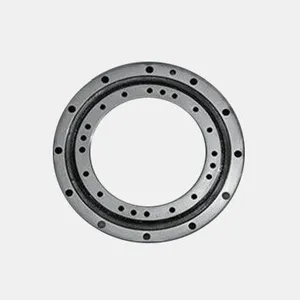
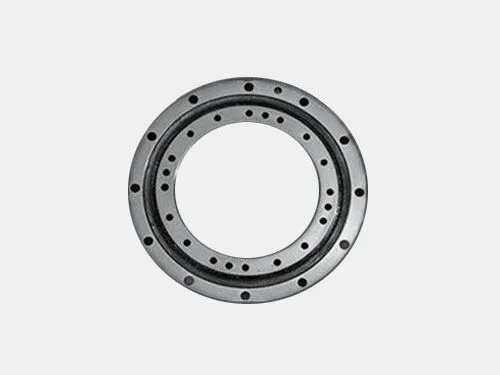
SHF Series Harmonic Drive Bearings
Product Spotlights
Crossed cylindrical roller design – handles radial, axial & moment loads.
High rigidity & zero backlash – ensures transmission accuracy.
P5/P4 precision grades – suitable for precision positioning.


Related Products
-
 SHF Series Harmonic Drive BearingsNegotiableMOQ: 5 Pieces
 -
CSF Series Harmonic Reducer BearingsNegotiableMOQ: 5 Pieces
-
Robot Reducer BearingNegotiableMOQ: 5 Pieces
-
Robot Hollow Rotating Platform BearingNegotiableMOQ: 5 Pieces
-
High Precision Rotary Table Bearings ORT 100NegotiableMOQ: 5 Pieces
The harmonic reducer is widely applied in various fields such as industrial automation, robot arm joints, humanoid robots, semiconductor LCD production equipment, photovoltaic equipment, optical instruments, and precision machine tools due to its high torque capacity, high rigidity, high positioning accuracy, high rotational accuracy, high speed, high stability, ultra-small size, and ultra-light weight.
Harmonic transmission is a relatively unique type of power transmission method, which has unparalleled advantages over other transmission methods. It has a large transmission ratio, high precision, large bearing capacity, high efficiency, small size, and light weight, among many other merits. It is widely used in fields such as space technology, electronics industry, military industry, robotics, packaging machinery, printing machinery, medical devices, etc., and has a wide range of application possibilities. We generally refer to it as a harmonic reducer or harmonic drive unit.
After several decades of development both domestically and internationally, the development of harmonic reducers has been advancing rapidly. The harmonic transmission technology has become increasingly mature. As the main component of harmonic transmission, the cross roller bearings have also achieved rapid development in China in recent years. The cross roller bearings used in harmonic transmission have slightly different structures from ordinary cross roller bearings. The basic structural forms are similar, and they basically adopt an outer ring segmented type and an inner ring with an overall structure. Compared with standard cross roller bearings, there are many installation holes machined on the inner and outer rings, especially the inner ring. From the outside to the inside, there are generally three layers of installation threads with different sizes and quantities. This is the difference in appearance from the basic type of cross roller bearings. The materials all use GCr15 bearing steel. The outer ring is heat treated using the overall quenching process, while the inner ring uses the high-frequency quenching process on the roller track surface. This is the difference compared to the ordinary cross roller bearing process.

Send Inquiry to This Supplier

You May Also Like
-
High Precision Rotary Table Bearings ORT 50NegotiableMOQ: 5 Pieces
-
High Precision Rotary Table Bearings ORT 80NegotiableMOQ: 5 Pieces
-
High Precision Rotary Table Bearings ORT 150NegotiableMOQ: 5 Pieces
-
High Precision Rotary Table Bearings ORT 120NegotiableMOQ: 5 Pieces
-
High Precision Rotary Table Bearings ORT 180NegotiableMOQ: 5 Pieces
-
High Precision Rotary Table Bearings ORT 200NegotiableMOQ: 5 Pieces
-
High Precision Rotary Table Bearings ORT 260NegotiableMOQ: 5 Pieces
-
Thin-Walled Crossed Roller Bearings ORB 2008NegotiableMOQ: 5 Pieces
-
Thin-Walled Crossed Roller Bearings ORB 2508NegotiableMOQ: 5 Pieces
-
Thin-Walled Crossed Roller Bearings ORB 3010NegotiableMOQ: 5 Pieces


