








 Contact Platform Support
 Help Center
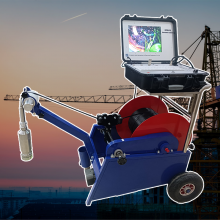
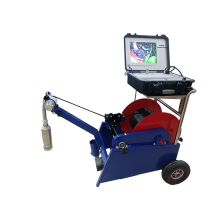
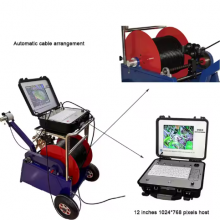
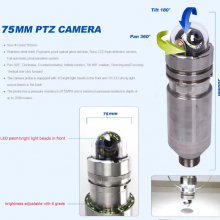
Wireless Downhole Monitoring Self Leveling Pipeline Camera


Related Products
-
 Guided Wave Radar Level Gauge Hydrostatic Level ProbeNegotiableMOQ: 1 Piece
 -
2D Resistivity Imaging Equipment IP Survey System for MineralsNegotiableMOQ: 1 Set
-
Borehole Geophone Sensor Underground Seismic SensorNegotiableMOQ: 1 Set
-
Magnetic Surveying System Magnetic Survey EquipmentNegotiableMOQ: 1 Set
-
Underground Drilling Orientation Tool Portable Hole Alignment InstrumentNegotiableMOQ: 1 Set
The Extreme Environment Challenger – Certified for the Planet’s Harshest Subsurface Realms
GYGD-IV Rotary Borehole Inspection Camera: Engineered to Survive Where Other Tools Fail
The subsurface is not a gentle place. It is a realm of crushing hydrostatic pressure, caustic chemical brines, extreme temperature swings, and abrasive particles that wear down even the toughest machinery. Yet, for those who must venture into these hostile environments—to drill for water, extract geothermal energy, monitor carbon storage sites, or inspect aging infrastructure—the need for reliable visual intelligence does not diminish. It becomes absolutely critical. The GYGD-IV Rotary Borehole Inspection Camera has been systematically hardened, tested, and certified to operate in the planet’s most punishing subsurface conditions, delivering uncompromised imaging performance where ordinary cameras would fail within minutes.
Pressure: Conquering the Crushing Depths
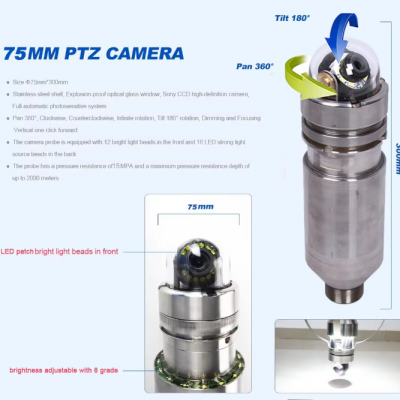
Deep boreholes exert forces that are difficult to comprehend. At 1,000 meters, the hydrostatic pressure reaches approximately 10 megapascals (MPa) —equivalent to the weight of a small car pressing on every square centimeter of the probe’s surface. The GYGD-IV is pressure-rated to 15 MPa, providing a generous safety margin for operations down to 1,500 meters. This rating is not theoretical; every production probe undergoes a certified hydrostatic pressure test in a specialized chamber, where it is subjected to 125% of its rated pressure for a sustained period. The test records zero leakage, zero optical distortion, and full mechanical function of the rotary mechanism. The double O-ring seal system, crafted from Viton® fluoroelastomer, maintains its elasticity and sealing force even after repeated pressure cycles, thanks to a proprietary groove geometry that prevents extrusion. For extreme deep-well applications, an optional pressure-compensated oil-filled housing is available, which equalizes internal and external pressure, allowing operation to 20 MPa (2,000 meters) .
Temperature: Thriving in Thermal Extremes
Subsurface temperatures vary wildly. Shallow water wells may hover near freezing, while geothermal boreholes can exceed 150°C. The GYGD-IV’s thermal management system enables reliable operation across a -20°C to +75°C range for the standard probe, with an extended high-temperature version rated to 120°C for geothermal and deep oil/gas applications. The secret lies in the active cooling circuit integrated into the probe’s electronics compartment. A phase-change material (PCM) absorbs heat during operation, while low-thermal-conductivity standoffs isolate sensitive components from the hot housing. The LED illumination system uses heat-sinked, current-controlled drivers that prevent thermal runaway even in stagnant, non-circulating borehole fluids. For arctic operations, the system includes self-regulating heating elements that keep the lens and seals free of ice, ensuring immediate deployment even after overnight storage at -40°C.
Chemical Aggression: Resisting Acid, Salt, and Hydrocarbons
Borehole fluids are often corrosive cocktails. The GYGD-IV’s material selection reflects a deep understanding of downhole chemistry. The housing is 316L stainless steel with electropolished finish, resistant to pitting corrosion from chlorides and to stress corrosion cracking from hydrogen sulfide (H₂S). The optical window is sapphire, second only to diamond in hardness and chemically inert to almost all acids, bases, and solvents. The cable jacket is a specialized polyurethane formulation that withstands prolonged exposure to diesel, crude oil, brine, and dilute acids without swelling or cracking. The connector contacts are gold-plated beryllium copper with hermetic glass-to-metal seals, eliminating the wicking action that can draw corrosive fluids into the cable. Every external screw, washer, and pin is passivated 316 stainless steel or Hastelloy C-276 for maximum corrosion margin.
Abrasion and Impact: Surviving the Rough Ride
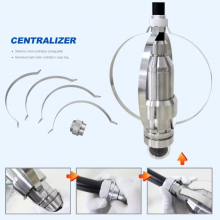
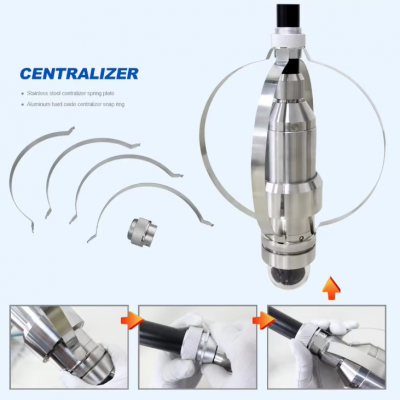
Deploying a camera down a cased borehole is rarely a smooth journey. The probe may bounce against casing joints, scrape across scale-encrusted surfaces, or be pulled through gravel packs. The GYGD-IV’s centralizer system features replaceable polyurethane rollers that protect the housing while centering the camera for optimal imaging. The front nose cone is machined from hardened 17-4 PH stainless steel, capable of withstanding repeated impacts without deforming. The cable enters the probe through a strain-relief boot that absorbs bending moments, preventing damage to internal solder joints. In the event of a severe snag, the weak-link coupling between the probe and the cable is designed to break at a known load, sacrificing the coupling to save the more expensive probe. Field-replaceable wear rings on the housing allow operators to renew the probe’s abrasion protection after years of service.
Certifications: Proof of Extreme Readiness
The GYGD-IV does not merely claim ruggedness; it proves it through independent certifications. The probe and control unit carry IP68 (dust-tight and continuous immersion) and IP69K (high-pressure, high-temperature washdown) ratings. The system is CE marked for electromagnetic compatibility and low-voltage safety. For hazardous locations, an ATEX/IECEx certified version (Zone 1, II 2 G Ex db IIC T6) is available, featuring intrinsically safe circuits and non-sparking mechanical components. The MIL-STD-810H test report is available upon request, documenting the system’s survival of vibration, shock, humidity, salt fog, and temperature extremes as per US military standards. For the oil and gas industry, the system can be supplied with API 5CT compliance documentation, confirming its suitability for casing and tubing inspection.
User Confidence Through Tested Reliability
When an operator lowers a GYGD-IV into a borehole, they do so with confidence born of rigorous engineering and third-party validation. The system’s predictable failure modes and graceful degradation mean that even in the event of a component reaching its limit, the camera will continue to provide valuable data. The real-time health monitoring on the control unit displays internal temperature, pressure, and LED current, alerting the operator to any developing issue. This transparency builds trust and allows informed decisions about continuing or aborting a mission. For critical infrastructure where failure is not an option, the GYGD-IV is the camera of choice.
Extreme Environment Specifications Table
| Environmental Challenge | GYGD-IV Design Solution | Certified Performance |
|---|---|---|
| Hydrostatic Pressure | 316L housing, dual Viton® O-rings, optional oil-filled compensation | 15 MPa standard (1,500 m), 20 MPa optional (2,000 m) |
| Temperature – Standard | Active PCM cooling, low-thermal-conductivity standoffs | -20°C to +75°C continuous |
| Temperature – High-Temp Version | Ceramic PCB, high-temp lubricants, derated LEDs | -10°C to +120°C continuous |
| Temperature – Arctic Version | Self-regulating heaters, low-temp grease | -40°C to +50°C continuous |
| Chemical Resistance | 316L electropolished, sapphire window, gold-plated contacts, Hastelloy C-276 optional | Resists H₂S, NaCl brines, dilute acids, hydrocarbons |
| Abrasion Resistance | Hardened 17-4 PH nose cone, replaceable polyurethane rollers | Survives 100+ deployments in abrasive conditions |
| Impact & Shock | Strain-relief boot, weak-link coupling, MIL-STD-810H tested | 3-foot drop onto concrete, operational |
| Vibration | Potting of internal electronics, MIL-STD-810H Method 514.7 | 5g at 50-2000 Hz, 1 hour per axis |
| Ingress Protection | Dual O-rings, IP68 test chamber verified | IP68 (continuous immersion), IP69K (steam cleaning) |
| Hazardous Locations | Intrinsically safe circuits, non-sparking mechanicals | ATEX Zone 1, II 2 G Ex db IIC T6 |
| EMC/RFI Immunity | Shielded cable, ferrite filters, CE test | EN 61326-1 industrial environment |
| Cable Tensile Strength | Kevlar-reinforced, 6 conductors, polyurethane jacket | 250 kg breaking strength, 50 kg working load |

Send Inquiry to This Supplier


You May Also Like
-
Portable Geological Imager Subsurface Panoramic CameraNegotiableMOQ: 1 Piece
-
API 5CT Compliant Camera NIST Traceable Measurement CamNegotiableMOQ: 1 Set
-
SCADA Water Level Monitoring 4-20mA Water Level TransmitterNegotiableMOQ: 1 Piece
-
Deep Water Well Inspection Camera Underground Underwater Borehole Inspection CameraUS$ 1 - 1MOQ: 1 Piece
-
360 Degree Rotation Underwater Deep Water Well Inspection CameraUS$ 1 - 1MOQ: 1 Piece
-
Waterproof Underwater Manhole and Borehole Inspection CameraUS$ 1 - 1MOQ: 1 Piece
-
Borehole Water Well Inspection CCTV Camera Well LoggerNegotiableMOQ: 1 Piece
-
Resistivity Calibration Instrument Geophysical Resistivity Sensor Array Resistivity Data LoggerNegotiableMOQ: 1 Set
-
Mineral Exploration Data Interpretation Geophysical Prospecting Consulting Service Underground Cavity Detection SystemNegotiableMOQ: 1 Set
-
Multi Functional Pipe Inspection Camera Wireless Drain Inspection Camera Monitor High Pressure Waterproof Borehole CameraNegotiableMOQ: 1 Set
