








 Contact Platform Support
 Help Center
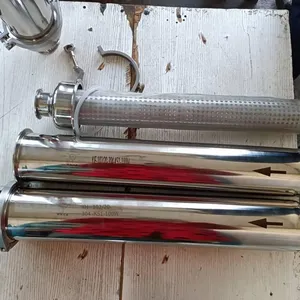
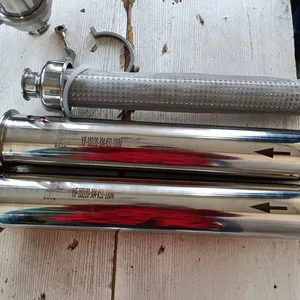
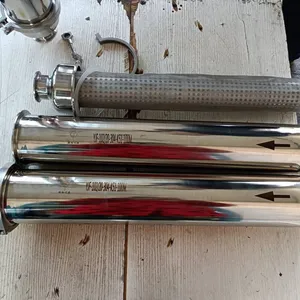
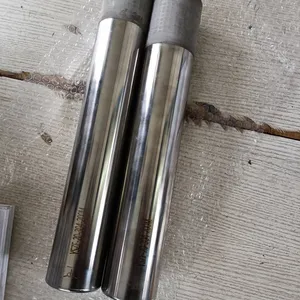
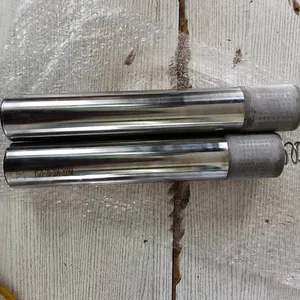
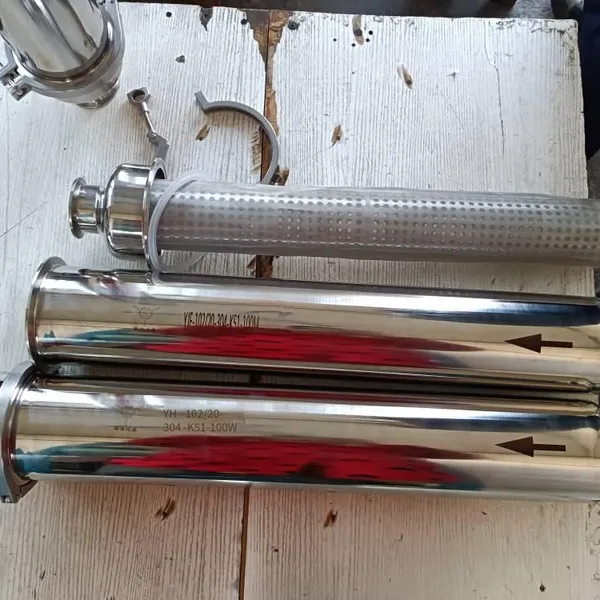
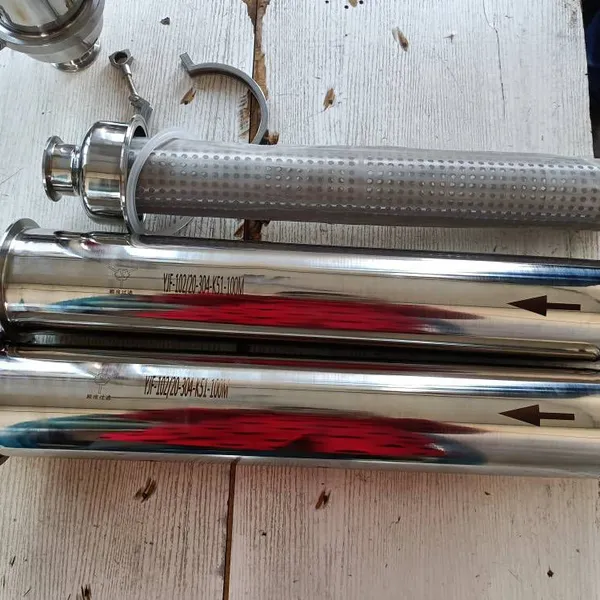
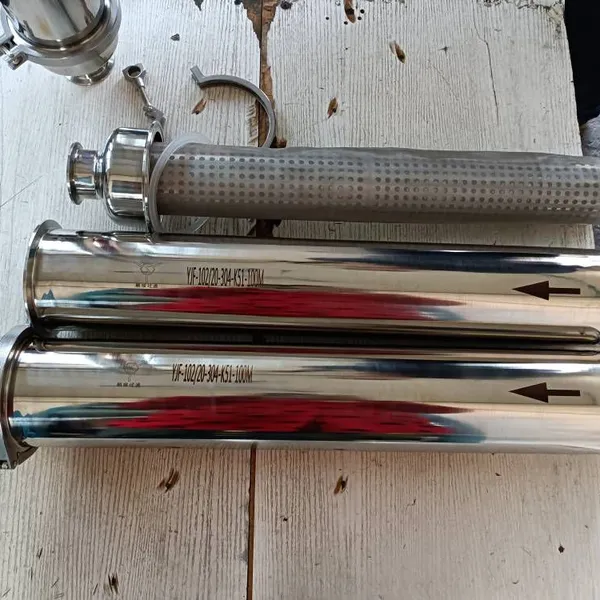
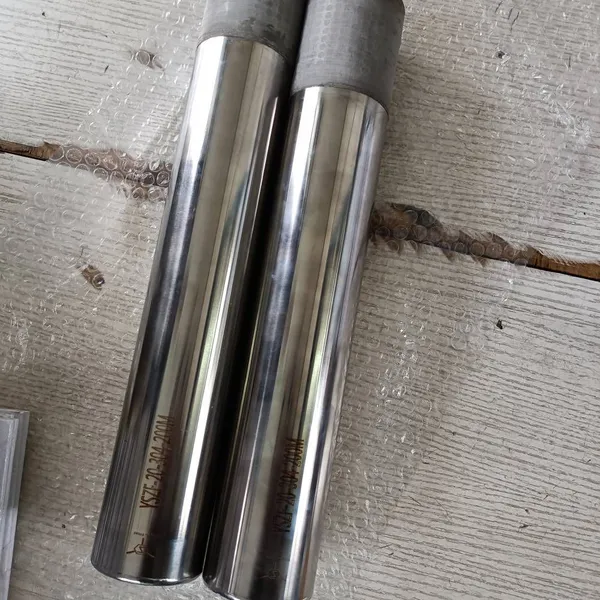
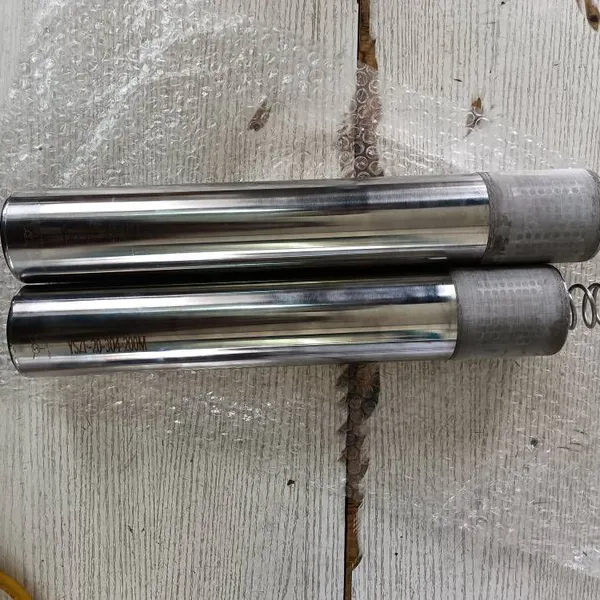
Yjf-102/20-304-k51-100m Precision Filter Produced by Yingsu, Sanitary Pipeline Filter


Related Products
-
 Model Ykf-0510-304-f40 Steam Filter, Basket Filter and Bag Filter Produced by YingsuNegotiableMOQ: 0 Piece
 -
Ycxf-0520-316-f51 Stainless Steel Magnetic Rod Filter, Magnetic Filter, Etc.NegotiableMOQ: 0 Piece
-
Stainless Steel Filters Produced by Yingsu, Model Yjf - 133 - 316 - K40 and Yjf - 219 - 316l - K50NegotiableMOQ: 0 Set
-
Ytf-0110-316-f40 High-pressure Hydrogen Filter, T-type Filter, Etc. Produced by YingsuNegotiableMOQ: 0 Piece
-
Stainless Steel Precision Filter of Model Yjf-219-316l-k76-300um and Yjf-0110-304-20umNegotiableMOQ: 0 Set
Specifications of Cartridge Filters
Cartridge filters are widely used in the field of precision filtration, and their specifications are mainly centered around the filter cartridges. Common outer diameters of filter cartridges include various specifications such as 50mm, 75mm, 100mm, etc. The lengths include 10 inches (approximately 254mm), 20 inches (approximately 508mm), 30 inches (approximately 762mm), 40 inches (approximately 1016mm), etc. Taking a 10 - inch filter cartridge with an outer diameter of 50mm as an example, it has a compact structure and is suitable for small - scale filtration equipment with limited space, such as the pre - filtration part of household water purifiers. While the 40 - inch long filter cartridge has a larger filtration area and can accommodate more impurities, and is often used in the industrial fluid pre - treatment process to handle large - flow liquids or gases.
Specifications of Bag Filters
The specifications of bag filters are mainly determined by the size of the filter bags. Common sizes of filter bags include diameter 180mm × length 430mm, diameter 180mm × length 810mm, diameter 360mm × length 810mm, etc. Among them, the filter bag with a diameter of 180mm × length 430mm belongs to the small - scale specification, with a small processing flow, and is suitable for places with low requirements for filtration flow, such as laboratories and small factories. The large - scale filter bag with a diameter of 360mm × length 810mm can accommodate more filter materials and can withstand a larger flow, and is often used in large - flow liquid filtration scenarios such as sewage treatment plants and chemical production.
Standards for Filter Cartridge Specifications and Models
Basic Parameter Specifications of Filter Cartridges
The diameter of a filter cartridge refers to its outer diameter. Common specifications include Φ10, Φ20, Φ30, etc., as well as various sizes between 10mm - 500mm. The larger the diameter, the larger the filtration area, and usually the better the filtration effect, but the cost will also increase accordingly. The length of a filter cartridge is usually between 100mm - 2000mm. Common specifications include 10 inches, 20 inches, 30 inches, etc. The longer the length, the better the filtration effect, but it will also increase the resistance and cost. The filtration accuracy of a filter cartridge refers to the size of particles that can be effectively intercepted, usually measured in micrometers (μm). Common accuracies include 0.1μm, 0.2μm, 0.5μm, 1μm, 5μm, 10μm, etc.
Specifications of Filter Cartridge Structure and Materials
Filter cartridges have diverse structures, including but not limited to melt - blown cartridges (PP cotton), wound cartridges, pleated cartridges, etc. Each structure is suitable for different filtration conditions and media. Filter materials can be made of various materials such as polypropylene, absorbent cotton, stainless steel, ceramics, etc. The selection is based on factors such as the chemical properties, temperature, and pressure of the filtration medium. The filter cartridges of air precision filters also include the filter cartridge filtration grade (e.g., F5 - F9 are coarse filters, H10 - H14 are high - efficiency filters), outer frame materials (e.g., aluminum alloy, galvanized sheet, stainless steel, etc.), filter material (e.g., glass fiber, synthetic fiber, polymer materials, etc.), interface forms (e.g., flat mouth, bell mouth, high - low ends, etc.), and structural forms (e.g., pleated, bag - type, box - type, etc.).
Characteristics of Different Types of Filter Elements
Common Types of Filter Elements
Paper filter elements are mainly composed of paper materials, with advantages such as low cost and easy replacement. Their filtration effect mainly depends on the texture of the paper material and the manufacturing process. However, the durability of paper filter elements is relatively poor, and they need to be replaced regularly. Chemical fiber filter elements are made of chemical fibers, with high filtration accuracy and strong durability. Their fiber structure can effectively intercept impurities in the fluid to ensure the filtration effect. Chemical fiber filter elements are suitable for occasions with high water quality requirements. Metal mesh filter elements are woven from metal wires, with characteristics such as high temperature resistance and corrosion resistance. They can be used for a long time in harsh environments, and the filtration effect is stable. Metal mesh filter elements are usually used in the filtration systems of industrial fields. Metal powder sintered filter elements are made by high-temperature sintering of metal powders, with characteristics such as uniform pore size and high filtration accuracy. They can effectively filter out tiny particles in the fluid to ensure the purity of the fluid.
Special Types of Filter Elements
PP filter elements, also known as PP melt-blown filter elements, are made by hot-melt entanglement of polypropylene ultrafine fibers. Their fibers randomly form a three-dimensional microporous structure in space, integrating surface, deep, and fine filtration, and can intercept impurities of different particle sizes. PP filter elements have characteristics such as high filtration accuracy, water resistance, and strong acid and alkali resistance, and are commonly used in fields such as drinking water treatment, medicine, and chemical industry. Wound filter elements are made by precisely winding textile fiber yarns with good filtration performance on a porous skeleton. The yarn materials include polypropylene fibers, acrylic fibers, degreased cotton fibers, etc. By controlling the winding tightness and sparsity of the yarns, filter elements with different accuracies can be made. Wound filter elements have advantages such as good filtration effect, easy cleaning, and replacement, and are widely used in fields such as industrial water treatment and food and beverage production. Activated carbon filter elements mainly use the adsorption performance of activated carbon to remove odors, residual chlorine, and some organic substances in water. Activated carbon has a microporous structure and strong adsorption capacity, which can effectively remove harmful substances in water. Activated carbon filter elements are widely used in fields such as household water purifiers and water dispensers to improve the taste and safety of water quality. There are also some special types of filter elements, such as nanofiltration filter elements and reverse osmosis filter elements. The filtration accuracy of nanofiltration filter elements is between 0.01 - 0.001 microns, which can filter out inorganic salts, heavy metal ions, etc. in water; while the filtration accuracy of reverse osmosis filter elements is below 0.001 microns, which can remove ionic impurities in water and make the water quality close to pure water.
Influencing Factors for Selecting Specification Sizes
Installation Space Limitation
Installation space is one of the key factors determining the specification size of precision filters. In the renovation projects of some old factories, due to the compact layout of the original equipment, the installation space for the filter is limited. At this time, a filter with a small size needs to be selected. For example, a small wall-mounted precision filter may only have a width of about 200mm, a height of 300mm, and a thickness of about 100mm, which can be installed in a narrow space to meet the filtration needs in specific environments.
Processing flow requirements
Different production processes and usage scenarios have different requirements for fluid processing flow. On the beverage production line, to ensure production efficiency, it is necessary to process dozens of liters or even hundreds of liters of liquid per minute. This requires the precision filter to have a large filtration area and flow capacity, and it is necessary to select a filter with a larger specification size, such as a filter with a multi - core structure and a large - diameter filter bag. In a small experimental device in the laboratory, the flow rate of the liquid or gas processed per minute may be only a few milliliters or dozens of milliliters, and a small - sized filter can meet the requirements.
Selection and application of precision filters
Selection table and technical parameters
The precision filter has a detailed selection table. For example, for model STB(3 - 10), the outer diameter is 160mm, the total height is 450mm, the number of filter elements is 3, and the filter element specification is 10”; for model NT - 105F - M18 - T2, the processing flow is 1.4m³/min, the connection diameter is 1/4", and the weight is 2.5kg, etc. Its technical parameters include flow rate (e.g., 1/4″ corresponds to 1.4m³/min), operating temperature (52℃ for plastic cups, 80℃ for metal cups), operating pressure (150psig(10bar) for both plastic and metal cups), filtration accuracy (e.g., (B)5μm), caliber (NPT/BSPP - G has 1/4″, 3/8″, 1/2″, etc.), weight (e.g., 1.1(0.5)kg), etc.
Application scope
Precision filters are widely used in fields such as petrochemical, natural gas, coatings, paints, inks, pharmaceuticals, bio - engineering, automobile manufacturing, electronics, electroplating, food, and beverages. They are ideal equipment for various liquid filtration, clarification, and purification treatments. In the petrochemical and chemical industries, they can be used for the purification of various fluids such as hydrogen peroxide and resins; in the oil and natural gas industries, they are used for CNG filtration at gas filling stations; in the pharmaceutical and bio - engineering industries, they are used for the filtration of infusion pharmaceutical water; in the automobile manufacturing industry, they are used for the treatment of electrophoretic paint and top - coat paint; in the electronics and electroplating industries, they are used for the purification of chemicals and gases in the manufacturing process of liquid crystal displays; in the food, beverage, and wine industries, they are used for the process purification and aseptic treatment of wine, fruit juice, etc.
Precautions for specification selection
Filter configuration principle
Filters should be configured in combination according to the principle of “coarse first, then fine”, and the order cannot be reversed. The actual flow rate, pressure, and temperature of the compressed air passing through the filter cannot exceed the values specified on the nameplate. When installing, it is necessary to pay attention to distinguish the inlet and outlet positions of the filter, and the filter should be installed vertically with a certain height from the ground to facilitate the replacement of the filter element.
Filter element replacement and maintenance
When one of the following situations occurs, such as the obvious deterioration of the filter effect, the pressure difference indicator value exceeding 0.07MPa (the initial pressure drop of the filter element is
The specification selection of precision filters requires comprehensive consideration of multiple factors to ensure the filtration effect they achieve in different scenarios.

Send Inquiry to This Supplier

You May Also Like
-
Yjf-0520-304-f50 Precision Filter, Stainless Steel Filter Element Filter, Cartridge Precision FilterNegotiableMOQ: 0 Piece
-
Yjf-219-316l-k76-300um Stainless Steel Filter, Precision Filter Produced by YingsuNegotiableMOQ: 0 Set
-
Anti-corrosion Parallel Filter Ybaf-4840-304-f100 Produced by Yingsu, Ybf-1100-304-f40NegotiableMOQ: 0 Set
-
Ying su Produced Y-type Filters, T-type Filters, Precision Filters, Etc., Model: Yyxf-k51-316-100mNegotiableMOQ: 0 Piece
-
Precision Filter, Basket Filter, Ylf-220-304-f150, Ying su Ylf-220-304-f100NegotiableMOQ: 0 Set
-
Titanium Rod Filter Cartridge Ykf - 0510 - 304 - 0.45um for Use With Ykf - 0510 - 304 - F40NegotiableMOQ: 0 Set
-
Yjf-219-316-k50 Stainless Steel Precision Filter Produced by Yingsu, Model Yjf-0110-304-20umNegotiableMOQ: 0 Set
-
Yjf-0110-304-f20 Ylsf-219-304-f80 Yingsu Basket Filter, Stainless Steel FilterNegotiableMOQ: 0 Piece
-
Magnetic Rod Filter Model Ycbf-159-304-sms51, a Strong Magnetic Filter Produced by YingsuNegotiableMOQ: 0 Piece
-
Ydf-s1-304-sms51 Stainless Steel Filter, Basket Filter, Bag FilterNegotiableMOQ: 0 Set


