








 Contact Platform Support
 Help Center
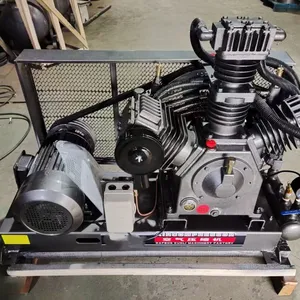
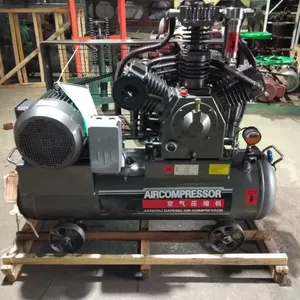
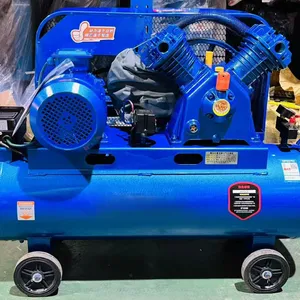
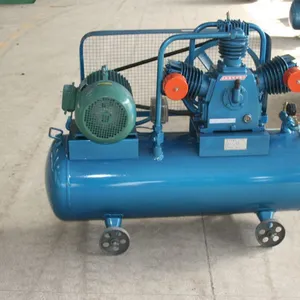
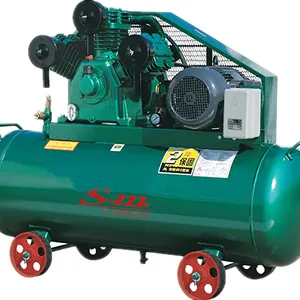
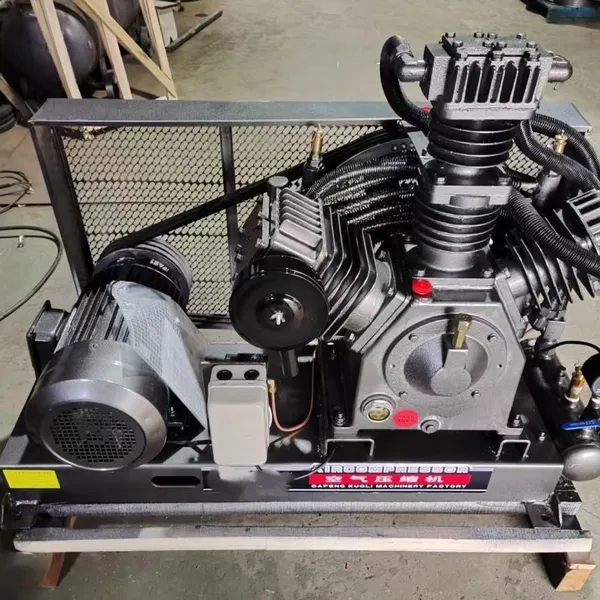
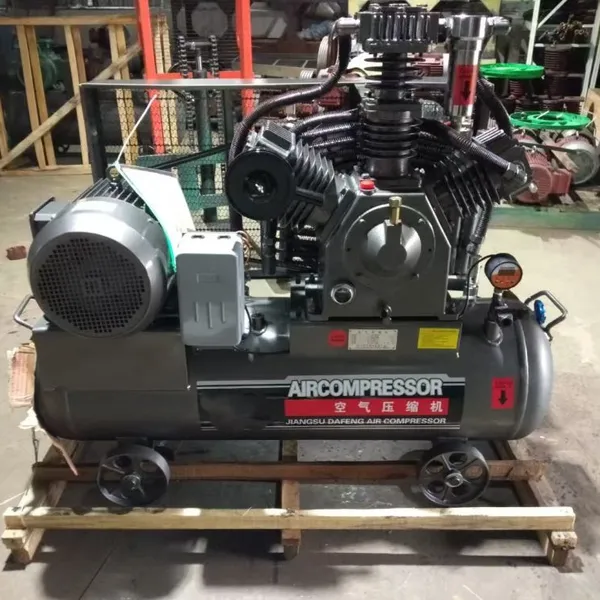
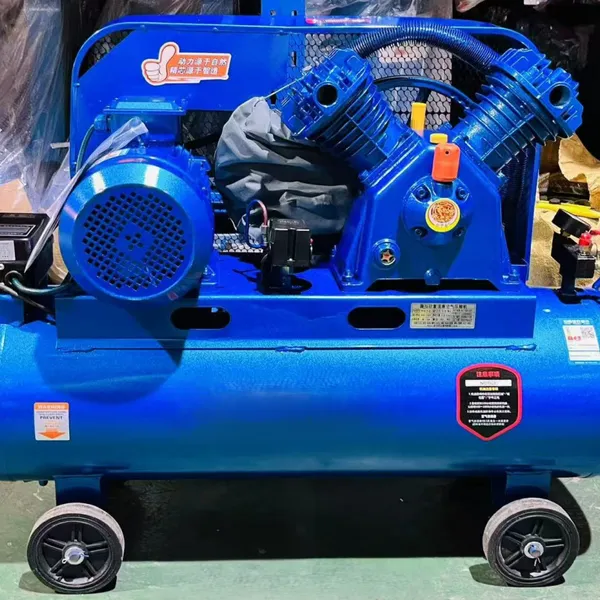
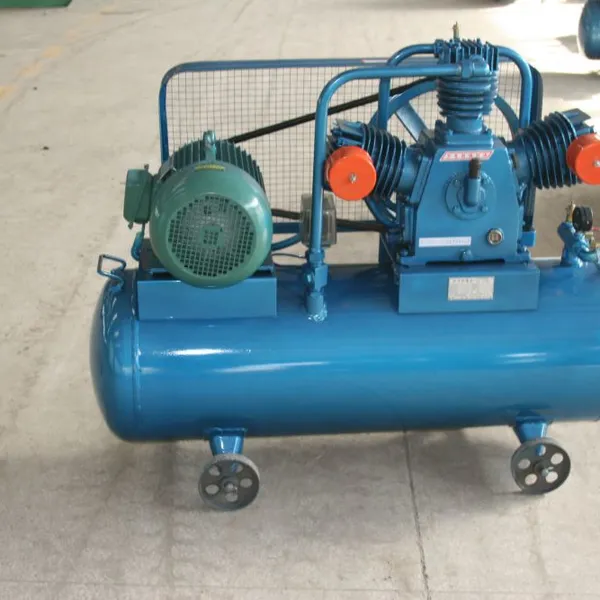
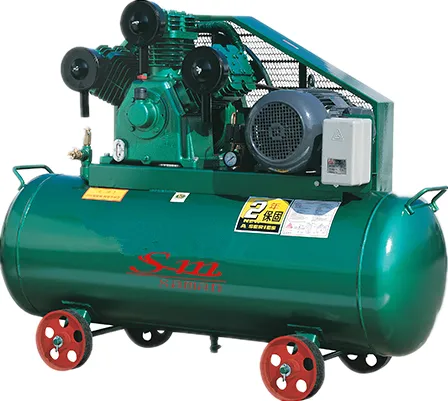
Saman W-0.6/8 Piston Type Air Compressor, With Stable Performance and High Gas Output Capacity
Product Spotlights


Related Products
-
 Saman Portable Medical Oil-Free Silent Air CompressorM550—M1500*4NegotiableMOQ: 1 Piece
 -
Silent Oil-free Air Compressor With Pure Gas Volume and 0 Oil ContentNegotiableMOQ: 1 Piece
-
Silent Oil-free Air Compressor, Portable Oil-free Silent Air CompressorNegotiableMOQ: 1 Piece
-
Saman Permanent Magnet Screw Air Compressor, Highly Efficient, Energy-saving, Low Rotational Speed, and High Gas Output CapacityNegotiableMOQ: 1 Piece
-
Saman Oil-free Vortex Air Compressor, MW-3.7 High-efficiency Oil-free Vortex Air CompressorNegotiableMOQ: 1 Piece
The piston-type air compressor is a reciprocating air compressor, which is suitable for applications requiring large capacity and high-pressure output, such as industrial production, mining operations, etc.
When the piston, which moves back and forth in the cylinder, moves to the right, the pressure in the left chamber of the cylinder is lower than the atmospheric pressure Pa. The suction valve opens, and external air is drawn into the cylinder. This process is called the compression process. When the pressure inside the cylinder is higher than the pressure in the output air pipeline p, the exhaust valve opens. The reciprocating motion of the piston is formed by the crank-slider mechanism driven by an electric motor. The rotational motion of the crank is converted into the reciprocating motion of the piston.
This type of compressor always has a residual volume at the end of the exhaust process. During the next suction, the compressed air in the residual volume expands, reducing the amount of air drawn in, lowering the efficiency, and increasing the compression work. The structure is simple, has a long service life, and is easy to achieve large capacity and high-pressure output.
When the piston, which moves back and forth in the cylinder, moves to the right, the pressure in the left chamber of the cylinder is lower than the atmospheric pressure pa. The intake valve opens, and outside air is drawn into the cylinder. This process is called the compression process. When the pressure inside the cylinder is higher than the pressure in the output air pipe p, the exhaust valve opens. Compressed air is sent to the air intake pipe, and this process is called the exhaust process. The reciprocating motion of the piston is formed by the crank-slider mechanism driven by the electric motor. The rotational motion of the crank is converted into the reciprocating motion of the piston.
Schematic diagram of the working principle of a piston air compressor
1 - Exhaust valve 2 - Cylinder 3 - Piston 4 - Piston rod 5 - Slider 6 - Connecting rod 7 - Crank 8 - Intake valve
9 - Valve spring Product Introduction
Announcement Editor
This type of compressor always has a residual volume at the end of the exhaust process. During the next intake, the compressed air in the residual volume will expand, reducing the intake air volume, lowering the efficiency, and increasing the compression work. Moreover, due to the existence of the residual volume, when the compression ratio increases, the temperature rises sharply. Therefore, when the output pressure is high, staged compression should be adopted. Staged compression can reduce the exhaust temperature, save compression work, improve volumetric efficiency, and increase the exhaust volume of compressed gas.
1. It is a single-stage piston-type air compressor, commonly used in systems requiring a pressure range of 0.3 - 0.7 MPa. If the pressure of a single-stage piston-type air compressor exceeds 0.6 MPa, all performance indicators will sharply decline. Therefore, multi-stage compression is often used to increase the output pressure. To improve efficiency and lower the air temperature, intermediate cooling is required. Schematic diagram of a two-stage piston-type air compressor. After passing through the low-pressure cylinder, the air pressure increases from p1 to p2, and the temperature rises from T1 to T2; then it flows into the intermediate cooler, releasing heat to the cooling water at constant pressure, and the temperature drops to T1; then it is compressed to the required pressure p3 by the high-pressure cylinder. It can be seen that the air temperatures T1 and T2 entering the low-pressure cylinder and the high-pressure cylinder are on the same isothermal line 12 ′ 3 ′, and the two compression processes 12, 2 ′ 3 deviate from the isothermal line 12 ′ 3 ′ not far. The single-stage compression process with the same compression ratio p3 / p1 is 123 ″, which deviates from the isothermal line 12 ′ 3 ′ much more than the two-stage compression, that is, the temperature is much higher. Moreover, the power consumed by single-stage compression is equivalent to the area 613 ″ 46 in the figure, while the power consumed by two-stage compression is equivalent to the sum of areas 61256 and 52 ′ 345 in the figure, and the saved power is equivalent to 2 ′ 23 ″ 32 ′. Therefore, staged compression can reduce the exhaust temperature, save compression work, and improve efficiency.
Piston-type air compressors have various structural forms. According to the configuration of the cylinders, there are vertical, horizontal, angled, symmetrical balanced, and opposed types. According to the number of compression stages, they can be classified as single-stage, double-stage, and multi-stage. According to the installation method, they can be classified as mobile and fixed types. According to the control method, they can be classified as unload type and pressure switch type. Among them, the unload control method means that when the pressure in the storage tank reaches the set value, the air compressor does not stop running but operates without compression by opening the safety valve. This non-compression operating state is called unload operation. While the pressure switch control method means that when the pressure in the storage tank reaches the set value, the air compressor automatically stops running.
Classification characteristics
Broadcast Editor
Piston-type air compressors are generally classified based on exhaust pressure, exhaust volume (cubic flow rate), structural type, and structural characteristics.
1. According to the exhaust pressure, they are divided into:
Low-pressure air compressor: Exhaust pressure ≤ 1.0 MPa
Medium-pressure air compressor: 1.0 MPa High-pressure air compressor: Compressor 10 MPa 2. According to the exhaust volume size, they are divided into: Small air compressor: 1 m³/min Medium air compressor: 10 m³/min Large air compressor: Exhaust volume > 100 m³/min The exhaust volume of an air compressor refers to the free gas flow rate in the intake state. Generally, it is stipulated that: when the shaft power is 3. According to the relative position of the center line of the cylinder to the ground, they are divided into: Vertical air compressor - The center line of the cylinder is vertically arranged with the ground. z Angled air compressor - The centerline of the cylinder forms a certain angle with the ground (V-shaped, W-shaped, L-shaped, etc.). Horizontal air compressor - The centerline of the cylinder is parallel to the ground, and the cylinder is arranged on one side of the crankshaft. For dynamic balance air compressors - The centerline of the cylinder is parallel to the ground, and the cylinders are symmetrically arranged on both sides of the crankshaft. / X 4 According to structural characteristics, they are divided into: Single-acting - The gas is compressed only on one side of the piston. Double-acting - The gas is compressed on both sides of the piston. , F. H2 s; c0 z7 B Water-cooled type - The cylinder has a cooling water jacket and is cooled by water. Air-cooled type - The outer surface of the cylinder is cast with heat sinks and is cooled by air. Fixed type - The air compressor unit is fixed on the foundation. Mobile type - The air compressor unit is placed on a mobile device for easy relocation. Oil-lubricated - The cylinder is filled with oil for lubrication, and the moving mechanism is lubricated by a circulating oil system. Oil-free lubrication - The cylinder is not filled with oil for lubrication, and the piston and cylinder operate in a dry state, but the transmission mechanism is lubricated by a circulating oil system. Full oil-free lubrication - The transmission mechanism of the cylinder is not lubricated with oil. In addition, it is classified as having a crosshead (small and medium-sized oil-free air compressors) and without a crosshead (V, W type low-pressure mini air compressors); single-stage compression, two-stage or multi-stage compression. Product services Broadcast Editor The advantages of piston-type air compressors are simple structure, long service life, and ease of achieving large capacity and high-pressure output. The disadvantages are high vibration, loud noise, and because the exhaust is intermittent, the output has pulses, and a storage tank is required. Fault resolution Broadcast Editor Fault 1: When starting, the motor makes a buzzing sound, but the compressor does not start. The fuse has blown and the circuit breaker has tripped? Reason 1: The specification of the extension wire is too low. Correction: Use a higher specification wire and check the circuit breaker fuse; Reason 2: There are too many electrical lights or appliances using the circuit (overloaded circuit) Correction: Use other circuits or remove the loads from the circuit; Reason 3: One-way valve failure. Correction: Repair or replace; Reason 4: Voltage is too low. Correction: Check with a voltmeter; Reason 5: Temperature is too low. Correction: Warm up the machine or use light lubricating oil; Reason 6: Fuse or circuit breaker specification is incorrect. Correction: Check and replace; Reason 7: Poor ventilation, indoor temperature is too high. Correction: Move the compressor to a ventilated area; Reason 8: Pressure switch failure. Correction: Replace the pressure switch. Fault 2: The compressor does not work? Reason 1: The power line is not connected. Correction: Plug in the power plug; Reason 2: The pressure switch is in the off position. Correction: Switch to [automatic/ON] position; Reason 3: There is no lubricating oil in the compressor body (may seriously damage the compressor) Correction: Add lubricating oil; Reason 4: The belt is too loose or too tight. Correction: Adjust; Fault 3: The rotation direction is incorrect? Reason: The motor wire is connected wrongly. Correction: Change the wiring. Fault 4: The compressor overheats, the motor overheats? Reason 1: The pressure is too high and the machine is operating beyond its capacity. Correction: Reduce the operating pressure; Reason 2: The air filter or valve is clogged with carbon deposits. Correction: Remove and clean; Reason 3: The belt is too tight or the center line is not aligned. Correction: Realign and adjust; Reason 4: The environmental temperature is too high or the ventilation is poor. Correction: Move to a well-ventilated area; Reason 5: The voltage is too low or the wire is too long. Correction: Replace the wire and install a stabilizing device. Fault 6: The noise is too loud? Reason: There is no lubricating oil in the crankcase. Correction: Check if the bearings are damaged and reapply lubricating oil; Reason 1: The belt pulley body motor belt guard is loose. Correction: Shut down the machine and re-tighten; Reason 2: The valve or piston is clogged with carbon deposits. Correction: Remove the compressor cylinder cover for inspection; Reason 3: The bearing piston pin thrust bearing. Correction: Send to an approved service center for inspection. Fault 7: The vibration is too large? Reason 1: The pulley is not aligned or too loose. Correction: Realign or fix; Reason 2: The crankshaft is bent (deformed). Correction: Send to an approved service center; Reason 3: The belt is loose. Correction: Adjust the belt; Reason 4: The ground is uneven. Correction: Level the ground. Fault 8: The lubricating oil consumption is too high or there is lubricating oil in the hose Reason 1: The piston ring is worn. Correction: Send to the service center for replacement; Reason 2: The cylinder leaks. Correction: Replace the cylinder; Reason 3: Running-in. Correction: Re-run (running-in).

Send Inquiry to This Supplier

You May Also Like
-
Saman Permanent Magnet Variable Frequency Screw Air Compressor, MV-100A, With a Power of 75KW, Highly Efficient and Energy-savingNegotiableMOQ: 1 Piece
-
Saman Two-stage Permanent Magnet Variable-frequency Screw Air Compressor MUT-180A, With a Power of 132KW and a Flow Rate of 27 Cubic Meters.NegotiableMOQ: 1 Piece
-
Air Compressor Parts, Air Filter, Oil Filter, Oil Separation Core, Sensor, Frequency ConverterNegotiableMOQ: 1 Piece
-
Saman MW-5.5 Oil-free Vortex Air Compressor, Class 0 Level, Pure Oil-free, Ultra-quiet, Highly Energy-efficient, Low Maintenance, Stable and ReliableNegotiableMOQ: 1 Piece
-
Saman Screw Air Compressor, Permanent Magnet Variable Frequency, High-efficiency Double-stage Air CompressorNegotiableMOQ: 1 Piece
-
Saman Water-lubricated/dry-type Oil-free Screw Air Compressor, With Zero Oil ContentNegotiableMOQ: 1 Piece
-
Saman Dual-stage Permanent Magnet Variable-frequency Air Compressor MUT-150A, Featuring High Gas Output, Low Rotational Speed and Low Noise.NegotiableMOQ: 1 Piece
-
The Saman Screw Air Compressor is Widely Used and Can be Applied to Any Industry, Such as Food, Machinery, Healthcare, Industry, Mining, Etc.NegotiableMOQ: 1 Piece
-
Saman MW-2.2 Oil-free Vortex Air Compressor, Featuring High Output Capacity, Low Noise and Small Footprint.NegotiableMOQ: 1 Piece
-
Saman Screw Air Compressor MV Permanent Magnet Variable Frequency Series, With Flow Rates Ranging From 1m³ to 60m³NegotiableMOQ: 1 Piece


