








 Contact Platform Support
 Help Center
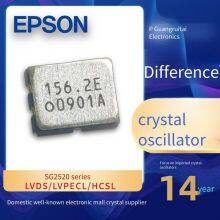
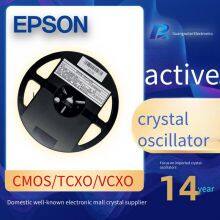
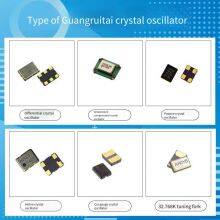
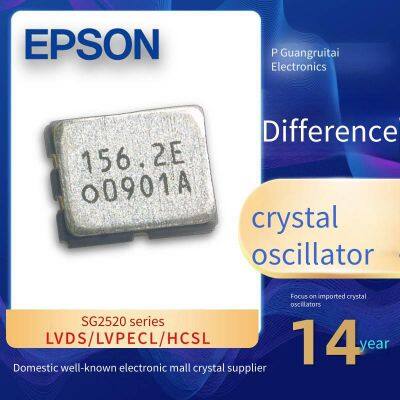
5g Millimeter-wave Base Station Sg2520vgn Lvds 400mhz Low Jitter Epson Differential Crystal Oscillator, Epson Agent


Related Products
-
 Nvidia Thor Chipset Clock Source Sg2520ehn 125mhz Lv-pecl Differential Crystal Oscillator EpsonUS$ 2.31MOQ: 1000 Pieces
 -
Ultra-thin ar Glasses, Clock Source 156.25mhz Sg2520vhn ±20ppm Lvds Epson Differential Crystal OscillatorUS$ 2.31MOQ: 1000 Pieces
-
Virtual World Brain-computer Interface Clock Source Sg2520hhn Hcsl 300mhz Differential Crystal Oscillator EpsonUS$ 2.31MOQ: 1000 Pieces
-
Low-orbit Satellite Communication Clock Source Sg2016hgn Hcsl 100mhz Epson Differential Crystal Oscillator AgentUS$ 2.31MOQ: 1000 Pieces
-
ai Edge Computing Chip Sg2016vgn Lvds 200m Epson Differential Crystal Oscillator Smd2016US$ 2.31MOQ: 1000 Pieces
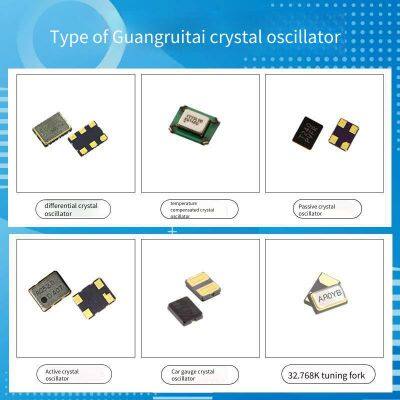
The following is a comprehensive analysis of differential crystal oscillators, presenting key information in a structured manner by combining technical principles, application scenarios, and selection points: --- ⚡ I. Core Concept of Differential Crystal Oscillators 1. Working Principle - Output two complementary clock signals with a phase difference of 180° (such as LVDS/LVPECL/HCSL). By differential transmission, it cancels out common-mode noise and significantly improves anti-interference ability. - Compared with single-ended output (CMOS), differential signals can reduce jitter by 30% - 50% in high-frequency (>100MHz) scenarios. 2. Core Advantages - Anti-electromagnetic interference (EMI): Cancels out external noise and is suitable for complex environments such as motor control and wireless communication. - Low-power transmission: The differential swing is small (e.g., only 350mV for LVDS), saving more than 20% power compared to CMOS. - Long-distance transmission: The effective transmission distance can reach 10 meters (usually 60dB (a key indicator for suppressing power supply noise). - Skew: The delay difference between the two signals 25Gbps). - FPGA (Field-Programmable Gate Array): Provides high-precision clock signals. 2. Communication Systems - 5G Base Stations: Ensures high-speed and stable data transmission. - Optical Communication: For high-speed optical modules. 3. Automotive Electronics - In-vehicle Ethernet (100BASE-T1). 4. Industrial Control - High-speed ADC/DAC clocks. 5. Medical Imaging - MRI gradient controllers. --- III. Selection Guidelines for Differential Crystal Oscillators 1. Interface Type - LVDS: Suitable for high-speed data transmission and low-power applications. - LVPECL: Suitable for high-frequency and high-performance applications. - HCSL: Suitable for applications with low radiation requirements. 2. Jitter Requirements - High-speed applications:

Send Inquiry to This Supplier

You May Also Like
-
5g Millimeter Wave Base Station Sg2016egn Lv-pecl 156.25mhz Differential Crystal Oscillator, Agent of EpsonUS$ 2.31MOQ: 1000 Pieces
-
Quartz SMD Crystal Resonator Manufacturer SMD3225 26.000MHZ 9PF 10PPMUS$ 134MOQ: 1 Roll
-
SMD2520 Passive Quartz Crystal Resonator 24M 26M 27M China Factory WholesaleUS$ 150MOQ: 1 Pack
-
Mini 49SMD Crystal Resonator 2-Pin 12M 24M 25M Quartz SMD Factory Direct WholesaleUS$ 72.8MOQ: 5 Packs
-
Automotive-grade Quartz Surface-mount Passive Crystal Oscillator Nx3225gb 16.000mhz Exs00a-cg02426US$ 0.14 - 0.15MOQ: 1000 Pieces
-
Txc Active Crystal Oscillator Awz3200001, Quartz Oscillator for ai Computing Power Server, 32.768khz, Taichung Crystal, SmdUS$ 0.34 - 0.38MOQ: 1000 Pieces
-
Agent for Imported Kyocera Crystal Oscillators and Crystals Kc2016z13.5600c1kx00 Smd Quartz ActiveUS$ 0.35 - 0.38MOQ: 1000 Pieces
-
Txc Automotive Grade Av27000010 27mhz 8pf Smd3225 Ceramic Surface Four-pin Passive Quartz Smd Crystal OscillatorUS$ 0.12MOQ: 3000 Pieces
-
Agent of South China Ndk Crystal Oscillator Nz2016shb 32.768k, Sufficient Supply, Supports 1.8 - 3.3v VoltageUS$ 0.36 - 0.38MOQ: 1000 Pieces
-
Qualcomm Baseband Clock Tree Nx1210ac Ndk 38.4m Thermosensitive Passive Smd Crystal Oscillator, Ndk Radio Wave AgentUS$ 0.1 - 0.12MOQ: 1000 Pieces