








 Contact Platform Support
 Help Center
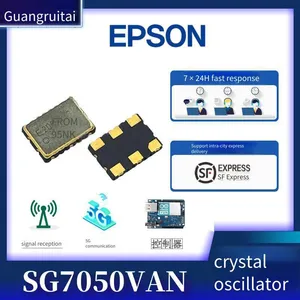
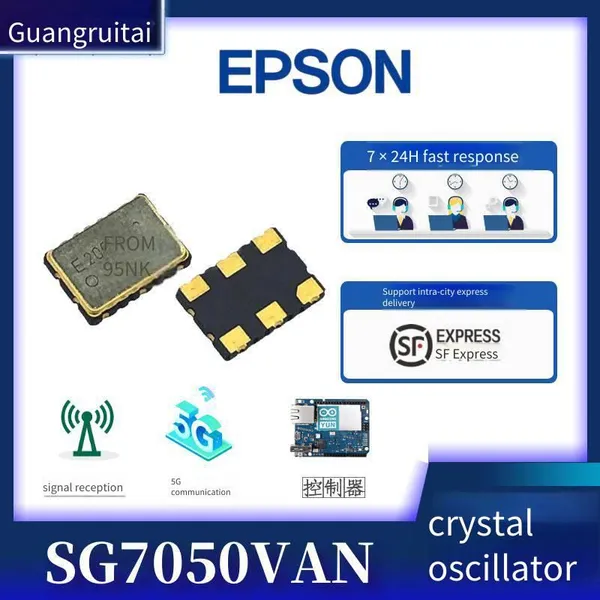
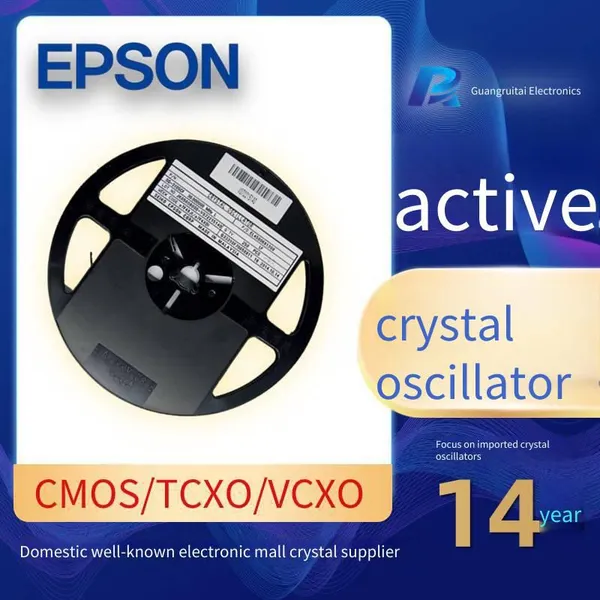
Adas Module Clock Source Sg7050ven Lvds Epson Differential Crystal Oscillator 1.8 - 3.3v



Related Products
-
 Agent for Epson Sg3225ven Lvds 3.3v ±50ppm Differential Crystal Oscillator as Clock Source for Optical Communication ModulesUS$ 2.31MOQ: 1000 Pieces
 -
Fpga Configuration Clock 200mhz Sg5032een Lv-pecl Differential Crystal Oscillator, Epson AgentUS$ 2.31MOQ: 1000 Pieces
-
Geothermal Drilling Sensor Clock Source Sg2520hgn 156.25mhz Hcsl Differential Crystal Oscillator EpsonUS$ 2.31MOQ: 1000 Pieces
-
ai Accelerator Card Clock Source 200mhz Sg7050een Lv-pecl Epson Differential Crystal OscillatorUS$ 2.31MOQ: 1000 Pieces
-
Low Earth Orbit (leo) Satellite Communication Terminal Sg2520egn 100mhz Differential Crystal Oscillator Clock Source, Epson EpsonUS$ 2.31MOQ: 1000 Pieces
The following is a comprehensive analysis of differential crystal oscillators, presenting key information in a structured manner by combining technical principles, application scenarios, and selection points: --- ⚡ I. Core Concepts of Differential Crystal Oscillators 1. Working Principle - Output two complementary clock signals with a phase difference of 180° (such as LVDS/LVPECL/HCSL). Through differential transmission, common-mode noise is cancelled, significantly improving anti-interference ability. - Compared with single-ended output (CMOS), differential signals can reduce jitter by 30% - 50% in high-frequency (>100MHz) scenarios. 2. Core Advantages - Anti-electromagnetic interference (EMI): Cancels external noise and is suitable for complex environments such as motor control and wireless communication. - Low-power transmission: The differential swing is small (e.g., LVDS is only 350mV), saving more than 20% of power compared to CMOS. - Long-distance transmission: The effective transmission distance can reach 10 meters (single-ended is usually 60dB (a key indicator for suppressing power supply noise). - Skew: The delay difference between the two signals 25Gbps). 3. Temperature Range - Commercial grade: 0°C - 70°C. - Industrial grade: -40°C - 85°C. - Automotive grade: -40°C - 125°C. --- III. Application Scenarios of Differential Crystal Oscillators | Application Field | Specific Application | Interface Type | | High-speed communication | 100G/400G Ethernet | LVPECL | | Data center | Server clock | LVDS | | AI computing | GPU clock | LVDS (low jitter) | | 5G base station | Radio frequency (RF) clock | HCSL (low radiation) | | Automotive electronics | In-vehicle Ethernet (100BASE-T1) | LVDS | | Industrial control | High-speed ADC/DAC clock | LVDS (low jitter) | | Medical imaging | MRI gradient controller | HCSL (low radiation) | --- ⚠️ IV. Design Considerations 1. PCB Layout - The differential traces should be strictly of equal length (length difference

Send Inquiry to This Supplier

You May Also Like
-
5g Millimeter-wave Base Station Sg2520vgn Lvds 400mhz Low Jitter Epson Differential Crystal Oscillator, Epson AgentUS$ 2.31MOQ: 1000 Pieces
-
Nvidia Thor Chipset Clock Source Sg2520ehn 125mhz Lv-pecl Differential Crystal Oscillator EpsonUS$ 2.31MOQ: 1000 Pieces
-
Ultra-thin ar Glasses, Clock Source 156.25mhz Sg2520vhn ±20ppm Lvds Epson Differential Crystal OscillatorUS$ 2.31MOQ: 1000 Pieces
-
Virtual World Brain-computer Interface Clock Source Sg2520hhn Hcsl 300mhz Differential Crystal Oscillator EpsonUS$ 2.31MOQ: 1000 Pieces
-
Low-orbit Satellite Communication Clock Source Sg2016hgn Hcsl 100mhz Epson Differential Crystal Oscillator AgentUS$ 2.31MOQ: 1000 Pieces
-
ai Edge Computing Chip Sg2016vgn Lvds 200m Epson Differential Crystal Oscillator Smd2016US$ 2.31MOQ: 1000 Pieces
-
5g Millimeter Wave Base Station Sg2016egn Lv-pecl 156.25mhz Differential Crystal Oscillator, Agent of EpsonUS$ 2.31MOQ: 1000 Pieces
-
Quartz SMD Crystal Resonator Manufacturer SMD3225 26.000MHZ 9PF 10PPMUS$ 134MOQ: 1 Roll
-
SMD2520 Passive Quartz Crystal Resonator 24M 26M 27M China Factory WholesaleUS$ 150MOQ: 1 Pack
-
Mini 49SMD Crystal Resonator 2-Pin 12M 24M 25M Quartz SMD Factory Direct WholesaleUS$ 72.8MOQ: 5 Packs