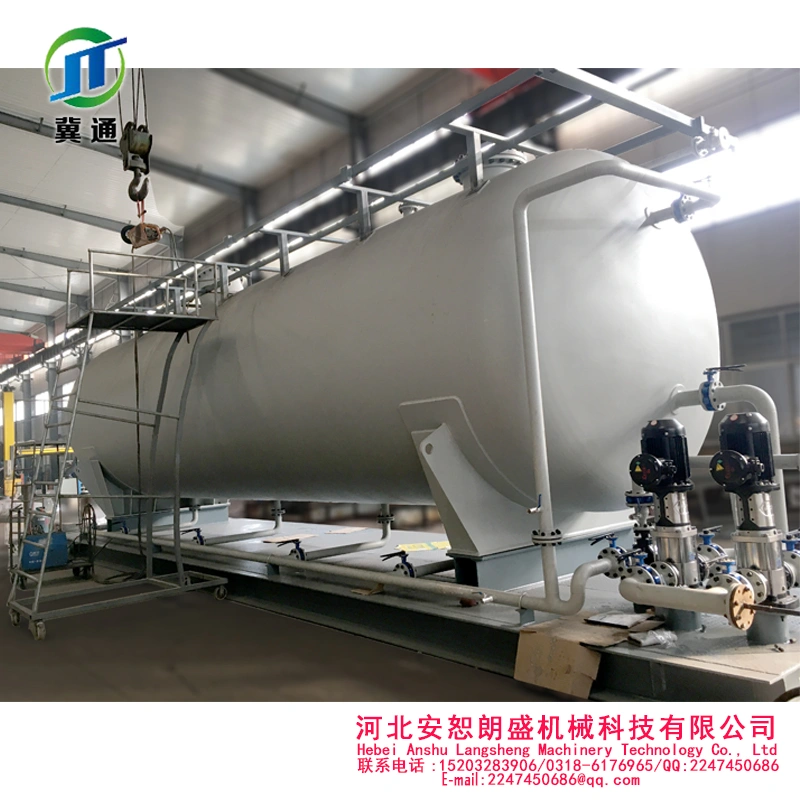
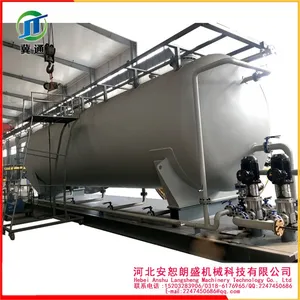
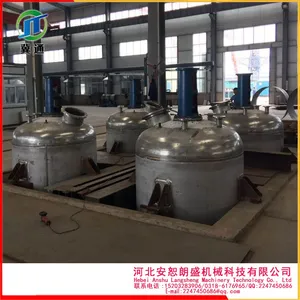
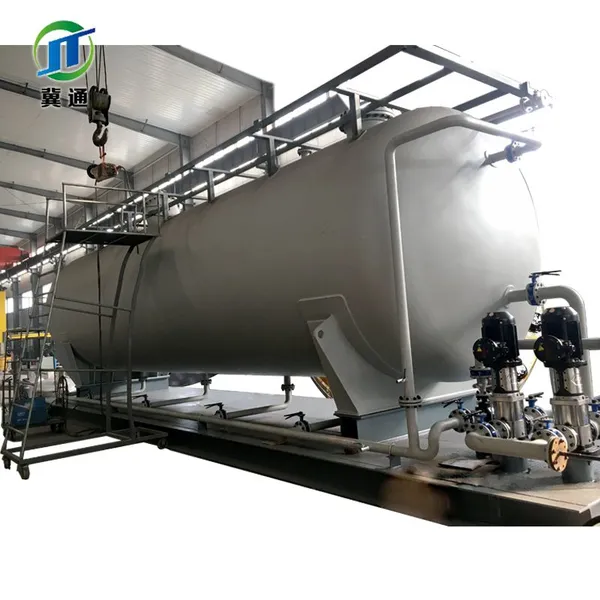
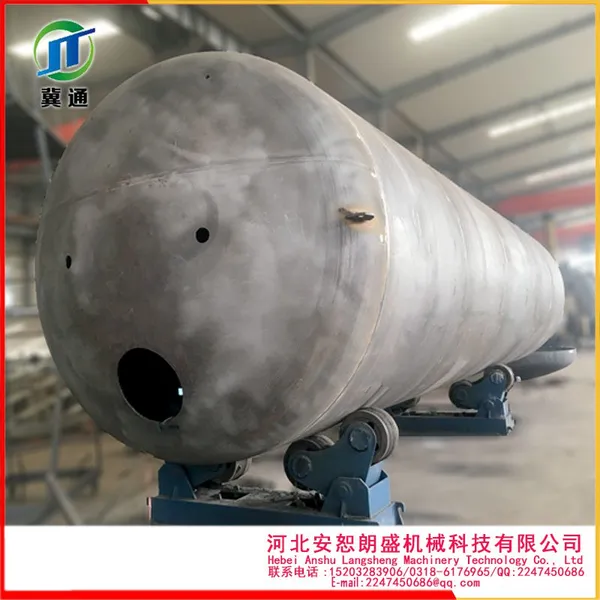
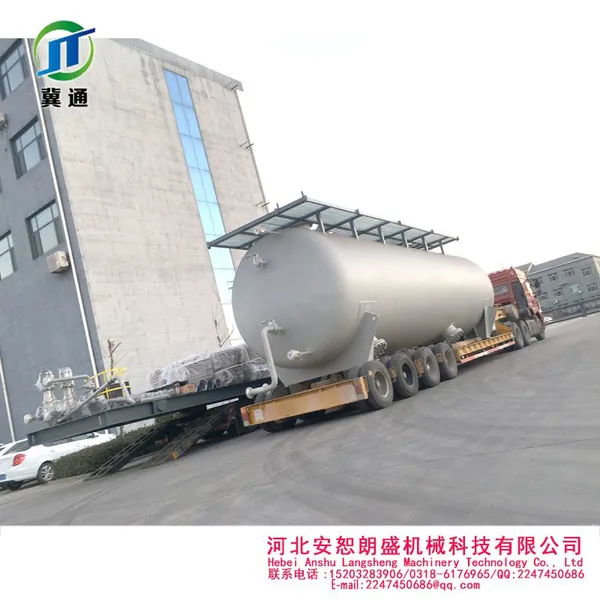
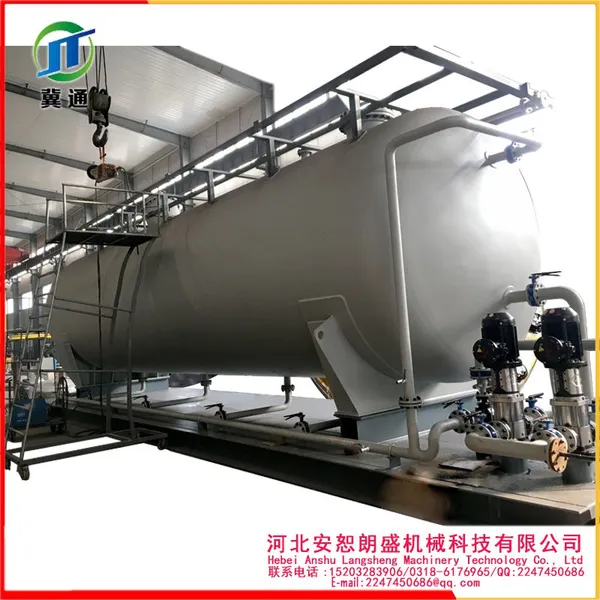
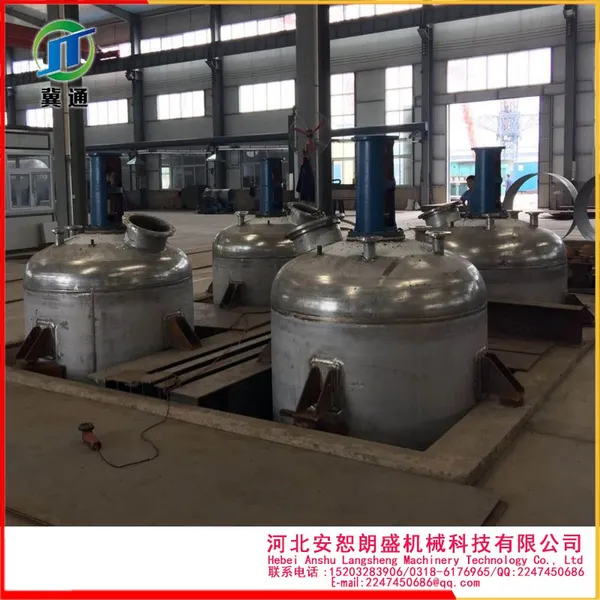
Horizontal Separation Buffer Tank for Oil Fields, Separation Container
Horizontal separator buffer tanks, also known as buffer tanks, are commonly used in oilfields. As a type of separation container, they offer superior throughput compared to other types of separation containers. These containers are widely used in pressurization points, transfer stations, combined stations, and centralized processing stations, playing an indispensable role in oil and gas gathering and transportation, performing functions of oil and gas separation, storage, and buffer balancing.
1. Structure and Working Principle The structural features of this horizontal separator buffer tank include a tank body, and inlet pipes, outlet pipes, and a buffer chamber connected to the tank body. During operation, the oil and gas mixture enters the tank body through the inlet pipe, undergoes initial separation in the buffer chamber, and then further separates the oil and gas within the tank body. Light oil and natural gas are output through the outlet pipe, while heavy oil remains at the bottom of the tank. This working principle allows the buffer tank to perform multiple functions in oil and gas gathering and transportation, including oil and gas separation, storage, and buffer balancing.
1) Detailed Structural Explanation The main components of a horizontal buffer tank include the main container, a mist eliminator for capturing mist, a buffer plate to promote initial oil-gas separation, a foam-breaking screen to prevent foam overflow, and a gas rectifier to adjust the gas flow direction. Its detailed structure can be found in Figure 4-1.
(1) Main Container As the core component of the buffer tank separator, the pressure it withstands determines the upper limit of the entire buffer tank's operation, while its size directly affects the processing capacity. This container consists of a head and a cylinder (body), connecting not only the inlet pipe of the oil-gas mixture but also numerous functional pipelines such as a safety valve, associated gas discharge pipe, crude oil discharge pipe, and sewage discharge pipe. Large containers typically have manholes for easy maintenance, while smaller containers often use handhole designs. In addition, it includes interfaces for controlling the liquid level, steam (or hot water) inlets and outlets for the heating coils, and pressure gauge connections, among other sophisticated features.
(2) Mist Eliminator During the oil-gas separation process, small oil droplets that cannot be completely captured by sedimentation separation need to be further captured by a mist eliminator. The mist eliminator primarily relies on the principles of collision and condensation. Through the stacking of multiple layers of metal wire mesh, the gas continuously collides with the mesh as it passes through, causing the liquid droplets in the gas to coalesce and grow larger, eventually falling to the bottom of the container, thus achieving effective gas-liquid separation.
(3) Buffer Plate: The buffer plate is made of pressed steel plate, in a dish or spherical shape. Its smooth inner surface helps the oil-gas mixture disperse, increasing the surface area of the medium and promoting the escape of gas carried in the oil. As the oil, gas, and mist rise to the top of the separator, the liquid falls to the bottom, thus completing the initial separation of the gas and liquid phases.
(4) Defoaming Mesh: The defoaming mesh is made of steel plate mesh. Its function is to break the bubble structure formed by the liquid containing gas, allowing the gas to be released, thus completing the initial gas-liquid separation.
(5) Gas Rectifier: The gas rectifier consists of a series of parallel corrugated plates. Through its narrow parallel gaps, the gas flows in a laminar state, effectively reducing the degree of disturbance, thereby promoting the gravity settling of liquid droplets in the gas phase.
(6) Liquid Level Control Device
Liquid level control devices are of two types: one is a device that can measure and continuously display the liquid level, capable of both local display and remote signal transmission; the other is a high/low liquid level alarm device, which can be connected to the external pump to control the pump's start and stop based on the liquid level.
(7) Heating Section
The heating section typically uses heating coils, which circulate hot water or steam to maintain a suitable temperature for the medium and help reduce the solubility of natural gas in the liquid phase, thus facilitating effective oil-gas separation.
2) Working Principle
After the oil-gas mixture enters the buffer tank through the axial inlet, it impacts the inner side of the disc-shaped plate on the buffer plate. Due to the reduced pressure, the surface area of the medium increases, and the diffusion effect is correspondingly enhanced, causing the dissolved gas in the oil to gradually release. During the impact on the disc-shaped spherical surface, the kinetic energy of the oil-gas mixture is effectively absorbed, making the droplets with reduced kinetic energy settle more easily. The separated oil falls to the bottom under its own gravity and is discharged through the oil outlet. The foam generated by the impact is eliminated by a defoaming screen, and the initially separated gas flows out after multiple collisions and direction changes by the gas rectifier and mist eliminator. During this process, small oil droplets fall to the bottom of the separator, further separating the tiny oil droplets from the gas. When the natural gas reaches a certain purity, it is discharged from the container through the natural gas outlet. In addition, a heating coil is installed inside the buffer tank; heating reduces the solubility of the gas in the liquid, thus further facilitating gas-liquid separation.
The gas-liquid separation process in the buffer tank mainly relies on various methods such as pressure reduction, diffusion, density differences, changing the flow direction, and reducing solubility to achieve effective oil-gas separation.
3) Safe Operating Techniques
When operating the buffer tank for oil-gas separation, a series of safe operating techniques must be followed. These techniques aim to ensure smooth operation while protecting personnel and equipment. Through reasonable operating procedures and safety measures, potential safety risks can be effectively avoided, ensuring the stability and reliability of the separation process.
1) Key Points of Operational Safety Technology
In the oil-gas separation operation of the buffer tank, a series of safety technical requirements must be strictly observed. These requirements cover a wide range of aspects, from personal protective equipment during operations to safe grounding of equipment, meticulous observation of various safety accessories, and timely handling of abnormal situations. These measures ensure operational safety and stability, effectively preventing potential safety risks.
2) Operational Procedures When performing oil-gas separation operations in the buffer tank, a strict operational procedure must be followed. This procedure not only specifies the sequence of operations but also includes multiple steps such as checking equipment status, adjusting parameters, and handling abnormal situations. Standardized execution of this procedure ensures operational continuity and efficiency, thereby guaranteeing the safety and stability of the entire oil-gas separation process.
Send Inquiry to This Supplier
You May Also Like
-
Shaft Couplings GICL Drum Gear Coupling Mechanical High TorqueUS$ 888 - 9999MOQ: 10 Pieces
-
Oil Refinery Refinery Explains the Refinery or Refinery Oil PlantUS$ 888 - 999MOQ: 50 Bags
-
Manufacture of Large Cardan Shaft Coupling by Mechanical Transmission Shaft CompanyUS$ 500 - 5000MOQ: 1 Bag
-
JZMJ Heavy-duty Flexible Diaphragm Coupling, High Torque, With Double Key.NegotiableMOQ: 1 Acre
-
500-10000 Ton Fuel Storage Tanks; Petrochemical Storage Tanks; Gasoline Storage Tanks With Internal Floating Roofs; Hot Water Storage Tanks.NegotiableMOQ: 1 Acre
-
Autoclave; Non-fired Bricks; Blocks; Concrete and Aerated Concrete Blocks; Covered Autoclave; Carbon Steel AutoclaveNegotiableMOQ: 1 Acre
-
Custom Machining of High-torque Steel Internal and External Gear Couplings for Industrial MachineryUS$ 14 - 15MOQ: 1 Acre
-
Horizontal Separation Buffer Tank for Oil Fields, Separation ContainerNegotiableMOQ: 1 Unit
-
Top Selling ISO9001 Certified Buffer Tank HorizontalUS$ 138 - 276MOQ: 1 Piece
-
Prevent Chocolate Oil Separation Buffer Tank 086-18662218656US$ 1,700 - 20,000MOQ: 1 Set