








 Contact Platform Support
 Help Center
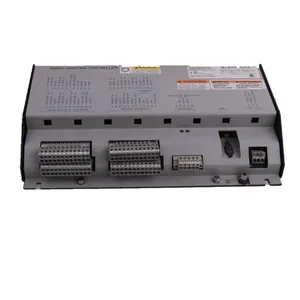
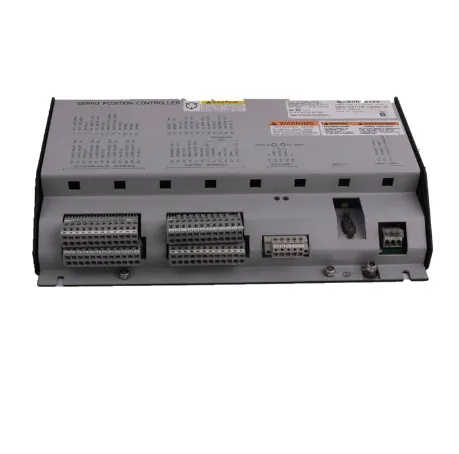
WOODWARD 8200-226 Servo Position Controller



Related Products
-
 WOODWARD 8200-227 Servo Position ControllerNegotiableMOQ: 1 Piece
 -
WOODWARD 8928-7334 Optional Mounting BracketNegotiableMOQ: 1 Piece
-
WOODWARD 8237-1242 ProTech-SX ControllerNegotiableMOQ: 1 Piece
-
WOODWARD 8237-1243 ProTech-SX ControllerNegotiableMOQ: 1 Piece
-
WOODWARD 8237-2594 ProTech-GII ControllerNegotiableMOQ: 1 Piece
I. Overview
The WOODWARD 8200-226 is a servo position controller, with its core positioning as a high-precision industrial-grade servo valve position control unit. Designed specifically for the accurate control of servo valve positions, this controller is equipped with high-precision position detection and closed-loop control capabilities. It can flexibly receive DeviceNet bus signals or 4-20mA analog position demand signals, realizing precise positioning control of actuators such as proportional valves and integral servo valves. Boasting an ultra-high control accuracy of 0.05%, wide environmental adaptability, and multi-protocol compatibility, it is widely used in fuel valve control systems of power equipment such as gas turbines and steam turbines. Meanwhile, it is suitable for high-precision motion control scenarios in fields like machine tools, packaging machinery, industrial robots, printing machines, and textile machinery, providing stable and accurate servo control support for industrial automation systems and process control systems.
The WOODWARD 8200-226 adopts an industrial-grade highly integrated modular design, integrating core functions such as high-precision signal acquisition, real-time control calculation, multi-protocol communication, and comprehensive safety protection. It features a wide input voltage range and low power consumption, enabling stable operation in harsh industrial environments ranging from -40℃ to +70℃. Supporting a variety of mainstream communication interfaces, it can be seamlessly integrated into various industrial control networks. Coupled with user-friendly configuration tools and a visual operation interface, it greatly reduces the difficulty of system integration and operation and maintenance, providing users with an efficient and reliable high-precision servo control solution.
II. Product Features
Ultra-high Precision Position Control: With a control accuracy of up to 0.05%, it can achieve micron-level precise regulation of servo valve positions, meeting the requirements of industrial scenarios with strict position control accuracy. It supports a maximum rotational speed of 6000 rpm and a torque output of 225 Nm, being adaptable to servo actuators with different load requirements. It balances high-speed response and heavy-load driving capabilities, ensuring control stability and accuracy under complex working conditions.
Multi-type Signal Adaptability and Flexible Control: It can flexibly receive two core position demand signals—DeviceNet bus digital signals and 4-20mA analog signals, perfectly adapting to different industrial control network architectures. It can accurately drive various types of servo motors, including DC servo motors, brushless AC servo motors, and stepping motors. Control parameters can be flexibly configured according to application requirements, adapting to the control needs of different actuators such as proportional valves and integral servo valves.
Rich Communication Interfaces and Convenient Integration: It comes standard with multiple communication interfaces including DeviceNet, RS-232, and RS-485. Some models are compatible with the CANopen protocol, supporting high-speed data interaction with upper control systems, human-machine interfaces, and remote monitoring equipment. The communication lines adopt high-quality shielded cable design, which can effectively resist electromagnetic interference and ensure the stability of data transmission. The maximum transmission distance of the RS-232 network can reach 50 feet, and the maximum transmission distance of the RS-485 network can reach 4000 feet when matched with the corresponding baud rate, meeting the communication needs of different on-site layouts.
Superior Adaptability to Harsh Environments: It uses industrial-grade high-stability components and a sealed protective structure, with an IP65 protection rating, providing excellent dustproof and splash-proof performance. The operating temperature range covers -40℃ to +70℃, withstanding extreme high and low temperature environments. Having passed rigorous vibration and shock tests, it can operate stably in complex vibration environments of industrial sites, suitable for harsh working conditions such as gas turbine rooms and machine tool workshops.
Comprehensive Safety Protection and High Reliability: It has built-in multiple safety protection functions such as overvoltage protection, overcurrent protection, overload protection, and reverse connection protection, which can effectively prevent damage to the controller and actuators caused by abnormal conditions such as power supply anomalies, load overload, and line short circuits. Equipped with a fault self-diagnosis function, it can real-time monitor its own working status, communication status, and the operating status of actuators. Upon detecting a fault, it promptly sends an alarm signal and records fault information, facilitating quick troubleshooting by maintenance personnel. The product complies with IEC standards and has undergone rigorous reliability tests to ensure long-term stable operation.
Low Power Consumption and Flexible Configuration Features: With power consumption of less than 100W, it has high energy conversion efficiency, reducing the overall energy consumption of the system. It supports custom parameter settings through dedicated configuration tools, including position control accuracy, response speed, alarm thresholds, and communication protocol parameters, adapting to the control needs of different application scenarios. It provides a user-friendly interface and convenient operation procedures, facilitating users in parameter configuration, status monitoring, and maintenance debugging.
III. Technical Parameters
1. Core Basic Parameters
Product Model: WOODWARD 8200-226
Product Type: High-precision industrial-grade servo position controller
Brand Series: WOODWARD SPC Series
Core Functions: Precise position control of servo valves/servo motors, position signal acquisition, closed-loop control calculation, multi-protocol communication, fault self-diagnosis
Control Accuracy: 0.05%
Compatible Actuators: Proportional valves, integral servo valves, DC servo motors, brushless AC servo motors, stepping motors
Safety Certification: Complies with IEC standards
Application Fields: Fuel valve control of gas turbines/steam turbines, machine tool processing, packaging machinery, industrial robots, printing machines, textile machinery, chemical/pharmaceutical process control, automated production lines, etc.
2. Electrical Performance Parameters
Input Voltage: 24 VDC
Output Voltage: 5 VDC
Power Consumption:
Input Signal Type: DeviceNet bus signal, 4-20mA analog position demand signal
Speed Range: Up to 6000 rpm
Torque Range: Up to 225 Nm
Communication Interfaces: DeviceNet, RS-232, RS-485 (some models compatible with CANopen)
Communication Line Requirements: RS-232/RS-485 adopts high-quality shielded communication cables (such as WOODWARD 2008-1512 or equivalent low-capacitance shielded wires like Belden YR 58684)
Network Transmission Distance: RS-232 typically
Impedance Requirement: Impedance between positive and negative power supply terminals (PS+, PS-) and ground > 10 MΩ
RS-485 Termination Matching: Approximately 90-120Ω terminating resistors required at both ends
3. Environmental and Physical Parameters
Operating Temperature: -40℃ ~ +70℃
Storage Temperature: -40℃ ~ +85℃
Relative Humidity: 5% ~ 95% RH (non-condensing)
Protection Rating: IP65 (complies with IEC 60529 standard)
Dimensions: 230mm (length) × 150mm (width) × 70mm (height)
Weight: Approximately 2.5 kg
Mounting Method: Wall-mounted/rail-mounted (compatible with industrial standard mounting interfaces)
IV. Working Principle
The core working principle of the WOODWARD 8200-226 servo position controller is a closed-loop control process of position demand signal reception - real-time position detection - closed-loop control calculation - actuator driving - status feedback and diagnosis. Through the coordinated operation of high-precision signal acquisition modules, real-time control chips, multi-protocol communication modules, and driving circuits, it achieves precise regulation of the position of servo valves/servo motors. The specific working process can be divided into five core stages:
Stage 1: Position Demand Signal ReceptionThe controller real-time receives position demand signals (DeviceNet digital signals or 4-20mA analog signals) issued by the upper control system through the DeviceNet bus interface or analog input interface. The communication module decodes and verifies the received signals to ensure signal integrity. Meanwhile, through shielded communication lines and anti-interference design, it resists electromagnetic interference in industrial sites and ensures the stability and accuracy of demand signal transmission.
Stage 2: Real-time Position DetectionThe controller real-time collects the actual position signals of servo valves/servo motors through built-in position detection interfaces or external position sensors. The acquisition module performs conditioning processing such as filtering and amplification on the position signals, removing noise interference in the signals, and converting them into standard digital signals recognizable by the control chip, providing accurate feedback data for subsequent control calculations.
Stage 3: Closed-loop Control CalculationThe real-time control chip compares and calculates the received position demand signal and the actual position feedback signal to obtain the position deviation value. Based on preset control algorithms (such as proportional-integral-derivative control algorithm), it generates corresponding drive control signals according to the deviation value. At the same time, combined with real-time operating parameters such as rotational speed and torque, it dynamically optimizes the control signals to ensure the motion stability and control accuracy of the actuator.
Stage 4: Actuator DrivingThe driving circuit converts the optimized control signals into power signals that can drive servo valves/servo motors, accurately controlling the actions of the actuator to make it gradually approach and stabilize at the target position. During the driving process, the controller real-time monitors the operating status of the actuator, dynamically adjusting the drive signal parameters according to load changes to ensure driving stability and reliability.
Stage 5: Status Feedback and DiagnosisThe controller real-time feeds back information such as the actual position, operating speed, torque of the actuator, and its own working status (power supply status, communication status, module working status) to the upper control system through the communication module, facilitating global monitoring and scheduling of the upper system. Meanwhile, the diagnosis module continuously monitors the working status of each link. If faults such as signal anomalies, communication interruptions, overload, overvoltage, and overcurrent are detected, it immediately triggers the alarm mechanism, sends an alarm signal, and records detailed information such as fault type and fault time, providing support for maintenance personnel to quickly troubleshoot faults.

Send Inquiry to This Supplier


You May Also Like
-
WOODWARD 8237-2597 ProTech-GII ControllerNegotiableMOQ: 1 Piece
-
WOODWARD 8237-2600 ProTech-GII ControllerNegotiableMOQ: 1 Piece
-
WOODWARD 8237-2492 MicroNet Safety ModuleNegotiableMOQ: 1 Piece
-
WOODWARD 8237-2494 MicroNet Safety ModuleNegotiableMOQ: 1 Piece
-
WOODWARD 8237-2496 MicroNet Safety ModuleNegotiableMOQ: 1 Piece
-
WOODWARD 8237-2493 MicroNet Safety ModuleNegotiableMOQ: 1 Piece
-
WOODWARD 8200-1370 Control PanelNegotiableMOQ: 1 Piece
-
WOODWARD 8200-1372 Control PanelNegotiableMOQ: 1 Piece
-
WOODWARD 8200-1374 18-36 VDC, Standard ComplianceNegotiableMOQ: 1 Piece
-
WOODWARD 8200-1100 Distributed I/O ModuleNegotiableMOQ: 1 Piece


