








 Contact Platform Support
 Help Center
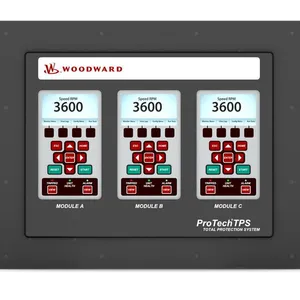
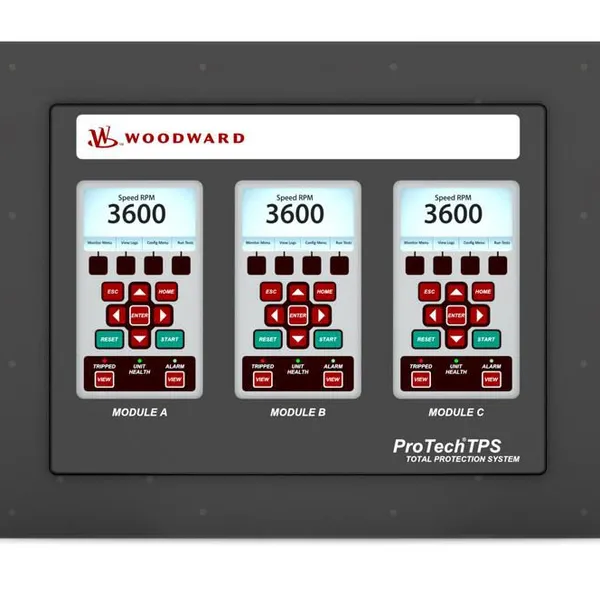
WOODWARD 8237-2600 ProTech-GII Controller



Related Products
-
 WOODWARD 8237-2492 MicroNet Safety ModuleNegotiableMOQ: 1 Piece
 -
WOODWARD 8237-2494 MicroNet Safety ModuleNegotiableMOQ: 1 Piece
-
WOODWARD 8237-2496 MicroNet Safety ModuleNegotiableMOQ: 1 Piece
-
WOODWARD 8237-2493 MicroNet Safety ModuleNegotiableMOQ: 1 Piece
-
WOODWARD 8200-1370 Control PanelNegotiableMOQ: 1 Piece
I. Overview
The WOODWARD 8237-2600 is a dedicated overspeed protection controller for turbines with built-in mathematical enhancement functions, belonging to the PROTECH-GII series. Its core positioning is an industrial turbine high-precision safety protection and monitoring unit. Designed specifically for the overspeed protection of equipment such as steam turbines, gas turbines and turbo-generators, this controller integrates core functions including overspeed monitoring, overacceleration protection, fault self-diagnosis and event log recording. By real-time collecting turbine speed signals and comparing them with preset thresholds, it can quickly trigger a trip command when an overspeed or overacceleration condition is detected, achieving dual protection for equipment and personnel.
With its highly reliable hardware design, precise speed monitoring algorithm and flexible configuration functions, it is widely used in core fields such as thermal power plants, industrial energy stations, oil and gas extraction equipment, pipeline compressors and marine power systems. It provides key protection for the safe and stable operation of turbines, and serves as a core component in industrial turbine safety control systems.
The WOODWARD 8237-2600 adopts an industrial-grade highly integrated modular design, integrating core functions such as high-precision speed signal acquisition, mathematical operation enhancement, real-time safety monitoring, multi-type log recording and multi-protocol communication. It has good environmental adaptability and can operate stably in industrial environments ranging from -10℃ to 60℃. It supports seamless integration with DCS/PLC systems, and combined with menu-driven on-site programming functions and an intuitive log query interface, it greatly reduces the difficulty of system integration and operation and maintenance, providing users with an efficient and reliable turbine safety protection solution.
II. Product Features
Precise Dual Protection Against Overspeed and Overacceleration: It integrates core overspeed and overacceleration protection functions. Through high-precision speed sensing and signal processing technology, it real-time collects and compares turbine speed signals with preset trip thresholds to accurately identify overspeed conditions. It supports enable configuration of the overacceleration function, allowing users to set overacceleration protection parameters according to specific application scenarios, effectively avoiding equipment damage caused by sudden speed increases and providing a dual safety barrier for turbine operation.
Mathematical Enhancement and Flexible Parameter Configuration: Equipped with exclusive mathematical enhancement functions, it can realize complex speed calculation and threshold judgment logic to adapt to the dynamic characteristic requirements of different types of turbines. It supports on-site programming and configuration, allowing users to customize key parameters such as overspeed trip setting value and overacceleration protection threshold according to application scenarios to meet diversified safety protection requirements. Parameter configuration is completed through a menu-driven interface, which is convenient and accurate to operate.
Full-type Event Log Recording: It has a complete log recording function, which can automatically record key information such as overspeed events, overacceleration events, trip events and alarm events, including detailed parameters such as event occurrence time, speed at trigger and event duration. Log data is stored in non-volatile memory and will not be lost even when power is off. It supports viewing and downloading through the on-site panel or dedicated service tools, providing accurate data support for fault tracing and preventive maintenance.
Rich Interfaces and Convenient System Integration: It is equipped with complete input and output interfaces, supporting the access of analog, digital and communication signals. It is compatible with input from various speed sensors such as magnetic pickups, meeting the signal acquisition requirements of different turbines. It comes standard with RS-232 and Ethernet communication interfaces, supporting mainstream protocols such as Modbus, enabling high-speed data interaction with DCS/PLC systems for convenient remote monitoring, parameter configuration and log export.
Adaptability to Harsh Environments and High Reliability: Adopting industrial-grade high-stability components and sealed protective structure, it has excellent dustproof and splash-proof performance, suitable for dusty, humid and other complex industrial environments. It has passed rigorous vibration and shock tests, and can operate stably in vibration environments such as turbine rooms and offshore platforms. Its operating temperature range covers -10℃ to +60℃, which can withstand temperature fluctuations in industrial sites and meet the stringent working condition requirements of core energy fields.
Convenient Operation and Maintenance and Safety Certification Guarantee: Adopting a compact structural design, it is easy to install in confined spaces. It has intuitive fault alarm indication and log query functions, allowing operation and maintenance personnel to quickly locate the root cause of faults, greatly reducing the difficulty of operation and maintenance and downtime. The product has passed relevant industrial safety certifications, complies with mainstream standards in the field of industrial turbine safety control, and can be safely used in hazardous industrial environments.
III. Technical Parameters
1. Core Basic Parameters
Product Model: WOODWARD 8237-2600
Product Type: Industrial Turbine Overspeed Protection Controller (with mathematical enhancement functions)
Brand Series: WOODWARD PROTECH-GII Series
Core Functions: Turbine overspeed monitoring and protection, overacceleration monitoring and protection, fault self-diagnosis, event log recording, remote communication
Compatible Equipment: Steam turbines, gas turbines, turbo-generators, pipeline compressors
Safety Certification: Complies with relevant standards for industrial turbine safety control
Application Fields: Thermal power plants, industrial energy stations, oil and gas extraction equipment, pipeline compressor control, marine power systems, offshore platform energy equipment, etc.
2. Electrical Performance Parameters
Input Voltage: 24 VDC (allowable fluctuation range: 18V DC ~ 32V DC)
Input Signal Type: Compatible with input from speed sensors such as magnetic pickups; supports multi-channel discrete/analog input signals
Output Signal Type: Relay output (for triggering trip/alarm), speedometer output
Communication Interfaces: RS-232, Ethernet (supports Modbus protocol)
Programming Method: Menu-driven on-site programming, remote communication programming
Log Recording Function: Supports recording of overspeed logs, overacceleration logs, trip logs and alarm logs; can store the latest 50 trip/alarm events and 20 overspeed events
3. Environmental and Physical Parameters
Operating Temperature: -10℃ ~ +60℃
Storage Temperature: -40℃ ~ +85℃
Relative Humidity: 5% ~ 95% RH (non-condensing)
Protection Rating: IP56 (complies with IEC 60529 standard)
Dimensions: 15.2 cm (length) × 5.1 cm (width) × 20.3 cm (height) (compatible with standard installation dimensions of the same series)
Weight: Approximately 0.7 kg
Mounting Method: Panel-mounted (compatible with industrial standard mounting interfaces)
Vibration Resistance: Meets the requirements of vibration environments in industrial turbine sites; has passed rigorous vibration and shock tests
IV. Working Principle
The core working principle of the WOODWARD 8237-2600 turbine overspeed protection controller is a closed-loop safety protection process of speed signal acquisition - real-time calculation and comparison - safety status judgment - protection action triggering - event log recording. Through the coordinated operation of the speed acquisition module, mathematical operation module, safety judgment module, drive output module and communication module, it achieves precise monitoring and rapid protection against turbine overspeed and overacceleration conditions. The specific working process can be divided into five core stages:
Stage 1: Speed Signal AcquisitionThe controller real-time collects turbine speed signals through a dedicated speed sensor interface (compatible with magnetic pickups, etc.). The signal acquisition module performs filtering, amplification and verification processing on the received speed signals, eliminating signal clutter caused by electromagnetic interference in industrial sites, and converting them into standard digital signals to provide accurate data support for subsequent calculation and comparison.
Stage 2: Real-time Calculation and ComparisonThe operation module with mathematical enhancement functions processes the collected speed signals in real time, including speed value calculation and speed change rate (acceleration) analysis. At the same time, it compares the real-time speed value with the preset overspeed trip threshold, and compares the speed change rate with the preset overacceleration protection threshold to accurately determine whether the turbine is in a safe operating state.
Stage 3: Safety Status JudgmentThe safety judgment module outputs a status judgment signal based on the calculation and comparison results: if the speed does not reach the overspeed threshold and the acceleration does not reach the overacceleration threshold, it is judged as a safe operating state and the controller continues monitoring; if it is detected that the speed exceeds the overspeed threshold or the speed change rate exceeds the overacceleration threshold, it is immediately judged as a dangerous condition and a protection action command is triggered.
Stage 4: Protection Action TriggeringAfter receiving the dangerous condition judgment command, the drive output module responds quickly and outputs a trip command through the relay, controlling the action of relevant turbine actuators (such as trip valves) to cut off dangerous conditions and prevent equipment damage or the expansion of safety accidents. At the same time, it triggers an alarm signal to remind on-site personnel to handle the situation in a timely manner through indicator lights or external alarm devices.
Stage 5: Event Log Recording and FeedbackWhile triggering the protection action, the log recording module automatically records key information such as event type (overspeed/overacceleration/trip), event trigger time, speed/acceleration value at trigger and event duration, and stores it in non-volatile memory. Meanwhile, the controller feeds back the event information to the upper-level DCS/PLC system through the communication interface, facilitating remote monitoring and fault tracing by operators. On-site personnel can view detailed log information through the menu-driven interface, providing an accurate basis for fault troubleshooting.

Send Inquiry to This Supplier


You May Also Like
-
WOODWARD 8200-1372 Control PanelNegotiableMOQ: 1 Piece
-
WOODWARD 8200-1374 18-36 VDC, Standard ComplianceNegotiableMOQ: 1 Piece
-
WOODWARD 8200-1100 Distributed I/O ModuleNegotiableMOQ: 1 Piece
-
WOODWARD 8200-1103 Distributed I/O ModuleNegotiableMOQ: 1 Piece
-
WOODWARD 8200-1105 Distributed I/O ModuleNegotiableMOQ: 1 Piece
-
WOODWARD 8273-1017 2300E Digital Load Sharing and Speed ControlNegotiableMOQ: 1 Piece
-
WOODWARD 8273-1018 2300E Digital Load Sharing and Speed ControlNegotiableMOQ: 1 Piece
-
WOODWARD 8200-1343 Panel-mounted VersionNegotiableMOQ: 1 Piece
-
WOODWARD 8200-1345 Flex500 – Back Panel MountNegotiableMOQ: 1 Piece
-
WOODWARD 8200-1355 Back Panel, MarineNegotiableMOQ: 1 Piece


