Material
Other, Global universal model
Condition
Other, Global universal model
Task
Other, Global universal model
Mathematical Model
Other, Global universal model
Signal
Other, Global universal model
Customized
Non-Customized
Structure
Other, Global universal model
Operating Temperature
-20℃~50℃
Relative Humidity
5%-95% (non-condensing)
Dimensions
210mm × 80mm × 80mm
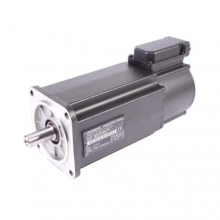
The REXROTH MKD071B-061-KG0-KN is a permanent magnet synchronous servo motor. With a rated power of 6.1kW, high dynamic response, and reliable structural design, it is widely used in scenarios such as CNC machine tool spindle drive, precision transmission in automated production lines, robot joint drive, high-precision control of printing and packaging equipment, and accurate positioning of electronic manufacturing equipment. It undertakes key tasks including high-precision speed regulation, accurate position control, and stable torque output.
Its core advantages lie in the adoption of high-performance permanent magnet synchronous technology and optimized electromagnetic design. While achieving high power density output, it can form a closed-loop control chain of "command control - power output - status feedback" when matched with Rexroth servo drives. It provides a power solution with both precision and reliability for mid-to-high-end industrial control scenarios, and is a mature high-performance servo motor product applied in the field of precision manufacturing.
Technical Parameters
1.1 Core Electrical Parameters
Adopts a permanent magnet synchronous motor topology, with a rated power of 6.1kW, rated voltage of 380V AC (three-phase), rated current of 14.5A, and rated frequency of 100Hz.
Rated speed is 3000r/min, maximum speed is 6000r/min (short-time operation, duration ≤60s), and speed accuracy is ≤±0.01% (at rated speed).
Rated torque is 19.4N·m, peak torque is 58.2N·m (peak duration 3s), and torque ripple is ≤±1%.
Motor constant (Km) ≥2.8N·m/√kW, power factor ≥0.9 (under rated load), and efficiency class reaches IE3 (in accordance with GB 18613-2020 standard), effectively reducing energy consumption.
1.2 Rotor and Feedback Parameters
The rotor uses high-coercivity neodymium-iron-boron (NdFeB) permanent magnets. The magnetic steel is installed by surface mounting and undergoes high-temperature curing treatment, resulting in excellent magnetic performance stability.
Equipped with an incremental photoelectric encoder as the standard feedback component, with a resolution of 1024 lines/revolution, supporting frequency multiplication processing (up to 4096 pulses/revolution). An absolute encoder (13-bit multi-turn + 16-bit single-turn) can be optionally configured to meet high-precision positioning requirements.
The encoder signal interface adopts differential signal output, featuring strong anti-interference capability. It supports real-time position and speed signal interaction with the drive, enabling closed-loop control.
1.3 Structural and Installation Parameters
Adopts a compact structural design, with a frame size of 71B and an installation type of B3 (foot mounting). Optional types such as B5 (flange mounting) and B14 (flange mounting) are available.
The motor shaft diameter is 22mm, shaft extension length is 40mm, and it uses a single-key connection (key width 6mm). The shaft end precision complies with ISO 1940-1 G6.3 class.
The motor length (including encoder) is 345mm, and the weight is 28kg.
The protection class is IP65 (motor body), and the encoder protection class is IP67, which can cope with industrial on-site environments such as dust and splashing liquids.
The cooling method is self-fan cooling (standard cooling fan, supporting 0-6000r/min speed regulation), and a water-cooling jacket can be optionally configured for forced cooling.
1.4 Environmental Adaptability Parameters
The operating temperature range is -20℃~40℃ (derating is required when the ambient temperature exceeds 40℃, with a derating of 2% for each 1℃ increase), and the storage temperature range is -40℃~80℃.
The relative humidity is 5%~95% (no condensation), which can cope with various environments such as humid workshops and clean rooms.
The vibration resistance performance complies with IEC 60068-2-6 standard (10~2000Hz, acceleration 10g), and the impact resistance performance complies with IEC 60068-2-27 standard (20g, 11ms half-sine wave), which can withstand normal vibration and instantaneous impact during equipment operation.
The insulation class is Class H, the winding temperature resistance is 180℃, the insulation resistance is ≥100MΩ (500V DC), and the voltage resistance is 2500V AC/1min (between winding and housing).
1.5 Compatibility and Reliability Parameters
Perfectly compatible with Rexroth IndraDrive series servo drives (such as HCS02.1E-W0070, HCS03.1E-W0150). High-speed data communication between the motor and the drive is realized through the DRIVE-CLiQ interface, with a communication rate of 100Mbps.
Supports mainstream industrial Ethernet protocols such as PROFINET, EtherCAT, and Modbus (drive support required).
Mean Time Between Failures (MTBF) ≥300,000 hours, and bearing life ≥20,000 hours (under rated speed and good lubrication conditions).
Supports fault diagnosis functions such as motor temperature monitoring (built-in PTC thermistor), overload protection, and overvoltage protection, and can feed back the operating status in real time through the drive.

Functional Features
2.1 High Power Density Design for Optimized Installation Space
Adopts a compact electromagnetic structure and optimized motor topology design, achieving a rated power output of 6.1kW within the 71B frame size, with a power density of 0.22kW/kg.
Compared with traditional asynchronous servo motors of the same class, its volume is reduced by approximately 20% and weight by approximately 15%, significantly saving installation space for equipment such as CNC machine tools and robots.
The motor length is only 345mm (including encoder), which can be adapted to narrow installation scenarios. At the same time, the lightweight design reduces the inertia impact on the equipment load end and improves the overall dynamic response performance of the system.
2.2 High-Precision Control Performance for Precision Scenarios
Adopts high-performance permanent magnet synchronous technology, matched with a 1024-line incremental encoder (optional absolute encoder), achieving a speed accuracy of ≤±0.01% and a position control accuracy of ≤±0.001mm (when matched with ball screw transmission), which can meet the needs of high-precision scenarios such as precision turning of CNC machine tools and chip packaging of electronic manufacturing equipment.
The motor rotor has a small moment of inertia (0.045kg·m²), short acceleration and deceleration time (acceleration time from 0 to 3000r/min ≤0.2s), and a dynamic response frequency of ≥500Hz. It can quickly respond to the speed and position commands of the drive, reducing dynamic following errors.
2.3 Wide Range Speed Regulation and Stable Torque Output
Supports a wide speed regulation ratio of 1:1000 (from 3r/min to 3000r/min), and can still maintain stable torque output during low-speed operation (torque ripple ≤±2% at low speed of 3r/min), which can adapt to multi-condition needs such as low-speed feeding and high-speed printing of printing and packaging equipment.
The peak torque reaches 58.2N·m (3 times the rated torque), which can cope with short-term heavy-load scenarios such as CNC machine tool cutting and robot handling, without the need for additional configuration of high-power motors, reducing equipment costs.
Adopts a vector control algorithm (drive support required), which can output 100% rated torque at zero speed, realizing accurate positioning and braking functions.
2.4 Enhanced Reliability Design for Complex Working Conditions
The motor windings use Class H insulation materials and undergo vacuum pressure impregnation (VPI) treatment, with excellent insulation performance, enabling long-term stable operation in high-temperature and high-humidity environments.
The rotor permanent magnets adopt anti-debonding and anti-demagnetization designs, and have passed the 150℃ high-temperature aging test, which can maintain stable magnetic performance even under motor overload or high-temperature working conditions.
The protection class reaches IP65, and the motor shaft end uses a double-lip skeleton oil seal for sealing, which can effectively prevent impurities such as dust and cutting fluid from entering, and is suitable for dusty or humid scenarios such as machine tool processing and food processing.
The bearings use SKF high-precision deep groove ball bearings, matched with long-life lubricating grease, extending the bearing service life to more than 20,000 hours.
2.5 Convenient Adaptation and Maintenance Design for Reduced Integration Costs
Adopts standardized installation dimensions and interfaces, which can directly replace servo motors of other brands in the same class without modifying the equipment installation structure.
Supports plug-and-play with Rexroth IndraDrive series drives, and automatically identifies motor parameters through the DRIVE-CLiQ interface without manual configuration, simplifying the integration process.
The motor has a built-in PTC thermistor and speed sensor, which can monitor the motor temperature and operating status in real time, and realize fault alarms such as overload, over-temperature, and overvoltage through the drive.
The motor surface is equipped with a status indicator window, which can visually observe the encoder operating status, facilitating on-site maintenance personnel to quickly troubleshoot faults.
Working Principle
3.1 Command Receiving and Driving Link
The servo drive (such as Rexroth HCS02.1E) receives speed, position, or torque commands sent by the upper controller (such as PLC, CNC). After processing by the vector control algorithm, it outputs three-phase sine wave current to the motor stator windings.
The drive communicates with the motor encoder in real time through the DRIVE-CLiQ interface to obtain the real-time position and speed signals of the motor rotor, forming a feedback link for closed-loop control.
After the three-phase current is applied to the motor stator windings, a rotating magnetic field is generated. The speed of the rotating magnetic field is determined by the input current frequency (synchronous speed n=60f/p, where f is the current frequency and p is the number of motor pole pairs).
3.2 Magnetic Field Interaction and Power Output Link
The permanent magnets on the motor rotor generate a constant magnetic field. The rotating magnetic field of the stator interacts with the magnetic field of the rotor permanent magnets to generate electromagnetic torque, driving the rotor to rotate synchronously with the rotating magnetic field of the stator (the synchronous speed is consistent with the rotor speed).
By adjusting the frequency and amplitude of the drive output current, the speed and torque of the stator rotating magnetic field can be precisely controlled, thereby realizing precise regulation of the motor speed and output torque.
When position control is required, the drive calculates the position deviation based on the upper command and the rotor position signal fed back by the encoder, and adjusts the output current to make the rotor accurately stay at the target position.
3.3 Status Feedback and Regulation Link
The incremental encoder built in the motor collects the rotor speed and position signals in real time and transmits them to the drive through the differential signal interface. The drive dynamically adjusts the phase and amplitude of the output current according to the deviation between the feedback signal and the upper command, realizing closed-loop regulation of speed, position, or torque.
The PTC thermistor built in the motor monitors the winding temperature in real time. When the temperature exceeds 150℃, it sends an over-temperature signal to the drive, which immediately cuts off the output current and triggers an alarm to protect the motor from damage.
During motor start-stop or overload, the drive optimizes current distribution through the vector control algorithm, reducing current impact and improving motor operation stability.
3.4 Auxiliary Function Operation Link
The self-fan cooling fan standardly equipped with the motor is controlled by the drive, which automatically adjusts the fan speed according to the motor load and temperature. It reduces the fan speed during light load or low temperature to reduce energy consumption and noise.
The optional electromagnetic brake device (additional order required) is energized to brake when the motor stops, preventing the rotor from sliding and realizing accurate positioning.
The oil seal at the motor shaft end and the IP65 protection structure effectively isolate external impurities during power output, protecting key components such as bearings and encoders and extending the motor service life.
Common Faults and Solutions
4.1 Fault 1: Motor Fails to Start, Drive Reports "Motor No Response" Fault
Possible Causes
Loose or incorrect connection of wires between the motor and the drive.
The drive fails to correctly identify motor parameters.
The electromagnetic brake is not released (if equipped).
Motor winding short circuit or open circuit.
Drive fault.
Solutions
Check the connection of power cables (U, V, W) and encoder cables between the motor and the drive, re-tighten the terminal blocks, and ensure correct phase sequence.
Re-execute the motor parameter identification process through the drive software (such as IndraWorks) to confirm that the drive has correctly read the motor model and parameters.
Check the power supply line of the electromagnetic brake to ensure the brake coil is normally energized (the rated voltage of the brake coil is usually DC 24V), and manually test whether the brake can be released normally.
Measure the motor winding resistance with a multimeter (the three-phase resistance should be balanced, with a deviation ≤5%). If the resistance is infinite, the winding is open-circuited; if the resistance is close to zero, the winding is short-circuited, and the motor needs to be returned to the factory for repair.
Replace with a drive of the same model for testing. If the motor starts normally, the original drive is faulty and needs to be repaired or replaced.
4.2 Fault 2: Abnormal Noise and Vibration During Motor Operation
Possible Causes
Misalignment between the motor and the load (excessive coaxiality deviation).
Worn or damaged bearings.
Loose or demagnetized rotor permanent magnets.
Loose motor fixing bolts.
Load jamming.
Solutions
Check the coupling or pulley connection between the motor and the load, measure the coaxiality with a dial indicator (radial runout ≤0.05mm, end runout ≤0.03mm), and adjust the installation position to ensure coaxiality.
Remove the motor end cover, check whether the bearings are worn, noisy, or have dry grease. Replace the worn bearings and add special lubricating grease.
Contact the manufacturer to test the magnetic performance of the rotor permanent magnets. If demagnetization or loosening exists, the motor needs to be returned to the factory to reattach the magnetic steel and conduct magnetic performance testing.
Check the motor mounting foot bolts and re-tighten them to ensure the motor is firmly fixed.
Disconnect the connection between the motor and the load, manually rotate the load shaft. If jamming occurs, troubleshoot the load fault, such as reducer jamming or poor guide rail lubrication.
4.3 Fault 3: Motor Speed Fluctuation During Operation, Drive Reports "Unstable Speed" Fault
Possible Causes
Encoder signal interference or poor connection.
Improper drive parameter settings (such as proportional gain, integral time).
Excessive power supply voltage fluctuation.
Frequent load fluctuation.
Poor dynamic balance of the motor rotor.
Solutions
Check whether the encoder cable uses a shielded cable, whether the shield layer is single-ended grounded (grounding resistance ≤4Ω), route the cable away from power cables (distance ≥30cm), and re-tighten the encoder terminal blocks.
Optimize the control parameters through the drive software, appropriately increase the proportional gain (P) and reduce the integral time (I) to improve the system response speed while avoiding oscillation.
Measure the power supply voltage with a multimeter (the fluctuation range should be ≤±10% of the rated voltage). If the fluctuation is excessive, configure a voltage stabilizer.
Check whether the load has periodic heavy loads or jamming, optimize the load operating conditions, such as adding buffer devices and improving lubrication.
Conduct a dynamic balance test on the motor rotor. If the unbalance exceeds G2.5 class (ISO 1940-1), the motor needs to be returned to the factory for dynamic balance correction.
4.4 Fault 4: Drive Reports "Motor Over-Temperature" Fault, Motor Fails to Operate Normally
Possible Causes
Long-term overload operation of the motor (load exceeds the rated torque).
Faulty cooling fan or blocked air duct.
Excessively high ambient temperature (exceeding 40℃).
Faulty PTC thermistor or loose wiring.
Aging of motor winding insulation.
Solutions
Monitor the real-time motor torque through the drive software. If it exceeds the rated torque for a long time, evaluate whether the load is matched, and replace with a motor of higher power if necessary.
Check whether the cooling fan rotates normally, clean the dust on the motor surface air duct and heat sink to ensure good ventilation. Replace the fan in time if it is faulty.
Improve the installation environment, such as adding ventilation equipment and reducing the ambient temperature. Derate the motor when the ambient temperature exceeds 40℃.
Check the wiring of the PTC thermistor, measure its resistance value with a multimeter (approximately 1kΩ at room temperature, approximately 10kΩ at 150℃). Replace the thermistor if the resistance is abnormal.
Measure the motor winding insulation resistance. If it is ≤50MΩ, the insulation is aging, and the motor needs to be returned to the factory for re-impregnation treatment or winding replacement.
4.5 Fault 5: Drive Reports "Encoder Fault", Motor Fails to Operate in Closed-Loop Mode
Possible Causes
Loose or broken encoder cable connection.
Encoder signal subject to strong electromagnetic interference.
Internal encoder damage (such as worn code disc, faulty photoelectric component).
Drive encoder interface fault.
Solutions
Re-plug and fasten the connectors at both ends of the encoder cable, check whether the cable is broken, and replace the damaged encoder cable.
Replace with an encoder cable with better shielding performance, ground the shield layer at one end, route it separately from power cables, and install a signal filter if necessary.
Remove the motor encoder end cover, check whether the code disc is worn, contaminated, or broken, and whether the photoelectric components are clean. Replace the encoder if it is damaged.
Connect the encoder cable of a normally operating motor to the faulty drive. If the fault is still reported, the drive interface is faulty and needs to be repaired or replaced.
Check the encoder power supply voltage (usually DC 5V) to ensure stable voltage. If the voltage is abnormal, troubleshoot the drive power supply circuit.









 Contact Platform Support
 Help Center