Material
Other, Global universal model
Condition
Other, Global universal model
Task
Other, Global universal model
Mathematical Model
Other, Global universal model
Signal
Other, Global universal model
Customized
Non-Customized
Structure
Other, Global universal model
Operating Temperature
-10℃-55℃
Relative Humidity
10%-90% (non-condensing)
Storage temperature
-40℃-85℃
Dimensions
100mm × 180mm × 65mm
I. Overview
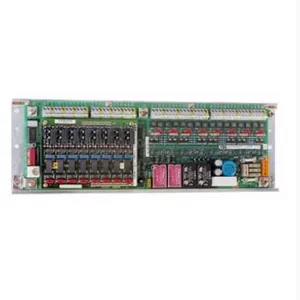
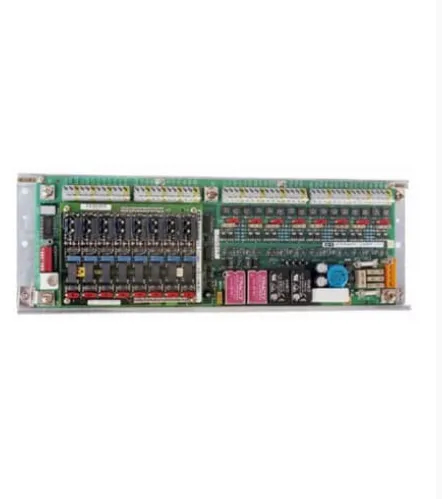
The ABB UAC096AE01 HIEE300794R0001 is a compact process control unit launched by ABB in the field of industrial automation. Its core positioning is a "precision control and efficient signal processing unit for small and medium-sized industrial production processes". Its core value lies in integrating core control functions with lightweight hardware design, establishing a control link of "streamlined signal acquisition - efficient logical operation - precise command output". It provides an integrated solution of "multi-type signal compatibility + basic control algorithm execution + low-cost integration" for batch or continuous production processes in industries such as food and beverage, pharmaceuticals, and small and medium-sized chemical engineering (e.g., tank level control, reactor temperature regulation, and pipeline flow stabilization). While ensuring process control accuracy, it reduces equipment deployment space and cost input.
Compared with full-function control units such as the ABB UAC096AE01, it focuses more on "adaptability to compact scenarios":
Specifically designed for small and medium-sized applications of ABB AC 800M controllers and System 800xA automation platforms, it reduces the number of signal channels while retaining core control capabilities. It supports mixed processing of analog and digital signals and has built-in basic industrial control algorithms such as PID.
At the same time, it has industrial-grade anti-interference and wide-temperature tolerance capabilities, enabling stable operation in workshop environments with dust, electromagnetic interference, and temperature fluctuations.
As a lightweight core component of ABB's process automation system, it can collect key on-site parameters such as temperature, level, and flow in real time, drive the action of actuators such as valves and pumps after calculation via built-in algorithms, and support fault self-diagnosis and safety interlocking. It is a key hardware support in the industrial field for "realizing refined control in small and medium-sized scenarios and balancing performance and cost".
II. Technical Parameters
(I) Signal Acquisition and Output Parameters
(II) Control and Calculation Parameters
(III) Environmental and Reliability Parameters
(IV) Power Supply and Connection Parameters

III. Functional Features
(I) Compact Design and Streamlined Configuration, Adapting to Small and Medium-Sized Scenarios
Lightweight hardware layout: With a compact size of 100mm×180mm×65mm, its volume is 40% smaller than that of full-function control units. It can be installed in small control cabinets or independently deployed via DIN rails (e.g., small tank control boxes in food workshops), saving equipment installation space. Weighing ≤0.8kg, it is easy to carry and maintain on-site, reducing installation costs.
On-demand signal channel configuration: The streamlined configuration of 4 AI + 2 AO + 8 DI + 4 DO channels fully meets the control requirements of small and medium-sized equipment (e.g., control of a single reactor in a pharmaceutical workshop: AI collects temperature/pressure, AO controls feed valves/heating rods, DI monitors motor status, and DO drives alarm lights), avoiding cost waste caused by channel redundancy.
(II) Core Control Functions Retained, Balancing Performance and Cost
Precise regulation of basic PID: The built-in PID algorithm supports manual tuning and anti-integral windup functions. Although it does not have auto-tuning and feedforward compensation, it can still achieve a regulation accuracy of ±0.5% (e.g., tank level control fluctuation ≤±2%) through manual parameter optimization by engineers, meeting the control requirements of small and medium-sized processes. It also supports discrete logic control, enabling basic interlocking such as "parameter overrun → trigger shutdown" to ensure equipment safety.
Wide-range sensor compatibility: AI channels are compatible with 4-20mA transmitters and Pt100 RTDs, allowing direct connection to level meters (e.g., ABB LC200) and temperature transmitters (e.g., ABB TT200) commonly used in small and medium-sized workshops without additional signal converters. DI/DO channels support 24V DC standard equipment, enabling direct connection to small relays and solenoid valves, simplifying on-site wiring and integration processes.
(III) Industrial-Grade Reliability Design, Ensuring Stable Operation
Adaptation to harsh workshop environments: The operating temperature range of -10℃-55℃ covers the normal temperature conditions of small and medium-sized workshops (e.g., 10℃-35℃ for food workshops, 15℃-40℃ for pharmaceutical workshops). The anti-interference capabilities of ±4kV ESD contact discharge and ±2kV EFT electrical fast transient can resist electromagnetic interference generated by small motors and frequency converters in workshops, ensuring stable signal acquisition and output (data error rate ≤10⁻⁶).
Basic fault protection and diagnosis: It is equipped with channel-level fault detection (AI open circuit, AO overcurrent, DI/DO short circuit) and power reverse connection protection. In case of faults, fault codes (e.g., "E01-AI1 Open Circuit", "E05-DO2 Overcurrent") are fed back via the Mini USB interface or upper-level software, allowing maintenance personnel to quickly locate problems. The overcurrent protection function can prevent the DO channel from being burned due to solenoid valve short circuits, reducing equipment maintenance costs.
(IV) Usability and Flexible Integration, Lowering Application Thresholds
Streamlined configuration process: Configuration is performed via ABB Control Builder M software, which has built-in "small and medium-sized equipment control templates" (e.g., tank level control, small reactor temperature control). Engineers only need to select a template and associate channel addresses (e.g., associate AI1 with a temperature transmitter) to complete basic program configuration within 30 minutes, without complex programming.
Dual installation and communication adaptation: It supports ABB standard rack mounting (integrated into the AC 800M system) and DIN rail independent mounting (independent control of small equipment), enabling flexible switching between the two installation methods (e.g., independent control of a single device in the early stage of the workshop, and direct installation to the rack when connecting to the system in the later stage). The optional RS-485 interface supports the Modbus RTU protocol and can connect to third-party small instruments (e.g., domestic flow meters), improving system compatibility.
(V) Low-Cost Operation & Maintenance and Debugging, Improving Efficiency
Convenient on-site debugging: The Mini USB interface supports on-site debugging via a laptop without carrying a dedicated programmer. Engineers can view real-time channel data (e.g., temperature value of AI1, output status of DO1) and modify PID parameters (e.g., proportional coefficient P, integral time I) on-site via software, shortening debugging time (debugging of a single device ≤1 hour).
Basic data traceability: The 32MB Flash memory can store 10,000 process data records and 200 fault records. Although it does not have a cloud platform connection function, it can still meet the quality traceability needs of small and medium-sized enterprises by exporting data locally (e.g., food workshops recording daily tank level changes, pharmaceutical workshops tracing reaction temperature curves). Data retention ≥5 years after power-off ensures no data loss.
IV. Application Fields
(I) Food and Beverage Industry: Small Tank Level and Temperature Control
Application Scenario
A small tank (500L) in a juice processing plant needs to achieve:
Level control (level setpoint: 80%, control fluctuation ≤±2%, realized by adjusting the opening of the feed valve);
Temperature control (juice temperature setpoint in the tank: 5℃, control fluctuation ≤±1℃, realized by adjusting the opening of the cold water valve);
Safety interlocking (triggering an alarm and stopping the feed pump when level >95% or temperature >8℃).
The environment is a food workshop (temperature: 10℃-35℃, high humidity, with electromagnetic interference from small motors).
Module Function Implementation
Signal acquisition and control: Among the 4 AI channels, 2 are connected to Pt100 RTDs (for monitoring juice temperature) and 1 to a 4-20mA level meter (for monitoring tank level). Among the 2 AO channels, 1 controls the feed valve (24V DC solenoid valve) and 1 controls the cold water valve (small electric valve). PID logic is written via Control Builder M software, and level PID parameters (P=2.0, I=60s) and temperature PID parameters (P=1.5, I=40s) are manually tuned to achieve level fluctuation ≤±1.5% and temperature fluctuation ≤±0.8℃.
Safety interlocking and alarm: Among the 8 DI channels, 2 monitor the operating status (running/stopped) of the feed pump. Among the 4 DO channels, 1 outputs an alarm signal (driving an audible-visual alarm) and 1 controls the shutdown of the feed pump. The logic is configured as "Level >95% OR Temperature >8℃ → DO outputs alarm + stops feed pump" with a response time ≤50ms, preventing tank overflow or juice spoilage.
Installation and maintenance: The module is installed in a small control box next to the tank via DIN rails, and the Mini USB interface facilitates on-site debugging by engineers. When the AI channel detects an open circuit of the level meter, the module feeds back the "E01-AI3 Open Circuit" fault. After maintenance personnel replace the level meter, the module can resume operation by software reset, with maintenance time ≤30 minutes.
(II) Pharmaceutical Industry: Basic Control of a Single Reactor
Application Scenario
A single small reactor (100L) in a traditional Chinese medicine extraction workshop needs to achieve:
Temperature control (extraction temperature setpoint: 80℃, control fluctuation ≤±1℃, realized by adjusting the power of the heating rod);
Pressure monitoring (monitoring the pressure inside the reactor and triggering the pressure relief valve when it exceeds 0.2MPa);
Status monitoring (monitoring the operating status of the agitator motor and stopping heating in case of faults).
The environment is a pharmaceutical workshop (temperature: 15℃-40℃, clean and dust-free, with electromagnetic interference from the agitator motor).
Module Function Implementation
Signal acquisition and control: Among the 4 AI channels, 1 is connected to a Pt100 RTD (for monitoring reaction temperature) and 1 to a 4-20mA pressure transmitter (for monitoring the pressure inside the reactor). Among the 2 AO channels, 1 controls the heating rod (adjusting power via a solid-state relay). Among the 8 DI channels, 1 monitors the operating status of the agitator motor (contactor feedback) and 1 is connected to an emergency stop button. Among the 4 DO channels, 1 controls the pressure relief valve (solenoid valve) and 1 controls the power supply of the heating rod.
Logic control and safety: FBD programming is used to implement the logic of "Agitator motor stops → Stop heating" and "Pressure >0.2MPa → Open pressure relief valve". During temperature regulation via PID, parameters are manually optimized to achieve temperature fluctuation ≤±0.8℃, meeting the temperature accuracy requirements of traditional Chinese medicine extraction. The module exports daily temperature records (1 record stored every 10 minutes) via the Mini USB interface for quality traceability in pharmaceutical production.
Integration and expansion: In the early stage, the module is independently installed in the reactor control box via DIN rails. During later workshop expansion, the module is removed and installed in the AC 800M small rack, and connected to the workshop DCS system via the PROFIBUS DP bus to realize centralized monitoring. No module replacement is required, reducing expansion costs.









 Contact Platform Support
 Help Center