








 Contact Platform Support
 Help Center
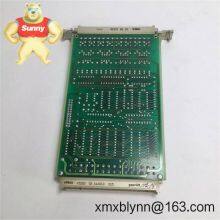
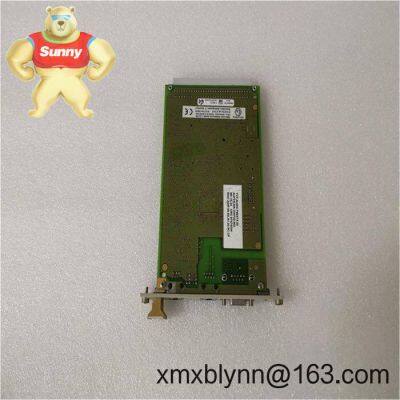
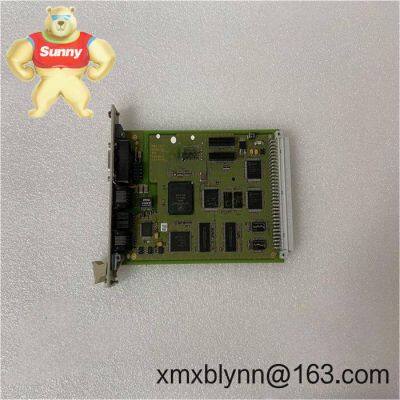
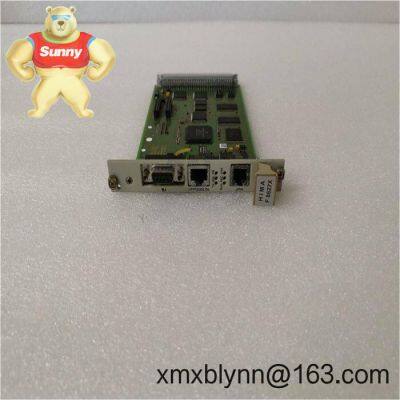
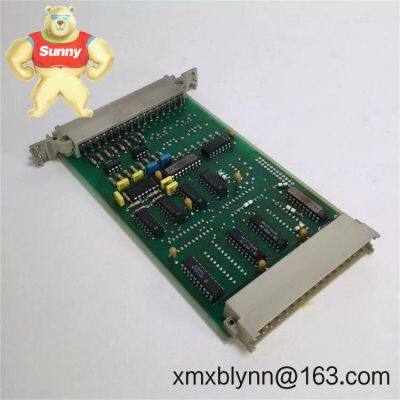
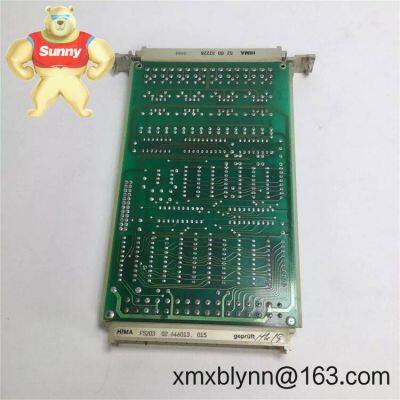
HIMA 5203 – Interface Module for Integrating Safety Controllers With Plant Networks



Related Products
-
 HIMA F8651X Digital Input Module – Safety‑rated Discrete Input Card for HIQuad X SystemsUS$ 216.00MOQ: 1 Blade
 -
HIMA X-AO 16 01 Analog Output Module – Reliable 16‑channel Analog Outputs for Safety ControllersUS$ 216.00MOQ: 1 Blade
-
HIMA F7123 4-Channel Multi-Function Power Distribution Module – Dependable 24 VDC Distribution for HIQuad Safety SystemsUS$ 2216.00MOQ: 1 Blade
-
HIMA K9202B (996920261) Energy-Saving Cabinet Fan Module – Reliable Cooling for Safety Control CabinetsUS$ 2216.00MOQ: 1 Blade
-
HIMA F2102 – Smart Safety Module for High-Integrity Shutdown and InterlocksUS$ 2216.00MOQ: 1 Blade
The HIMA 5203 is commonly used as a communication/interface module to link HIMA safety systems with plant control networks and third‑party PLC/DCS platforms. From my experience, teams deploy it where high integrity (SIL) safety logic must exchange status, alarms, and setpoints with supervisory systems without compromising the safety lifecycle. You might notice that it fits best in modernization or expansion projects where seamless connectivity and low downtime are key.
Designed for HIMA safety architectures – Interfaces with established HIMA platforms to expose status, events, and diagnostics to higher‑level systems.
Industrial network connectivity – Variants typically support fieldbuses such as Modbus (TCP/RTU) or Profibus DP, and Ethernet-based links for SCADA/HMI integration.
SIL‑oriented data handling – Built for use in safety-related applications where deterministic behavior and diagnostic coverage matter.
Diagnostics and health reporting – Helps maintenance teams identify communication faults faster; reduces mean time to repair.
Flexible deployment – Suitable for retrofit work and brownfield expansions where you need to bridge legacy fieldbuses to modern networks.
Lifecycle-friendly – Availability of spares and documented migration paths typically keep long-lived process units compliant and supportable.
| Brand / Model | HIMA 5203 |
| Power Requirements | 24 VDC via system backplane (typical for HIMA interface modules; check specific variant) |
| Operating Temperature | Typically 0 to +55 °C; verify limits by revision and system family |
| Signal I/O Types | Communication interface (no direct analog/digital field I/O; used for data exchange between safety controller and networks) |
| Communication Interfaces | Variant-dependent: Modbus TCP/RTU, Profibus DP, or industrial Ethernet options are common in this class |
| Installation Method | Mounted in the designated HIMA rack/backplane for the target system family; wiring via terminal blocks or fieldbus connectors |
Application FieldsThe 5203 is selected where critical safety logic must be visible in the plant network without losing integrity. Typical scenarios include:
Emergency Shutdown (ESD) systems reporting status and trip causes to DCS/SCADA.
Fire & Gas (F&G) systems delivering alarms, votes, and diagnostic data to operator stations.
Boiler/Burner Management (BMS) logic sharing permissives and interlocks with process controls.
Pipeline and tank farm safety where remote stations use Modbus/Profibus links to a central historian.
Pharma and specialty chemicals requiring validated, traceable safety data transfers.
Advantages & ValueReliability in harsh environments – Built for continuous operation, which in many cases cuts nuisance communication trips.
Compatibility with mixed-vendor plants – Useful when a HIMA safety layer has to coexist with ABB, Emerson, Honeywell, Rockwell, or Siemens systems.
Cost containment – Avoids large-scale controller changes; you add a communication bridge instead of re‑engineering the safety application.
Maintainability – Clear diagnostics and standard fieldbuses simplify spares holding and technician training.
One thing I appreciate is how quickly teams can validate links during FAT/SAT. A site engineer told us they mapped 300+ points to their DCS and finished loop checks a day ahead of plan—no surprises on startup.
Installation & MaintenanceCabinet and mounting – Install in a clean, dry control cabinet meeting IEC/UL panel standards. Provide adequate ventilation; avoid mounting above high‑heat devices.
Wiring practices – Separate fieldbus/Ethernet from high‑voltage cabling. Use shielded twisted pair for serial buses; bond shields at one end to reduce noise.
Power – Stable 24 VDC supply with proper grounding is typically required; consider redundant feeds in safety applications.
Configuration – Define node addresses, baud rates, and mapping in engineering tools. Keep a versioned backup of configuration files in the project repository.
Maintenance – Routine visual inspection for connector integrity; clean dust with dry air. Schedule periodic comms loop checks and review diagnostic logs. Firmware updates should follow MOC procedures.
Safety – De‑energize before insertion/removal unless the system explicitly supports hot‑swap. Observe ESD handling guidelines.
Intended for use in IEC 61508 SIL 3 applications within HIMA safety systems (TÜV-certified system context; check module certificate).
CE compliant; RoHS conformity typically applies to current revisions.
UL/cUL and marine approvals may be available depending on the specific variant and project requirements.
Manufacturer warranty is commonly 12 months from shipment; extended coverage can be arranged in many cases.
Note: The HIMA 5203 designation can refer to a specific interface variant. Features such as protocol options and temperature range may vary by revision and target system (HIMax, HIQuad X, or other families). If you share the exact part code or data sheet rev, I can map the protocol set, backplane compatibility, and spare kit recommendations precisely.

Send Inquiry to This Supplier



You May Also Like
-
HIMA F3113 Output Module – Safety Digital Outputs for Reliable Machine and Process ControlUS$ 2216.00MOQ: 1 Blade
-
HIMA F3221 Refurbished Input Module – Cost‑Effective Safety I/O for HIMA SystemsUS$ 2216.00MOQ: 1 Blade
-
HIMA F3222 Digital Input Module – Reliable 24 VDC Safety-Critical Signal AcquisitionUS$ 2216.00MOQ: 1 Blade
-
HIMA F3 AIO 8 01 (F3AIO8401) – Safety‑related Analog I/O Module for HIQuad/F3 SystemsUS$ 2216.00MOQ: 1 Blade
-
HIMA F3224 Input Module – Precise 24 VDC Signal Acquisition for HIQuad Safety SystemsUS$ 2216.00MOQ: 1 Blade
-
HIMA F3 DIO 8/8 01 (F3DIO8801) – Compact 8DI/8DO 24 VDC Module for HIQuad/HIQuad X Safety SystemsUS$ 2216.00MOQ: 1 Blade
-
HIMA F6215 – High‑Precision 8‑Channel Analog Input Module for Safety‑Critical MonitoringUS$ 2216.00MOQ: 1 Blade
-
HIMA F6216 – Precision Analog Input Module for Safety Control SystemsUS$ 2216.00MOQ: 1 Blade
-
HIMA F7130A F7130 Power Supply Module – Stable Backplane Power for Safety Controller RacksUS$ 2216.00MOQ: 1 Blade
-
HIMA F8620/11 High‑Efficiency Central Processing Unit for Safety ControllersUS$ 2216.00MOQ: 1 Blade


