Material
Other, Global universal model
Condition
Other, Global universal model
Task
Other, Global universal model
Mathematical Model
Other, Global universal model
Signal
Other, Global universal model
Customized
Non-Customized
Structure
Other, Global universal model
Operating Temperature
-25℃~+70℃
Relative Humidity
5%~95% (non-condensing)
Storage Temperature
-40℃~+85℃
Dimensions
120mm × 150mm × 40mm
I. Overview
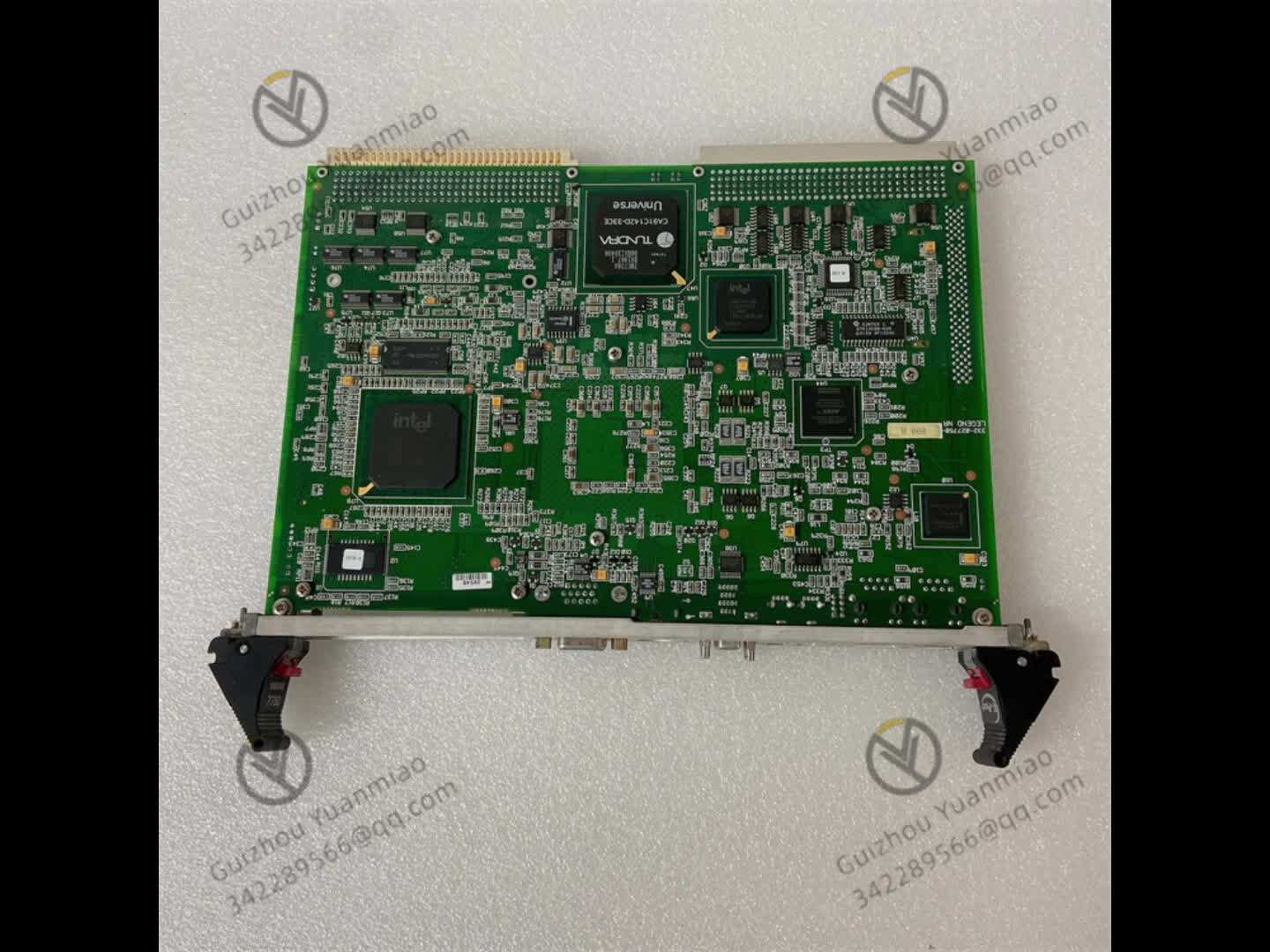
GE IS210WSVOH1AE is a high-performance Analog Output (AO) module of the Mark VI series. Its core positioning is to serve as a "precision signal output hub" for industrial control systems (such as gas turbine speed control systems, chemical reactor control units, and metallurgical rolling mill drive systems). It is specifically designed to address core needs in complex industrial scenarios, including "precision actuation of executors, continuous parameter adjustment, and implementation of system-level control commands".
Its core function is to receive digital control commands issued by control cores (such as PLCs and DCSs), and through high-precision Digital-to-Analog Conversion (DAC) and signal conditioning, output stable analog signals (such as 4-20mA current signals and 0-10V voltage signals) to drive the operation of on-site executors (such as control valves, frequency converters, and servo motors). This enables continuous and precise control of industrial equipment operating parameters (such as valve opening, motor speed, and reaction temperature). It is widely applicable to industries with strict requirements for output accuracy, signal stability, and system reliability, including power generation, petrochemicals, metallurgy, and energy. It is a key executive component in industrial control systems that "converts control commands into physical actions".
As a core analog output module of the GE Mark VI series, the IS210WSVOH1AE integrates the core advantages of "high-precision DAC + wide signal compatibility + industrial-grade protection":
It adopts a 16-bit high-precision DAC chip, achieving an output accuracy of ±0.1% F.S. (Full Scale) and enabling micro-amplitude signal adjustment.
It supports multiple types of analog outputs (current and voltage), making it compatible with mainstream industrial executors.
Equipped with photoelectric isolation, wide-temperature adaptation, and strong electromagnetic interference resistance, it can operate continuously and stably in industrial sites with high temperatures, high vibrations, and strong electromagnetic interference.
Compared with ordinary analog output modules, it has advantages in output accuracy and signal stability. Compared with dedicated drive units, its modular design facilitates system expansion and maintenance, allowing flexible adaptation to industrial control scenarios of different scales. It is an ideal choice for large-scale industrial systems to achieve precise executive control.
II. Technical Specifications
(I) Core Output Parameters
(II) Signal Isolation and Anti-Interference Parameters
Isolation Design: Photoelectric isolation (isolation voltage ≥2500Vrms) is used between output channels and the module's internal circuit; independent isolation is adopted between channels (to avoid signal crosstalk between channels); isolation is also applied between the power supply and signal circuit (isolation voltage ≥1500Vrms).
Electromagnetic Interference Resistance: Complies with the EN 61000-6-2 industrial anti-interference standard; ESD (Electrostatic Discharge) protection level: ±15kV (air discharge)/±8kV (contact discharge); RF (Radio Frequency) radiation immunity level: 10V/m (80MHz~1GHz); EFT (Electrical Fast Transient) pulse group immunity level: 4kV (power terminal)/2kV (signal terminal); RF conducted immunity level: 10V (150kHz~80MHz).
Common Mode Rejection Ratio (CMRR): ≥90dB (for 50Hz/60Hz power frequency interference); Differential Mode Rejection Ratio (DMRR): ≥70dB (for 1kHz interference signals), which can effectively suppress the impact of on-site common-mode interference on output signals.
(III) Hardware and Power Supply Parameters
Processor and Interface: Built-in 16-bit signal processing chip (80MHz main frequency), supporting real-time signal calibration (zero/gain calibration) and output signal linearization correction; compatible with GE Mark VI dedicated high-speed buses (such as Profinet, EtherNet/IP); communication rate with control modules ≤100Mbps; data transmission delay ≤1ms.
Power Supply Requirements: 24VDC±15% redundant power supply (supports dual power input with automatic switching); operating current ≤150mA (without signal output); full-load current ≤300mA (8 channels at full-scale output); power consumption ≤7.2W (under full-load conditions); supports reverse power connection protection (no damage under reverse voltage ≤36V DC).
Physical Dimensions: 120mm (length) × 150mm (width) × 40mm (height); compatible with GE Mark VI series standard racks, occupying 1 module slot; weight approximately 0.25kg.
Installation Method: 35mm DIN rail mounting (requires matching Mark VI series racks); minimum spacing of ≥5mm between modules to ensure heat dissipation; front panel equipped with a detachable terminal block (with anti-misplug design for easy wiring and maintenance).
(IV) Environmental Parameters
Operating Temperature Range: -25℃~+70℃, supporting low-temperature startup (no preheating required at -25℃, startup time ≤30s).
Storage Temperature Range: -40℃~+85℃; humidity range: 5%~95% (no condensation, complying with IEC 60068-2-3 standard).
Vibration and Shock Resistance: Vibration resistance level: 5g (10Hz~2000Hz, complying with IEC 60068-2-6); shock resistance level: 30g (11ms pulse, complying with IEC 60068-2-27).

III. Functional Features
(I) High-Precision Analog Output for Precise Actuation of Executors
Centered on "16-bit DAC conversion + real-time calibration", the IS210WSVOH1AE provides precise drive signals for executors:
Micro-Precision Signal Output: The 16-bit DAC resolution and ±0.1% F.S. output accuracy enable fine signal adjustment. For example, when controlling the feed control valve of a chemical reactor (where a 4-20mA signal corresponds to 0-100% opening), adjusting the module's output current from 12mA (50% opening) to 12.016mA results in a 0.1% change in opening (i.e., 0.1%×100% = 0.1% opening). This allows precise control of feed volume, ensuring the reaction concentration remains stable within ±0.5%.
Multi-Type Signal Compatibility: The 8 channels can be independently configured for current or voltage output to adapt to different executors. For instance, channels 1-4 can be configured for 4-20mA current output (to drive steam control valves and fuel control valves), while channels 5-8 can be set for 0-10V voltage output (to drive frequency converters and servo motor controllers). A single module can drive multiple types of executors (valves, motors), simplifying system layout.
Zero and Gain Calibration: Software (such as GE ToolboxST) supports zero and gain calibration for each channel, eliminating signal drift during long-term operation. For example, if a 4-20mA output channel, due to ambient temperature changes, measures 11.95mA (a deviation of -0.05mA) when it should output 12mA, software calibration can restore the output accuracy to ±0.01mA, ensuring the accuracy of executor actions.
(II) Multi-Layer Isolation and Anti-Interference Design for Stable Output Signals
To address strong electromagnetic interference and executor load fluctuations in industrial sites, the module ensures signal quality through isolation and protection designs:
Three-Level Isolation Protection:
Photoelectric isolation (2500Vrms) between output channels and the internal circuit blocks grounding loop interference between executors and the control core. For example, if a field frequency converter generates a 15V common-mode voltage, the isolation circuit can block the conduction of common-mode current, resulting in an output current fluctuation of ≤0.02mA and no abnormal valve opening.
Independent isolation between channels prevents faults in one executor from affecting other channels. For example, if the control valve connected to channel 3 shorts (current reaching 30mA), the channel immediately triggers short-circuit protection (current limited to 25mA), while the other 7 channels continue to output normally, eliminating the risk of overall module damage.
Isolation between the power supply and signal circuit (1500Vrms) suppresses the impact of grid voltage fluctuations (e.g., 24VDC fluctuation of ±15%) on output signals, with output voltage fluctuation ≤0.05V (for 0-10V output).
Output Protection and Filtering:
Each output channel has short-circuit and overvoltage protection. If an executor shorts or is incorrectly connected to high voltage, the module can quickly cut off abnormal current to prevent damage to internal circuits. For example, if 220V AC is mistakenly connected to a 0-10V output channel, the overvoltage protection circuit triggers within 10μs, and the module can be restored with a simple reset without damage.
A built-in programmable low-pass filter filters out high-frequency noise. For example, in a workshop with severe grid interference, configuring a 10Hz cutoff frequency filters out high-frequency noise above 10Hz, reducing the fluctuation of 4-20mA output signals from ±0.1mA to ±0.01mA and ensuring smooth executor operation.
(III) Flexible Configuration and System Integration for Multi-Scenario Control
The module is compatible with GE Mark VI series control systems and supports flexible configuration and cross-system collaboration:
Software-Based Parameter Configuration: Via the GE ToolboxST configuration software, parameters such as output type, range, update rate, and filter frequency of each channel can be remotely configured. For example, if channel 5 needs to be changed from "4-20mA (0-100% opening)" to "0-20mA (0-150% opening)", no on-site operation is required—parameters can be modified and downloaded via software, taking effect within 200ms, reducing downtime for maintenance.
Native Compatibility with Mark VI Bus: It communicates with Mark VI control modules (such as IS200PMCIH1AAA) via the Profinet bus, with a data transmission rate of 100Mbps and a control command delivery delay of ≤1ms. For example, in a gas turbine speed control system, when the control module issues a command to "increase speed to 3000rpm", the module converts the digital command into a 16mA current output (to open the fuel control valve wider) within 0.8ms, ensuring rapid speed regulation response.
Third-Party System Compatibility: It supports communication with third-party DCSs (such as Siemens PCS 7) via the Modbus TCP/IP protocol, with analog output values mapped to Modbus registers (e.g., register 40001 corresponds to the output value of channel 1). For example, in metallurgical rolling mill control, the Siemens PCS 7 issues a "roll pressure adjustment" command via Modbus TCP, and the module outputs a 0-10V voltage signal to drive the hydraulic valve, achieving precise control of rolling mill pressure.
(IV) Industrial-Grade Reliability and Convenient Operation & Maintenance for Reduced Management Costs
The module balances stability and convenience in hardware durability and operation & maintenance design:
Wide-Temperature and Harsh Environment Adaptability: With an operating temperature range of -25℃~+70℃, the module’s output accuracy fluctuation is ≤0.05% F.S. (no DAC drift) in scenarios such as steam turbine plants in northern winters (-20℃) or chemical workshops in southern summers (65℃). The housing is made of flame-retardant PC+ABS material (UL94 V-0 grade) with an IP20 protection rating, resisting dust and oil intrusion, and ensuring no terminal oxidation during long-term operation (10,000 hours).
Fault Self-Diagnosis and Early Warning: It has built-in channel-level fault detection, capable of monitoring faults such as "output short circuit, overvoltage, DAC fault, and bus communication interruption", and uploading fault codes via the bus (e.g., F001 = short circuit of channel 1, F002 = overvoltage of channel 2). For example, if channel 6 has a short circuit, the module triggers an "F006 short-circuit fault" alarm, and the control module displays the faulty channel, enabling engineers to quickly locate and repair the issue.
Local Status Visualization: The front panel is equipped with 8 channel status indicators (green = normal output, yellow = signal overrange, red = fault) and 1 power indicator, allowing intuitive on-site judgment of the module’s working status. For example, a steady red light on channel 4 indicates a short circuit in that channel—initial troubleshooting can be done without connecting software, increasing operation & maintenance efficiency by 60%.









 Contact Platform Support
 Help Center