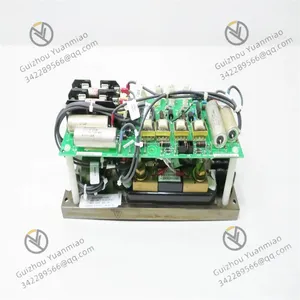
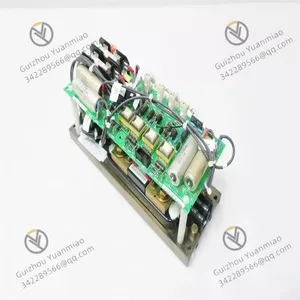
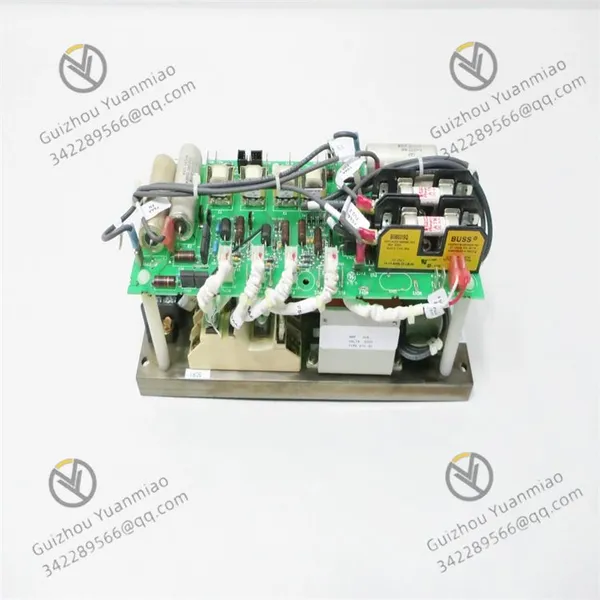
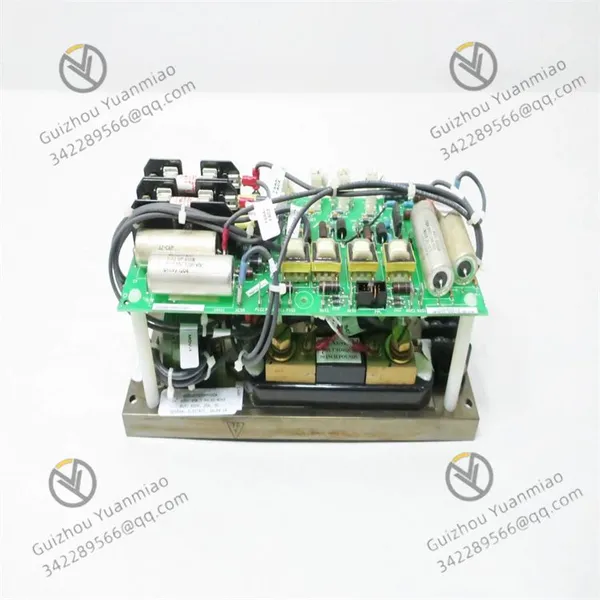
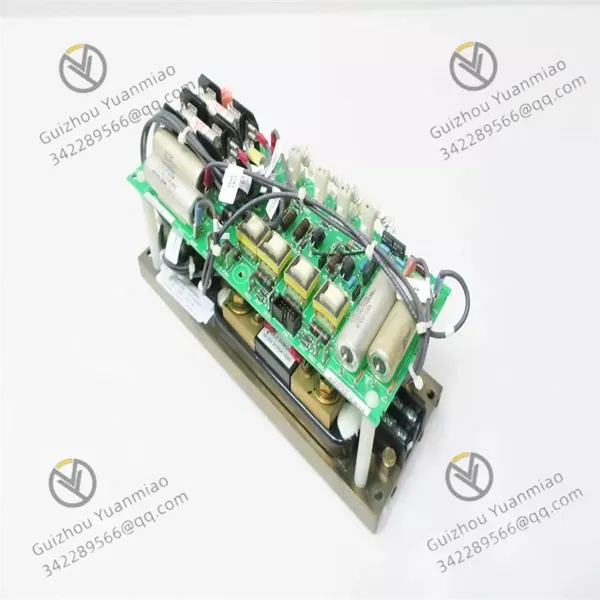
GE DS2020FECNRP020A Communication and Control Interface Module
GE DS2020FECNRP020A is a module specially designed for industrial control systems. It belongs to the GE Speedtronic series (often used in the control of large rotating machinery such as turbines and generators) and mainly undertakes functions related to communication interfaces and control logic processing. It is a key component connecting internal system modules and external devices. The following is an introduction from the aspects of core functions, working principles, characteristics, and application scenarios:
I. Core Positioning and Functions
DS2020FECNRP020A usually serves as a communication and control interface module, whose core role is to realize data interaction within the control system and communication connection with external devices, including:
Acting as a node of the internal system bus, connecting processor modules and I/O modules (such as signal conditioning modules and drive modules) to achieve real-time data transmission and command distribution.
Providing external communication interfaces to support data interaction with upper computers (such as SCADA systems, HMI man-machine interfaces) or third-party devices (such as sensors, actuators, other control systems), transmitting operating status, fault information, and control commands.
Assisting in executing part of the control logic, such as signal forwarding, data caching, and simple logic judgment (such as state interlocking), reducing the burden on the main processor and improving the system response speed.

II. Working Principle
Internal Data Bus Interaction
Through the dedicated high-speed backplane bus of the GE Speedtronic system (such as the VME bus or Ethernet/IP bus of the Mark VIe system), it establishes connections with the main processor modules (such as the DS200 series) and I/O modules in the system, receives real-time sensor data (such as speed, temperature, pressure) collected on-site and equipment status signals, and forwards the control commands of the main processor to actuator modules (such as servo valves, relays).
External Communication Protocol Conversion
It supports multiple industrial communication protocols (such as Modbus RTU/TCP, DNP3.0, EtherNet/IP, etc.), converts the internal digital signals of the system into a protocol format recognizable by external devices, and at the same time converts external commands into the internal bus protocol of the system, realizing interoperability across devices and systems.
Data Caching and Redundancy Design
It has a built-in cache unit that can temporarily store key data (such as operating parameters before a fault) to avoid data loss when communication is interrupted; some models support redundant communication paths (such as dual-bus design), which automatically switch to the backup link when the main communication link fails, ensuring the continuity of data transmission.
III. Functional Characteristics
High-Reliability Industrial Design
Wide temperature operating range: Supports -40℃~70℃, adapts to harsh environments such as high temperature, low temperature, dust, and vibration in power plants and industrial workshops, and complies with industrial anti-environmental interference standards such as IEC 60068.
Anti-electromagnetic interference (EMI) capability: Built-in shielding layer and filter circuit, which can resist strong electromagnetic noise generated during the operation of turbines, motors, and other equipment, ensuring stable signal transmission.
Flexible Communication Compatibility
Supports multiple communication interfaces: Usually includes Ethernet (10/100Base-T), serial interfaces (RS485/RS232), etc., which can adapt to scenarios with different transmission rates and distances (such as serial communication for short distances and Ethernet for long distances).
Multi-protocol compatibility: The protocol type can be configured according to application requirements, facilitating integration with equipment from different manufacturers (such as PLC, DCS, intelligent sensors) and reducing system expansion difficulties.
Modularity and Hot-Swap Support
Adopting a modular design, it can be directly installed on the rack or backplane of the GE Speedtronic system, and is compatible with other modules (such as DS3820 series signal modules, DS2020 series power modules); some models support hot-swap, allowing module replacement without stopping the system, reducing maintenance downtime.
Status Monitoring and Diagnosis
Built-in self-diagnostic circuit, which real-time monitors the module's power supply status, communication link integrity, interface faults, etc., and feeds back abnormal status (such as "communication interruption", "bus fault") through indicator lights (such as LED) or communication messages, facilitating quick problem location.

IV. Application Scenarios
DS2020FECNRP020A is mainly used in industrial control fields with extremely high requirements for communication reliability and real-time performance. Typical scenarios include:
Power industry: Control systems of gas turbines, steam turbines, and generators (such as the Speedtronic Mark VIe platform), serving as a communication hub to connect speed control modules, vibration monitoring modules, and central monitoring systems, realizing remote operation and maintenance and status monitoring.
Energy and chemical industry: Control systems of large compressors, pumps, and other equipment, connecting on-site sensors (such as pressure and flow probes) with upper computers, transmitting real-time operating data and receiving adjustment commands to ensure stable production processes.
Heavy industry: Control of large rotating machinery in industries such as metallurgy and papermaking, realizing collaborative work between distributed control modules, such as coordinating equipment linkage and data aggregation of multiple production lines.
Summary
GE DS2020FECNRP020A module, through efficient communication protocol conversion, reliable bus interaction, and industrial-grade design, has become a key node connecting "internal modules and external devices" in the GE Speedtronic control system. Its high compatibility and redundancy capability ensure the stable operation of large industrial equipment in complex environments, and it is an important component for realizing data intercommunication and collaborative control in the field of industrial automation.