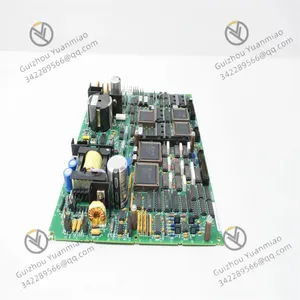
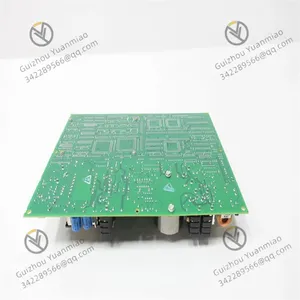
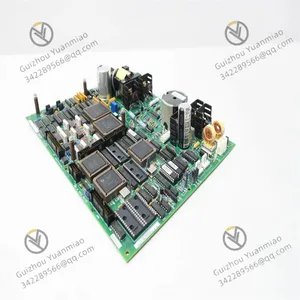
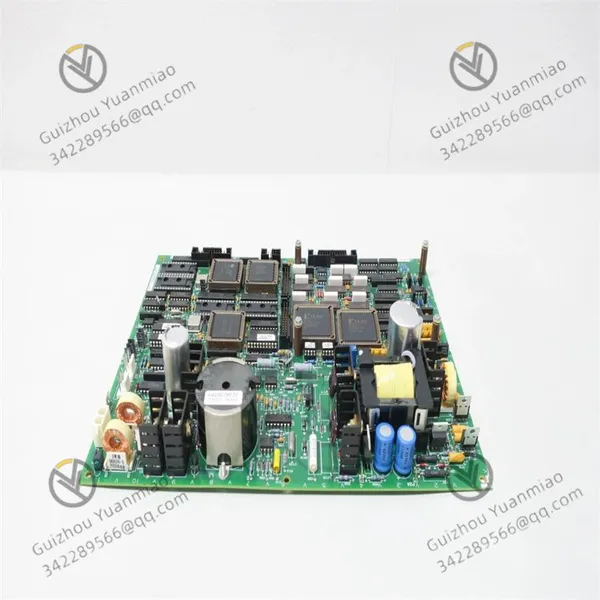
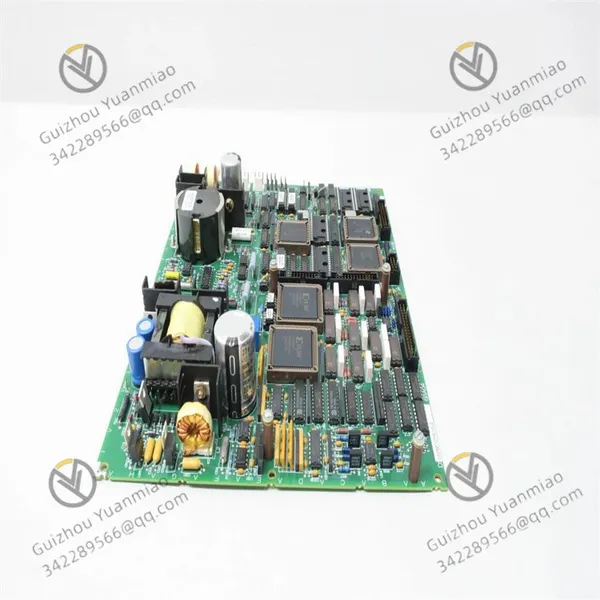
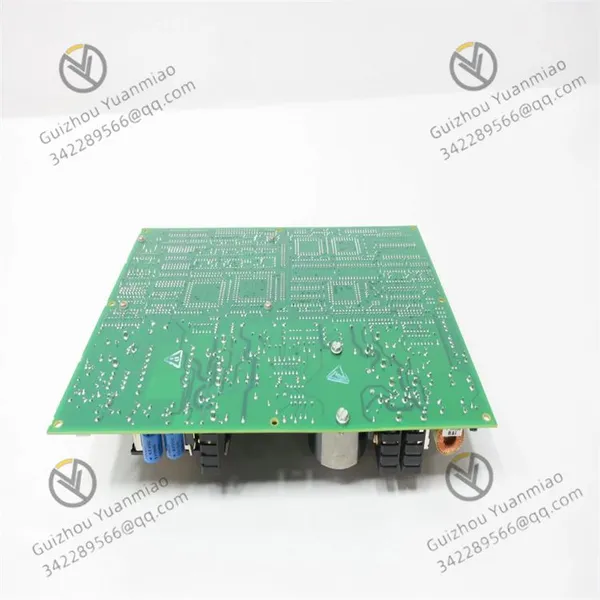
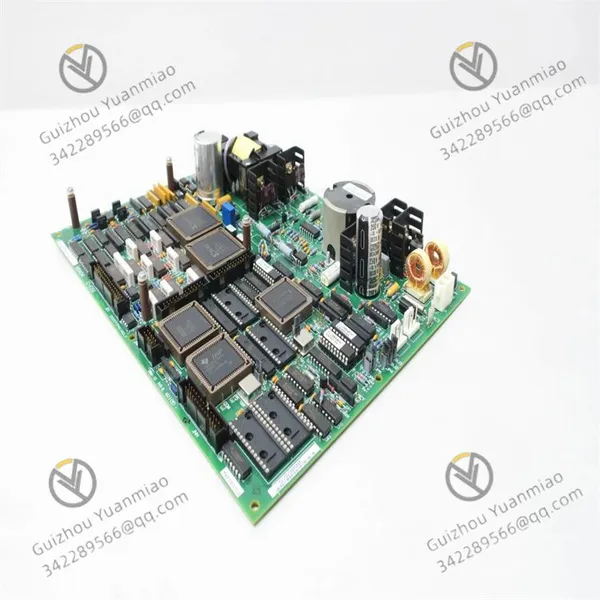
GE DS200TCPAG1AJD Turbine Control Processor Board
GE DS200TCPAG1AJD is a turbine control processor board specifically designed for the control of industrial turbines (such as gas turbines and steam turbines). It is a core component of GE's Speedtronic series control systems, mainly responsible for real-time data processing, logic control, and command execution during the operation of turbines, and is one of the "brains" ensuring the safe and efficient operation of turbines. The following is an introduction from the aspects of core functions, working principles, characteristics, and application scenarios:
I. Core Positioning and Functions
As the main processor module for turbine control, DS200TCPAG1AJD is the core computing unit of the Speedtronic system (such as Mark V and Mark VI series). It undertakes the full-process control logic of turbines from startup, operation to shutdown. Its specific functions include:
Real-time data acquisition and processing: It receives key parameters from on-site sensors (such as speed, temperature, pressure, vibration, valve position, etc.), processes data in real-time through a high-speed bus, and calculates the current operating status of the turbine (such as load rate, efficiency, fault risk).
Execution of core control logic: It runs preset control algorithms (such as speed closed-loop control, load regulation, temperature limit protection, surge suppression, etc.), outputs control commands based on real-time data, and drives actuators (such as fuel valves, servo motors, guide vane regulators) to adjust the operating parameters of the turbine.
Safety interlock and protection: It has built-in safety logic. When dangerous conditions such as overspeed, overtemperature, and overpressure are detected, it immediately triggers protection mechanisms (such as emergency shutdown, load reduction) to prevent equipment damage or safety accidents.
System collaboration and communication: It interacts with other modules (such as communication interface modules, I/O modules, HMI human-machine interfaces) through internal buses (such as VME bus, Ethernet), transmits control commands, operating data, and fault information, and realizes linkage with upper computers (such as SCADA systems).

II. Working Principle
Data Input and Preprocessing
It connects to I/O modules (such as signal conditioning module DS200 series) through the system backplane bus, receives sensor signals after conversion (such as 4-20mA analog quantity, digital switch signal), and filters and verifies the data (such as eliminating abnormal values) to ensure the accuracy of input data.
Control Algorithm and Logic Operation
Based on preset control programs (such as GE's dedicated turbine control algorithm), it calculates real-time data:
Startup phase: Controls the ignition sequence and speed climbing rate to ensure the turbine reaches idle speed smoothly.
Operation phase: Adjusts fuel/steam flow according to the grid load demand, maintains stable speed (such as synchronizing grid frequency), and monitors parameters such as temperature and pressure within safe thresholds.
Shutdown phase: Executes ordered shutdown logic, controls the valve closing rate to avoid mechanical impact.
Command Output and Execution
It converts the calculation results into control signals (such as PWM pulses, analog commands) and sends them to actuators (such as fuel servo valves, guide vane control motors) through output modules to adjust the operating status of the turbine in real-time.
Safety Protection Mechanism
It has built-in dual protection logic at the hardware and software levels. When the following dangerous conditions are detected, it immediately cuts off key control loops (such as fuel supply) and triggers an alarm:
Speed exceeds the safety upper limit (such as overspeed of 110% of the rated value).
Exhaust temperature and bearing temperature exceed critical values.
Vibration amplitude exceeds the standard (may cause mechanical damage).
Failure of key sensors or actuators (such as signal loss).

III. Functional Characteristics
High Real-time Performance and Computing Power
Equipped with an industrial-grade high-performance processor (such as a dedicated RISC chip or embedded CPU), it supports microsecond-level data processing speed to ensure real-time response of control commands (turbine control has extremely high requirements for delay, usually <10ms).
Industrial-grade Reliability Design
Wide temperature operating range: Supports -40℃~70℃, adapting to high temperature, dust, and vibration environments such as power plants and industrial workshops.
Anti-interference ability: Built-in electromagnetic shielding and filter circuits to resist strong electromagnetic noise (such as interference from motors and high-voltage equipment) during turbine operation.
Redundancy design: Some models support dual-processor redundancy (main-standby switching). When the main processor fails, the standby processor seamlessly takes over control to avoid system interruption.
Programmability and Flexibility
It supports configuring control logic through GE's dedicated programming software (such as ToolboxST), and can adjust control parameters according to turbine models (such as heavy-duty gas turbines, industrial steam turbines) or application scenarios (such as power plant power generation, industrial drive) to adapt to different working conditions.
Diagnosis and Maintenance Functions
It has a built-in self-diagnostic circuit that monitors the module's own status in real-time (such as power supply, memory, bus communication), feeds back fault information (such as "processor overload", "memory error") through indicator lights or communication messages, facilitating quick problem location; supports online debugging and program updates, reducing downtime for maintenance.

IV. Application Scenarios
DS200TCPAG1AJD is mainly used in turbine control scenarios with extremely high requirements for control accuracy and safety. Typical fields include:
Power industry: Speed control, load regulation, and safety protection of gas turbines and steam turbines in power plants to ensure stable grid-connected power generation of units.
Industrial drive: Control of industrial turbines driving compressors, pumps, and other equipment in the petrochemical and metallurgical industries to maintain the stable operation of production processes.
Energy field: Core control of distributed energy systems (such as small gas turbine generator sets) to achieve efficient energy conversion and scheduling.
Summary
As a turbine control processor board, GE DS200TCPAG1AJD is the "core computing unit" of the Speedtronic system. Through real-time data processing, precise control logic, and multiple safety protections, it ensures the stable operation of turbines under complex working conditions. Its industrial-grade reliability, high real-time performance, and programmability make it a key component in the field of large rotating machinery control, widely used in power, energy, industrial and other industries, and is the core technical support for ensuring the efficient and safe operation of turbines.