Home > Electrical & Electronics > Electrical Control System > ABB Bailey IMMFP01 Multi-Function Processor Interface Module
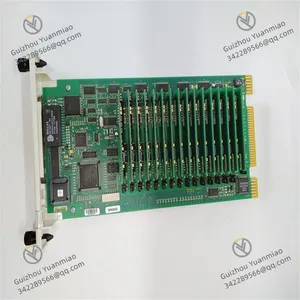
ABB Bailey IMMFP01 Multi-Function Processor Interface Module
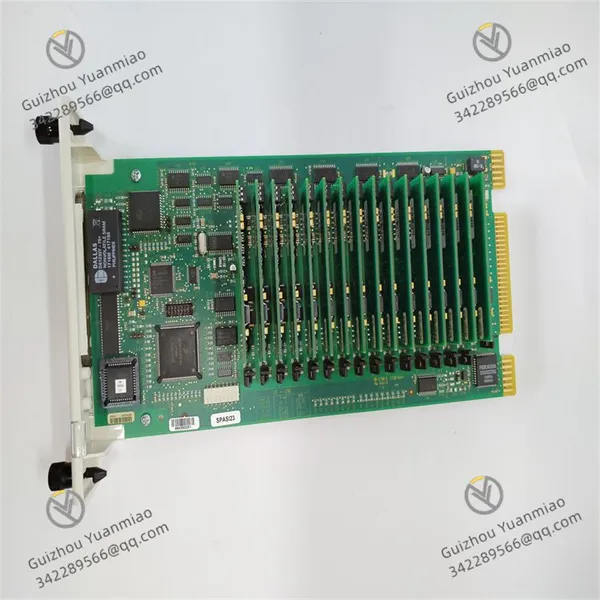
ABB Bailey IMMFP01 Multi-Function Processor Interface Module photo-1

Negotiable MOQ: 1 Unit (Price negotiable depending on order volume and customization)
Key Specifications
Get Latest Price
Material:
Other, Global universal model
Condition:
Other, Global universal model
Task:
Other, Global universal model
Payment & Shipping
Payment Methods:
Port of Shipment:
China
Delivery Detail:
Delivery time depends on order quantity.
Material Other, Global universal model
Condition Other, Global universal model
Task Other, Global universal model
Mathematical Model Other, Global universal model
Signal Other, Global universal model
Customized Non-Customized
Structure Other, Global universal model
power supply 24V DC
Operating Temperature -0℃ to +60℃
Overview


ABB Bailey IMMFP01 is a multi-functional processor module belonging to the ABB Bailey series, which occupies a core position in industrial automation control systems and is mainly responsible for key tasks such as data processing, logic control, and communication management. As the "nerve center" connecting on-site equipment and upper-level control systems, it can receive signal data from various input modules (such as digital input modules, analog input modules), and after high-speed calculation and logical judgment, send control instructions to output modules to achieve precise regulation of industrial production processes. At the same time, the module has strong communication capabilities and can exchange data with other modules in the system, operation stations, and third-party equipment, making it an important part of building a distributed control system (DCS). With its efficient processing performance, rich functions, and reliable operation, IMMFP01 is widely used in large industrial fields such as electric power, chemical industry, metallurgy, and papermaking, providing solid technical support for the realization of automated and intelligent management of industrial production.


Core Parameters

  • Processor Performance: Equipped with a high-performance microprocessor with a high main frequency and fast operation speed, it can quickly process complex control logic and a large amount of real-time data. For example, in the multi-variable control scenario of chemical production, it can simultaneously process the calculation and adjustment of dozens of process parameters, ensuring the timely generation and execution of control instructions, and meeting the strict requirements of industrial production for real-time performance.

  • Memory Configuration: Equipped with a certain capacity of program memory and data memory. The program memory is used to store the control logic programs written by users, and the data memory is used to temporarily store real-time collected process data, intermediate calculation results, etc. The memory capacity is sufficient to support the operation of complex control algorithms and the caching of large-scale data, meeting the needs of medium and large industrial control projects.

  • Communication Interfaces: Integrates multiple communication interfaces, including a local bus interface for connecting with on-site modules, an Ethernet interface for communicating with operation stations or upper computers, and an expansion interface supporting standard industrial protocols (such as Modbus, Profibus). The communication rate is high, the local bus transmission rate can reach hundreds of kilobits per second, and the Ethernet interface supports 10/100Mbps adaptive, ensuring efficient and stable data transmission and realizing seamless collaboration of various components in the system.

  • I/O Expansion Capability: Supports expanding multiple I/O modules through the local bus, and can flexibly configure the number of input and output channels according to actual application needs, with a maximum expansion of hundreds of I/O points, meeting the control needs of industrial sites of different scales. For example, in the auxiliary workshop control of large thermal power plants, centralized monitoring and control of hundreds of devices can be realized through expansion modules.

  • Power Requirements: The working power supply is 24V DC, with low power consumption during normal operation, and the total current is about 300mA. It has a wide power supply adaptation range (18V DC-30V DC) and can operate stably in an environment with industrial power fluctuations. The module integrates a power protection circuit with overvoltage, overcurrent, and short-circuit protection functions, improving the reliability of the power supply system and preventing module damage due to abnormal power supply.

  • Environmental Adaptability: The operating temperature range is 0℃-60℃, which can operate stably in the common temperature environment of industrial workshops; the relative humidity is 5%-95% RH (non-condensing), which can adapt to humid production environments such as paper mills and water treatment plants. It also has a certain ability to resist vibration and impact, meeting the installation environment requirements of industrial sites and ensuring long-term reliable operation.

  • Physical Specifications: Adopts a compact modular design with small size, suitable for installation in ABB Bailey series standard racks or control cabinets. When installed in collaboration with other modules (such as I/O modules, communication modules), it can effectively save space, facilitate system integration and maintenance, and optimize the layout of the control cabinet.


SPASI23 (3)


Functional Features

  • Powerful Control Functions: Supports multiple control algorithms, including proportional-integral-derivative (PID) control, logic control (such as ladder diagram, function block diagram), sequential control, etc., which can meet the control needs of different industrial scenarios. Users can write control programs through dedicated programming software (such as Control Builder) to realize complex production process control. For example, in chemical batch reactions, precise control of stages such as heating, heat preservation, and cooling can be automatically completed according to the preset process curve.

  • Real-time Data Processing and Storage: Has high-speed data processing capability, can real-time collect, analyze and process a large amount of process data from the scene, and store key data in local memory or external storage devices, facilitating historical data query and trend analysis. For example, in the power industry, it can store historical curves of boiler pressure, temperature and other parameters, providing data support for equipment fault diagnosis and production optimization.

  • Flexible Communication Management: As the core node of system communication, it can manage multiple communication links, realizing data interaction with on-site I/O modules, operation stations, engineer stations, and third-party control systems (such as PLC, SCADA). It supports multiple industrial communication protocols (such as Modbus, Profibus, Ethernet/IP), and can flexibly adapt to different network architectures, ensuring efficient and reliable data transmission within the system.

  • Redundancy and Fault Tolerance Capability: Supports redundant configuration, and can form a redundant system with another IMMFP01 module. When the main module fails, the standby module can automatically switch to operation in a very short time (usually less than 100ms), ensuring uninterrupted operation of the control system, improving the reliability and availability of the system, and is suitable for industries with extremely high requirements for production continuity, such as chemical industry and electric power.

  • Self-diagnosis and Maintenance Functions: Built-in a complete self-diagnosis system, which can real-time monitor the module's own hardware status (such as processor, memory, communication interface), power supply status, and connection status with other modules. When an abnormality is detected, it sends alarm information through LED indicators and communication interfaces, and records fault codes, facilitating maintenance personnel to quickly locate and eliminate faults, and reducing system downtime. It also supports online maintenance, allowing operations such as program downloading and parameter modification without interrupting system operation.

Product Tags: IMMFP01

Send Inquiry to This Supplier

* Message
0/5000

Want the best price? Post an RFQ now!
Verified Business License
Business Type
Trading Company
Year Established
2014
Factory Size
1,000-3,000 square meters
Product Certifications
SA8000