Material
Other, Global universal model
Condition
Other, Global universal model
Task
Other, Global universal model
Mathematical Model
Other, Global universal model
Signal
Other, Global universal model
Customized
Non-Customized
Structure
Other, Global universal model
Dimensions
70x40x30mm
Operating Temperature
-40°C to 70°C
Output Signal
Output Signal: 4 to 20 mA
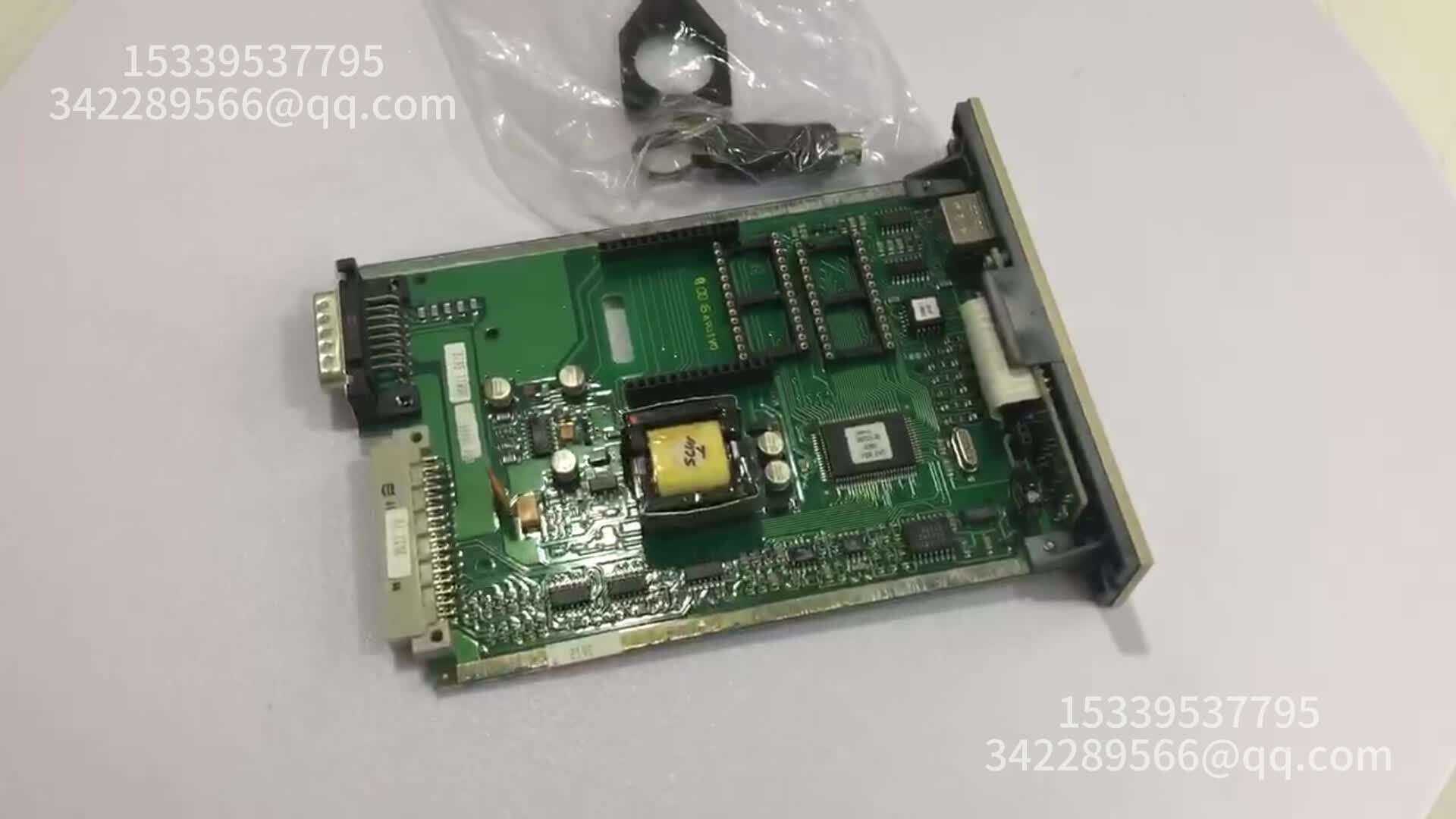
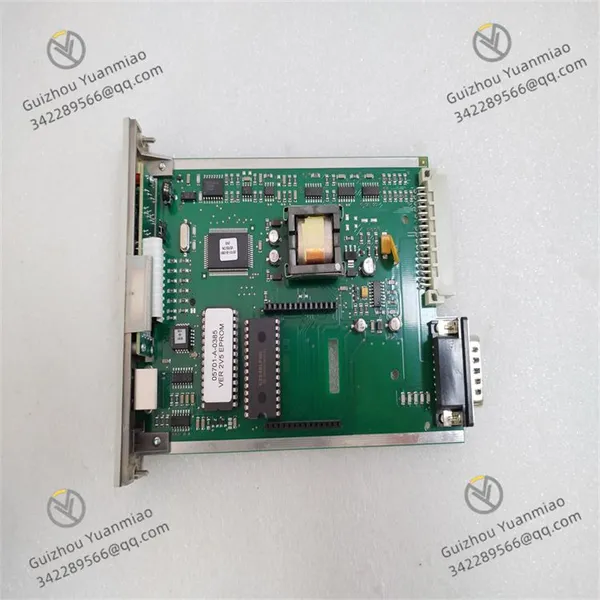
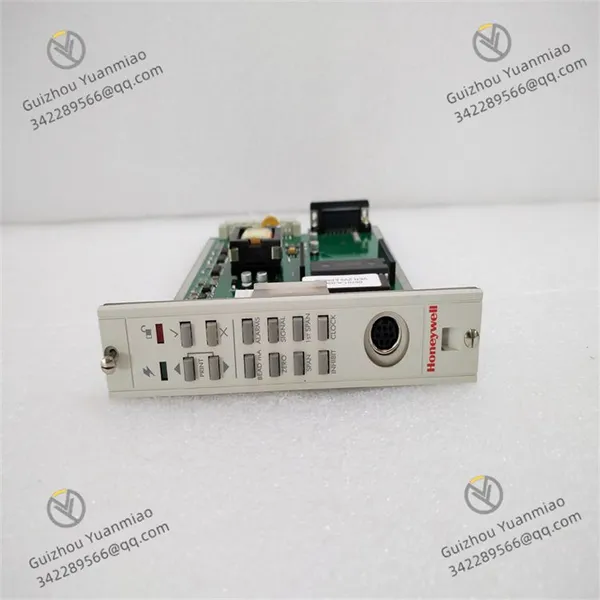
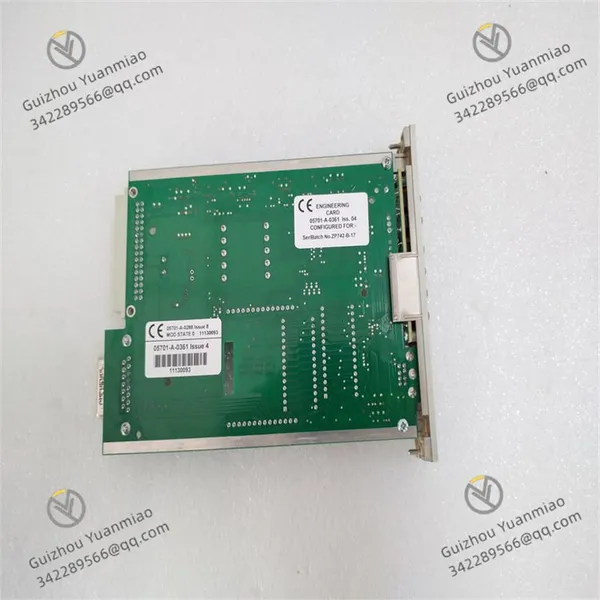
Honeywell 05701-A-0361
Honeywell 05701-A-0361 is a high-performance industrial automation module belonging to the Honeywell Zellweger System 57 series. Combining the technical advantages of Honeywell and SIEGER, it can be used for gas detection, flame detection, and measurement and control of physical quantities such as temperature, pressure, and flow, suitable for various industrial scenarios including industrial automation and building automation.
Functional Features
High-precision Control: Adopting microcontroller technology, the control accuracy can reach ±0.1%, ensuring precise measurement and control of physical quantities such as temperature and pressure.
Fast Response: Capable of quickly responding to load changes with a maximum frequency of 1000 Hz to ensure system stability.
Multiple Control Modes: Supports various control modes such as manual, automatic, and external control to meet different application requirements.
Strong Communication Function: Supports multiple communication protocols such as RS232, RS485, CAN, and Ethernet, facilitating communication with other devices, as well as remote monitoring and data recording.
High Reliability: Manufactured with high-quality materials, with a protection level of IP65 or IP67, it can stably operate in harsh environments ranging from -40°C to 70°C and has strong anti-interference capability.
Multifunctionality: Equipped with discrete input/output functions, it also supports flame detection induction, as well as measurement and control of multiple physical quantities such as temperature, pressure, and flow, suitable for process control, discrete control, and safety systems.

Technical Parameters
Power Supply Voltage: 18-32VDC.
Current Consumption: 24 mA.
Dimensions: 70x40x30mm.
Weight: Approximately 0.5 kg.
Operating Temperature Range: -40°C to 70°C.
Storage Temperature Range: -40°C to 85°C (non-condensing).
Humidity Range: 5% to 95% (non-condensing).
Communication Interfaces: Supports RS232, RS485, CAN, Ethernet, etc.
Input/Output Configuration: 1 analog input, 1 digital input, 1 analog output, and 1 digital output.
Measurement Range: 0 to 100 psi.
Output Signal: 4 to 20 mA.
Control Accuracy: ±0.5%.
Working Principle
When used for gas detection, the module is based on catalytic combustion detection technology, which can convert combustible gas concentration signals into electrical signals. After internal circuit amplification, filtering, and other processing, the signals are compared with preset alarm thresholds. If the thresholds are exceeded, alarm signals are output, and meanwhile, information such as gas concentration data is transmitted to other devices through communication interfaces. For the measurement and control of physical quantities such as temperature and pressure, the module receives analog or digital signals from sensors through input interfaces, processes them, and then controls actuators through output interfaces according to the set control strategy to achieve regulation of the corresponding physical quantities. In addition, the module can interact data with other devices according to preset programs and communication protocols to achieve functions such as remote monitoring and centralized control.


Common Faults and Solutions
Communication Failure: May be caused by poor communication cable connection, incorrect communication parameter settings, or damaged communication interfaces. Check if the cables are properly connected, confirm whether communication parameters such as baud rate and address are correct, and contact professionals for maintenance or module replacement if the interfaces are damaged.
Inaccurate Measurement: If there is a large deviation in measuring physical quantities such as temperature and pressure, it may be due to sensor failure, abnormal input signals, or incorrect module calibration parameters. Check whether the sensor is working normally, verify that the input signals are within the module's specified range, and re-calibrate the module if necessary. If the gas detection is inaccurate, it may be due to aging or contamination of the catalytic combustion sensor, and consider replacing the sensor or performing cleaning maintenance.
Abnormal Output: May be caused by damaged output interfaces, abnormal loads, or internal program errors of the module. Check if the load is normal, try replacing the device connected to the output interface. If the problem remains unsolved, re-download the correct program into the module. If the interface is determined to be damaged, repair or replace the module.
Module Overheating: May be caused by poor ventilation in the installation environment or long-term high-load operation of the module. Ensure that there is sufficient heat dissipation space around the module, clean up the surrounding dust, avoid long-term use in high-temperature environments, and suspend use if necessary until the module cools down before restarting.