Home > Electrical & Electronics > Electrical Control System > Foxboro FCM2F2 P0914YZ Optical Fiber Communication Extender

Foxboro FCM2F2 P0914YZ Optical Fiber Communication Extender
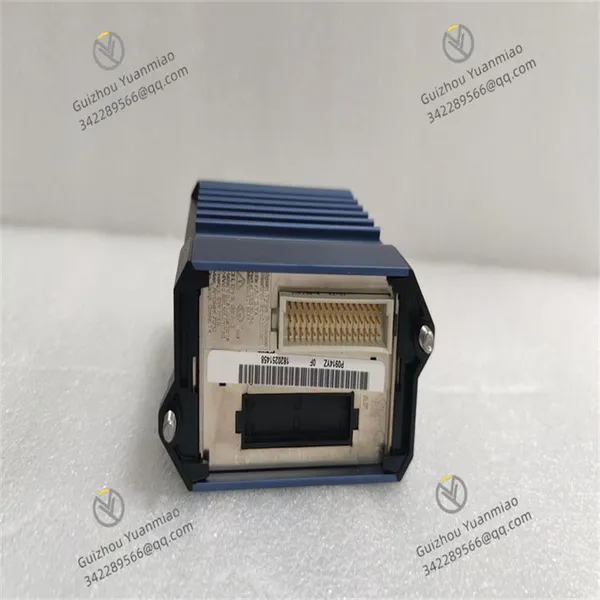
Foxboro FCM2F2 P0914YZ Optical Fiber Communication Extender photo-1
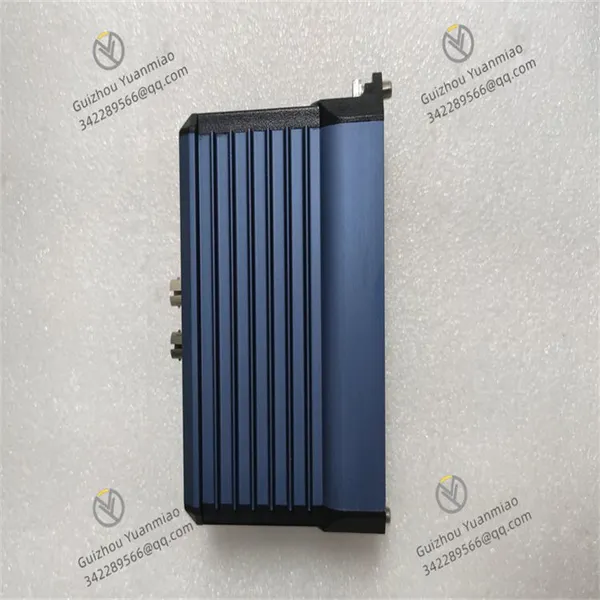
Foxboro FCM2F2 P0914YZ Optical Fiber Communication Extender photo-2
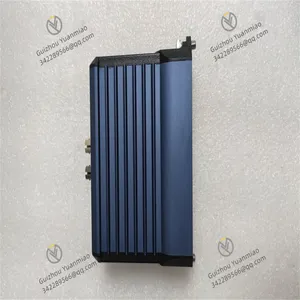
Foxboro FCM2F2 P0914YZ Optical Fiber Communication Extender photo-3
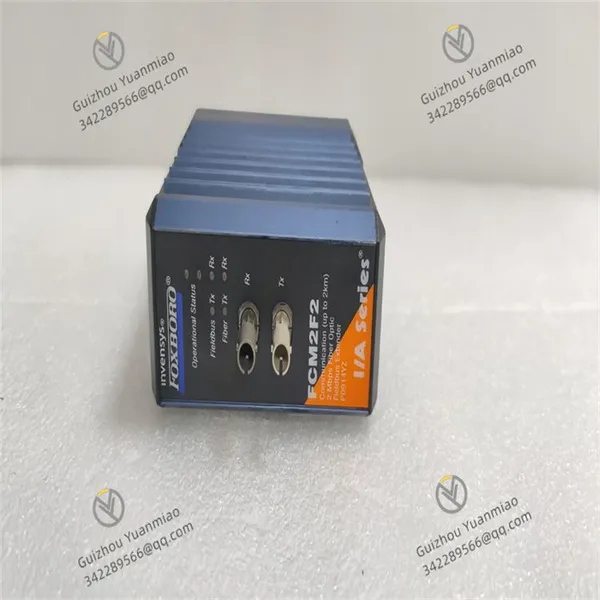
Negotiable MOQ: 1 Piece (Price negotiable depending on order volume and customization)
Key Specifications
Get Latest Price
Material:
Other, Global universal model
Condition:
Other, Global universal model
Task:
Other, Global universal model

Payment & Shipping
Payment Methods:
Port of Shipment:
China
Delivery Detail:
Delivery time depends on order quantity.
Material Other, Global universal model
Condition Other, Global universal model
Task Other, Global universal model
Mathematical Model Other, Global universal model
Signal Other, Global universal model
Customized Non-Customized
Structure Other, Global universal model
Operating temperature -20°C to +70°C
Storage temperature -40°C to +70°C
Humidity 5% to 95% (non-condensing)
Foxboro FCM2F2 P0914YZ


The Foxboro FCM2F2 P0914YZ is an optical fiber communication expander primarily used for remote installation of 200-series Foxboro DCS Field Bus Modules (FBMs), positioning them close to factory processes.
Functional Features
  • Remote Expansion: Supports a maximum fiber cabling distance of 2km between backplanes, allowing FBMs to be installed far from the control center but close to field devices for convenient monitoring and control of on-site equipment.

  • High Reliability: Fiber cabling is immune to electrical noise (e.g., electromagnetic interference, radio-frequency interference, and lightning). With electrical isolation, it prevents voltage differences and ground loops, ensuring stable operation in harsh industrial environments.

  • Easy Maintenance: Can be disassembled/replaced from the backplane without powering off, facilitating on-site maintenance and module replacement. Six light-emitting diodes (LEDs) on the module front display network activity status between the module's field bus and fiber links, as well as the FCM's operational status, enabling maintenance personnel to quickly assess module performance.

FCM2F2 P0914YZ (3)

Technical Parameters
  • Power Requirements: Input voltage range (redundant) is 24V DC +5%, -10%; maximum power consumption is 5W.

  • Environmental Requirements: Operating temperature: -20°C to +70°C; storage temperature: -40°C to +70°C; relative humidity: 5% to 95% (non-condensing); pollution degree: G3 (severe).

  • Physical Specifications: Installed on 200-series FBM backplanes, weighing approximately 284g. Dimensions: height 102mm (without mounting ears) or 114mm (with mounting ears), width 45mm, depth 104mm.

Installation and Cabling
  • Backplane Installation: The FCM installs on a standard backplane, which supports up to eight FBMs or a combination of FBMs and FCMs. When connecting two backplanes with fiber cables (redundant), each backplane requires a pair of FCMs (four FCMs total); for non-redundant configurations, each backplane needs only one FCM.

  • Fiber Cabling: The cable required for FCM2F2 connection is multimode, graded-index glass fiber with a 62.5μm core, 125μm cladding, and NA 0.275 (numerical aperture). The maximum allowable signal loss is 1dB per km at 1300nm and 3.6dB per km at 850nm. Cables must be terminated with ST-type connectors.

FCM2F2 P0914YZ (1)

Working PrincipleI. Core Components and Basic Principles
  1. Optical Signal Reception and Conversion
    • Receiver Function: The optical fiber communication expander converts input optical signals into electrical signals via a photodetector (e.g., photodiode PD) at the receiving end. This process utilizes the photoelectric effect: when an optical signal irradiates the detector, photocurrent is generated, converting changes in optical power into changes in electrical signals.

    • Signal Preprocessing: The converted electrical signal may have attenuation or noise, requiring preliminary amplification by a low-noise amplifier (LNA) and interference removal via a filter circuit to ensure signal integrity.

  2. Signal Amplification and Regeneration
    • Electrical Signal Amplification: The preprocessed electrical signal enters the main amplifier (e.g., operational amplifier or RF amplifier) to boost signal strength and compensate for attenuation during transmission (e.g., fiber loss, connector loss).

    • Signal Regeneration (Optional): For extremely long communication distances or high signal quality requirements, the expander uses a clock recovery circuit (CDR) and decision circuit to "reshape" the electrical signal—restoring the waveform and timing of the original digital signal and eliminating cumulative noise and distortion (similar to the regeneration function of an optical fiber repeater).

  3. Optical Signal Forwarding and Transmission
    • Electrical-Optical Conversion: The amplified or regenerated electrical signal is converted into an optical signal via a laser diode (LD) or light-emitting diode (LED). LDs are suitable for long-distance, high-speed scenarios (e.g., single-mode fiber), while LEDs are Mostly used short-distance, low-speed scenarios (e.g., multimode fiber).

    • Optical Signal Modulation: The electrical signal controls the luminous intensity of the light source through a modulation circuit, making the optical signal changes consistent with the original electrical signal (e.g., amplitude modulation, pulse modulation) to ensure accurate information transmission.

    • Optical Power Enhancement: Further enhance the optical signal power via an optical amplifier (e.g., semiconductor optical amplifier SOA) to increase transmission distance, or expand transmission capacity by superimposing multiple wavelength optical signals in a single fiber through wavelength division multiplexing (WDM) technology.

  4. Bidirectional Communication and Link Management
    • Duplex Mechanism: The optical fiber communication expander supports full-duplex or half-duplex communication, achieving bidirectional signal transmission via a optical splitter (e.g., coupler) or independent transmitting/receiving fibers. For example, in full-duplex mode, transmitting and receiving optical signals simultaneously travel in different wavelengths or fibers.

    • Link Monitoring and Protection: A built-in monitoring circuit real-time detects parameters such as optical signal strength and bit error rate. When signals are abnormal, it automatically initiates gain adjustment, alarms, or redundant switching (e.g., primary-backup link switching) to ensure communication stability.

FCM2F2 P0914YZ (2)

II. Key Technologies and Expansion Methods
  1. Optical Amplification Technology
    • Distributed Amplification: Inject gain media (e.g., erbium-doped fiber amplifier EDFA) directly into the fiber line for online amplification of optical signals, suitable for long-distance trunk transmission.

    • Centralized Amplification: Integrate an optical amplifier inside the expander to centrally amplify received optical signals before transmission, commonly used for distance expansion in access networks or local area networks.

  2. Signal Regeneration Technology
    • For digital signals, eliminate cumulative damage through "3R" regeneration (Reamplify, Reshape, Retime), bringing signal quality close to the original level, suitable for high-speed (e.g., above 10Gbps), long-distance scenarios.

  3. Wavelength Conversion and Multiplexing
    • Convert optical signals to different wavelengths via wavelength converters (WDM) or transmit multiple wavelength signals in the same fiber using wavelength division multiplexing technology, achieving "one fiber for multiple uses" to expand communication capacity and distance.

III. Application Scenarios and Typical Functions
  1. Long-Distance Communication Expansion
    • In optical fiber transmission networks, when signals suffer power loss due to fiber attenuation (e.g., 0.2dB/km), amplify signals via expanders to extend transmission distance from tens of kilometers to hundreds of kilometers (e.g., submarine cable communication requires multi-stage expanders).

  2. LAN/Industrial Field Expansion
    • In industrial automation scenarios, expanders extend the fiber communication distance of devices like PLCs and sensors from hundreds of meters to kilometers while isolating electromagnetic interference (fiber is non-conductive with strong anti-interference capability).

    • In data centers or building networks, connect devices in different machine rooms or floors to solve cabling distance limitations.

  3. Signal Splitting and Aggregation
    • Expanders can act as optical splitters (e.g., 1xN), distributing one optical signal to multiple fibers or aggregating multiple signals into one, enabling expansion of network topologies (e.g., star, tree structures).

Product Tags: FCM2F2 , P0914YZ

Send Inquiry to This Supplier

Message
0/5000
Want the best price? Post an RFQ now!
1Yr
Business Type
Trading Company
Year Established
2014
Factory Size
1,000-3,000 square meters
Product Certifications
SA8000