Home > Electrical & Electronics > Electrical Control System > Foxboro FBM232 P0926GW Ethernet Communication Module

Foxboro FBM232 P0926GW Ethernet Communication Module
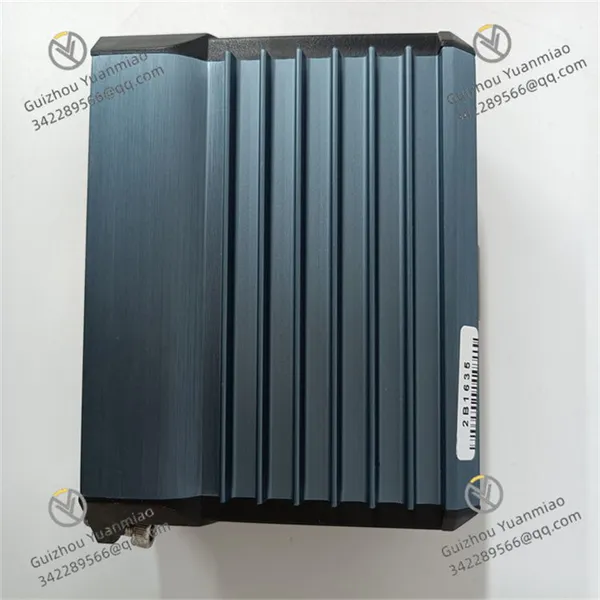
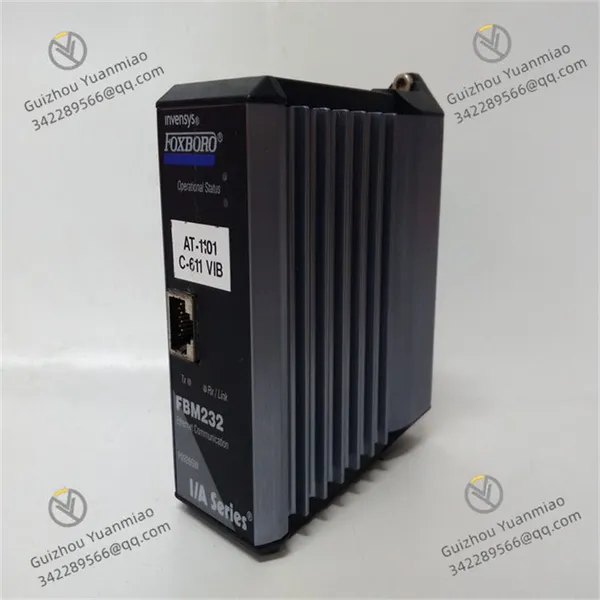
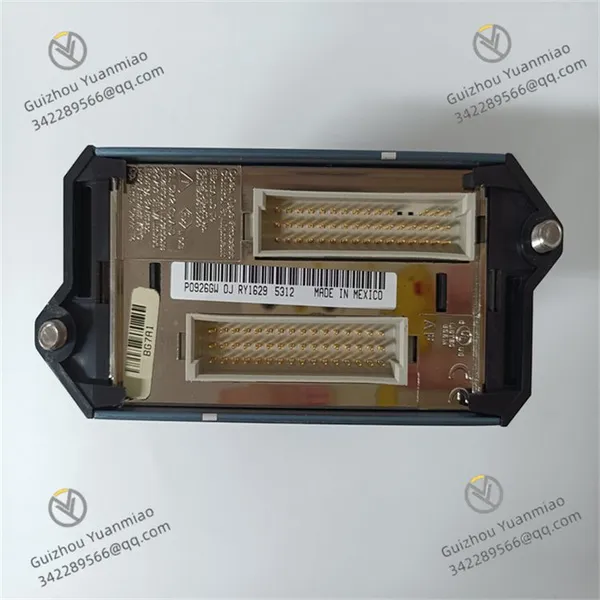
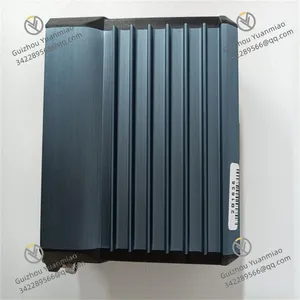
Foxboro FBM232 P0926GW Ethernet Communication Module photo-1
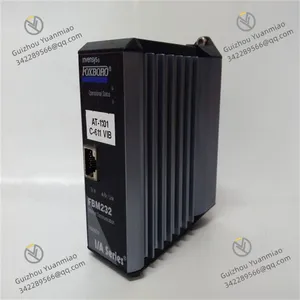
Foxboro FBM232 P0926GW Ethernet Communication Module photo-2
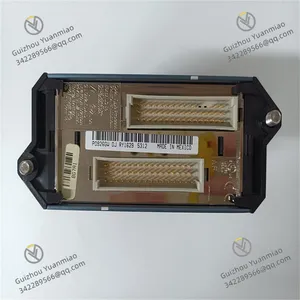
Foxboro FBM232 P0926GW Ethernet Communication Module photo-3
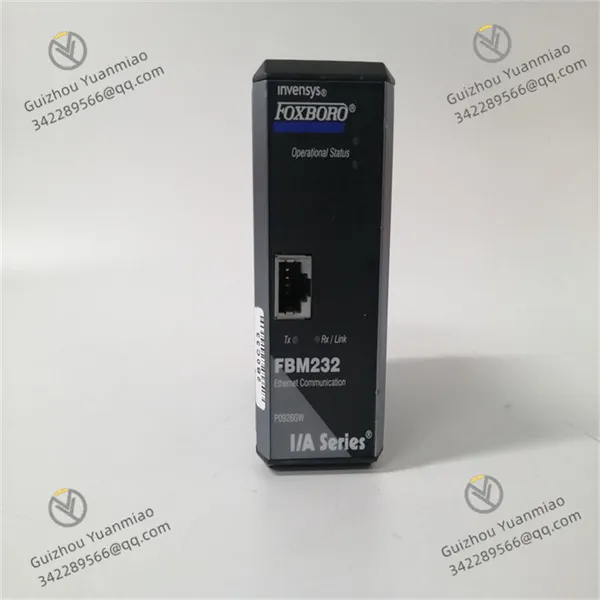
Foxboro FBM232 P0926GW Ethernet Communication Module photo-4
Negotiable MOQ: 1 Piece (Price negotiable depending on order volume and customization)
Key Specifications
Get Latest Price
Material:
Other, Global universal model
Condition:
Other, Global universal model
Task:
Other, Global universal model

Payment & Shipping
Payment Methods:
Port of Shipment:
China
Delivery Detail:
Delivery time depends on order quantity.
Material Other, Global universal model
Condition Other, Global universal model
Task Other, Global universal model
Mathematical Model Other, Global universal model
Signal Other, Global universal model
Customized Non-Customized
Structure Other, Global universal model
Operating Temperatur -40°C to 70°C
Dimensions 160mm×99mm×40mm
Power Supply 24V DC
Foxboro FBM232 P0926GW
I. Functional Features
  • High-integration Analog Input/Output Module:
    Equipped with 8 isolated analog input (AI) channels and 8 analog output (AO) channels, supporting industrial standard signals (e.g., 4-20mA, 0-10V). Suitable for collection and control of process parameters such as temperature, pressure, and flow.
    • High-precision Signal Processing: AI channels feature 16-bit resolution and linearity ≤±0.05% FS; AO channels have 14-bit resolution, meeting requirements for precise measurement and control.

  • Full-channel Electrical Isolation Design:
    Each AI/AO channel is independently optoelectrically isolated with an isolation voltage ≥500V AC, effectively suppressing common-mode interference and preventing signal crosstalk and equipment damage.
  • Wide-range Signal Compatibility:
    • AI Input: Supports configurable signals including 4-20mA, 0-20mA, 0-5V, 0-10V, ±5V, ±10V, compatible with devices like pressure transmitters and temperature sensors.

    • AO Output: Supports signals such as 4-20mA and 0-10V, directly driving actuators like control valves and frequency converters. Output load capacity: ≤500Ω for 4-20mA, ≥10kΩ for 0-10V.

  • Industrial-grade Environmental Adaptability:
    Operating temperature ranges from -40°C to 70°C, with protection levels meeting dustproof and splash-proof requirements, suitable for harsh industrial scenarios like metallurgy, petroleum, and chemical industries.
  • Real-time Status Monitoring:
    Each channel is equipped with independent LED indicators (AI input abnormality light, AO output status light), intuitively displaying signal status for on-site debugging and fault diagnosis.

FBM232 P0926GW (4)

II. Technical Parameters
Parameter Category Specific Indicators
Input Signal (AI) 8 channels, configurable 4-20mA/0-20mA/0-5V/0-10V/±5V/±10V, input impedance ≥10MΩ, sampling rate ≥250Hz
Output Signal (AO) 8 channels, configurable 4-20mA/0-10V, output accuracy ±0.1% FS (25°C), settling time ≤5ms
Isolation Features Optoelectric isolation for AI/AO channels (500V AC), mutual isolation between channels
Power Supply 24V DC (voltage range 19.2-28.8V DC), power consumption ≤12W
Communication Protocol Supports Modbus RTU, communicates with Foxboro DCS systems or third-party controllers via FBM backplane
Operating Temperature -40°C to 70°C, storage temperature -40°C to 85°C
Humidity 5%-95% non-condensing
Dimensions Approximately 160mm×99mm×40mm (6.3×3.9×1.6 inches)
Weight Approximately 0.7kg (1.5 lbs)
Installation Method Insert into 200-series FBM backplane (e.g., dual-slot P0973CG or quad-slot P0973CN), supporting DIN rail installation

FBM232 P0926GW (3)

III. Working Principle
  • Analog Signal Acquisition and Processing Flow:
    • AI Channels: Receive external sensor signals (e.g., 4-20mA from pressure transmitters), filter and amplify via signal conditioning circuits, convert to digital quantities through 16-bit ADC, and transmit to the internal processor via optoelectric isolators.

    • Signal Processing: The processor linearizes and corrects digital signals, filters out noise, stores them in status registers, and supports engineering unit conversion (e.g., mapping between temperature in °C and current in mA).

  • Analog Output Control Logic:
    • AO Channels: Receive control commands (digital quantities) from the host computer (e.g., DCS), convert to analog signals via 14-bit DAC, and output to actuators through relay drive circuits.

    • Protection Mechanism: Output terminals are equipped with overcurrent and overvoltage protection circuits to prevent module damage from abnormal loads.

  • Communication and Status Feedback:
    • Communicate with the control system via Modbus RTU protocol, uploading AI data and receiving AO commands in real time.

    • LED indicators dynamically display channel status (e.g., flashing when AI exceeds limits, steady on when AO output is valid).

FBM232 P0926GW (2)

IV. Installation and Configuration Guide(I) Installation Steps
  • Safety and Environmental Preparation:
    • Power off and wear an anti-static wristband to avoid static damage to components.

    • Ensure the installation environment is far from strong electromagnetic sources (e.g., frequency converters, transformers), with suitable temperature and humidity.

  • Physical Installation:
    • Insert into the corresponding slot of the FBM backplane, pressing until the slot locks.

    • If using a DIN rail, fix the backplane with an adapter to ensure firm installation.

  • Wiring Connection:
  • Power Wiring: Connect to 24V DC power supply (mind polarity), using shielded cables.

  • AI Wiring:

    • Current signal (4-20mA): Two-wire transmitters directly connect to AI terminals (+ for signal, - for COM); three-wire/four-wire transmitters require external power supply.

    • Voltage signal (0-10V): Connect positive and negative poles to corresponding terminals, with the common end to COM.

  • AO Wiring:

    • Current output: Load is connected in series between AO terminal and COM (e.g., control valve coil), with load resistance ≤500Ω.

    • Voltage output: Load is connected in parallel between AO terminal and COM, with load impedance ≥10kΩ.

    • Inductive loads require parallel freewheeling diodes (DC) or varistors (AC) to prevent back EMF interference.

  • Communication Wiring: Connect RS-485 cables to A/B terminals of the control system, shorting 120Ω terminal resistors at the end.

  • Appearance Inspection:
    • Confirm no loose terminals and correct wiring.

    • After powering on, check the PWR light (green steady on), and AI/AO channel lights should not flash abnormally.

(II) Configuration Process
  • Tools and Connection:
    • Use Foxboro's dedicated configuration software (e.g., FBM Configuration Tool) to connect the module via RS-485 or Ethernet.

  • Parameter Configuration:
    • Communication Parameters: Set Modbus address (1-247), baud rate (up to 115.2kbps), and parity (odd/even/none).

    • AI Parameters: Configure input signal type, engineering units (e.g., °C, kPa), upper/lower alarm values, and filtering time (default 10ms).

    • AO Parameters: Set output signal type, safe output value (e.g., maintain last value or output 0% in case of failure), and output limiting (prevent overrange).

  • Function Verification:
    • Manually input standard signals (e.g., 20mA to AI channel), observe if LED lights match software display values (error ≤±0.05% FS).

    • Send AO commands via software (e.g., output 50%), measure output voltage/current for accuracy, and verify normal load actuation.

FBM232 P0926GW (1)

(III) Debugging and Fault Troubleshooting
Fault Phenomenon Possible Causes Solutions
Abnormal AI value fluctuation Signal interference, loose wiring, input impedance mismatch Check shielding and grounding, reinforce wiring, confirm input signal type matches configuration.
No AO output Damaged output channel, load short circuit, abnormal power supply Measure output voltage/current, replace AO channel or module, check load and power supply.
Communication failure Reverse wiring polarity, address conflict, missing terminal resistance Check RS-485 wiring, modify Modbus address, install 120Ω resistor.
Module overheating Excessive ambient temperature, overload Strengthen ventilation, check if power voltage and load power are within rated ranges.
V. Application Scenarios
  • Precise Control of Process Parameters:
    • Chemical industry: Real-time collection of reactor temperature/pressure and control valve adjustment.

    • Petroleum refining: Signal processing and output driving in flow metering and liquid level regulation systems.

  • Power System Monitoring:
    • Substations: Analog collection of bus voltage/current, transformer oil temperature monitoring, and cooling fan control.

    • Generator sets: Steam pressure/speed signal processing and excitation system regulation output.

  • Environmental Protection and Building Automation:
    • Sewage treatment: Collection of parameters like pH and turbidity, frequency adjustment of dosing pumps.

    • Intelligent buildings: Temperature/humidity control of air conditioning systems, variable frequency adjustment of water supply/drainage pumps.

VI. Comparison with FBM230 (Extended Reference)
Module Model FBM230 (P0926GU) FBM232 (P0926GW)
Core Function 16-channel DI + 16-channel DO (digital) 8-channel AI + 8-channel AO (analog)
Signal Type Dry/wet contact signals (5-24V DC/AC) Standard analog signals like 4-20mA, 0-10V
Application Status monitoring, equipment start/stop control Process parameter measurement, continuous quantity regulation
Resolution - (no resolution for digital signals) AI 16-bit, AO 14-bit
Typical Load Solenoid valves, contactors (digital drive) Control valves, frequency converters (analog drive)
Product Tags: FBM232 , P0926GW

Send Inquiry to This Supplier

* Message
0/5000

Want the best price? Post an RFQ now!
Verified Business License
Business Type
Trading Company
Year Established
2014
Factory Size
1,000-3,000 square meters
Product Certifications
SA8000