Contact Platform Support
 Help Center
Application of MAOS 82692-97-5 in In Vitro Diagnostic Kit



Related Products
-
 The Role of Chromogenic Substrate TODB 127544-88-1 in Triglyceride DetectionUS$ 30 - 50MOQ: 100 Grams
 -
Advantages and Characteristics of the Chromogenic Substrate DA64 (115871-19-7)US$ 480 - 500MOQ: 100 Grams
-
Performance Characteristics and Usage Instructions of Color Developing Substrate DA67 115871-18-6US$ 480 - 500MOQ: 100 Grams
-
Advantages of High TOOS Molar AbsorbanceUS$ 1.5 - 2MOQ: 100 Grams
-
How to Obtain High-quality TOPS Powder as a Chromogenic SubstrateUS$ 1.6 - 2.8MOQ: 100 Grams
With the rapid development of modern medical technology, in vitro diagnostic kits are playing an increasingly important role in clinical diagnosis. These test kits can accurately and quickly detect various biomarkers in the human body, providing doctors with powerful diagnostic evidence. Among them, the application of the novel Trinder's reagent MAOS as an excellent chromogenic substrate in in in vitro diagnostic kits has attracted widespread attention. This article will explore in detail the application and advantages of MAOS in in in vitro diagnostic kits.
Overview of MAOS
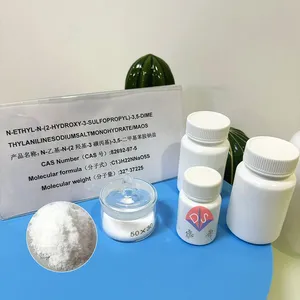
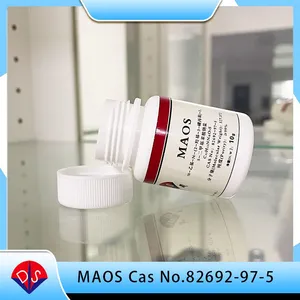
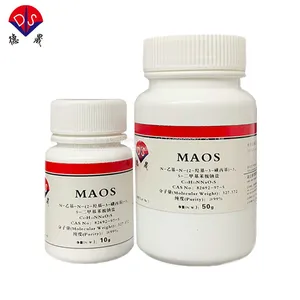
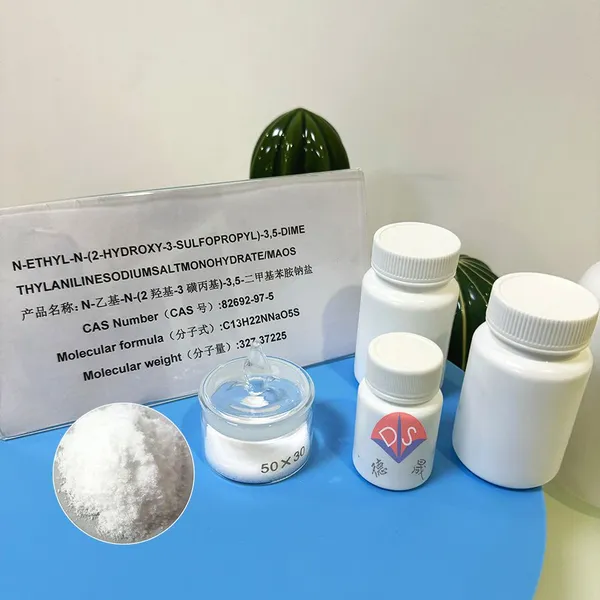
MAOS, The full name is N-ethyl-N - (2-hydroxy-3-sulfopropyl) -3,5-dimethylaniline sodium salt monohydrate, which is a highly water-soluble derivative of aniline. It has the advantages of high color sensitivity and good water solubility, and is widely used in in vitro diagnostic kits. The original form of MAOS is powder, which needs to be prepared into a solution when used. The molar absorption intensity of its color reaction is relatively high, making the sensitivity of the detection results higher compared to other color substrates.
Application of MAOS in In Vitro Diagnostic Kit
1. Uric acid testing
Uric acid is a metabolic product in the human body, and its concentration changes are related to various factors. MAOS can be used for quantitative determination of uric acid in in vitro diagnostic kits. Through specific enzymatic reactions, MAOS undergoes a chemical reaction with uric acid to produce products with specific colors. By using a photometer to measure the absorbance of the product, the concentration of uric acid can be accurately calculated. This method has the characteristics of high sensitivity and good accuracy, providing a reliable means for the detection of uric acid.
2. Biomarker detection
In vitro diagnostic kits, MAOS is commonly used to detect various disease markers, such as cardiovascular markers (such as troponin, CK-MB), due to its high sensitivity and stability. These tests are crucial for early detection, diagnosis, and monitoring of treatment outcomes, providing a favorable basis for clinical testing.
Advantages of MAOS in In Vitro Diagnostic Kit
1. High sensitivity: MAOS has a higher molar absorption intensity for color reaction, resulting in higher sensitivity of detection results. This means that under the same conditions, using MAOS can achieve lower detection limits and higher detection sensitivity, thereby improving diagnostic accuracy.
2. Wide pH adaptability range: Enzymes are usually involved in biochemical testing projects, and the catalytic effect of enzymes is very sensitive to the pH value of the reaction environment. MAOS has a wide pH adaptation range and can maintain stable color reaction performance within a wide pH range. This makes the application of MAOS in in in vitro diagnostic kits more flexible and convenient.
3. UV absorption wavelength: The UV absorption wavelength of the product after MAOS oxidation can reach 630NM, much higher than that of ordinary color reagents. This makes MAOS more suitable for biochemical detection projects, as the ultraviolet region is less affected by the composition of the sample being tested, making it easier to obtain more accurate results.
In summary, MAOS, as a chromogenic substrate, has broad application prospects and important application value in in vitro diagnostic kits. With the continuous development and innovation of medical technology, it is believed that MAOS will play a more important role in future clinical diagnosis. Desheng is a manufacturer of new Trinder's reagents and can provide a range of reagents such as MAOS. Independently developed and produced, with small inter batch differences and sensitive response, it has important value in clinical diagnosis. If you have any purchasing needs, please feel free to contact us for consultation and ordering!

Send Inquiry to This Supplier


You May Also Like
-
Stability and Storage Conditions of ADOS Products as Chromogenic SubstratesUS$ 15 - 22MOQ: 100 Grams
-
The Simplicity of ADPS Colorimetric Reagent in Experimental OperationUS$ 8 - 13MOQ: 100 Grams
-
Packaging Requirements for Exporting Color Developing Substrate ALPS Powder in Small BatchesUS$ 15 - 28MOQ: 100 Grams
-
What Items Can DAOS, a Chromogenic Substrate, be Used to Detect?US$ 30 - 50MOQ: 100 Grams
-
Basic Information of the New Trinder's Reagent HDAOS Powder ReagentUS$ 20 - 35MOQ: 100 Grams
-
Application of MADB 209518-16-1 in Serum Muscle Enzyme Detection KitUS$ 30 - 45MOQ: 100 Grams
-
Exploration of the Advantages of MAOS Chromogenic Substrates in Biochemical DetectionUS$ 35 - 50MOQ: 100 Grams
-
What is the Use of the New Trinder's Reagent TOOS 82692-93-1?US$ 1.5 - 2MOQ: 100 Grams
-
Application Introduction of TOPS Color Reagent (CAS40567-80-4)US$ 1.6 - 2.8MOQ: 100 Grams
-
What Applications Can the Chromogenic Substrate ADOS 82692-96-4 be Used In?US$ 15 - 22MOQ: 100 Grams