








 Contact Platform Support
 Help Center
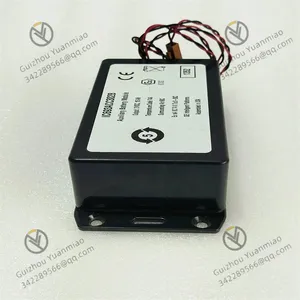
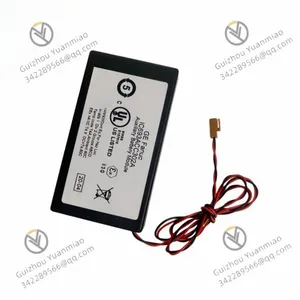
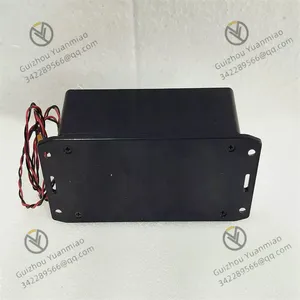
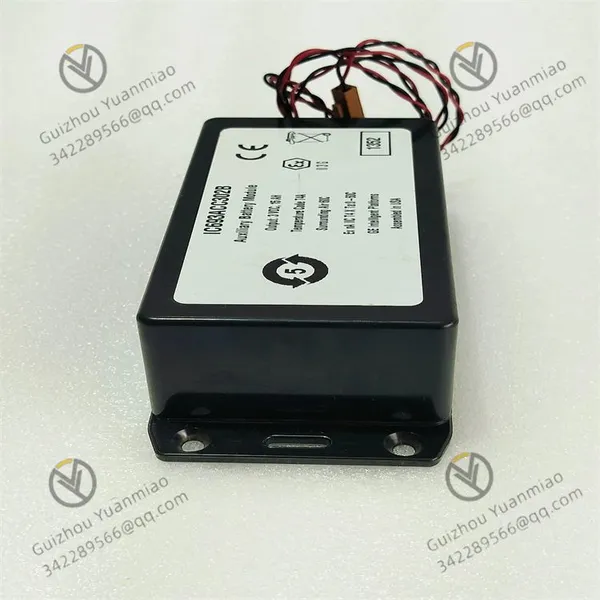
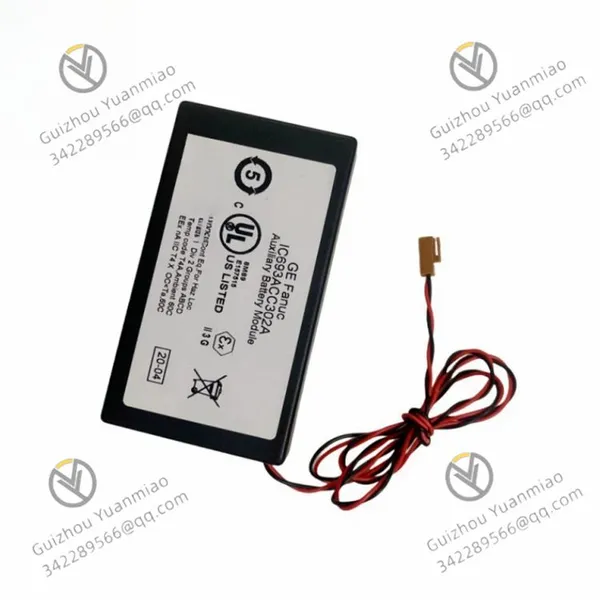
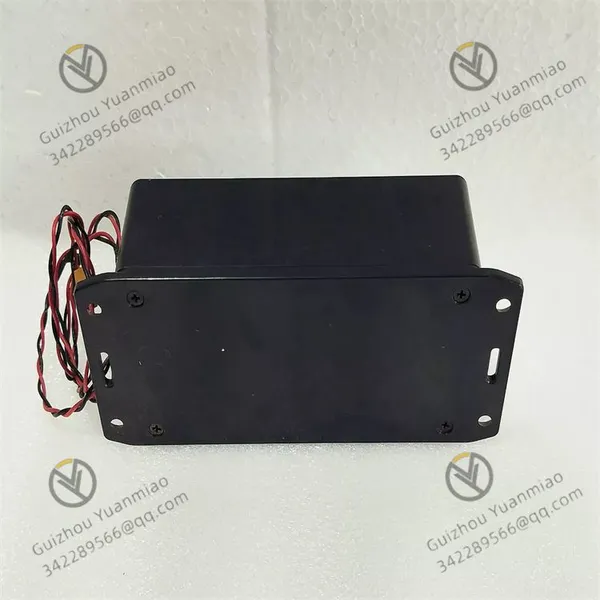
GE IC693ACC302 Auxiliary Battery Pack Module



Related Products
-
 IC693ACC315 GE Industrial Automation Auxiliary Battery Pack ModuleNegotiableMOQ: 1 Piece
 -
IC693ACC332 GE Industrial Automation Auxiliary Battery Pack ModuleNegotiableMOQ: 1 Piece
-
GE IC693ACC335 Auxiliary Battery Pack ModuleNegotiableMOQ: 1 Piece
-
GE URRHH Multilin Series ModulesNegotiableMOQ: 1 Piece
-
UR9EV GE High-performance Industrial Control ModuleNegotiableMOQ: 1 Piece
GE IC693ACC302 auxiliary battery pack module
I. Basic Working Logic: Dual power supply redundancy design
Normal power supply status:
When the controller (such as series 90-30/70, PACSystems) is connected to an external power supply, the module is in the "standby charging" mode. At this point, the external power supply, on the one hand, supplies power to the controller's volatile memory (such as RAM), and on the other hand, charges the battery pack through the charging management circuit inside the module to ensure that the battery remains fully charged.
Power-off switching mechanism
When an abnormality occurs in the external power supply (such as power failure or sudden voltage drop), the power detection circuit inside the module will quickly identify the voltage drop and trigger the internal relay or electronic switch to immediately cut off the external power supply path. At the same time, the battery pack is connected to the power supply circuit, and the battery continuously supplies power to the controller's memory to prevent data loss.
Ii. Core Function Implementation: Memory Data Protection
Power supply requirements for volatile memory:
If the RAM and other volatile memories of the controller lose power after a power outage, the stored programs, configuration parameters and operation data will be lost immediately. The core function of IC693ACC302 is to provide a stable DC power supply (typically 5V or 24V, depending on the controller model) through the battery pack when the external power supply is interrupted, maintaining the "data hold" state of the memory and ensuring that the controller can return to its pre-power outage operating state after a restart.
The relationship between battery capacity and backup duration:
The module is equipped with a 15.0 ampere-hour (Ah) battery pack, and its backup duration is directly related to the power consumption of the controller:
When used in conjunction with low-power controllers such as IC693 CPU374, the power consumption is relatively low, and the battery can support memory backup for 15 months.
When used in conjunction with high-power controllers such as the IC693 CPU (model 311-364) or the IC697 CPU, the battery can still support up to 75 months of backup through an optimized power supply strategy. This is attributed to the low-power management circuit inside the module, which can dynamically adjust the output current and reduce energy loss.
Iii. Safety and Reliability Design
Overcurrent/short circuit protection
The module is equipped with a 1-ampere fuse. When a short circuit or abnormal surge in current occurs in the battery output circuit, the fuse will quickly melt to cut off the faulty circuit, preventing the battery from overheating or the controller from being damaged, and ensuring system safety.
Temperature Adaptability and Life Management
The operating temperature range is 0-60℃. It can withstand certain temperature fluctuations in industrial environments. When the temperature is too high, the battery performance will decline; when it is too low, it may affect the charging and discharging efficiency.
The shelf life is 7 years. After this period, the battery capacity will naturally decline and needs to be replaced regularly to ensure the reliability of backup.
Iv. Collaborative Workflow with the Controller
Initial connection and charging:
The module is connected to the controller mainboard through a 2-pin female connector. After the external power supply is turned on, the battery starts to charge until it reaches a fully charged state (the charging status can be determined by the indicator light on the module, if there is a design).
Power status monitoring
The module continuously monitors the external power supply voltage. When the voltage drops below the threshold (such as below 80% of the rated value), the switching logic is triggered and the battery immediately takes over the power supply.
Power-off maintenance and data retention
During battery power supply, the controller memory remains working to ensure that program data is not lost. After the external power supply is restored, the module automatically switches back to the external power supply and recharges the battery, forming a cycle.
V. Summary of Key Technical Points
Power switching speed: The switching process is completed in milliseconds, which is much faster than the time it takes for memory data to be lost (usually in microseconds), ensuring seamless data retention.
Low self-discharge design: The battery pack adopts low self-discharge technology, which slows down the power loss when not in use, ensuring its usability after long-term storage.
Compatibility adaptation: By adapting to the series 90-30/70 and PACSystems controllers through different power supply protocols, it ensures compatibility with multiple CPU models and achieves universal backup functions.
Application scenarios and value
This module is mainly used in industrial automation scenarios where "data is not lost in case of power failure" is required, such as production line control and process automation systems. When there is a sudden power outage or equipment maintenance power failure, it can avoid production interruption caused by program reset, reduce the time for restart and debugging, and improve system reliability and production efficiency.

Send Inquiry to This Supplier


You May Also Like
-
GE UR9EH Universal RelayNegotiableMOQ: 1 Piece
-
UR8HH GE I/O ModuleNegotiableMOQ: 1 Piece
-
GE UR8FV Universal Relay CT/VT ModuleNegotiableMOQ: 1 Piece
-
GE UR8FH Multilin Series CT/VT ModulesNegotiableMOQ: 1 Piece
-
GE UR6EV Contact Input Group Isolation Terminal BoardNegotiableMOQ: 1 Piece
-
GE UR6AV Digital I/O ModuleNegotiableMOQ: 1 Piece
-
GE SR489-P5-A20-E Generator Management RelayNegotiableMOQ: 1 Piece
-
GE SR489-P5-HI-A20-E Generator Management Relay ModuleNegotiableMOQ: 1 Piece
-
GE SR489-P1-HI-A20-E-H High-end Management RelayNegotiableMOQ: 1 Piece
-
GE 489-P1-HI-A20-T-H Generator Management Relay ModuleNegotiableMOQ: 1 Piece


