








 Contact Platform Support
 Help Center
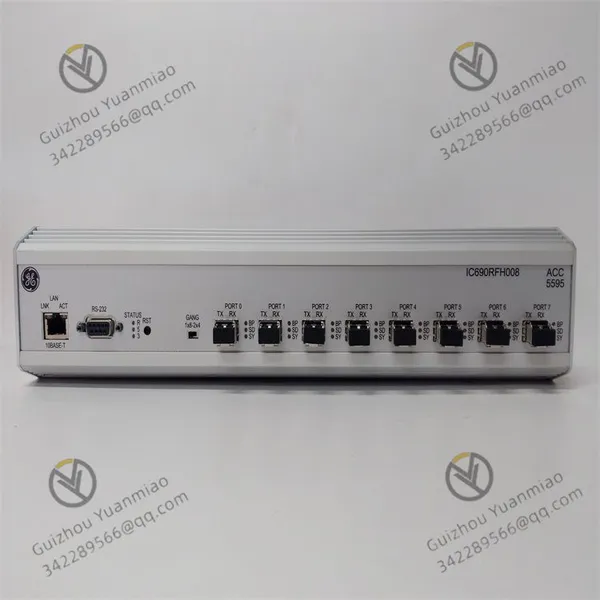
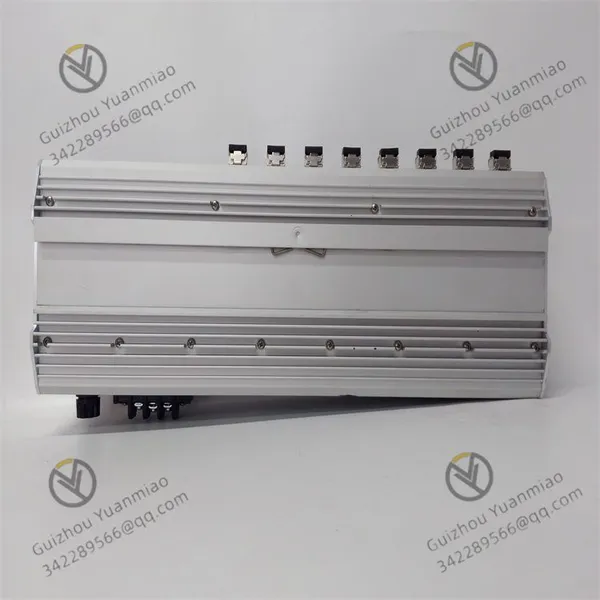
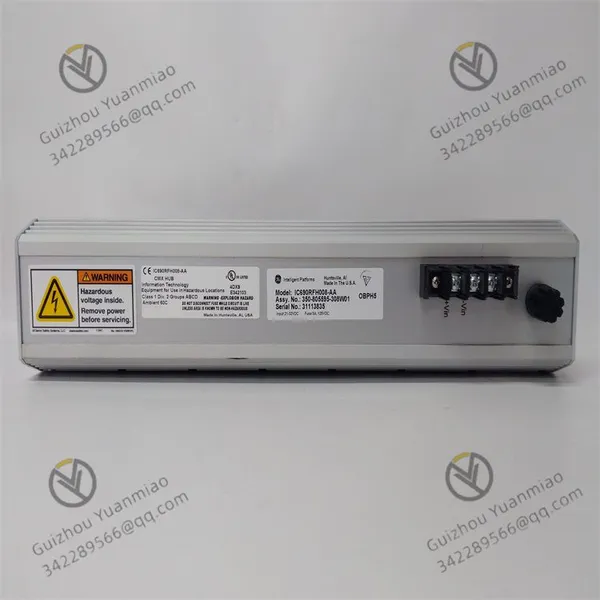
GE IC690RFH008 Radio Frequency Identification Reading Module



Related Products
-
 GE IC693ACC302 Auxiliary Battery Pack ModuleNegotiableMOQ: 1 Piece
 -
IC693ACC315 GE Industrial Automation Auxiliary Battery Pack ModuleNegotiableMOQ: 1 Piece
-
IC693ACC332 GE Industrial Automation Auxiliary Battery Pack ModuleNegotiableMOQ: 1 Piece
-
GE IC693ACC335 Auxiliary Battery Pack ModuleNegotiableMOQ: 1 Piece
-
GE URRHH Multilin Series ModulesNegotiableMOQ: 1 Piece
GE IC690RFH008 Radio Frequency Identification reading module
I. Core Components and Basic Architecture
The RFID system mainly consists of three parts:
RFID reading module (reader/reader) : Transmits radio frequency signals and receives the data returned by the tag. It usually includes a radio frequency circuit, a baseband processing unit and a communication interface.
RFID tags (electronic tags) : They store the identification information of target objects and are divided into passive tags (without batteries, powered by reading modules) and active tags (with their own batteries, actively transmitting signals).
Antenna: The medium for transmitting radio frequency signals between the reading module and the tag. The reading module emits electromagnetic waves through the antenna, and the tag receives and reflects the signals through the antenna.
Ii. Working Principle and Process
Signal transmission and tag activation
The reading module emits radio frequency carrier signals of specific frequencies (such as 902-928 MHZ in the ultra-high frequency (UHF) band) through the antenna.
When the RFID tag enters the antenna radiation area of the reading module, the passive tag generates an induced current by cutting the magnetic field lines through the coil, supplying power to the chip and activating it. Active tags respond to signals actively.
2. Data Modulation and Transmission
Tag data loading: The tag chip encodes the stored identification information (such as ID number, item attributes, etc.) and modulates it onto the radio frequency signal.
Modulation methods: Common modulation methods include amplitude shift keying (ASK), frequency shift keying (FSK), phase shift keying (PSK), etc. For example, passive tags often use ASK modulation (which transmits data by changing the amplitude of the reflected signal).
Signal reflection and return: Passive tags reflect the modulated signals back to the reading module through the "backscattering" technology. Active tags directly transmit signals through their own antennas.
3. Signal reception and decoding
The antenna of the reading module receives the radio frequency signal returned by the tag. After being processed by the radio frequency circuit (such as a low-noise amplifier, mixer), it is converted into a baseband signal.
The baseband processing unit demodulates and decodes the signal to restore the data stored in the tag.
4. Data processing and system interaction
The reading module transmits the decoded data to the upper computer (such as PLC, server) through communication interfaces (such as serial port, Ethernet, USB, etc.).
The upper computer stores, analyzes the data or triggers corresponding control actions (such as production line scheduling, inventory management system updates, etc.).
Iii. Key Technical Principles
Coupling mode
Inductive coupling (near field communication,
Electromagnetic backscatter coupling (far-field communication, >1 meter) : The electromagnetic waves emitted by the reading module are reflected when they encounter the tag. The tag modulates the reflected signal by changing its own impedance. This is commonly seen in ultra-high frequency (UHF) and microwave frequency bands (such as 900MHz, 2.45GHz).
2. Anti-collision algorithm
When multiple tags enter the reading range simultaneously, the reading module avoids signal conflicts through anti-collision protocols (such as the ALOHA algorithm in ISO 18000-6C) to achieve simultaneous identification of multiple tags.
Iv. Application Scenario Examples
Supply chain management: Through RFID technology, the location and status of goods can be tracked in real time, enhancing the transparency and efficiency of the supply chain.
Asset tracking: Attaching RFID tags to assets enables real-time tracking of their location and usage, thereby enhancing the efficiency of asset management.
Inventory management: By using this module, rapid and accurate inventory checks can be achieved, reducing manual operation errors and improving inventory management efficiency.
Production process control: It can be integrated into an automated production line to automatically control and monitor the production process, such as tracking the position of workpieces on the production line to ensure that each production link proceeds in sequence.
V. Integration with the IC690RFH008 module
IC690RFH008, as an ultra-high frequency RFID reading module, adopts the UHF frequency band (902-928 MHZ) and electromagnetic backscattering coupling. The maximum reading distance reaches 10 meters and it supports the EPC Global Class 1 Gen 2 protocol (compatible with mainstream tags).
Connect the external antenna through the N-type antenna interface to enhance signal coverage; The FSK modulation is utilized to enhance the anti-interference capability and adapt to electromagnetic interference in industrial environments.

Send Inquiry to This Supplier



You May Also Like
-
UR9EV GE High-performance Industrial Control ModuleNegotiableMOQ: 1 Piece
-
GE UR9EH Universal RelayNegotiableMOQ: 1 Piece
-
UR8HH GE I/O ModuleNegotiableMOQ: 1 Piece
-
GE UR8FV Universal Relay CT/VT ModuleNegotiableMOQ: 1 Piece
-
GE UR8FH Multilin Series CT/VT ModulesNegotiableMOQ: 1 Piece
-
GE UR6EV Contact Input Group Isolation Terminal BoardNegotiableMOQ: 1 Piece
-
GE UR6AV Digital I/O ModuleNegotiableMOQ: 1 Piece
-
GE SR489-P5-A20-E Generator Management RelayNegotiableMOQ: 1 Piece
-
GE SR489-P5-HI-A20-E Generator Management Relay ModuleNegotiableMOQ: 1 Piece
-
GE SR489-P1-HI-A20-E-H High-end Management RelayNegotiableMOQ: 1 Piece


