








 Contact Platform Support
 Help Center
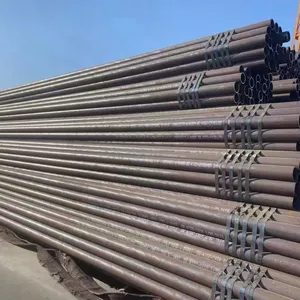
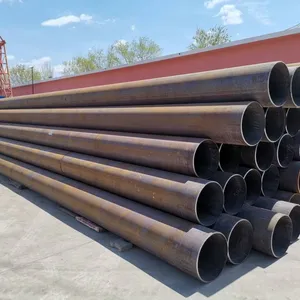
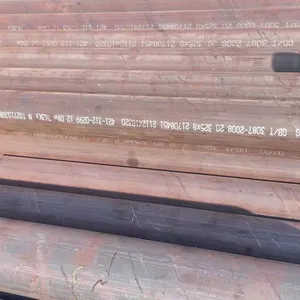
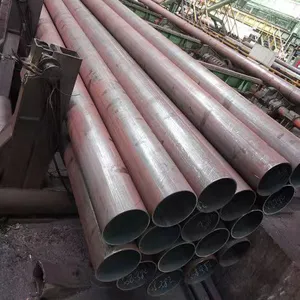
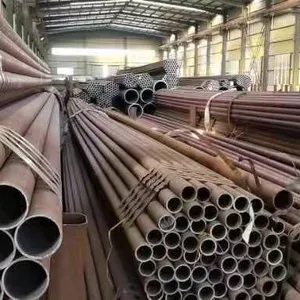
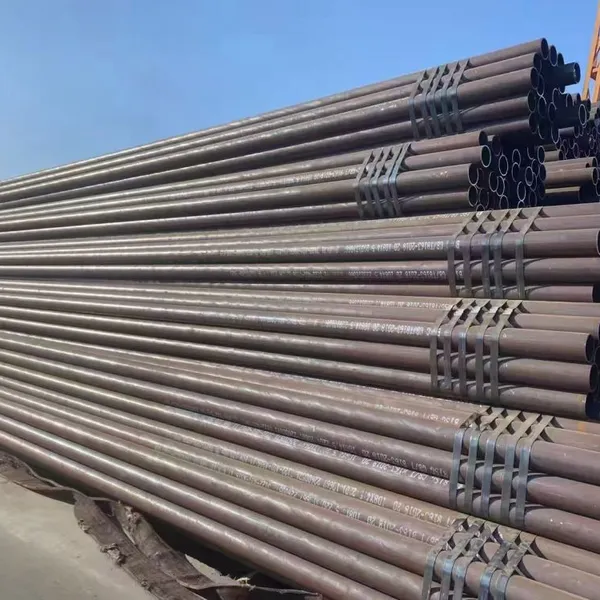
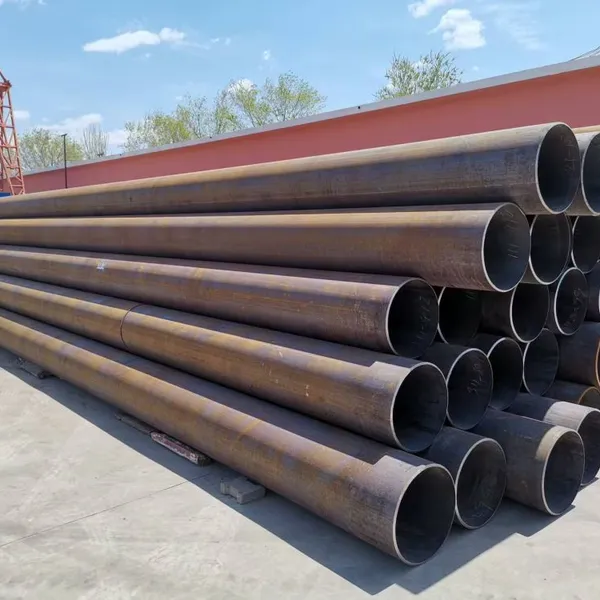
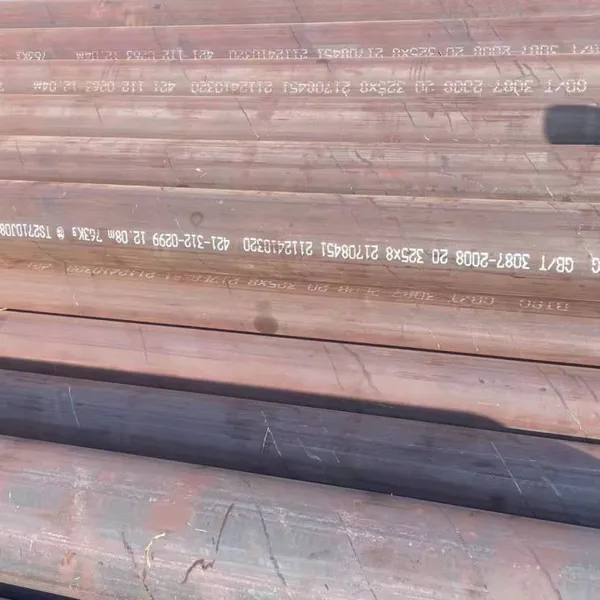
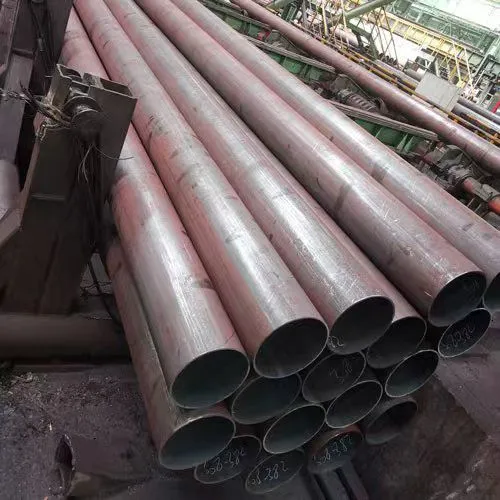
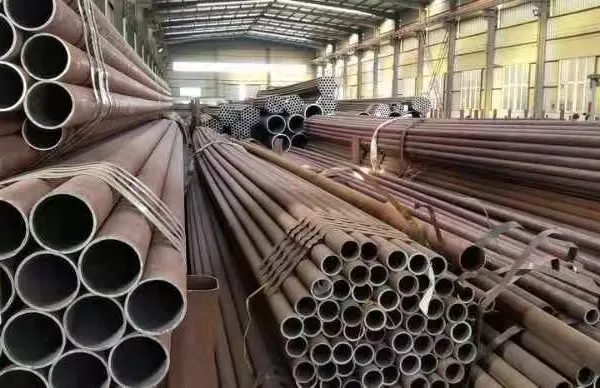
Baotou Steel 37Mn Seamless Steel Pipes for Gas Cyliner GB/T18248 JIS G3429 37Mn 34CrMo4 Gas Cylinder Tubes



Related Products
-
 Baotou Steel ASTM A106B Boiler Pipes GB/T5310 ASTM A335 A213 15CrMoG 12Cr1MoVG Seamless Steel Pipes for BoilerNegotiableMOQ: 30 Metric Tons
 -
Baotou Steel Seamless Steel Pipe API 5L X42 X52 X60 X65 PSL1 Seamless Steel Pipeline for Oil and GasNegotiableMOQ: 30 Metric Tons
-
Inner Mongolia Baogang Group Steel Pipe X42 Seamless Steel PipeNegotiableMOQ: 30 Metric Tons
-
Baotou Steel 16 Inch Seamless Steel Pipe X52 Line PipeNegotiableMOQ: 30 Metric Tons
-
Baotou Steel Seamless Structure Pipe EN10210 S355J0H S355JRH S355J2H S355NH Structural Steel PipesNegotiableMOQ: 30 Metric Tons
Seamless steel pipes have a hollow cross-section and are widely used as conduits for transporting fluids, such as oil, natural gas, coal gas, water and certain solid materials. It is an economical section steel, widely used in the manufacture of structural components and mechanical parts, such as oil drill pipes, automotive drive shafts, bicycle frames, and steel scaffolding used in construction. Using steel pipes to manufacture ring-shaped parts can improve material utilization, simplify manufacturing processes, save materials and processing time, such as rolling bearing rings and jack sleeves, which have been widely made of steel pipes. Liaocheng, Shandong Province, is known as the "Capital of Seamless Steel Pipes". For instance, the Liaocheng Seamless Steel Pipe Factory produces large-diameter seamless steel pipes. The commonly available resource materials are: 10#, 20#, 35#, 45#, 16Mn, 27SiMn, 40Cr, 12Cr1MoV, 10CrMo910, 15CrMo, 35CrMo, 45Mn2, etc.
Mechanical properties
The mechanical properties of steel are important indicators to ensure the final application performance (mechanical properties) of steel, which depend on the chemical composition of the steel and the heat treatment system. In the standards for steel pipes, according to different application requirements, tensile properties (tensile strength, yield strength or yield point, elongation), hardness and toughness indicators, as well as high and low-temperature performance as required by users, are specified.
Tensile strength (σb)
The stress (σ) obtained by dividing the maximum force (Fb) that a specimen can withstand at the moment of breaking during the tensile process by the original cross-sectional area (So) of the specimen is called tensile strength (σb), with the unit of N/mm ² (MPa). It represents the maximum ability of metallic materials to resist damage under tensile force. The calculation formula is:
In the formula: Fb- the maximum force that the specimen can withstand when it breaks, N (Newton); So- Original cross-sectional area of the specimen, mm ².
② Yield point (σs)
For metallic materials with a yield phenomenon, the stress at which the specimen can continue to elongate without an increase in force (remaining constant) during the tensile process is called the yield point. When the force decreases, the upper and lower yield points should be distinguished. The unit of yield point is N/mm ² (MPa).
Upper yield point (σsu) : The maximum stress before the force first drops when the specimen yields; Lower yield point (σsl) : The minimum stress during the yield stage when the initial instantaneous effect is not considered.
The calculation formula of the yield point is:
In the formula: Fs- yield force (constant) during the tensile process of the specimen, N (Newtons); So- original cross-sectional area of the specimen, mm ².
③ Elongation after fracture (σ)
In a tensile test, the percentage increase in the gauge length of a specimen after it breaks relative to its original gauge length is called elongation. It is represented by σ and the unit is %. The calculation formula is:
In the formula: L1- the gauge length after the specimen is broken, in mm; L0- The original gauge length of the specimen, in mm.
④ Reduction of area (ψ)
In a tensile test, the percentage of the maximum reduction in cross-sectional area at the reduction point of the specimen after it breaks relative to the original cross-sectional area is called the reduction of area. Denoted by ψ, the unit is %. The calculation formula is as follows:
In the formula: S0- the original cross-sectional area of the sample, mm ²; S1- The minimum cross-sectional area at the reduction point after the specimen breaks, in mm ².
High-pressure chemical fertilizer pipe 102016Mn GB6479-2000 ∮8-1240*1-200 is suitable for chemical equipment and pipelines with working temperatures ranging from -40 to 400℃ and working pressures from 10 to 32Mpa
Fluid conveying pipes No. 10 and No. 20 ASTM A106A,B,C, A53A,B16Mn
General structural tubes of 10#, 20#, 45#, and 27 # are ASTM A53A,B16Mn
Oil casing J55, K55, N80, L80C90, C95, P110 API SPEC 5CTISO11960 ∮60.23-508.00*4.24-16.13 tubing is used for extracting oil or natural gas in oil Wells, and casing is used as the wellbore of oil and gas Wells
The uses of seamless steel pipes
1. Construction-related ones include: underground pipeline transportation, groundwater extraction during building construction, and hot water transportation for boilers, etc.
2. Mechanical processing, bearing sleeves, processing machinery parts, etc.
3. Electrical category: gas transmission, water power generation fluid pipelines.
4. Anti-static pipes for wind power plants, etc.
Execution standards and corresponding materials
GB/T8162-1999 (Theoretical Weight of Seamless Steel Tubes and galvanized steel Tubes for Structural purposes) It is mainly used in general structures and mechanical structures. Its representative materials (grades) : carbon steel, 20, 45 # steel; The prices of alloy steel Q345, 20C galvanized steel pipes, r, 40Cr, 20CrMo, 30-35CrMo, 42CrMo, etc.
2.GB/T8163-1999 (Seamless Steel Tubes for Fluid Conveyance) It is mainly used for fluid conveying pipelines in engineering and large-scale equipment. The representative materials (grades) of ceramic composite steel pipes are 20, Q345, etc.
3.GB3087-1999 (Low Wuxi Seamless Steel Tubes for Medium Pressure Boilers) It is mainly used for pipelines transporting low and medium pressure fluids in industrial boilers and domestic boilers. The representative materials are steel grades 10 and 20.
4.GB5310-1995 (Seamless Steel Tubes for High-Pressure Boilers) It is mainly used for high-temperature and high-pressure resistant fluid collection boxes and pipelines in power stations and nuclear power plant boilers in Tianjin. The representative materials include 20G, 12Cr1MoVG, 15CrMoG steel pipe scaffolding, etc.
5.GB5312-1999 (Seamless Steel Tubes of Carbon Steel and carbon-manganese steel for Ships) Chinese seamless steel pipe mesh is mainly used for grade I and II pressure-resistant pipes in ship boilers and superheaters, etc. The representative materials are 360, 410, 460 steel grades, etc.
6.GB1479-2000 (Seamless Steel Tubes for High-pressure Fertilizer Equipment) It is mainly used for transporting high-temperature and high-pressure fluids from fertilizer equipment to Tianjin Pipe Group. The representative materials include 20, 16Mn, 12CrMo, 12Cr2Mo, etc.
7.GB9948-1988 (Seamless Steel Tubes for Petroleum Cracking) It is mainly used for boilers, heat exchange scaffolding steel pipes and fluid conveying pipelines in petroleum smelters. Its representative materials include 20, 12CrMo, 1Cr5Mo, 1Cr19Ni11Nb, etc.
8.GB18248-2000 (Seamless Steel Tubes for Gas Cylinders) It is mainly used for manufacturing various gas welded steel pipes and hydraulic gas cylinders. Its representative materials include 37Mn, 34Mn2V, 35CrMo, etc.
In addition, there is GB/T17396-1998 (Hot-rolled Seamless Steel Tubes for Hydraulic props).
GB3093-1986 (High-pressure Seamless Steel Tubes for Diesel Engines)
GB/T3639-1983 (Cold-drawn or cold-rolled Precision Seamless Steel Tubes)
GB/T3094-1986 (Cold-drawn seamless steel tubes, Special-shaped steel tubes, Stainless steel seamless steel tubes)
GB/T8713-1988 (Precision Inner Diameter Seamless Steel tubes for hydraulic and Pneumatic cylinders)
GB13296-1991 (Stainless Steel Seamless tubes for Boilers and Seamless tube heat exchangers)
GB/T14975-1994 (Stainless Steel Seamless Tubes for Structural Use)
GB/T14976-1994 (Stainless Steel Seamless Tubes for Fluid Conveyance)
GB/T5035-1993 (Seamless Steel Tubes for Half Axle sleeves of Automobiles and Vehicles)
API SPEC5CT-1999 (Specification for Casing and Tubing), etc.
Common materials
1. Small-diameter high-pressure boiler tubes for automobiles (Buick sedans) are produced in accordance with domestic and international standards or industry standards, including 210C, 15CrMoG, 12Cr1MoVG, and T12 to T91 series steel tubes
2. Pipeline tubes for West-East Gas Pipeline stations in accordance with GB/ T9711.2L245NB, Φ1146, Φ895, etc
3. Submarine oil pipeline pipe API5L X52 PSL2 Φ8910, Φ114.311.1
4. Oilfield pipe N80 non-modified quality pipe API 5CT Φ139.77.72 J55 oil pipe API 5CT Φ735.51
5. Protocol standards for truss arm special tubes (overall quality adjustment tubes), such as 20Mn2B, 20Mn2, Φ14615, etc., are used for lifting equipment of crawler tower cranes
6. Special cylinder barrel and support tubes T91 and steel 102 series high-pressure boiler tubes GB5310-1995 are used in high-temperature and high-pressure environments of thermal power stations
7. Tractor rear axle tube 35mm NVN, rear axle of crawler tractors
8. Ultra-high strength structural tubes 35CrMnsi and 30CrMnSiNi2A are used for military and aircraft landing gear tubes
9. Axle pipes of 20Mn2, Φ17812, Φ12719, etc
10. Rock gangue pipe protocol standards such as J55, Φ266, and Φ316 are used for the reinforcement of expressways and large hydropower station DAMS
11. Hydraulic prop pipe GB/T17396-1998, 27SiMn, used for support and fixation in underground coal mining machinery operations
Medium carbon steel seamless tubes for boilers and superheaters produced in accordance with American standards ASTM A210, 210C, Φ606
12. Automobile half axle bushings YB/T5035-1996, 45MN2/45
13. Extra-long heat exchanger tubes 20, Φ19216000-21000, used for heat exchangers
14. Seamless tubes CR-1 and Φ485 are used for the cross rods of CR bogies for train speed-up
15. Directional spiral special-shaped seamless tubes for rocket launchers Φ1232.2, MP16Mn, GJB459-88
16. Anti-seawater corrosion pipe Q/CG41, 10CrMOA 1, Φ1084, Φ252.5
17. The submersible oil motor shaft tube protocol standards Φ3111, Φ3613.5, 40Cr, 35CrMo, 35CrMoV are used for the motor shafts of oil pumps
18. Low-temperature pipeline pipes GB/ T18994-2003, 09DG, 10MnDG, 09Mn2VDG, B655 are used for fluid transportation pipelines in low-temperature environments in the petrochemical industry and for pipes in nuclear power plants
Pure iron pipe DT3 for military use
19. 710 Super strong gun barrel barrel
20. Straight nine machine tube 15CDV6
21. Stainless steel seamless tubes for boilers and heat exchangers, GB13296-1991, 0Cr18Ni9Ti, 0Cr18Ni11Ti, Φ1928900, etc
22. Precision seamless steel tubes such as 10 and 20 for periscope tubes, shock absorbers for automobiles and motorcycles.
23. Tube SAE1035, Φ1009.5 for the drag armor-piercing compression ring
Domestic brand
The commonly used grades for variety standards are often foreign standards
Seamless steel pipes for structure
Standard: GB/T8162-2008
Common grades: 10, 20, 35, 45, 40Mn2, 45Mn2, 27SiMn, 20Cr, 40Cr, 20CrMo, 35CrMo, 38CrMoA1, 50CrV, 30CrMnSi ASTM A500-98
Common foreign standards: ASTM A501-98, ASTN A519-98, JIS G3441
Seamless steel pipes for fluid transportation
Standard: GB/T8163-2008
Common grades: 10#, 20#, Q295, Q345
Common foreign standards: ASTM A53-98, ASTM A192, ASME S192, JIS G3452-1998, FIS G3454-1998, DIN 1629-1984
Oil well oil pipe coupling material pipe pipeline steel pipe
Standard: API SPEC 5CT APE SPEC 5L
Common grades: J55, N80A, B, X42
Common foreign standards: API
Seamless steel tubes for high-pressure boilers
Standard: GB5310-2008
Common grades: 20G, 20MnG, 25MnG, 15MoG, 20MoG, 12Cr1MoVG, 15CrMoVG, 12Cr2MoG, 12Cr2MoWVTiB, 12Cr3MoVSiTiB
Common foreign standards: ASTM A106-96a, ASTM A210C, ATSM A213-95a, JIS G3461-1988, JIS G3462-1998, DIN 17175-1979, BS3059: Part 2:1990
Seamless steel tubes for low and medium pressure boilers
Standard: GB3087-2008
Common grades: 10#, 20 #
Common foreign standards: ASTM A179, ASTM A192
ASTM SA179,SA192,
BS3059
High-pressure seamless steel pipes for chemical fertilizer equipment
Standard: GB6479-2000
Common grades: 10#, 20G, Q345, Q390, 10MoVNb, 12CrMo, 15CrMo, 12Cr2Mo
Common foreign standard: ISO 9329-2-1997
ASTM A161-94
Seamless steel tubes for petroleum cracking
Standard: GB9948-2006
Common grades: 10#, 20#, 12CrMo, 15CrMo, 1Cr2Mo, 1Cr5Mo
Common foreign standard: JIS G3441-1988
Seamless steel pipes for the half axle sleeves of automobiles
Standard: Q/OHAD001 YB/T5035-1998
Common grades: 45Mn2, 45#, 25MnCr
Common foreign standard: DIN 1629-1984
Hot-rolled seamless steel tubes for hydraulic props
Standard: Q/OHAD010-GB/T17398-2007
Common grade: 27SiMn
Seamless carbon steel and carbon-manganese steel pipes for ships
Standard: GB/T5312-1999
Common grades: Q320, Q360, Q410, Q460, Q490
Common foreign standard: DIN 2391-1994
Cold-drawn precision seamless steel tubes
Standards: GB/T3639-2000, GB/T8713-88
Common grades: 10#, 20#, 35#, 45#, 30CrMo
Seamless steel pipes for geological drilling
Standards: YB/T5052-93, YB235-70
Common grades: DZ40, DZ50
Seamless steel tubes for artillery shells
Standard: YBn1-86
Common grades: 40Mn2, D60
Seamless steel pipes are used for the top rods
Standard: Q/OHAD003
Common grades: 1CrMo
Bearing steel pipe
Standard: YB/Z12-77YJZ84
Common grade: GCr15
Seamless steel pipes are used for ribbed steel bar connection sleeves
Q/OHA011
10#, 20#
Seamless steel pipes for gas cylinders
Technical Agreement
34Mn2V, 30CrMo, 35CrMo, 45#
Technological process
The production processes of general seamless steel pipes can be divided into cold drawing and hot rolling. The production process of cold-rolled seamless steel pipes is generally more complex than that of hot-rolled ones. The pipe billets first undergo three-roll continuous rolling, and after extrusion, they need to undergo sizing tests. If there are no corresponding cracks on the surface, the round pipes need to be cut by a cutting machine to cut billets about one meter in length. Then the annealing process begins. During annealing, acidic liquid is used for pickling. During pickling, it is necessary to pay attention to whether there are a large number of bubbles on the surface. If there are a large number of bubbles, it indicates that the quality of the steel pipe does not meet the corresponding standards. In terms of appearance, cold-rolled seamless steel pipes are shorter than hot-rolled seamless steel pipes. The wall thickness of cold-rolled seamless steel pipes is generally smaller than that of hot-rolled seamless steel pipes, but the surface looks brighter than thick-walled seamless steel pipes, with less roughness on the surface and fewer burrs on the diameter. The delivery state of hot-rolled seamless steel pipes is generally delivered after heat treatment in the hot-rolled state. After quality inspection, hot-rolled seamless steel pipes must go through strict manual selection by staff. After quality inspection, surface oiling is carried out, followed by multiple cold drawing tests. After hot rolling treatment, a piercing test is conducted. If the piercing expansion is too large, straightening correction is required. After straightening, it is conveyed to the flaw detector by the conveying device for flaw detection tests. Finally, it is labeled, arranged in specifications and placed in the warehouse.
Hot rolling
Round tube billet → heating → piercing → three-roll cross-rolling, continuous rolling or extrusion → de-tubing → sizing (or reducing) → cooling → straightening → hydrostatic test (or flaw detection) → marking → storage. Seamless steel pipes are made from steel ingots or solid tube billets through piercing to form rough tubes, and then processed by hot rolling, cold rolling or cold drawing. The specifications of seamless steel pipes are indicated by the outer diameter multiplied by the wall thickness in millimeters. Seamless steel pipes are divided into two types: hot-rolled and cold-rolled (drawn) seamless steel pipes. Hot-rolled seamless steel pipes are classified into general steel pipes, low and medium pressure boiler steel pipes, high pressure boiler steel pipes, alloy steel pipes, stainless steel pipes, petroleum cracking pipes, geological steel pipes and other steel pipes, etc. Cold-rolled (drawn) seamless steel pipes, in addition to being classified into general steel pipes, low and medium pressure boiler steel pipes, high pressure boiler steel pipes, alloy steel pipes, stainless steel pipes, petroleum cracking pipes and other steel pipes, also include carbon thin-walled steel pipes, alloy thin-walled steel pipes, stainless thin-walled steel pipes and special-shaped steel pipes. The outer diameter of hot-rolled seamless tubes is generally greater than 32mm, and the wall thickness is 2.5-200mm. The outer diameter of cold-rolled seamless steel tubes can reach 6mm, and the wall thickness can reach 0.25mm. The outer diameter of thin-walled tubes can reach 5mm, and the wall thickness is less than 0.25mm. Cold-rolled tubes have higher dimensional accuracy than hot-rolled ones.
Generally, seamless steel pipes are made by hot rolling or cold rolling of high-quality carbon structural steels such as 10, 20, 30, 35, and 45, low alloy structural steels such as 16Mn and 5MnV, or composite structural steels such as 40Cr, 30CrMnSi, 45Mn2, and 40MnB. Seamless pipes made of low-carbon steel such as 10 and 20 are mainly used for fluid conveying pipelines. Seamless tubes made of medium carbon steel such as 45 and 40Cr are used to manufacture mechanical parts, such as the load-bearing parts of automobiles and tractors. Generally, for seamless steel pipes, it is necessary to ensure strength and flatness tests. Hot-rolled steel pipes are delivered in either hot-rolled or heat-treated condition. Cold-rolled goods are delivered in a hot-treated condition.
Hot rolling, as the name suggests, involves a high temperature of the rolled piece, resulting in low deformation resistance and the ability to achieve large deformation amounts. Take the rolling of steel plates as an example. Generally, the thickness of continuous casting billets is around 230mm, while after rough rolling and finish rolling, the final thickness is 1 to 20mm. Meanwhile, due to the small width-to-thickness ratio of the steel plate, the dimensional accuracy requirements are relatively low, and it is less likely to have plate shape problems. The main focus is on controlling the convineness. For those with organizational requirements, it is generally achieved through controlled rolling and controlled cooling, that is, by controlling the starting and final rolling temperatures of the finish rolling. Round tube blank → Heating → piercing → Heading → Annealing → pickling → oil coating (copper plating) → Multiple cold drawing (cold rolling) passes → blank tube → Heat treatment → Straightening → hydrostatic test (flaw detection) → marking → storage

Send Inquiry to This Supplier


You May Also Like
-
Bao Steel 15CrMoG 12Cr1MoVG P11 T11 P22 T22 Cr-Mo Alloy Seamless Steel Pipes Hot Rolled Alloy Boiler PipesNegotiableMOQ: 30 Metric Tons
-
Baotou Steel 406.4mm X52 Seamless Steel Pipe Underground Oil and Gas PipelineNegotiableMOQ: 30 Metric Tons
-
Baotou Steel X42 Gr.B DN 400 DN400 Seamless Steel PipeNegotiableMOQ: 30 Metric Tons
-
Baogang Group Baotou Iron and Steel Group BISG Seamless Steel PipeNegotiableMOQ: 30 Metric Tons
-
Baotou Steel GB/T 5310 Seamless Steel Pipes 12Cr1MoVG 15CrMoG HP High Pressure Boiler PipesNegotiableMOQ: 30 Metric Tons
-
Seamless Steel PipeNegotiableMOQ: 30 Metric Tons
-
X60 Line PipeNegotiableMOQ: 30 Metric Tons
-
X52 PSL2 Seamless Steel PipeNegotiableMOQ: 30 Metric Tons
-
Baotou Steel Seamless Line PipeNegotiableMOQ: 30 Metric Tons
-
Baotou Steel 37Mn,34CrMo4 Seamless Steel Pipes for Gas CylindersNegotiableMOQ: 30 Metric Tons


