








 Contact Platform Support
 Help Center
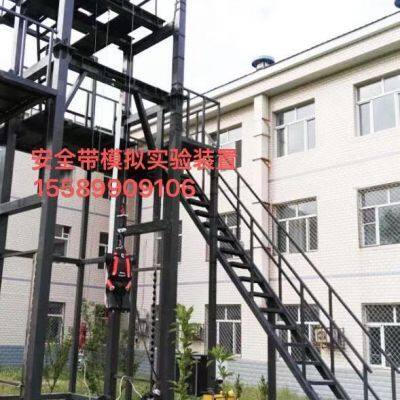
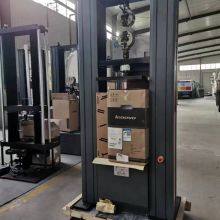
Safety Belt Static Load Tester, Safety Helmet Impact Test, Elevated Work Equipment Strength Test for Power Systems


Related Products
-
 Spring Testing Machine,Disc Spring Testing MachineUS$ 9988MOQ: 1 Bag
 -
Dental Material Testing Machine,Adhesive Bond TesterUS$ 9988MOQ: 1 Case
-
Máy Thử Nén StatUS$ 9988MOQ: 1 Pack
-
Electronic Universal Testing MachineCNY 10000 - 50000MOQ: 1 Piece
-
Electronic Universal Testing MachineUS$ 4000 - 5000MOQ: 1 Piece
**Safety Belts**: Including area restriction safety belts, guardrail operation safety belts, and fall suspension safety belts.
**Self - Retracting Lifelines**: Used for rapid payout, braking, and retraction of safety ropes (belts).
**Self - Locking Devices**: Including track type, rope type, etc.
**Shock Absorbers**: Used to absorb impact during a fall.
**Safety Ropes**: Used to connect safety belts to fixed points.
**Climbing Boards**: Used for climbing electric poles and other high - altitude operations.
**Rigid Ladders**: Including bamboo, wooden, aluminum alloy, and composite material ladders.
Impact Test
- Test Method: Place the safety helmet on a headform. Drop a 5kg steel hammer freely or with guidance from a height of 1m to impact the helmet. Measure the impact force on the headform using force sensors and other equipment.
- Corresponding Standard: According to GB 2811-2013, the force transmitted to the headform should not exceed 4900N (500kgf).
- Test Method: Drop a 3kg steel cone freely or with guidance from a height of 1m to pierce the safety helmet. The impact point on the helmet should be within a 100mm radius from the center of the helmet top, targeting a vulnerable area. Observe the electrical contact display device.
- Corresponding Standard: As specified by GB/T 2812, the steel cone must not make contact with the surface of the headform.
- Test Method: At room temperature, place the safety helmet sideways between two plates, with the brim extending beyond the plates but tightly adjacent to the bottom edge of the helmet shell. Apply pressure to the helmet via the plates using a press. Initially, apply 29.4N for 30 seconds, measure the distance between the plates as the initial value. Then load at a rate of 98N per minute until reaching 421.4N, hold for 30 seconds, and measure to calculate the maximum deformation. Reduce the load to 24.5N, then increase back to 29.4N and hold for 30 seconds, measuring and calculating the residual deformation.
- Corresponding Standard: GB/T 2812 stipulates that the maximum deformation should not exceed 40mm, and the residual deformation should not exceed 15mm.
Serial No. | Item Name | Technical Parameters
---|---|---
1 | Maximum test force | 10KN
2 | Testing machine accuracy | Grade 1
3 | Testing force measurement range | 2% - 100%
4 | Displacement resolution | 0.01mm
5 | Testing speed range | 0.01 - 500mm/min
6 | Tensile space (excluding fixtures) | 600mm
7 | Compression space | 600mm
8 | Column spacing | 400mm
9 | Wedge fixture holding range | Flat sample 0 - 7mm, Jaw 4 - 9mm

Send Inquiry to This Supplier

You May Also Like
-
Packaging Material Testing MachineUS$ 4000 - 5000MOQ: 1 Piece
-
Customized Horizontal Tensile Testing MachineUS$ 80000 - 100000MOQ: 1 Piece
-
Cup Extrusion Test MachineUS$ 9988 - 10000MOQ: 1 Bag
-
Manhole Cover Pressure Test MachineNegotiableMOQ: 1 Bag
-
Manhole Cover PressUS$ 9988 - 19888MOQ: 1 Bag
-
Electronic Universal Testing MachineUS$ 9988 - 19888MOQ: 1 Bag
-
Metal Bellows Testing MachineUS$ 1 - 9988MOQ: 1 Bag
-
Fatigue Testing Machine,Fatigue Test,Material Life TestingUS$ 9988 - 19988MOQ: 1 Piece
-
Ceramic Membrane Support Compressive and Flexural Testing MachineUS$ 9988 - 19988MOQ: 9988 Bags
-
Cupping Testing MachineUS$ 10000MOQ: 1 Pack


