








 Contact Platform Support
 Help Center
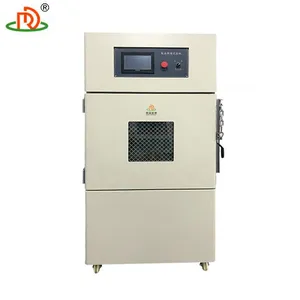
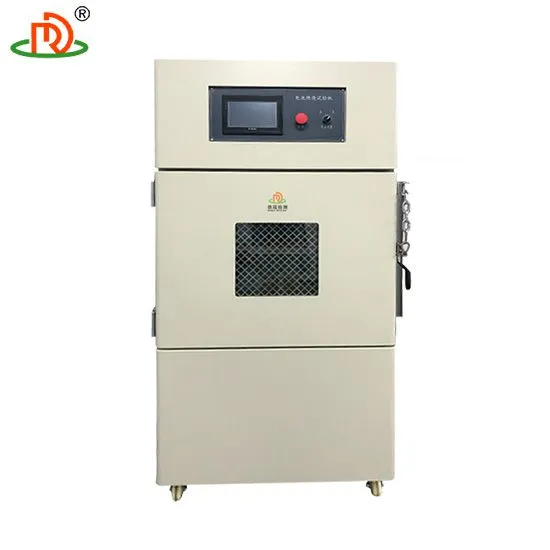
Short Circuit Test Box for Energy Storage System Battery


Related Products
-
 Electric Tool Battery Short Circuit Testing MachineUS$ 4000 - 6000MOQ: 1 Set
 -
Lead Acid Battery Short-circuit Testing MachineUS$ 4000 - 6000MOQ: 1 Set
-
Laboratory Battery Short Circuit Test Box SchemeUS$ 4000 - 6000MOQ: 1 Set
-
Lithium Ion Battery Pack Short Circuit Testing MachineUS$ 4000 - 6000MOQ: 1 Set
-
CE Certified Xenon Arc Weathering Test Chamber for Automotive Materials TestingUS$ 8000 - 15000MOQ: 1 Set
Power battery short-circuit explosion-proof test box STANDARD FEATURES
Item |
Specification |
Internal Dimension |
500*500*500mm(W*D*H) |
External Dimension |
700*800*1530mm(W*D*H) |
Internal Material |
SUS201 stainless steel plate, 1.2mm thick and affixed with Teflon; |
External Material |
Paint treatment of cold-rolled steel sheet |
|
Observe Window
|
250*250mm |
Two layers of tempered glass | |
Transparent window with stainless steel mesh | |
Exhaust port |
Diameter 100mm |
Pressure relief port |
200*200mm |
|
Door
|
Single door design, the door is equipped with a safety limit switch The side is equipped with an explosion-proof chain Only close the door to operate the device to ensure the safety of personnel |
Testing Hole |
There are two testing hole diameter 50mm, for cable connect. |
Control Mode |
Key Type |
Temperature collection range |
RT-1000℃ |
Temperature Acquisition Channel |
Channel 1
|
Temperature Display Accuracy |
±0.5℃ |
Voltage collection range |
0-100V |
Voltage Acquisition Channel |
Channel 1 |
Voltage Display Accuracy |
±0.5% |
Maximum Short-circuit Current |
1000A |
Current Acquisition Channel |
Channel 1 |
Current Display Accuracy |
±0.5% |
|
Internal Resistance of Device Loop |
80±20mΩ |
Voltage |
Single Phase 220V |
Power |
200W |
Machine Weight |
95kg |
The main functions of the short circuit test box for energy storage system battery:
1. short-circuit simulation: simulate different types of short-circuit situations, test the performance and safety of the battery in short-circuit.
2. real-time monitoring: monitor the battery voltage, current, temperature and other key parameters in the testing process, to ensure that the equipment operates within the safety range.
3. Data Recording and Analysis: Automatically record all the data in the testing process and generate detailed reports for subsequent analysis and optimization of battery design.
4. Over-current protection: set up over-current protection mechanism to avoid excessive current generated by the battery during the testing process, ensuring the safety of equipment and operators.
5. Temperature control: monitoring and controlling the battery temperature through the temperature control system to prevent the battery from overheating during the short-circuit process.
Application areas of the battery short circuit test box for energy storage system:
1. R&D and production of energy storage systems: used in the design, development and production of energy storage batteries to test the safety of batteries.
2. Battery quality testing: Used by battery manufacturers and third-party testing organizations to ensure the safety of batteries in short-circuit situations.
3. Safety Certification: Provides certification testing for energy storage system batteries that meet national and international safety standards.
4. Energy Storage System Operation: Periodic battery safety testing is conducted during the operation of the energy storage system to prevent potential safety hazards.
Installation Guidelines for Battery Short Circuit Test Boxes for Energy Storage Systems
When installing the Energy Storage System Battery Short Circuit Test Box, you need to follow the safety operation specification to ensure the safety of the testing process and the accuracy of the test results. The following are the installation steps and precautions:
1. Preliminary Preparation
- Confirm the location of the test box: Choose a well-ventilated place without flammable substances, make sure the operation area is dry, at the right temperature, and out of direct sunlight.
- Check the power supply: Make sure the power supply of the test box meets the requirements, usually a stable 220V or 380V AC power supply is required, and select the power connector according to the specifications of the equipment.
- Prepare necessary tools: screwdrivers, wrenches, cables, terminals and other tools.
- Read the equipment manual: Read the manual of the battery short circuit test box carefully to understand the installation requirements and safety warnings of the equipment.
2. Installation of the test box
2.1 Fixing the test box
- Choose an appropriate location: When installing the test box, make sure it is firmly placed on a flat, vibration-free floor to avoid vibration of the equipment during operation.
- Mounting bracket (if any): If the test box needs a bracket or supporting platform, please install the fixed bracket according to the installation manual to ensure the equipment is firm and stable.
- Avoid poor ventilation: The test box usually has heat dissipation needs, make sure there is enough space around for air circulation to avoid heat accumulation.
2.2 Wiring Connection
- Power supply connection: connect the power supply of the test box to a suitable power socket to ensure that the power supply voltage is consistent with the equipment requirements. General test box needs to be connected to AC220V or AC380V power supply.
- Grounding wire: according to the equipment requirements, ensure that the grounding wire is connected to the grounding port of the equipment to ensure safe operation of the equipment to avoid damage to the equipment or injury to personnel due to excessive current.
- Battery connection port: Make sure the battery connection port of the test box matches the type of battery to be tested. When connecting the batteries, make sure that the positive and negative terminals of the batteries are in good contact to avoid short circuits, poor contact and other problems.
- Monitoring port connection: connect the monitoring port (e.g. voltage, temperature sensor) on the test box with the battery for real-time monitoring of the battery status.
2.3 Equipment debugging and calibration
- Confirm that the equipment is free from errors: after installation, check whether all wiring is stable, ensure that there is no exposed cable, and that the power connector is not loose or in poor contact.
- Equipment start-up test: When starting up the equipment for the first time, carry out no-load test to ensure that all functions are normal, such as whether the power supply is started, whether the display shows normal information, and whether the short-circuit simulation function can be operated.
- Calibration of sensors: Perform calibration of sensors (e.g., current, voltage, temperature, etc.) according to the manual to ensure the accuracy of monitoring data.
3. Operation safety check
- Ensure operator safety: Protective equipment, such as insulated gloves, protective glasses, etc., must be worn during operation to avoid electric shock to the operator.
- Testing environment: Keep away from combustible substances and keep the testing area well ventilated to avoid fire or battery leakage caused by high temperature.
- Equipment safety settings: Confirm that the equipment has over-current, over-voltage, over-temperature and other protection mechanisms to ensure that the test process can be automatically shut down if there is an abnormality, to avoid equipment and personnel injury.
4. Start-up and debugging
- Turn on the power: After confirming that all the equipment is connected, start the power supply of the test box and check whether the display panel and indicator lights of the equipment are normal.
- Select test mode: select the appropriate short circuit test mode (such as DC short circuit, AC short circuit) according to the actual need, and set the parameters such as current, voltage and time.
- Run the test: before starting the test, make sure the battery is connected correctly, and start the test function after the test box is set up. During the process, monitor the battery status in real time and check whether the equipment is running normally.

Send Inquiry to This Supplier


You May Also Like
-
Xenon Weathering Test Chamber for Plastics & Coatings - ISO 4892 CertifiedUS$ 8000 - 15000MOQ: 1 Set
-
Customizable Xenon Test Chamber for Outdoor Product TestingUS$ 8000 - 15000MOQ: 1 Set
-
2025 New Model Xenon Test Chamber With Touch Screen ControlUS$ 8000 - 15000MOQ: 1 Set
-
Xenon Test Chamber for Paint & Adhesive Testing - Fast DeliveryUS$ 8000 - 15000MOQ: 1 Set
-
Xenon Arc Test Chamber for Rubber & Polymer TestingUS$ 8000 - 15000MOQ: 1 Set
-
Double Spray System Xenon Lamp Aging Box: Core Technology AnalysisUS$ 8000 - 15000MOQ: 1 Set
-
Intelligent Irradiance Control Xenon Lamp Aging BoxUS$ 8000 - 15000MOQ: 1 Set
-
Non-standard Customized Xenon Lamp Aging Test EquipmentUS$ 8000 - 15000MOQ: 1 Set
-
Salt Spray Test Chamber Manufacturer - CE Certified Salt Spray Testing MachineUS$ 950 - 2250MOQ: 1 Set
-
500L Capacity Salt Spray Testing Machine - ASTM B117 ComplianceUS$ 1050 - 2250MOQ: 1 Set


