








 Contact Platform Support
 Help Center
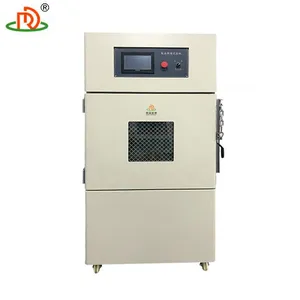
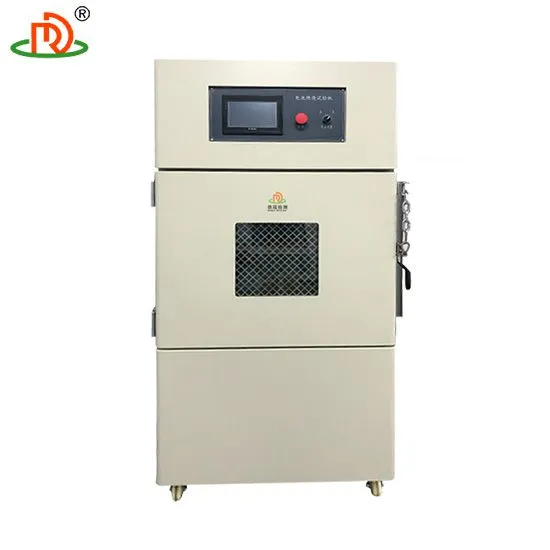
Battery Forced Internal Short Circuit Testing Machine


Related Products
-
 Power Battery Short-circuit Explosion-proof Test BoxUS$ 4000 - 6000MOQ: 1 Set
 -
Multi Station Battery Short Circuit Testing SystemUS$ 4000 - 6000MOQ: 1 Set
-
Intelligent Battery Short Circuit Testing MachineUS$ 4000 - 6000MOQ: 1 Set
-
High Precision Internal Resistance Short Circuit Testing MachineUS$ 4000 - 6000MOQ: 1 Set
-
New Energy Vehicle Battery Short-circuit Testing MachineUS$ 4000 - 6000MOQ: 1 Set
Lithium battery temperature controlled short circuit test box STANDARD FEATURES
Item |
Specification |
Internal Dimension |
500*500*500mm(W*D*H) |
External Dimension |
700*800*1530mm(W*D*H) |
Internal Material |
SUS201 stainless steel plate, 1.2mm thick and affixed with Teflon; |
External Material |
Paint treatment of cold-rolled steel sheet |
|
Observe Window
|
250*250mm |
Two layers of tempered glass | |
Transparent window with stainless steel mesh | |
Exhaust port |
Diameter 100mm |
Pressure relief port |
200*200mm |
|
Door
|
Single door design, the door is equipped with a safety limit switch The side is equipped with an explosion-proof chain Only close the door to operate the device to ensure the safety of personnel |
Testing Hole |
There are two testing hole diameter 50mm, for cable connect. |
Control Mode |
Key Type |
Temperature collection range |
RT-1000℃ |
Temperature Acquisition Channel |
Channel 1
|
Temperature Display Accuracy |
±0.5℃ |
Voltage collection range |
0-100V |
Voltage Acquisition Channel |
Channel 1 |
Voltage Display Accuracy |
±0.5% |
Maximum Short-circuit Current |
1000A |
Current Acquisition Channel |
Channel 1 |
Current Display Accuracy |
±0.5% |
|
Internal Resistance of Device Loop |
80±20mΩ |
Voltage |
Single Phase 220V |
Power |
200W |
Machine Weight |
95kg |
The Battery Forced Internal Short Circuit Tester is a specialized device used to evaluate the safety and performance of batteries under internal short circuit conditions. The following is the key information and design points about such equipment:
I. Test Purpose
Simulate battery internal short-circuit (e.g. electrode material detachment, diaphragm failure, etc.) scenarios.
Test the thermal stability, voltage drop, liquid leakage, fire or explosion risk of the battery under short-circuit condition.
Verify whether the safety protection mechanism of the battery (e.g. fuse, PTC, etc.) is effective.
Core test parameters
Short-circuit current: Accurately control the short-circuit current (usually several times the maximum discharge current of the battery).
Duration: Short circuit duration can be set (milliseconds to minutes).
Temperature monitoring: real-time collection of battery surface/internal temperature (thermocouple or infrared temperature measurement).
Voltage/Internal Resistance: Monitor the voltage drop and recovery at the moment of short-circuit.
Pressure Detection: Monitor the change of air pressure inside the battery (especially for high energy density battery).
Third, the main points of equipment design
Hardware part
Forced short-circuit trigger mechanism:
Mechanical: press the electrode through the probe (need to control the pressure and position with high precision).
Electronic: use low resistance alloy piece (such as Nichrome wire) to short-circuit the electrode instantly.
Dynamic triggering: combined with motor or electromagnet to realize rapid contact/disconnection.
Power Supply & Load:
Equipped with programmable DC power supply, supporting constant current/constant voltage mode.
High power load resistor (for absorbing short-circuit current to avoid power overload).
Safety Protection System:
Over-current protection (fuse, electronic circuit breaker).
Emergency stop button (red mushroom head button).
Forced air/liquid cooling system (to prevent battery overheating).
Data Acquisition Module:
High-speed ADC to collect voltage, current, temperature and pressure signals.
Support synchronous recording of multi-channel data (sampling rate ≥ 1kHz).
Software part
Test flow control:
User interface to set test parameters (current, time, trigger mode, etc.).
Automatic execution of test sequences (e.g. pre-charging, short-circuit triggering, data recording).
Real-time monitoring and alarm:
Real-time display of waveforms (voltage/current curves), temperature/pressure trend graphs.
Over-threshold alarm (e.g. temperature > 60°C automatically terminates the test).
Data Analysis and Reporting:
Generate test reports (including peak current, temperature rise rate, failure mode, etc.).
Support data export (Excel/PDF) and visualization comparison.
Typical application scenarios
Battery R&D: Verify the safety of new type of diaphragm and electrolyte.
Quality testing: screening substandard batteries (e.g., internal defects leading to potential short-circuit risk).
Safety certification: testing in accordance with UN38.3, IEC 62133 and other standards.
V. Precautions
Safety protection: explosion-proof box and fireproof material shell are required to avoid danger during testing.
Battery compatibility: Designed to accommodate batteries of different sizes/chemical systems (e.g. lithium-ion, lead-acid, solid-state batteries).
Calibration: Regular calibration of the current sensor and temperature probe to ensure accuracy.

Send Inquiry to This Supplier


You May Also Like
-
Mobile Lithium Battery Short Circuit Testing MachineUS$ 4000 - 6000MOQ: 1 Set
-
Short Circuit Test Box for Energy Storage System BatteryUS$ 4000 - 6000MOQ: 1 Set
-
Electric Tool Battery Short Circuit Testing MachineUS$ 4000 - 6000MOQ: 1 Set
-
Lead Acid Battery Short-circuit Testing MachineUS$ 4000 - 6000MOQ: 1 Set
-
Laboratory Battery Short Circuit Test Box SchemeUS$ 4000 - 6000MOQ: 1 Set
-
Lithium Ion Battery Pack Short Circuit Testing MachineUS$ 4000 - 6000MOQ: 1 Set
-
CE Certified Xenon Arc Weathering Test Chamber for Automotive Materials TestingUS$ 8000 - 15000MOQ: 1 Set
-
Xenon Weathering Test Chamber for Plastics & Coatings - ISO 4892 CertifiedUS$ 8000 - 15000MOQ: 1 Set
-
Customizable Xenon Test Chamber for Outdoor Product TestingUS$ 8000 - 15000MOQ: 1 Set
-
2025 New Model Xenon Test Chamber With Touch Screen ControlUS$ 8000 - 15000MOQ: 1 Set


