








 Contact Platform Support
 Help Center
The Mechanism of Action of HEDP as a Corrosion and Scale Inhibitor


Related Products
-
 Application of HEDP in Daily ChemicalsUS$ 99 - 9999MOQ: 1 Ton
 -
Application of ATMP in Daily Chemicals/ATMP ManufacturersUS$ 99 - 9999MOQ: 1 Ton
-
What is the Specific Application of HEDP in Metal Corrosion Protection?US$ 99 - 9999MOQ: 1 Ton
-
HMDTMPA/Water Treatment Chemicals/Corrosion Inhibitors/HMDTMPA ManufacturersUS$ 99 - 9999MOQ: 1 Ton
-
Chemical PCA/Dispersants PCA/PCANegotiableMOQ: 1 Ton
1-Hydroxy Ethylidene-1,1-Diphosphonic Acid
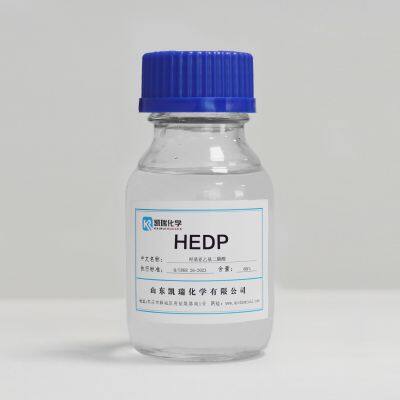
1-Hydroxy Ethylidene-1,1-Diphosphonic Acid (HEDP) is another effective chemical agent used in water treatment for controlling corrosion and scale. The mechanisms by which HEDP functions as a corrosion and scale inhibitor are as follows:
As a Corrosion Inhibitor:
Chelation: Similar to ATMP, HEDP has strong chelating abilities. It can form stable complexes with metal ions like calcium (Ca²⁺), magnesium (Mg²⁺), and iron (Fe²⁺/Fe³⁺), which prevents these ions from engaging in corrosion reactions on metal surfaces.
Formation of Protective Layer: HEDP can adsorb onto metal surfaces and create a protective layer. This layer serves as a physical barrier that shields the metal from corrosive elements in the water, such as dissolved oxygen and aggressive anions like chloride and sulfate.
Electrochemical Interaction: HEDP can interfere with the electrochemical processes that cause corrosion. It may act as a cathodic inhibitor by limiting the reduction reactions, or as an anodic inhibitor by passivating the metal surface, thus reducing the rate of metal dissolution.
As a Scale Inhibitor:
Threshold Inhibition: HEDP is effective at sub-stoichiometric levels, meaning it can inhibit scale formation at concentrations significantly lower than the molar concentration of the scaling ions. It achieves this by disrupting the nucleation and crystal growth of scale-forming compounds.
Crystal Modification: HEDP molecules can adsorb onto the surface of nascent scale crystals, distorting their crystal lattice and preventing them from growing large enough to precipitate out of solution and form scale deposits.
Dispersion: HEDP can also help to disperse tiny scale particles that have already formed, keeping them in suspension and preventing them from adhering to surfaces and equipment.
In essence, HEDP's role as a corrosion and scale inhibitor is attributed to its ability to sequester metal ions, form a protective film on metal surfaces, interfere with the electrochemical reactions involved in corrosion, and inhibit the formation and growth of scale crystals. These actions contribute to the protection of metal infrastructure and the maintenance of efficient heat transfer in water-carrying systems.

Send Inquiry to This Supplier


You May Also Like
-
PASP Manufacturer/Dispersants PASPNegotiableMOQ: 1 Ton
-
1-Hydroxy Ethylidene-1,1-Diphosphonic Acid (HEDP)NegotiableMOQ: 1 Short Ton
-
Amino Trimethylene Phosphonic Acid (ATMP)NegotiableMOQ: 1 Ton
-
2-Phosphonobutane -1,2,4-Tricarboxylic Acid (PBTC)NegotiableMOQ: 1 Ton
-
Diethylene Triamine Penta (Methylene Phosphonic Acid) (DTPMPA)US$ 99 - 9999MOQ: 1 Ton
-
Water Treatment Chemical/Ethylene Diamine Tetra (Methylene Phosphonic Acid) EDTMPA (Solid)NegotiableMOQ: 1 Ton
-
Water Treatment Chemical/2-Hydroxy Phosphonoacetic Acid (HPAA)/CAS No. 23783-26-8NegotiableMOQ: 1 Ton
-
Water Treatment Chemical/Polyamino Polyether Methylene Phosphonic Acid(PAPEMP)/CAS No. 130668-24-5NegotiableMOQ: 1 Ton
-
Water Treatment Chemical/Bis(HexaMethylene Triamine Penta (Methylene Phosphonic Acid)) BHMTPMPANegotiableMOQ: 1 Ton
-
Water Treatment Chemical/Hydroxyethylamino-Di(Methylene Phosphonic Acid) (HEMPA)NegotiableMOQ: 1 Ton


