








 Contact Platform Support
 Help Center
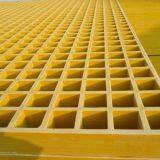
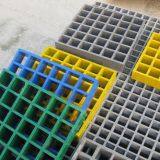
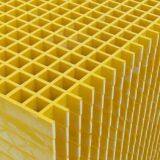
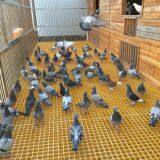
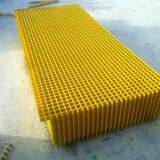
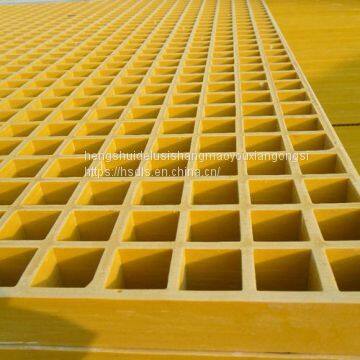
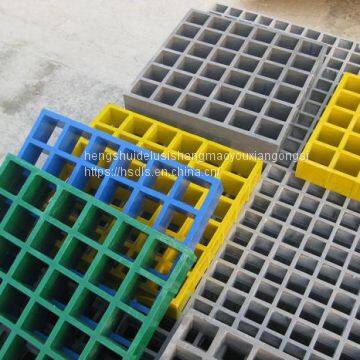
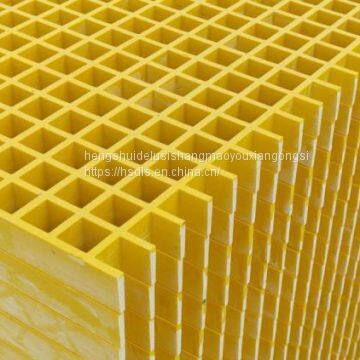
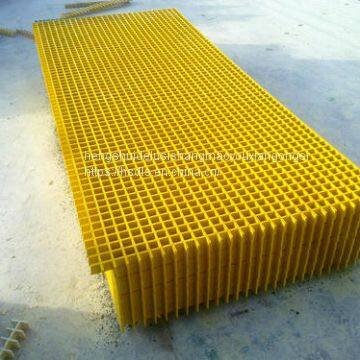
FRP Fiberglass Reinforced Plastics REDCO FRP GRATING



Related Products
-
 Fiberglass Reinforced Plastic Molded Grating | Emco Industrial PlasticsUS$ 100 - 1000MOQ: 1 Inch
 -
Fiberglass Reinforced Plastic Molded Grating | Emco Industrial PlasticsUS$ 100 - 1000MOQ: 1 Inch
-
China Fiberglass Reinforced Plastic Molded Grating | Emco Industrial PlasticsUS$ 100 - 1000MOQ: 1 Inch
-
China Fiberglass Grille Frp Material Floor Fiberglass Grilling GratingUS$ 100 - 1000MOQ: 1 Inch
-
Fire Resistant Fiberglass Reinforced Plastic Grille For WalkwayUS$ 100 - 1000MOQ: 1 Inch
The raw materials
(1) synthetic resin: composite molding products used in the molding material requirements of synthetic resin with: (1) to strengthen the material has a good infiltration performance, in order to form a good bond on the interface of synthetic resin and reinforcing materials;(2) has the appropriate viscosity and good fluidity, under the pressure conditions and the reinforcement material can be uniformly filled with the entire cavity;(3) in the pressure conditions have the appropriate curing speed, and the curing process does not produce by-products or by-products, volume shrinkage is small;(4) to meet the mold products specific performance requirements.According to the above selection requirements, commonly used synthetic resins are: unsaturated polyester resin, epoxy resin, phenolic resin, vinyl resin, furan resin, silicone resin, polybutadiene resin, allyl ester, melamine resin, polyimide resin, etc..In order to make the molded products achieve specific performance indicators, in the selection of resin varieties and brands, should also choose the corresponding auxiliary materials, fillers and pigments.
(2) reinforced material, moulding material that is commonly used in reinforced material mainly operate on the glass fiber silk, roving, roving, continuous glass fiber bundles, glass fiber cloth, glass fiber mat and so on, also have a small amount of special products choose asbestos blanket fabric (cloth), asbestos and asbestos paper and high silica fiber, carbon fiber, organic fiber (such as aramid fiber, nylon fiber, etc.) and natural fibers, such as linen, cotton cloth, scouring cloth, scouring cloth, etc.) and other varieties.Sometimes two or more fiber mixtures are used as reinforcing materials.
(3) auxiliary materials
Generally, it includes curing agent (initiator), accelerator, diluent, surface treatment agent, low-shrinkage additive, mold release agent, colorant (pigment), filler and other auxiliary materials.
2. Preparation of molding materials
Taking the molding material made of glass fiber (or glass cloth) impregnated resin as an example, the production process can be divided into two methods: premix and prepreg.
(1) premixing method: first cut glass fiber into 30 ~ 50mm chopped fiber, after puffiness, kneaded with resin glue solution in kneading machine until resin completely infiltrates glass fiber, and then dried (dried) to appropriate viscosity.It is characterized by loose and directionless fiber and large production capacity. The molding material produced by this method has large specific volume and good fluidity, but the fiber strength loss is large in the preparation process.
(2) prepreg method: fiber prepreg method is to dip the whole bundle of continuous glass fiber (or cloth), dry, cut short.It is characterized by the fiber bundles, relatively compact, the preparation of molding materials in the process of fiber strength loss is small, but molding materials fluidity and compatibility between the bundles is slightly poor.
Manufacturing technology of SMC, BMC, HMC, XMC, TMC and ZMC
Sheet Molding Compound (SMC) is a kind of Sheet Molding Compound, which is made by impregnating fiber or chopped fiber felt with resin and covering polyethylene film on both sides.It is one of the most widely used molding materials in the world.
SMC is a mixture of unsaturated polyester resin, thickener, initiator, crosslinking agent, low shrinkage additive, filler, internal mold release agent and colorant into a resin paste impregnated short-cut fiber roving or glass fiber felt, and on both sides with polyethylene or polypropylene film covered by the formation of sheet molding material.SMC, as a rapidly developing new molding material, has many characteristics:
(1) good reproducibility, not affected by the operator and external conditions;
Convenient operation and handling;
(3) the operation environment is clean and sanitary, improving working conditions;
(4) good liquidity, can be shaped shaped products;
(5) molding process for temperature and pressure requirements are not high, wide range of variable, can greatly reduce equipment and mold costs;
6 fiber length 40 ~ 50mm, good quality uniformity, suitable for pressing section change is not large thin-walled products;
After adopting low shrinkage additive, the surface quality is more ideal.
Today high production efficiency, molding cycle is short, easy to achieve automatic mechanization operation, production costs are relatively low.
As a new material, SMC has developed a series of new products according to different applications and requirements, such as BMC, TMC, HNC, XMC, etc.
Bulk Molding Compound (BMC), whose composition is very similar to the SMC, is an improved premixed Molding Compound, and can be used for Molding and extrusion.The difference between the two lies only in the shape of the material and the manufacturing process.The strength of BMC products is lower than that of SMC products. BMC products are more suitable for pressing small products, while SMC products are more suitable for large thin-walled products.
Thick Molding Compound (TMC) is similar to the SMC, with a thickness of 50mm.Due to the large thickness of TMC, glass fiber can be distributed randomly, which improves the permeability of resin to glass fiber.In addition, the material can be molded by injection and transfer molding.
High strength Molding Compound (HMC) and high strength sheet Molding Compound XMC are mainly used for manufacturing auto parts.HMC without or less filler, using chopped glass fiber, fiber content of about 65%, glass fiber directional distribution, with excellent fluidity and molding surface, the strength of its products is about 3 times of SMC products.XMC USES directional continuous fiber, with fiber content up to 70% ~ 80%, without filler.
(4) ZMC ZMC is a molding technology, ZMC three letters does not have the actual meaning, but contains molding plastics, injection molding machinery and mold three meanings.ZMC products not only maintain high strength index, but also have excellent appearance and high production efficiency.

Send Inquiry to This Supplier


You May Also Like
-
Pultrusion of Fiberglass Reinforced Plastic Grille/gratingUS$ 100 - 1000MOQ: 1 Inch
-
FRP Grating Panel & Fiberglass Grilling for Staircase & Fiberglass GratingsUS$ 100 - 1000MOQ: 1 Inch
-
Grille Used Fiberglass DeckUS$ 100 - 1000MOQ: 1 Inch
-
Fiberglass Solid Grille/tree Protection Frp GratingUS$ 100 - 1000MOQ: 1 Inch
-
Fiberglass Solid Grille / Water Resistance Steel Grating / Tree Protection Frp GratingUS$ 100 - 1000MOQ: 1 Inch
-
Fiberglass Grating Walkway, FRP GrillUS$ 100 - 1000MOQ: 1 Inch
-
Molded Glass Fiber GratingNegotiableMOQ: 1000 Square Meters
-
Molded Glass Fiber GratingUS$ 15 - 50MOQ: 1000 Square Meters
-
Molded Vs. Pultruded Fiberglass GratingUS$ 15 - 50MOQ: 1000 Square Meters
-
Fiberglass Products Fiberglass Tube Molded Glass Fiber GratingUS$ 15 - 50MOQ: 1000 Square Inches


