








 Contact Platform Support
 Help Center
Gas Chromatography



Related Products
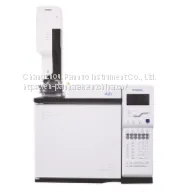
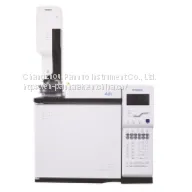
Gas Chromatography, gas chromatography, GC, is a very effective separation method established by British biochemist Martin ATP et al. in 1952 on the basis of liquid-liquid partition chromatography. It can be
analyzed and separated. Complex multi-component mixture. At present, due to the use of high-performance detectors and microprocessors, high-sensitivity detectors and microprocessors make gas chromatography an analytical method with fast analysis speed, high sensitivity and wide application range. It is widely used in various fields such as petroleum industry, metallurgy, polymer materials, food industry and biology, medicine, health, agriculture, commodity inspection, environmental protection and aerospace.
Gas chromatography is a chromatography using a gas as a mobile phase. Depending on the state of the stationary phase used, it can be divided into gas-solid chromatography (GSC) and gas-liquid chromatography (GLC). The former uses a porous solid as the stationary phase, and the separated objects are mainly permanent gases and low-boiling compounds. The latter stationary phase is coated with a high boiling organics on an inert support. Due to the wide variety of fixed liquids available, the selectivity is good and the application is extensive.
Gas Chromatography /
E-mail:marketing@pannatek.com
tel:86-0519-80586720

Send Inquiry to This Supplier

You May Also Like
-
 Intelligent Gas Bottle Locker-GBC269 Featuring Real-time Sensor Monitoring & Explosion-proof Steel |1900H*900W*450Dmm|for Gas Chromatography RoomUS$ 90 - 500MOQ: 5 Combos
 -
Gas ChromatographyNegotiableMOQ: 1 Set
-
Gas ChromatographyUS$ 3245 - 5677MOQ: 1 Bag
-
Gas Chromatography AnalyzerUS$ 36510 - 37510MOQ: 1 Set
-
Gas Chromatography SystemNegotiableMOQ: 1 Set
-
Gas Chromatography AnalyzerUS$ 18000.00 - 18000.00MOQ: 1 Set
-
New Gas Chromatography SystemNegotiableMOQ: 1 Set
-
Gas Chromatography Mass SpectrometerNegotiableMOQ: 1 Piece
-
Packed Column Gas ChromatographyNegotiableMOQ: 5 Bags
-
HK-A90 Gas ChromatographyUS$ 1,000 - 10,000MOQ: 1 Set


