








 Contact Platform Support
 Help Center
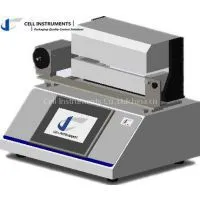
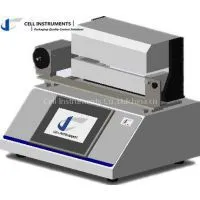
Thermal Shrinkage Force Tester



Related Products
-
 ASTM D 5591 Thermal Shrinkage Force TesterUS$ 1000 - 1000MOQ: 1 Piece
 -
ASTM D 5458 Peel Cling Tester for Stretch Wrap FilmUS$ 1000 - 2000MOQ: 1 Set
-
Wrapping Film Cling Peel Force Tester ASTM D 5458US$ 2000 - 6000MOQ: 1 Set
-
IEC 60068-2-75 Pendulum Hammer Striking TesterUS$ 4000 - 8000MOQ: 1 Set
-
Plastics, Rope and Yarn Tensile and Tension TesterUS$ 1000 - 1000MOQ: 1 Piece
The thermal shrinkage force tester conforms to ASTM D5591 is used for the measurement of the thermal shrinkage force of yarns and cords in air at controlled temperature.
Thermal Shrinkage Force Tester Principle:
A specified length of yarn or cord is fixedat a grip and the other end is mounted with a pretension mass, then the mass is removed and the end was connected to a loadcell. After that the yarn or cord is exposed to dry heat at a controlled temperature. The shrinkage force induced in the specimen is read from the tester.
Thermal Shrinkage Force Tester Features:
PLC control and touch screen operation
Yarn holder and heat unit separate design, not interfere between yarn sample and heating area before test
PID temperature control
Loadcell range 30N with accuracy of 0.5%F.S. for shrinkage force measurement(standard)
Temperature range: ambient~250°C,accuracy 0.1°C
Time range up to 9999 seconds(oras required)
Professional software is optional
One tension mass is configured as in ASTM D5591 table 1.
Standard:
ASTM D 5591: Standard Test Method for Thermal Shrinkage Force of Yarn and Cord With a Thermal Shrinkage Force Tester.

Send Inquiry to This Supplier


You May Also Like
-
PSTC-16 Loop Tack Tester Finat 9US$ 1000 - 1000MOQ: 1 Piece
-
ISO 12048 Box Compressive Strength TesterUS$ 1000 - 1000MOQ: 1 Piece
-
Food Bag Leakage TesterUS$ 1000 - 1000MOQ: 1 Piece
-
Coefficient of Friction Tester Inclined TypeUS$ 1000 - 1000MOQ: 1 Piece
-
Glass Grain Hydrolytic Resistance TesterUS$ 1000 - 1000MOQ: 1 Piece
-
Pendulum Impact Resistance Tester ASTM D3420 Impact TesterUS$ 1000 - 1000MOQ: 1 Piece
-
Glass Grain Hydrolytic Resistance TesterUS$ 1000 - 2000MOQ: 1 Set
-
Vacutainer Blood Collection Tube Drawing Volume TesterUS$ 1 - 3000MOQ: 1 Set
-
Ampul Bottle Neck Break Force Tester Ampoule Breaking Strength TesterUS$ 1000 - 2000MOQ: 1 Set
-
Plastic Film Pendulum Impact TesterNegotiableMOQ: 1 Set


