








 Contact Platform Support
 Help Center
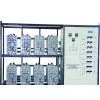
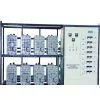
EDI Equipment for Water Purification



Related Products
warranty:one year
certificate:CE ISO9001 ISO2000
origin:China(mainland)
minimum order:one set
EDI can be used anywhere in general industry where deionized water is advantageous. Ultrapure water is used for microelectronic and semiconductor production, for biomedical and laboratory use, by pharmaceutical compounders, as pretreatment for stills, for boiler water during power generation, and in the food and beverage industry.
A typical EDI module will produce permeate water of approximately 15-17 megohm resistivity when installed and operated per the manufacturer's recommendations. Resistivity in this range is far better than the requirements for most pharmaceutical applications, generally adequate for electronics and other traditional DI applications, and slightly below the requirements for the 18.2 resistivity required for some semiconductor applications.
The conventional ultrapure water processes have included RO as the primary method to reduce total dissolved solids (TDS) and DI as the secondary method to remove TDS to ultrapure levels. In cases where the feedwater TDS is high or a reduction in the frequency of the DI regeneration is desired, a double-pass RO system can be applied as the primary TDS-reducing component of the overall ultrapure water system.
The EDI process
The transfer of ions across the appropriately charged boundary membranes into neighboring compartments transforms these compartments into concentrating sections. Water does not flow through the membranes. It is the ions that make this passage, directionally motivated by the direct current.
The typical EDI module is constructed using three separate streams of water, each for a specific purpose. The feed/product stream provides the entry of feedwater to the EDI module and the exit of EDI permeate from the EDI module. Recovery of 90
95 percent is typical, leaving 5-10 percent of the feedwater to the other two streams. The concentrate stream provides the means to collect the ions which have exited the feed stream, and remove them from the EDI module. The electrolyte stream provides a continuous flow of water across the EDI electrodes to prevent accumulation of ions at the electrodes.
In most applications, the feedwater will be split into the three streams.mounting one or more EDI modules with interconnecting piping, valves, instrumentation and a DC power supply. The capacity of EDI systems range from less than 1 gallon per minute (gpm) of product to hundreds of gallons per minute, completely scalable as a function of the number of EDI modules installed on the skid.
EDI does not require chemical regeneration of the resin due to a special feature of this process that causes the water molecules to “split” into hydroxyl (OH-) or hydrogen (H+) atoms. The local production of OH- and H+ within the mixed ion-exchange resins results in the constant regeneration of the resins without the addition of chemicals. Eliminating the need for chemical regeneration reduces operating costs, simplifies the control process, and makes the system more easily expandable. ·
Continuous operation.
In addition to the elimination of the need for hazardous chemicals, an RO/EDI system may be operated continuously because there is no downtime needed for regeneration.
Send Inquiry to This Supplier

You May Also Like
-
 ro Water Tank, Ultra-pure Water Frp Storage Tank, Nitrogen-sealed Water Tank, Water Storage Tank for Water Treatment in Electronic FactoriesUS$ 4000 - 4307.69MOQ: 1 Unit
 -
Urban Solid Waste Classification and Treatment Equipment Household Waste Trommel Screening MachineUS$ 30000 - 70000MOQ: 1 Set
-
220V Electric Composting Equipment for Organic Waste ProcessingNegotiableMOQ: 1 Piece
-
Water Bath SterilizerNegotiableMOQ: 1 Set
-
Ceramic Ink Printing On Glass Inorganic Glass Paint Enamel Pigments High Coverage For Range Hood GlassNegotiableMOQ: 0
-
Landfill Waste Trommel Screening Mahcine Domestic Waste Trommel SeparatorUS$ 23500 - 68500MOQ: 1 Set
-
PPS Needle Felt Filter Cloth for Thermal Power Plants for Boiler Gas PurifyNegotiableMOQ: 1 Piece
-
Waste Treatment EquipmentNegotiableMOQ: 2500 Sets
-
Replaceable Knives Wood Chipper Digital Maximize Efficiency for BiomassNegotiableMOQ: 1 Set
-
Aquarium Filter Media/plastic Bio Carrier for Waste Water Treatment Plant/bio Pond Filter in Anox TankUS$ 1873.70 - 2637.05MOQ: 5 Cubic Meters


