








 Contact Platform Support
 Help Center
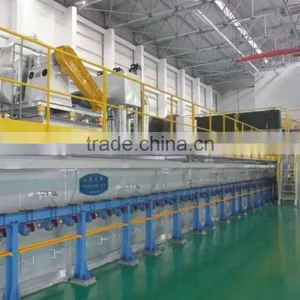
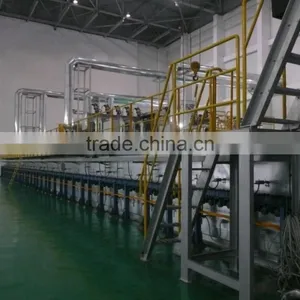
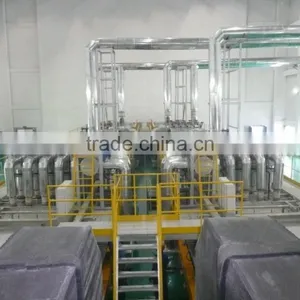
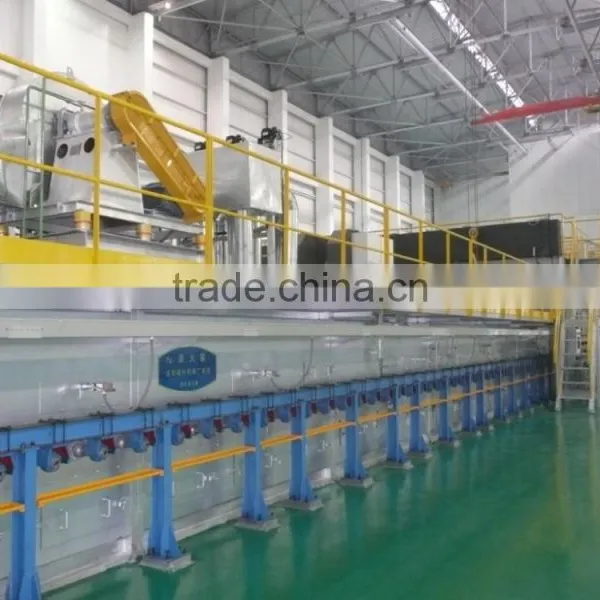
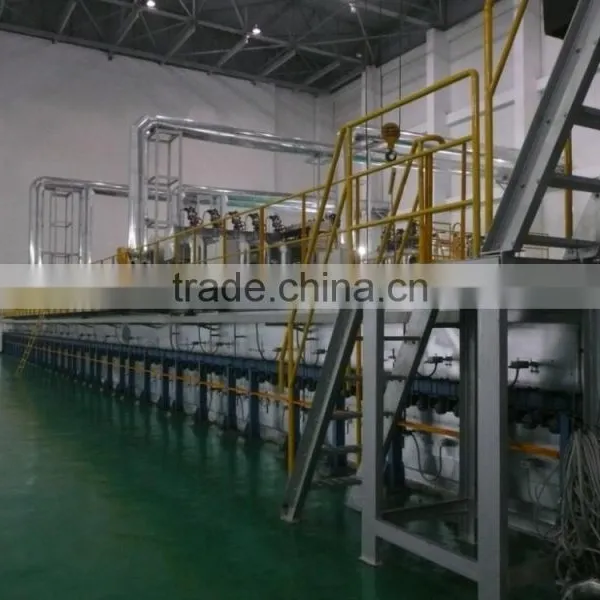
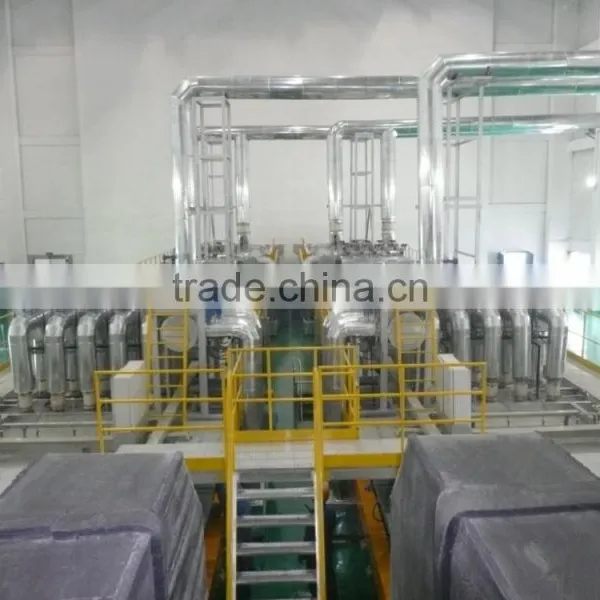
Annealing Lehr for Pattern Glass



Related Products
The annealing lehr features a whole-steel and whole-electrical structure composed of several modules. It is divided longitudinally into several zones according to the annealing curves. In these zones, various heating and cooling systems shall be provided to meet the requirements of ribbon temperatures and annealing processes, so as to ensure a good annealing and a proper temperature dropping.
The lehr can be divided into two main sections: an Annealing section and a Cooling section.
The Annealing section is composed of zones A, B and C, which are the pre-annealing zone, annealing zone and post-annealing zone, respectively. Of which, zone B is critical. It influences the annealing quality directly. The housing of these zones shall be heat-insulated. Inside these zones, proper heating and cooling systems shall be provided to control the cross zones, so as to control the cooling speed and cross temperature drop of the glass ribbon effectively.
The thermal process for Annealing section is based on the heat radiation theory. Indirect cooling is obtained with the heat exchangers located above and under the glass ribbon. The heat exchangers above the ribbon are made of blustered rectangular tube, while that under the ribbon are made of rectangular tube.
The Cooling section is composed of five zones: D, Ret, E, F1 and F2.
The thermal process for cooling section is based on the forced-convection theory. Direct cooling is obtained with the cold air sprayed out of the nozzles located above and under the glass ribbon.
In order to minimize the residual stress in the ribbon, the cooling air flows in the same direction as the glass flow in zone A and in the reversed direction to the glass flow in zones B and C.
Functions of Annealing Section
Zone A: Pre-Annealing Zone
The function of this zone is to drop under control the temperature of the ribbon out of the rolling machine and the lift-out rollers to the upper limit of the annealing temperature in zone B, and to adjust the cross temperature drop of the ribbon according to production requirements. Being composed of three (3) modules, this zone is 9,375 mm long.
Housing & Steel Structure: The housing of each module shall be made of welded steel plates and sectional steels. The inner housing shall be made of stainless steel and the outer housing shall be made of carbon steel. On both the front and rear ends of this zone, upper and lower drapes shall be provided. In order to ensure the tightness during lehr heating-up, the upper drapes shall be long enough to reach in-between two adjacent rollers. The height of the upper drapes can be adjusted manually. The lower drapes shall be fixed. In order to facilitate the maintenance, the lower drapes can be drawn out completely from the non-drive side.
On both sides of each module, cullet doors with minimum dimensions of 500W×200H are provided at the bottom to remove the cullet. In order to observe the operation of glass ribbon, peep-holes are provided on each of the modules. The minimum dimensions of the peephole shall be 300W×200H. In addition, peepholes for observing the operation of drapes shall also be provided near the upper drapes. The plugs of these peepholes should be able to ensure the tightness and easy replacement.
Thermal Insulation: The sides, top and bottom of housing shall be thermal insulated with various mineral cotton felts. In-between the inner and outer housings (upper, lower, left and right), alumina silica fibre felts and ceramic fibre felts shall be used for thermal insulation. When filling, the thermal insulating materials shall be placed in interlaced layers without holes left. The surroundings of the lehr roller journals, the cullet doors, the peepholes, the connector of heating elements and the air pipe entrances shall be filled solidly with various thermal insulating felts.
Alumina silica fibre felts with a specific weight of220 kg/m3 and ceramic fibre felts with a specific weight of 130 kg/m3 shall be used.
Cooling: Two fans shall be used for providing zones A and B with cooling air, one for normal operation and another for standby. These fans shall be installed on top of zone B. The cooling air will flow in the same direction as the glass flow. The air exhaust pipe shall reach to outside of the building with a level to be designed as FL + 600.
Cooling Process
Above the glass ribbon, five groups of blustered rectangular tubes made of heat-resist stainless steel shall be used as heat exchangers. The air will flow in the heat exchangers to cool down the glass ribbon. In order to control the transversal temperature difference of the ribbon, the air flow in each of the heat exchanger groups shall be controlled automatically by a control valve.................................................

Send Inquiry to This Supplier

You May Also Like
-
 Annealing Lehr for Container GlassUS$ 30,000 - 300,000MOQ: 1 Set
 -
Automatic Glass Bottle Making MachineNegotiableMOQ: 1
-
Gob Feeder for Container Glass ManufacturingNegotiableMOQ: 1
-
Glass Cullet Treatment MachinesNegotiableMOQ: 1
-
Automatic Glass Bottle Forming MachineNegotiableMOQ: 1
-
Refractory Spouts, Tubes, Orifice Rings, Plungers for Glass Furnace Gob Feeder MachinesUS$ 10 - 15MOQ: 100 Kilograms
-
Refractory Parts for Glass Furnace Gob Feeder MachinesUS$ 10 - 15MOQ: 100 Kilograms
-
Refractory Orifice Rings, Tubes, Spouts, Plungers for Glass Furnace Gob Feeder MachinesUS$ 10 - 15MOQ: 100 Kilograms
-
Feeder ExpendablesUS$ 10 - 15MOQ: 100 Kilograms
-
Wear Resistant Insert for SpoutUS$ 10 - 15MOQ: 100 Kilograms

