








 Contact Platform Support
 Help Center
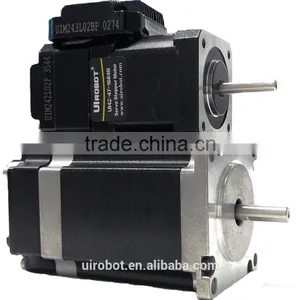
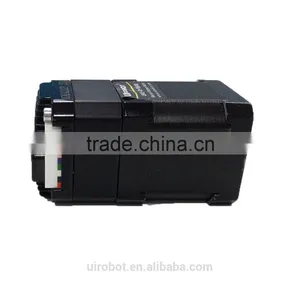
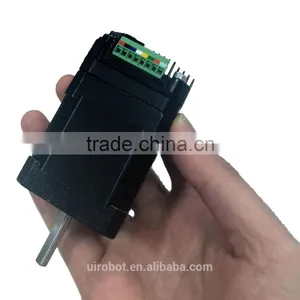
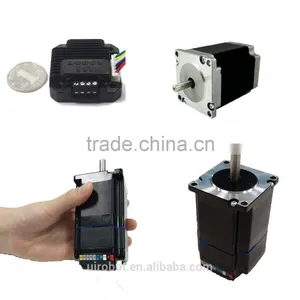
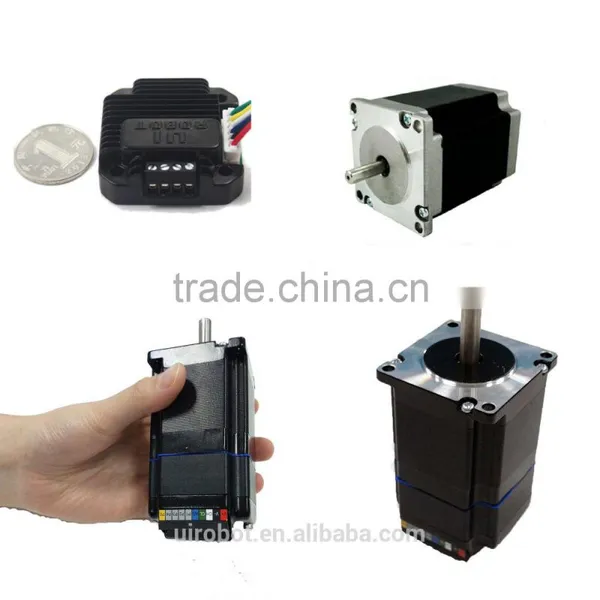
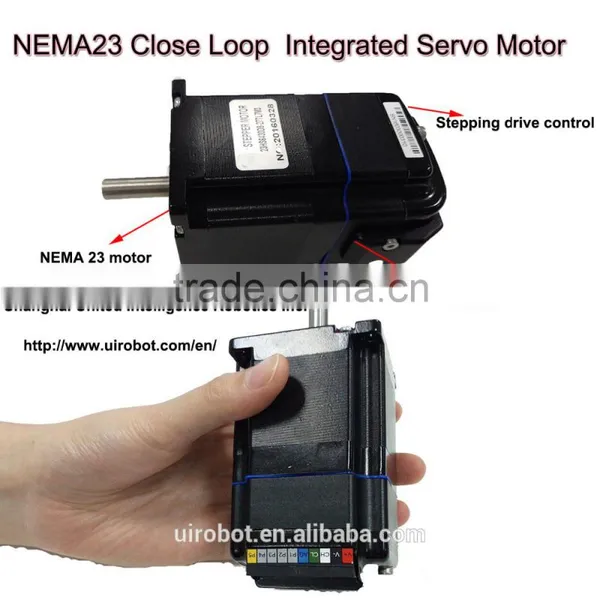
Integrated Stepper Motor With Drives From Shanghai

Related Products
-
 Programmable Stepper Motor Controller Integrated With Motor for Stage LightingNegotiableMOQ: 10 Sets
 -
NEMA23 57mm Integrated Stepper Motor With Motion ControllerNegotiableMOQ: 5 Pieces
-
NEMA34 86mm Integrated Stepper Motor With Motion ControllerNegotiableMOQ: 5 Pieces
-
NEMA23 57mm Integrated Stepper Motor With Motion ControllerUS$ 1 - 200MOQ: 5 Pieces
-
Closed-loop Stepper Servo System UIROBOTNegotiableMOQ: 1 Set
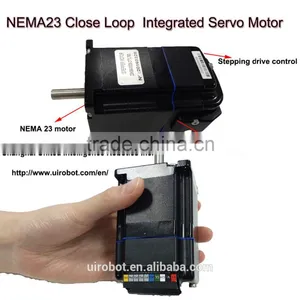
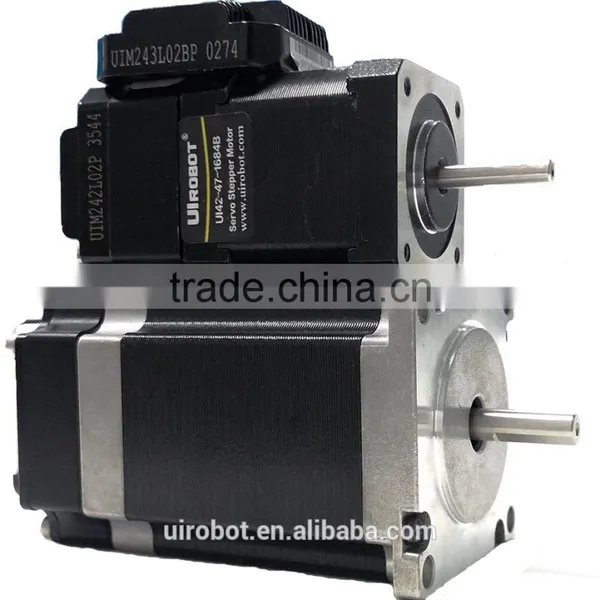
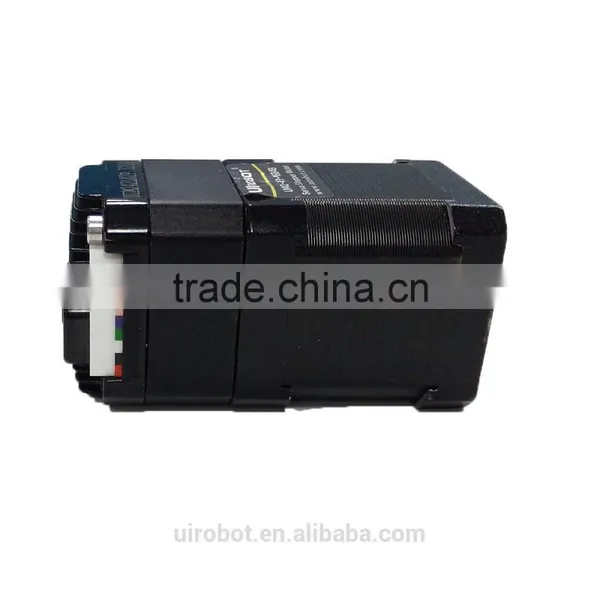
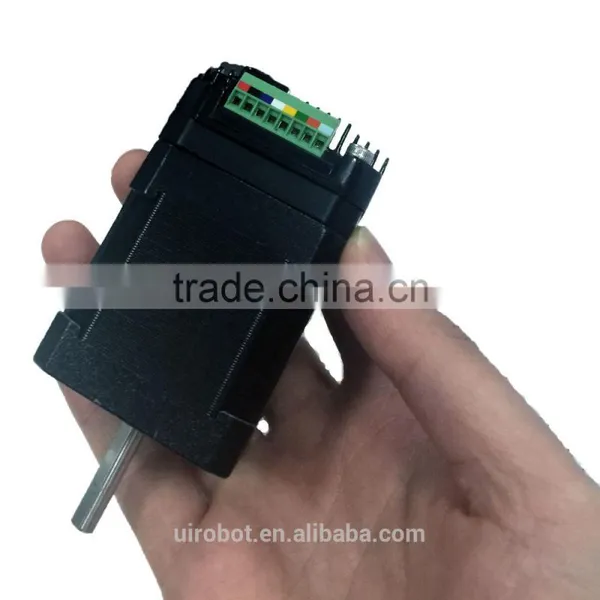
Integrated Stepper Motor with Drives
High torque Nema 23 stepper motors with 178 oz.in, 268 oz.in holding torque
UIM24004 stepper driver for driving
Integrated Stepper Motor with Drives in competitive price
UIROBOT
Estimating Stepper Motor Size:
"Pick the weight of the heaviest item you are pushing around. If it weighs 40lbs, use 40lbs. multiply it by the IPM [Inches Per Miniute] you want. Say that's 1,000 IPM. Divide the result by the magic number "531". The answer is 75.3 Watts".
Watts = IPM * Lbs / 531
or
Watts = torque (in in-oz) * RPM / 1351
Watts = amps * volts so you need a current and voltage rating that, when multiplied, reach more than your minimal required watts. In the example above, with a 75.3 watt power output requirement, you need a 4 amp motor driven at 24 volt motor or a 3 amp motor driven at 30 volt or ...
Here is that last line in a handy calculator with torque units conversion built in:
oz-inin-lbft-lbN-mN-cmdy-cmKg-mKg-cmg-cm at / 1352 =
This is generally going to me a more accurate estimate of the motor required for a mill or other system where a lead screw is pulling a load because the additional friction and mass of the system that moves the load is also included when you measure the torque required to turn the screw.
Drive Voltage
Given a target wattage (which is the power you need from the motor), the voltage needed to drive the motor is that wattage, divided by the rated amperage of the motor.
DriveVolts = Watts / Amps
The voltage on the motor label, is the steady state voltage, or the voltage which the motor can support when it is sitting at rest, which will be much less than the voltage used when the motor is turning. The maximum voltage that the motor can take when turning, the maximum safe drive voltage for the motor, can be estimated from the motors Inductance rating (if known) by simply multiplying it by 32.
MaxVolts ~= Inductance (in mH) * 32
In the example above, if the 4 amp motor had an inductance rating of 0.75mH or more, then we could feed its driver 24 volts and expect to get about 75 watts power out and drive our 40 lb load at 1000 IPM. That assumes a good lead screw and bearings, and no binding or other loads, of course. It also assumes 100% efficiency, which just doesn't happen, so build in an extra 20% or so as a "reality" factor.
In general, the motor needs more voltage to run at higher speeds, because the voltage pushes the current to the necessary level faster. Think of it like this: If you have a /really/ long garden hose, and you want a trickle of water out the far end, you can supply a trickle at the valve and just wait... eventually, the water will trickle out the other end. But if you want that trickle NOW, you turn the water value on full, then wait for the water to start coming out the end before you turn it down. Higher supply voltage allows faster changes to the current and field strenght in the motor coils and so faster rotation. But there is also a balance; at higher PSU voltages the motor will get hotter (because of increased wattage) and it will jerk faster from step to step, so you get more resonance and more problems with stalling. A higher voltage can actually stop the motor getting through resonance bands.

Send Inquiry to This Supplier

You May Also Like
-
Sew SA67 DV100M4 Helical-Worm Gearmotor 3-Phase Industrial Gear MotorNegotiableMOQ: 1 Piece
-
Stepping MotorNegotiableMOQ: 2600 Pieces
-
NWMA34 IG86 Harmonic Drive Integrated High-Precision 86HS98-FH80 Geared Motor Robot Joints Closed-Loop Drive 2.4V 6N.mUS$ 1563.81MOQ: 2 Pieces
-
Factory Price A2FM56/61W-VAB027 Hydraulic Piston MotorNegotiableMOQ: 1
-
Make Vibrating MotorUS$ 500 - 4,000MOQ: 1 Set
-
Best Sales High Quality Asynchronous MotorUS$ 22 - 40MOQ: 1000 Pieces
-
Front Suspension [ New Design] Used Dirt BikeNegotiableMOQ: 20 Pairs
-
Advanced Engine Testing EquipmentUS$ 1,000 - 1,500MOQ: 1 Set
-
Shaded Pole OEM Replacement Electric Motor With Sleeve Bearing, 3000rpm, 115VAC, 60HzUS$ 4.5 - 5.5MOQ: 1000 Pieces
-
Lawn Mower MotorNegotiableMOQ: 1


