








 Contact Platform Support
 Help Center
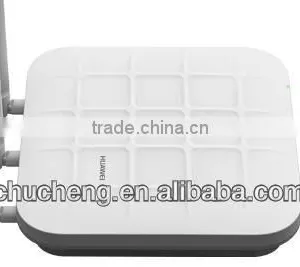
Huawei AP7130DN-AC Wireless Access Point Access Point Wifi Usb


Related Products
-
 Huawei AP6610DN-AGN Outdoor Access Point Wifi Mini Access PointNegotiableMOQ: 1 Piece
 -
Huawei AP6610DN-AGN Outdoor Access Point Wifi Access PointNegotiableMOQ: 1 Piece
-
Huawei AP6610DN-AGN Outdoor Wireless Access Point 5.8ghz Access PointNegotiableMOQ: 1 Piece
-
Huawei AP6610DN-AGN Outdoor Wireless Access Point Wifi Access Point OutdoorNegotiableMOQ: 1 Piece
-
Huawei AP6510DN-AGN Wireless Access PointNegotiableMOQ: 1 Piece
Huawei AP7130DN-AC outdoor Access Point wireless access point
The AP7030DN-AC is a premium series dual-band Access Point (AP). Support for IEEE 802.11ac enables the AP7130DN-AC to support GE bandwidth, which greatly improves user experience. The AP7030DN-AC is applicable to scenarios with a simple building structure, a small size, a high density of users, and high capacity demands, such as small-sized conference rooms, bars, and entertainment areas.
The AP7030DN-AC is recommended for use in buildings with a simple structure, small area, a high density of users, and requires a high capacity, for example, small-scale meeting rooms, bars, and entertainment places. The AP7030DN-AC APs can be flexibly deployed in these places and work in both Fit AP and bridge mode.
Specifications
| Item | Description | |
|---|---|---|
| Technical specifications | Dimensions (H x W x D) | 53 mm x 220 mm x 220 mm |
| Weight | 1.3 kg | |
| System memory | 256 MB DRAM 32 MB flash memory | |
| Power specifications | Power input | DC 12V±10% POE Power: -48V DC PoE function in compliance with IEEE 802.3at |
| Maximum power consumption | 19W NOTE:The maximum power consumption depends on local laws. | |
| Environment parameters | Operating temperature | -10°C to +50°C |
| Storage temperature | -40°C to +70°C | |
| Humidity | 5% to 95% (non-condensing) | |
| Waterproof grade | IP31 | |
| Altitude | –60 m to 4000 m | |
Antenna Parameters
| Item | Description | ||||
|---|---|---|---|---|---|
| Antenna type | Removable RP-SMA antenna | ||||
| Antenna gain | 2.4G: 2.5dBi 5G: 4dBi | ||||
| Maximum number of concurrent users | 128 | ||||
| Maximum transmit power | 17 dBm You can adjust the transmit power from the maximum to 15 dBm, with a step of 1 dBm. NOTE:Actual transmit power depends on local laws and regulations. | ||||
| Maximum number of non-overlapping channels | 2.4 GHz 802.11b/g 20 MHz: 3 802.11n 20 MHz: 3 40 MHz: 1 | 5 GHz 802.11a 20 MHz: 24 802.11n 20 MHz: 24 40MHz: 11 80MHz: 3 | |||
| NOTE:The number of non-overlapping channels allowed varies in different countries. | |||||
| 802.11b: 1 Mbit/s, 2 Mbit/s, 5.5 Mbit/s, 11 Mbit/s | |||||
| 802.11g: 6 Mbit/s, 9 Mbit/s, 12 Mbit/s, 18 Mbit/s, 24 Mbit/s, 36 Mbit/s, 48 Mbit/s, 54 Mbit/s | |||||
| 802.11n data rate | |||||
| 23 | 195 | 405 | 216.7 | 450 | |
| 802.11ac data rate | |||||
| MCS index | NSS | GI=800ns | |||
| 20 MHz (Mbit/s) | 40 MHz (Mbit/s) | 80 MHz (Mbit/s) | |||
| NOTE: MCS: modulation coding scheme index, which determines the spatial stream quantity, modulation, coding rate, and data rate. GI: guard interval, the period in nanoseconds the radio listens between packets. The GI introduces immunity to propagation delays. NSS: number of spatial streams. | |||||
| Receiver Sensitivity | 2.4 GHz 802.11b (CCK) -96 dBm @ 1 Mb/s -91 dBm @ 2 Mb/s -91 dBm @ 5.5 Mb/s -88 dBm @ 11 Mb/s | 2.4 GHz 802.11g (non-HT20) -91 dBm @ 6 Mb/s -90 dBm @ 9 Mb/s -89 dBm @ 12 Mb/s -86 dBm @ 18 Mb/s -83 dBm @ 24 Mb/s -80 dBm @ 36 Mb/s -76 dBm @ 48 Mb/s -74 dBm @ 54 Mb/s | 2.4 GHz 802.11n (HT20) -91 dBm @ MCS0/8/16 -88 dBm @ MCS1/9/17 -86 dBm @ MCS2/10/18 -81 dBm @ MCS3/11/19 -78 dBm @ MCS4/12/20 -74 dBm @ MCS5/13/21 -72 dBm @ MCS6/14/22 -71 dBm @ MCS7/15/23 | 2.4 GHz 802.11n (HT40) -86 dBm @ MCS0/8/16 -86 dBm @ MCS1/9/17 -84 dBm @ MCS2/10/18 -80 dBm @ MCS3/11/19 -77 dBm @ MCS4/12/20 -72 dBm @ MCS5/13/21 -70 dBm @ MCS6/14/22 -68 dBm @ MCS7/15/23 | 5 GHz 802.11a (non-HT20) -89 dBm @ 6 Mb/s -88 dBm @ 9 Mb/s -86 dBm @ 12 Mb/s -83 dBm @ 18 Mb/s -80 dBm @ 24 Mb/s -77 dBm @ 36 Mb/s -73 dBm @ 48 Mb/s -71 dBm @ 54 Mb/s |
| 5 GHz 802.11n (HT20) -90 dBm @ MCS0/8/16 -85 dBm @ MCS1/9/17 -84 dBm @ MCS2/10/18 -78 dBm @ MCS3/11/19 -75 dBm @ MCS4/12/20 -71 dBm @ MCS5/13/21 -70 dBm @ MCS6/14/22 -68 dBm @ MCS7/15/23 | 5 GHz 802.11n (HT40) -85 dBm @ MCS0/8/16 -82 dBm @ MCS1/9/17 -79 dBm @ MCS2/10/18 -75 dBm @ MCS3/11/19 -72 dBm @ MCS4/12/20 -68 dBm @ MCS5/13/21 -66 dBm @ MCS6/14/22 -64 dBm @ MCS7/15/23 | 5 GHz 802.11ac (VHT20) -90 dBm @ MCS0&NSS1 -87 dBm @ MCS1&NSS1 -85 dBm @ MCS2&NSS1 -82 dBm @ MCS3&NSS1 -78 dBm @ MCS4&NSS1 -74 dBm @ MCS5&NSS1 -73 dBm @ MCS6&NSS1 -72 dBm @ MCS7&NSS1 -67 dBm @ MCS8&NSS1 -65 dBm @ MCS9&NSS1 | 5 GHz 802.11ac (VHT40) -87 dBm @ MCS0&NSS1 -84 dBm @ MCS1&NSS1 -82 dBm @ MCS2&NSS1 -79 dBm @ MCS3&NSS1 -75 dBm @ MCS4&NSS1 -71 dBm @ MCS5&NSS1 -70 dBm @ MCS6&NSS1 -69 dBm @ MCS7&NSS1 -64 dBm @ MCS8&NSS1 -62 dBm @ MCS9&NSS1 | 5 GHz 802.11ac (VHT80) -84 dBm @ MCS0&NSS1 -81 dBm @ MCS1&NSS1 -79 dBm @ MCS2&NSS1 -76 dBm @ MCS3&NSS1 -72 dBm @ MCS4&NSS1 -68 dBm @ MCS5&NSS1 -67 dBm @ MCS6&NSS1 -66 dBm @ MCS7&NSS1 -61 dBm @ MCS8&NSS1 -59 dBm @ MCS9&NSS1 | |
WLAN Features
- Compliance with IEEE 802.11a/b/g/n/ac, providing a maximum rate of 1.3 Gbit/s for each radio
- Maximum ratio combining (MRC)
- Maximum-likelihood detection (MLD)
- Aggregate data units, including A-MPDU (Tx/Rx) and A-MSDU (Rx only)
- 802.11 dynamic frequency selection (DFS)
- Short GI in 20 MHz, 40MHz and 80MHz modes
- 256QAM modulation
- Priority mapping and packet scheduling based on a Wi-Fi Multimedia (WMM) profile to implement priority-based data processing and forwarding
- Automatic and manual rate adjustment (the rate is adjusted automatically by default)
- WLAN channel management and channel rate adjustment
- Supports the FrameBurst function that can improve the peak throughput
- Automatic channel scanning (the AP7030DN-AC scans channels used by other APs, measures their interference, and reports the scanning result to the AC to trigger channel adjustment)
- Service set identifier (SSID) hiding
- Signal sustain technology (SST)
- Unscheduled automatic power save delivery (U-APSD)
- Control and Provisioning of Wireless Access Points (CAPWAP)
- Automatic AC discovery
Network Features
- Compliance with IEEE 802.3u
- Auto-negotiation of the rate and duplex mode and automatic switching between the Media Dependent Interface (MDI) and Media Dependent Interface Crossover (MDI-X) mode
- VLAN assignment based on SSIDs
- VLAN aggregation on uplink Ethernet ports
- 4093 VLAN IDs (1-4093) and 16 virtual APs (VAPs)
- Uplink ports in tagged and untagged mode
- DHCP client
- PPPoE dialup
- Centralized data forwarding and local data forwarding
- STA isolation in the same VLAN
- ACL
- LLDP
- Uninterrupted service forwarding upon CAPWAP channel disconnection in direct forwarding mode
- Uniform authentication on an AC
- Dual-AC backup

Send Inquiry to This Supplier

You May Also Like
-
TYT Smarthome Gateway / Home Applainces Remote Comtroller in Zigbee Coordinator SystemUS$ 59 - 139MOQ: 1 Square Inch
-
Serial Wifi Module Wire Ethernet PCB Antenna Transparent Transmission WF-01US$ 1 - 10MOQ: 10 Pieces
-
External 3G Gsm Modem Pool 8 Port Speaker/call Sending Bulk SMS MMSUS$ 345 - 500MOQ: 1 Piece
-
RF DIN 7/16 Attenuator 50W 3dB/6dB/10dB/20dB/30dB/40dB/50dBNegotiableMOQ: 1 Piece
-
2015 New Stylish Optical Bluetooth Transmitter for Smartphone ,laptopUS$ 11 - 13MOQ: 1000 Pieces
-
UM220-III NUS$ 0.1 - 1MOQ: 1 Piece
-
2.4G WIFI/Bluetooth Internal FPC Antenna FR4 Antenna PCB Wifi Patch Antenna With IPEX UFL ConnectorUS$ 0.48 - 0.7MOQ: 100 Pieces
-
Bluetooth Audio Module RS232 Serial Bluetooth Module HC-06 Adapter Communication Master-Slave 2 Modes MINI USBUS$ 1 - 100MOQ: 100 Units
-
RIGHT ANGLE f QUICK MALE RF CONNECTORUS$ 0.01 - 0.99MOQ: 1000 Pieces
-
High Strength FRP RadomeNegotiableMOQ: 100 Pieces


