Laser Cutting Machine Insights & Buyer's Guide
The laser cutting machine is at the forefront of current production technologies in manufacturing industries due to its ability to cut and engrave various materials and components quickly and accurately. With the use of a well-collimated laser system from a good laser machine, it is now possible to cut and engrave into acrylic, plastic, machines for wood, and even thin sheet metal with precision. There exists a range of desktop lasers for home users or small businesses, up to typologies of the industrial fiber laser cutting and CO2 laser cutting that facilitate the process of manufacturing, advanced prototyping, and even the creation of designs. Laser cutting machines offer a precise finish, maximum cutting velocity, and CNC operations’ efficiency, despite the material or dimensions of the workpiece. The current paper entails a brief overview of effective concepts, development, and the significance of this fascinating technology in both industrial and domestic setups.
Laser Cutting Technology: An Overview
What is a Laser Cutting Machine?
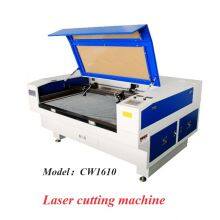
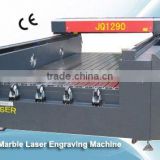
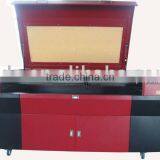
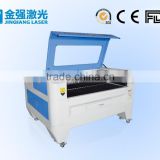
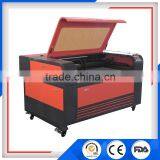
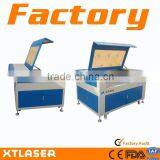
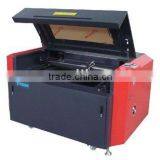
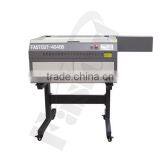
A laser cutter, or rather a laser cutting machine, is any cutter that makes use of a laser for cutting purposes. With these cutters, beams are focused on the material for etching, cutting, or marking, over material which could include paper, cloth, or wood. The source of the laser, usually a CO2, fiber, or diode, is an important consideration in terms of efficiency and success of cutting materials, for example, acrylic, plastics, or metal. The optics where the laser was produced allows direction of a precise beam onto specific areas for cutting, speed, and path determined by CNC systems. The layout of the laser machine further allows the system to be changed from cutting to etching, such that ordinary shapes can be cut and engraved, laser print using what would be considered mark engraving, and fine detail engravings. Laser cutters that are compact and portable are more effective for educational or small business purposes. More powerful solid-state lasers and fiber lasers, however, aim to provide higher output for industries. Capabilities and efficiency are enhanced by the addition of, for example, a compressor, an extraction unit, subassemblies, and other supporting devices.
History of Laser Cutter Development
The laser cutter has been developed since solid-state laser experiments back in the day to modern-day laser cutting machines, which are incredibly fast and even integrated with software built. CO2 laser machines simplified cutting of organic materials, providing almost perfect edges in woods and acrylics within appropriate speeds and costs. Thereafter, fiber laser systems modified the process of cutting sheets by using more force and better beams to cut steel and aluminum with accuracy. As technology progressed, diode modules and various types of seed laser heads, along with the optical delivery, were improved to smaller and more durable components, therefore making desktops and even household machines a reality. LaserPecker, for example, was one such brand that was responsible for making a portable engraver possible for end users, whereas industrial manufacturers devoted themselves to expanding CNC and enclosure protections. The market is now optimized with everything starting from DIY desktops and all the way to fully automated industrial systems with full laser solutions.
Importance of Cutting with a Laser in Certain Industries
Industrial advancement, in modern days, has brought forth the Laser Cutting Machine due to its accuracy, fast prototyping, and easy customizable fabrication. Automotive and Aerospace industries use fiber laser technology for cutting sheet metal and marking components with intense precision levels. Clothes and packages sectors use CO2 laser cutters for fabrics and plastic materials, creating complex designs and yet very accurate engravings. Small firms make use of tabletop laser machines to make small-scale products, make signage out of acrylic, and laser-cut wood, at least with steady consistency. The use of laser cutting machines reduces the time required to tool up, converts more material to useful components, and fits into existing CNC systems, hence enabling easy manufacturing. The integration of laser cutting technology ranges from craft dens to international supply chains, making the powerful laser a vital asset across many industries as it simplifies the manufacturing processes, enhances the possibilities of designing, and is compelling in CNC machines.
Advantages of the Laser Cutting Machine
Accuracy and its precision nature
The phrase ‘laser cutter’ presupposes those two attributes as persuasive as full-powered optics, locked laser output, and accurate CNC dynamics. Laser cutters burrow narrow cuts, earlier mentioned different dimensional spectacles with consistent over strokes, thereby requiring minimal machine corrections. Northbound to any acrylic, plastic, or metal sheet beyond. Cutting sheet metal with a high-strength fiber effectively uses the utmost beam proficiency on high power without edge degradation. Therefore, organic and plastic materials remain best for CO2 machine usage due to crisp edges. With an area for cutting and engraving set on a flimsy, cutting and engraving take place almost simultaneously, letting one avoid registration woes, which come when using different tools. Progress on the Source laser and coherent will enhance laser-sharp accuracy like that of microns when it comes to engravings and markings. There is a possibility to manufacture machines with industrial precision that are small and tabletop in size.
Productivity and Speed of Laser Machines
Laser cutting ensures production efficiency by removing any physical tooling, which paves the way for a deep penetration into the material being cut within the shortest time possible. With such systems, superior motion control, acceleration performance, and intelligent cutting path algorithms, a laser cutter/ engraver can process quantities faster and better. Different types of fiber laser cutting machines utilize higher power levels, allowing for operation on sheets of metal. On the other hand, CO2 Laser Cutting Machines are designed for speed as well as sharpness of the cut when working with wood and some plastics. With air assist, adjustable focal position, or even additional lasers, throughput on engraving and cutting is further increased. Intelligent nesting software is employed to reduce material spillage, and the exchange of lasers is moderated by the available laser power in real time. In the current situation, even tabletop lasers will reduce the lead time to produce a prototype to production and do not require any hard tooling or fixtures. Consequently, fabricating methods are sped up, associated downtimes are minimized, and there are rapid and simple turnarounds for both the customers and the domestic fabrication industry as well.
Available in Many Materials
One of the most attractive characteristics of a Laser Cutting Machine is its functionality across various types of materials. CO2 laser machines are ideal for working on organic materials, which means that a laser machine is able to cut wood neatly, cut and engrave acrylic signs, and perform processing of plastics, leaving smooth edges. Also, fiber laser machines are the best when it comes to precision laser cutting of metals. In this way, sheet metal fabrication for both parts and metal enclosures becomes very economical. Incorporating the diode and 20W module in small file laser engravers brings about the capability of laser scribble and high precision patterning on a glasswork or a machine that can be placed on a desktop, which is most practical. Adjusting the focusing beam and laser power, and speed accordingly, allows a user to cut and engrave laminates, fabrics, and thin composite materials with ease. With the option of choosing the different types of lasers and the parameters, there is a possibility of using one machine for prototyping as well as for final production.
The Uses of a Laser Cutting Machine
Laser Cutting Machine: Manufacturing Sector
One of the areas in which laser cutting technology performs exceptionally well is the automotive and aerospace industries, where quality, strength, light weight, and extremely tight tolerances are required. Such materials as steels, aluminum, and titanium may be cut using sheet metal using the advantage of fiber lasers, producing laser platforms that have higher power. This ensures that brackets, enclosures, and structural parts have clean edges and reliable joints. Using an all-in-one laser machine, engraving and cutting of identification, serial numbers, and also laser marking are possible within one setup. This is due to the integration of the laser and the CNC with optical feedback, so that all the processes are carried out at high speed yet still remain accurate. CO2 laser machines also complement the metalwork by cutting and forming plastics, composites, and acrylics used in the building of interior panels, and also making prototype parts. More production cells combine the laser cutting machine with a handling system to increase the utilization and production of the cutting area. It is also helpful in the aspect of waste elimination as laser type and power settings are selected for a particular try, and quality standards are very strict.
Garment and Textile Industries: Customized Cutting of Fabrics
The ideal type of laser cutting in crops involved in fashion and textile sectors is by making use of CO2, which allows better and contactless forms to be made very accurately, even through fabrics or leather, including technical fabrics. Laser cutting helps in designing resultant patterns with sharp edges, good fall, and reduced fabric protruding upon completion of work. Using a desktop laser cutter is sufficient in fit model labs–especially in Atelier sewing, as there is no limitation regarding ready control on bodies’ or objects’ curves, shapes, cuts, appliqué, or engraving of e.g., denim or felt. Moreover, the latter type of machines is a regular cutting supported by software able to combine the geometry of a lot of pieces within a single composition and deal with the variable width of material in the cutting zone. One-stage engraving of materials provides and creates texture patterns with a brand, and also with precise diode modules, with the help of a positioning system will allow cutting on printed materials. When using CNC, efficient production of small series and customization is also easy.
Arts: Engravings, Sculptures, etc
The artists and designers in this age use laser engravers and laser engraving codecs to turn the ideas into cost-effective engraved or indistinguishable graffiti, and even sculptures. In the case of the CO2 laser, its usefulness is observed in wood, acrylic, and paper. The creators can not only cut the mentioned materials into layers but also engrave them with artistic ease. Sometimes the fame does not come secure, fiber optic lasers cut flat metals that provide rigidity that can be shaped or arranged in inset designs or a 3D form. Added, every DIY enthusiast has their range of supporting products, such as the mini Laser Cutting Machine of a few brands, as perceived LaserPecker, that would help them design, cut, and put together decorations, signage, and even jewelry from the machine they own at home. Multi-photon, aka dual-beam micromachining, or diodes having higher output power (can go as high as 20 watts), shorten the process time as well as widen the range of materials supported. When all of these resources are sufficiently combined, due to efficiency and economy of scale is achieved because instead of simply ‘strips laser yet another layer’ out of a surface, a flat and soft surface can, in effect, be structured.
Deciding on the Appropriate Laser Cutting Machine
Aspects to focus on: Machine dimensions, Energy, and Readiness.
Begin with the layout in which the machine works: in this case, pick the cutting surface that accommodates the biggest workpiece, and it is also necessary for the arrangement of materials in a way that reduces wastage. Choose a laser strength that matches the types and thicknesses of the materials that you intend to cut. Thus, laser cutters using the carbon dioxide lasers with powers from 40 to 150 watts are ideal for cutting these materials and more, while fiber laser cutters with higher energy levels provide high speed and clean edge cutting of sheet metals. Check the quality of the lens and the motion capabilities when dealing with high-end engraving and cutting, and also take into account the efficiency of the enclosure, smoke evacuation, and air assist for safer and cleaner production. Check if the software and cut file formats can be utilized in your CNC process, whether it is vector or raster engraving. If you require cutting materials out of the ordinary, think about having two lasers or a 20W diode laser expansion as a module. The manufacturer must meet the customer service, replacement parts, and enhancement expectations for the product life cycle.
Knowing the Laser Concepts: Carbon Dioxide or Diodesbrengen
Infrared laser sources found in CO2 laser machines are the most popular technology for working with non-metals. These laser sources can very easily process materials like acrylic, plastics, leather, and paper, and because of this, very smooth surfaces and sharp engraving can be achieved at useful and practical cutting speeds. This type of equipment is perfect for advertising applications, wood and cardboard boxes, and certain machines designed for working with wood. There are also desktop versions of this type of equipment specifically for use at home or in small businesses. Small 20-watt modules or diode lasers are another option, which can come in small sizes and are cheaper, therefore, suitable for diy laser applications and even detailing; portable engraver models as those of LaserPecker, in these categories even took off very well. Yet, diodes have some limitations concerning output and beam shape that do not allow cutting thick organic materials effectively, increasing both speed and depth. Whilst fiber lasers are considered ideal for sheet metal fabrication because they combine both high speed and good quality cuts. Select the specific category of Laser Cutting Machine if your materials, as well as your production level and product quality, specify it.
Low-Cost Ideas for Micro or Small-Scale Entrepreneurs
Enterprises should balance the cost of acquisition with the total operational cost. A decent desktop laser engraver with case, sound optics, and air compressor, produces excellent results on wood and acrylic at a low cost, improving return-on-investment (ROI) due to ease in performing prototyping work and executing small portion engraving and cutting. Take into account replacements, exhaust system, maintenance, software support, and user training. If metals are a requirement, a fiber laser is a more costly option but realizes a faster speed and a perfect quality edge in the process of sheet metal, oftentimes helping to decrease cost on outsourcing. Plan for a scenario of growth in stages: start with an organic material CO2 laser cutting machine, and later use a diode laser module or buy more machines to process other volumes and pieces. Seek to protect, cater and elevate the client’s business objectives through warranties, client support that does not hang up, should the number of users increase, and upgradable products.
Frequently Asked Questions (FAQs)
How can I incorporate a laser cutting machine in my space?
A laser cutting machine may be helpful to the workshop of a small business or hobbyist, because the equipment operates at different powers from 40W to 80W, as the case may be. Proper ventilation and control, as well as class 2 optics and/or CO2 gas for systems, may be included with the workstation, so check these from the vendor as well as the physical space.
How does a Laser Cutting Machine distinguish itself from an ordinary engraving and cutting tool?
A laser cutter engraver performs the twin functions of laser cutting machines and laser engraving; while the former may be marked, the latter is cut. There is a marked difference in the settings of cutting and the engraving of a laser beam that works the material; other than the strength of a beam of laser beam, it is the length of the wave that is different for different procedures. Most of the dual laser models and woodworking devices are designed for both cutting and engraving processes on wood, plastic, and thin metal sheets, provided the appropriate nozzle and power are used.
Is a desktop laser cutter suitable for beginners or hobbyists?
A desktop laser machine or a home laser is often preferred by beginners because of its size. It is more convenient for them to start with smaller cutting projects. All beginner users need to wear eye protection and attempt the basic functions of a laser cutting machine before doing any work. Most of the laser cutting machine advertisements include cutting various materials such as wood and acrylic. However, various models are referred to as diode or low-power CO2 units.
When should I choose a CO2 laser versus a diode or optical type of laser?
The most commonly used Laser Cutting Machine CO2 LASER is effective on amorphous material other than metal, metal shearing will in general require shallow, or even low-power etching and marking lasers, how nuclear aim is produced and powered, whether through CO2 gas laser or CO2 laser, Fiber optics laser, and high demand based on applications which need efficient high speed or high-power workings.
How do acrylic and ceramic materials work with precise laser engraving?
Acrylic and even harder materials like ceramics need the right kind of precision and laser diameter as well, because ceramics can sometimes prove to be unimaginable to cut or mark without the use of appropriate nozzles and emphasis of high power or specific wavelength. To be able to work delightfully in these materials, choose precision machines with a stable focus and polished laser beam control, with relevance to the materials available.
Can sheet metal and heavy stock be cut with laser machines, and what is the minimum laser output?
Laser cutting of metal sheets, in most cases, involves the use of a high-power laser and sometimes auxiliary gases like helium or oxygen, rather than the conventional hobbyists' version; hence, check the output power and test whether 80W versions do the job. Most manufacturers assume cutting (capable of cutting specific thicknesses) will be performed and advise on the right kind of nozzles and gas assistance type for cutting smooth edges.
What is the best choice between the 40W and 80W models, and is it worth considering high-speed models?
The choice between 40W and 80W models depends on the materials that one intends to cut. A 40W is suitable for most plastics and thin wood, although 80W and higher models are good for improved, faster, thicker materials. High-speed units help boost productivity; however, they also come at a premium. Also, ask yourself if you will require features such as laser marking, CNC integration, or even dual laser mode to enhance production. Finally, ensure that the equipment under consideration is suitable for cutting the desired material types.