








 Contact Platform Support
 Help Center
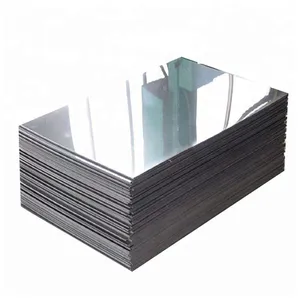
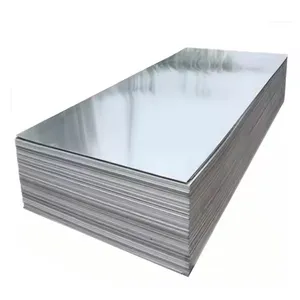
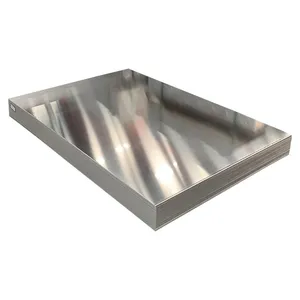
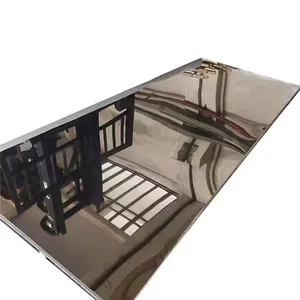
1.4306 304L Plate | Mirror Finish 0.5-6mm | Food Grade Application
Product Spotlights



Related Products
-
 304 Stainless Steel Plate | 2mm 4x8ft | 2B Cold Rolled | KitchenwareUS$ 1.15 - 3.25MOQ: 100 Kilograms
 -
316L Marine Grade Plate | 3mm | ASTM A240 | Corrosion ResistantUS$ 1.15 - 3.25MOQ: 100 Kilograms
-
2205 Duplex Stainless Plate | 5mm | High Strength | Chemical TankUS$ 1.15 - 3.25MOQ: 100 Kilograms
-
904L Ferritic Steel Sheet Plate | 1.5mm | No.4 Brushed | ApplianceUS$ 1.15 - 3.25MOQ: 100 Kilograms
-
2205 Duplex Stainless Plate | 5mm | High Strength | ASTM A240US$ 1.15 - 3.25MOQ: 100 Kilograms
1.4306 / 304L Mirror Finish Stainless Steel Plate: A Complete Technical Guide for Food-Grade Applications
When specifying stainless steel for food processing, pharmaceutical, or hygienic environments, material selection is not a matter of preference but of compliance, durability, and long-term cost control. The 1.4306 grade—known internationally as 304L—paired with a No. 8 mirror finish and supplied in the versatile 0.5–6mm thickness range, has become a benchmark solution for manufacturers who require both regulatory conformity and reliable corrosion performance. This guide examines the metallurgy, surface characteristics, standards, and practical applications of this plate so that engineers, procurement teams, and fabricators can make informed sourcing decisions.
Understanding the 1.4306 / 304L Designation
The designation 1.4306 is the European (EN) material number, while 304L is the equivalent AISI/ASTM identifier. Both refer to a low-carbon variant of the widely used 304 austenitic stainless steel. The "L" suffix signifies "low carbon"—the defining characteristic that separates this grade from standard 304.
Standard 304 permits a maximum carbon content of 0.08%, whereas 304L caps carbon at 0.03%. This seemingly small difference has a significant metallurgical consequence: it reduces the risk of chromium carbide precipitation at grain boundaries during welding, a phenomenon known as sensitization. Sensitized steel becomes vulnerable to intergranular corrosion, which can compromise weld zones in service. For fabricated equipment such as tanks, hoppers, and enclosures—common in food and beverage plants—this makes 304L the safer specification.
Chemical Composition
The corrosion resistance and formability of the plate derive directly from its balanced alloy chemistry. The table below outlines the typical composition ranges in accordance with EN 10088-2 and ASTM A240.
| Element | Symbol | Content (%) | Function |
|---|---|---|---|
| Chromium | Cr | 18.0–20.0 | Forms the passive oxide layer for corrosion resistance |
| Nickel | Ni | 8.0–12.0 | Stabilizes the austenitic structure; improves ductility |
| Carbon | C | ≤0.030 | Kept low to prevent carbide precipitation |
| Manganese | Mn | ≤2.00 | Deoxidizer; contributes to strength |
| Silicon | Si | ≤1.00 | Deoxidizer during melting |
| Phosphorus | P | ≤0.045 | Residual; controlled for toughness |
| Sulfur | S | ≤0.030 | Residual; controlled for weldability |
| Iron | Fe | Balance | Base metal |
The high chromium and nickel content ensures a self-healing passive film, while the restricted carbon level protects heat-affected zones during fabrication.
Mechanical Properties
Beyond corrosion resistance, structural performance is critical for load-bearing panels, platforms, and pressure-containing components. The mechanical values below represent typical minimums in the annealed condition.
| Property | Value | Test Standard |
|---|---|---|
| Tensile Strength | ≥485 MPa | ASTM A240 |
| Yield Strength (0.2% proof) | ≥170 MPa | ASTM A240 |
| Elongation (in 50mm) | ≥40% | ASTM A240 |
| Hardness | ≤201 HB / ≤92 HRB | ASTM A240 |
| Density | 7.93 g/cm³ | — |
| Modulus of Elasticity | ~193 GPa | — |
The combination of moderate yield strength and high elongation gives 304L excellent formability, allowing it to be deep-drawn, roll-formed, and bent without cracking—important for the curved surfaces and seams found in hygienic equipment.
The No. 8 Mirror Finish Explained
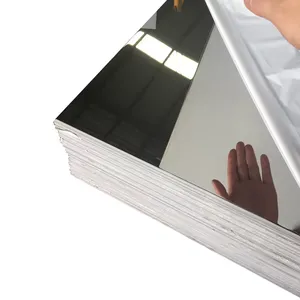
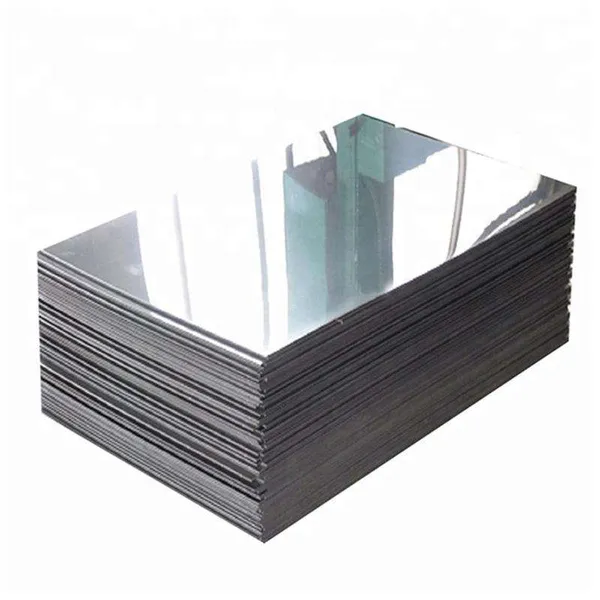
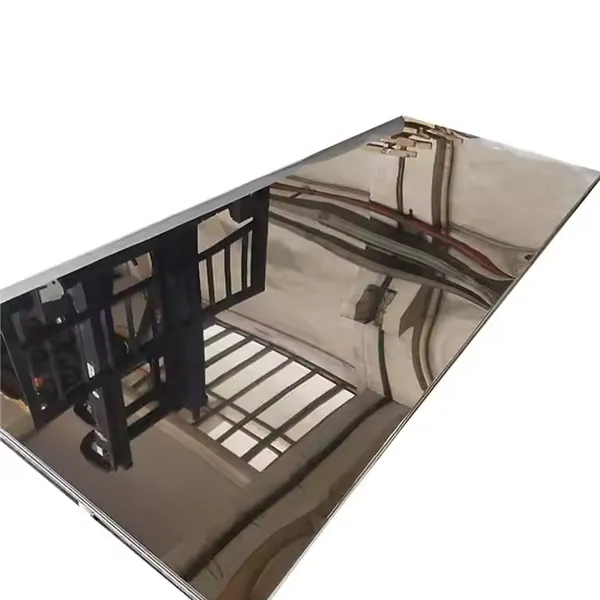
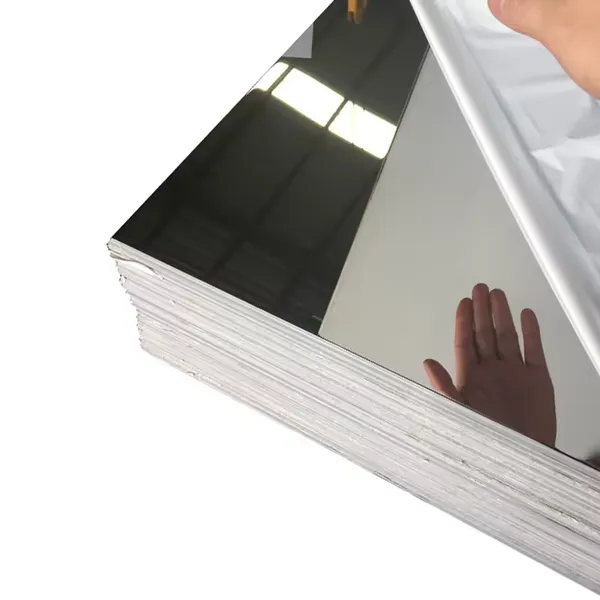
A mirror finish, classified as No. 8 under ASTM A480, is the highest reflective surface finish achievable through mechanical polishing. It is produced by progressively polishing the surface with finer abrasives and finishing with buffing compounds until a near-flawless reflective surface is achieved, typically with a surface roughness (Ra) of 0.05μm or lower.
The importance of a mirror finish in food-grade contexts is not purely aesthetic. A smoother surface has fewer microscopic peaks and valleys where bacteria, product residue, and contaminants can accumulate. This directly improves cleanability, reduces the risk of microbial harborage, and supports Clean-In-Place (CIP) protocols. The table below contrasts common finishes to contextualize the No. 8 specification.
| Finish | Description | Typical Ra | Common Use |
|---|---|---|---|
| No. 4 | Brushed / satin | 0.2–0.5μm | General hygienic surfaces |
| No. 6 | Dull satin | 0.15–0.25μm | Architectural, moderate hygiene |
| BA (2R) | Bright annealed | 0.05–0.1μm | Reflective, corrosion-sensitive |
| No. 8 | Mirror | ≤0.05μm | High-purity, food & pharma contact |
For applications demanding maximum sanitation and visual clarity—such as display equipment, high-purity processing surfaces, and decorative food-contact panels—the No. 8 finish offers measurable hygienic advantages alongside its reflective appearance.
The 0.5–6mm Thickness Range and Its Versatility
Supplying plate in a 0.5mm to 6mm range covers a broad spectrum of fabrication needs, from lightweight cladding to structural panels. Thinner gauges (0.5–1.5mm) are favored for enclosures, splash panels, and formed components where weight reduction matters. Mid-range thicknesses (2–3mm) balance rigidity and workability for worktops and equipment housings. Heavier gauges (4–6mm) serve structural bases, machine frames, and areas subject to mechanical loading or impact.
| Thickness | Typical Tolerance | Common Applications |
|---|---|---|
| 0.5–1.0mm | ±0.03–0.05mm | Cladding, light enclosures, formed parts |
| 1.5–2.0mm | ±0.05–0.08mm | Worktops, panels, hopper walls |
| 3.0–4.0mm | ±0.10–0.15mm | Equipment frames, tank walls |
| 5.0–6.0mm | ±0.15–0.20mm | Structural bases, heavy-duty platforms |
Consistent thickness tolerance across the range is essential for laser cutting, precise welding, and automated fabrication lines, where dimensional predictability affects downstream assembly.
Food-Grade Compliance and Hygienic Design
For a material to qualify as "food grade," it must not react with, contaminate, or transfer harmful substances to food products under normal use. 304L stainless steel meets the requirements of major regulatory frameworks, including FDA CFR 21 for food-contact surfaces and relevant EU food-contact material regulations. Its inert passive layer prevents leaching of metallic ions into food, while its non-porous mirror surface resists staining and residue buildup.
Hygienic design standards such as those referenced by EHEDG (European Hygienic Engineering & Design Group) and 3-A Sanitary Standards emphasize smooth, crevice-free, easily cleanable surfaces—criteria that mirror-finished 304L plate is well positioned to satisfy. This makes the material suitable not only for surfaces in direct contact with food but also for the surrounding equipment and structures that must maintain sanitary conditions.
Corrosion Resistance in Real Conditions
The passive chromium-oxide film on 304L regenerates in the presence of oxygen, providing strong resistance to a wide range of organic acids, cleaning agents, and moisture found in food environments. It performs reliably against the mild acids present in dairy, produce, and beverage processing.
It is important to note the material's limitations for informed specification. 304L offers good resistance in most food applications but is less resistant to chloride-rich environments, such as prolonged exposure to salt brines or coastal atmospheres, where pitting corrosion may occur. In such cases, the molybdenum-bearing 316L grade is the more appropriate upgrade. Understanding this boundary helps buyers match the grade to the actual service conditions rather than over- or under-specifying.
Fabrication and Welding Advantages
The low carbon content of 304L delivers its greatest benefit during fabrication. Because carbide precipitation is minimized, welds can be made without the mandatory post-weld annealing that standard 304 may require to restore corrosion resistance in the heat-affected zone. This reduces production time and cost while maintaining integrity at joints—often the most vulnerable part of any fabricated assembly.
The grade is readily formed, drawn, and machined, and is compatible with common welding methods including TIG, MIG, and resistance welding. When a mirror finish must be preserved across welded seams, careful heat control and post-weld polishing restore surface continuity.
Applications Across Industries
The combination of hygienic surface, corrosion resistance, and structural versatility gives this plate broad utility.
| Industry | Typical Application |
|---|---|
| Food & Beverage | Processing surfaces, tanks, conveyors, worktops |
| Pharmaceutical | Clean-room panels, high-purity equipment |
| Commercial Kitchen | Countertops, splashbacks, appliance housings |
| Architecture & Decor | Column cladding, elevator panels, signage |
| Dairy & Brewing | Storage vessels, piping supports, hoppers |
Quality Standards and Certification
Reputable suppliers back their material with documentation that allows full traceability and verification. Buyers should expect conformity to internationally recognized standards.
| Standard | Scope |
|---|---|
| ASTM A240 / A240M | Chromium-nickel stainless plate for pressure vessels |
| EN 10088-2 | Technical delivery conditions for corrosion-resisting sheet/plate |
| JIS G4304 | Japanese standard for hot/cold-rolled stainless plate |
| ISO 9001 | Quality management system certification |
| Mill Test Certificate (EN 10204 3.1) | Verified chemical and mechanical properties |
A Mill Test Certificate (MTC) is particularly important, as it links each batch to verified chemistry and mechanical data—essential for audits in regulated food and pharmaceutical supply chains.
How to Select the Right Plate
Choosing the correct plate involves matching several parameters to the intended use. Consider the service environment first: for standard food processing, 304L is well suited, but chloride exposure points toward 316L. Next, confirm the finish requirement—No. 8 mirror for the highest hygiene and reflectivity, or a brushed finish where cost and glare reduction take priority. Then select thickness based on structural load and forming needs, and finally verify that the supplier provides full certification and consistent tolerances.
Wuxi Zhongxin Special Steel Co., Ltd. – One-Stop Global Special Steel Export Service Provider
Wuxi Zhongxin Special Steel Co., Ltd. – One-Stop Global Special Steel Export Service Provider
Wuxi Zhongxin Special Steel Co., Ltd. is located in Xishan District, Wuxi City, nestled in the core special steel distribution hub of the Yangtze River Delta. Benefiting from a complete steel industrial chain and convenient marine logistics with easy access to Shanghai and Ningbo ports, we are an integrated special steel foreign trade enterprise integrating direct mill procurement, spot inventory storage, precision metal processing, and global steel import & export. We hold full self-operated import and export qualifications, and provide one-stop supporting solutions of full-range steel products and non-ferrous metals for global industrial purchasers and overseas engineering projects.
With years of experience in steel export, we have established long-term strategic cooperation as authorized distributors with leading domestic steel manufacturers including TISCO, Baosteel, JISCO and Dongfang Special Steel. All goods are supplied directly from original factories with stable supply, and manufactured in strict compliance with international standards such as ASTM, ASME, EN, DIN, JIS and GB to meet customs clearance and engineering inspection requirements worldwide.
Full Range of Main Export Steel Products
1. Stainless Steel Series: Hot-rolled & cold-rolled stainless steel sheets, coils and strips in grades 304/316L/321/2205 duplex steel; BA bright seamless pipes, EP electrolytic polished seamless pipes, industrial welded pipes; stainless steel round bars, angle steels, flanges and pipe fittings. Custom surface finishes including 8K mirror polishing, wire drawing, matte finishing and embossing are available.
2. Carbon Steel & Seamless Pipe Series: ASTM A106 Gr.B seamless carbon steel pipes in SCH40/SCH80, API 5L oil & gas casings, hot/cold rolled carbon steel sheets & coils, medium plates, checkered plates, round bars, H-beams, channel steels and angle steels for construction engineering.
3. Electrical Silicon Steel Series: Grain-oriented & non-oriented silicon steel sheets and coils, ultra-thin silicon steel specially for transformers, suitable for export orders of motors, transformers and new energy electrical equipment.
4. Coated Anti-Corrosion Steel: Hot-dip galvanized sheets & coils, color coated steel and weathering steel, widely used in overseas factory buildings, photovoltaic power stations and steel structure infrastructure projects.
5. Special Alloys & Non-Ferrous Metals: Nickel-based alloys, copper and aluminum sheets, pipes and bars to satisfy supporting demands of high-end chemical and new energy industries.
Supporting Precision Export Processing Capacity
We own a 10,000-square-meter-level warehousing and processing center equipped with imported laser cutting machines, waterjet cutting equipment, high-precision slitting & leveling lines and CNC polishing production lines. We provide one-stop deep processing services including pipe beveling, plate cutting, bending and mirror polishing to fixed lengths. All delivered goods can be supplied with EN 10204 3.1 Material Test Certificates, SGS/BV third-party inspection reports, together with hydrostatic testing, non-destructive testing and full heat number traceability documents.
Core Advantages of Foreign Trade Export
1. Mass Spot Inventory: Thousands of tons of conventional specifications are kept in stock for quick order arrangement of standard 4m/6m/12m fixed-length pipes and various sheets & coils. Special steel grades and non-standard sizes can be scheduled directly from steel mills, supporting both small-batch inquiries and bulk supply for large engineering projects.
2. Mature Global Sales Network: Our professional multilingual foreign trade team exports products to over 40 countries covering the Middle East, Southeast Asia, Europe, Africa, South America and Australia, serving customers from petrochemical, pressure vessel, photovoltaic new energy, food & pharmaceutical, electric power, overseas infrastructure, engineering machinery and other sectors.
3. One-Stop Quotation under All Trade Terms: We offer complete quotations on FOB China port, CFR and CIF overseas destination port basis, supporting full container load and less-than-container load shipments. We can issue certificates of origin, inspection certificates and a full set of customs clearance documents, and track marine logistics throughout the whole process.
4. Standardized Seaworthy Export Packaging: Steel pipes are fitted with plastic end caps, bundled with steel straps and wrapped in waterproof films; steel sheets are covered with anti-rust films. Each bundle is clearly marked with specification, wall thickness, material grade, heat number and country of origin to realize anti-rust protection during long-distance ocean transportation.
5. Transparent & Comprehensive Commercial Services: Quotation validity period, payment terms, loading/unloading fees, inspection charges, bank commissions and other extra costs are fully listed without hidden charges. Our technical team provides 24-hour online support for material selection, standard interpretation and delivery schedule follow-up, along with long-term after-sales guarantee.
Upholding the business philosophy of Quality First, Sincerity for Win-Win, Global-Oriented Service, we strive to be your long-term trusted partner for special steel export with a complete product portfolio, stable original factory supply, professional processing supporting capacity and mature foreign trade delivery system.
Q1:Do you offer sample orders?
A:Yes, samples are available for quality evaluation. Sample cost is charged but refundable upon bulk order.
Q2:What is your MOQ?
A:Our standard MOQ is 100 kg per specification. For common grades and standard sizes, we accept small batch orders. Mixed orders for different products are also welcome.
Q3:Can you provide custom sizes?
A:Yes, we can produce any length, width, thickness, or diameter based on your drawings. Cutting, slitting, and other processing services are available with tolerance as required.
Q4:What certifications do you provide?
A:Each shipment comes with EN 10204 3.1 mill test certificate (MTC). Third-party inspection reports (SGS/BV/TÜV) can be arranged upon request.
Q5:What is your lead time?
A:7–15 working days for stock items. 20–30 days for custom orders, depending on quantity and specification.
Q6:What surface treatments are available?
A:Various surface treatments are available upon request, including pickled, polished, coated, oiled, or as required.
Q7:What payment terms do you accept?
A:T/T (30% deposit + 70% against BL copy), L/C at sight, Western Union, etc.
Q8:What about packaging for export?
A:Standard seaworthy packaging with waterproof protection, steel straps, corner protectors, and ISPM 15 fumigation certification. Custom packaging is available as required.

Send Inquiry to This Supplier



You May Also Like
-
ASTM A240 304 Stainless Steel Sheet, 0.3-100mm Thickness, 4x8ftUS$ 1.75 - 2.55MOQ: 100 Kilograms
-
Stainless Steel Sheet 304/316/321 ASTM A240 JIS G4305 Thickness 1-50mmUS$ 1.85 - 4.15MOQ: 100 Kilograms
-
316L Stainless Steel Sheet Corrosion-Resistant Plate 2-20mm for Industry UseUS$ 2.85 - 4.2MOQ: 100 Kilograms
-
304 Stainless Steel Sheet Mirror Finish 0.5-6mm DIN ASTM Standard PlateUS$ 1.85 - 2.55MOQ: 100 Kilograms
-
High-Strength Stainless Steel Plate 310S 1-25mm for Heat-Resistant ApplicationsUS$ 5.75 - 7.15MOQ: 100 Kilograms
-
Stainless Steel Sheet 430 Cold Rolled 0.8-10mm GB/JIS Standard Metal PlateUS$ 1.85 - 3.95MOQ: 100 Kilograms
-
Precision Stainless Steel Sheet 316Ti 0.3-12mm Industrial Plate SuppliersUS$ 2.85 - 4.25MOQ: 100 Kilograms
-
304 Stainless Steel Sheet Brushed Finish 1-20mm Corrosion Resistant MaterialUS$ 1.85 - 2.45MOQ: 100 Kilograms
-
Stainless Steel Sheet 201/304/316 Stainless Plate Coil 0.5-12mm ThicknessUS$ 1.05 - 4.3MOQ: 100 Kilograms
-
SUS316 Stainless Steel Sheet Annealed Finish 2-25mm DIN JIS GB StandardsUS$ 2.9 - 4.35MOQ: 100 Kilograms


