








 Contact Platform Support
 Help Center
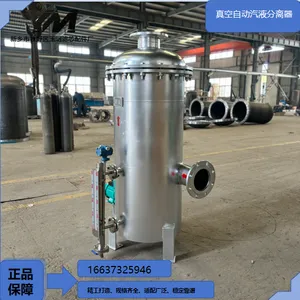
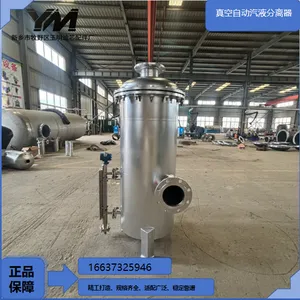
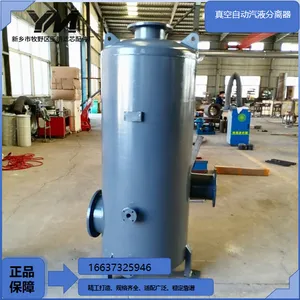
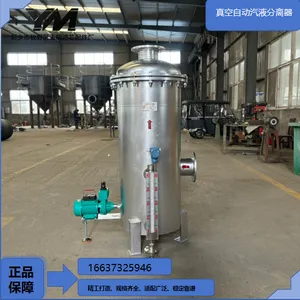
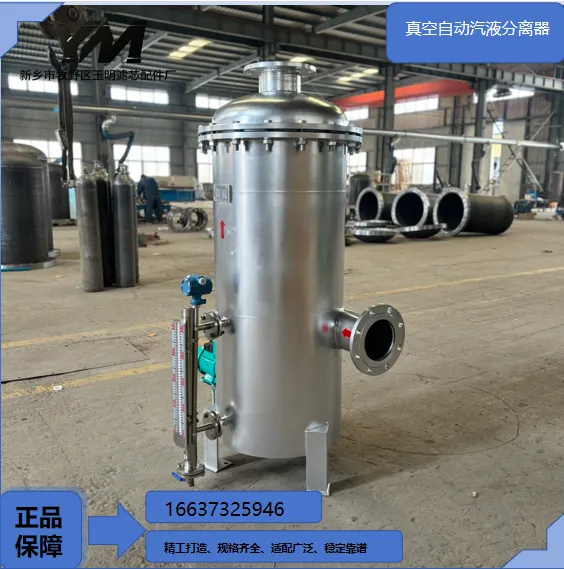
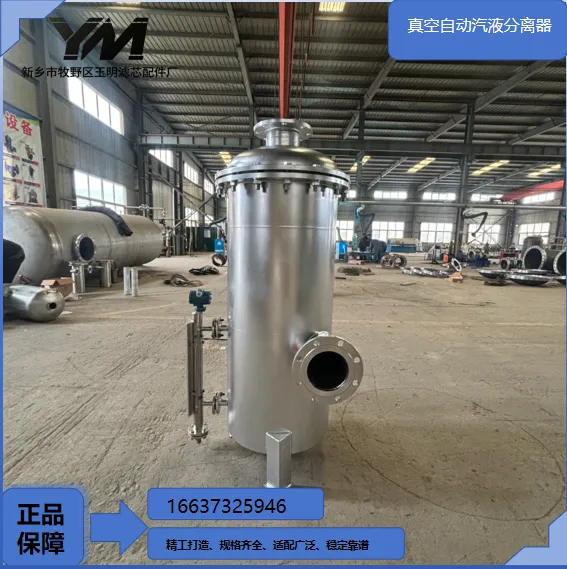
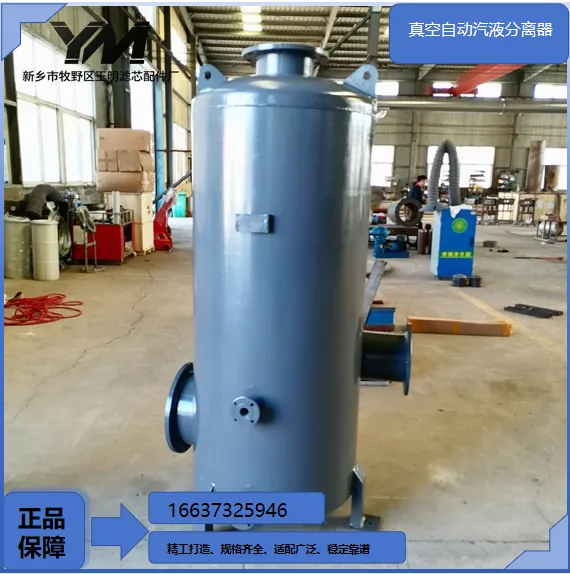
Vacuum Steam-Water Separator

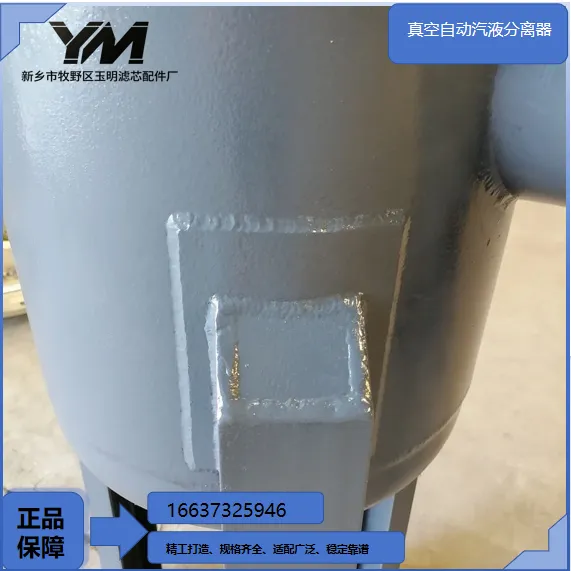
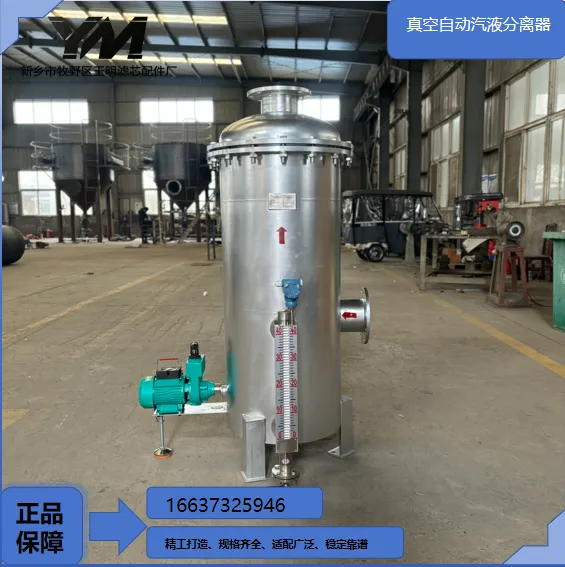
Product Spotlights
Adopts combined cyclone & gravity settling separation structure to capture fine droplets step by step. Separation efficiency reaches above 98% for entrained condensate.


Related Products
1 Product Overview
Vacuum Steam-Water Separator is a special gas-liquid separation unit for negative pressure vacuum steam systems, widely used in vacuum distillation, vacuum drying, vacuum condensate recovery, multiple-effect evaporation, vacuum turbine and negative pressure heat recovery pipelines.Ordinary atmospheric steam-water separators cannot work reliably under vacuum conditions. Standard traps tend to suck air inward. Under negative pressure, condensate cannot be drained smoothly by gravity, resulting in air intrusion and loss of vacuum.This unit adopts multi-stage combined separation structure. When vacuum steam enters the vessel, condensate droplets are separated and collected via cyclonic centrifugal force plus gravity settling. Separated condensate is continuously drained through vacuum drainage assembly while blocking reverse air ingress. Dry steam flows towards vacuum pumps or downstream processes.It solves typical failures caused by wet vacuum steam: vacuum pump liquid hammer, reduced heat transfer efficiency, unstable vacuum level of evaporation system and internal erosion corrosion.
2 Working Principle
Vacuum steam carrying condensate droplets enters the vessel via side inlet and forms swirling flow guided by internal baffles. Dense liquid droplets hit the cylinder wall under centrifugal force, coalesce into water film and flow downward. Gas turns inward upward to central passage, while fine mist droplets are further captured by gravity settling.Dry steam flows out through top outlet to vacuum pump or downstream equipment.Liquid water accumulates in bottom liquid sump. Supported by vacuum trap or water seal device, condensate is continuously drained without air leakage.Built-in anti-re-entrainment baffles prevent accumulated liquid from being swept back by high-speed vacuum airflow. Continuous steam-water separation is achieved to stabilize system negative pressure.
3 Main Structure
Side inlet flange, pressure vessel cylinder, swirl guiding internals, anti-re-entrainment baffle, top gas outlet chamber, bottom liquid collection sump, drain nozzle, outlet flange, manhole / handhole (optional for large size).
4 Technical Specifications
Nominal Diameter: DN50 ~ DN800
Design Pressure: Vacuum negative pressure ~ 0.6 MPa (short time positive pressure resistance)
Design Temperature: ≤250℃
Operating Vacuum Range: -0.02 ~ -0.098 MPa
Separation Efficiency: ≥98% for droplets ≥3μm
Housing Material: Q235-B carbon steel, SS304, SS316L stainless steel
Connection: Flanged connection
Installation: Vertical mounting
Optional accessories: Vacuum trap assembly, water seal tank, level gauge port, vent connection
5 Application Scope
Multiple-effect evaporator, vacuum drying line, vacuum distillation system, waste steam vacuum recovery pipeline, chemical negative pressure reaction system, black liquor evaporation for paper industry, food concentration vacuum system, power plant vacuum extraction system, vacuum crystallizer, vacuum sterilization pipeline.
6 Installation & Operation Guidance
Install vertically with horizontal inlet and outlet. Drain pipeline must be equipped with vacuum dedicated drainage assembly; ordinary traps cannot be used directly.
Arrange separator as close as possible to vacuum pump inlet to shorten wet steam pipeline and reduce secondary condensation.
External thermal insulation is recommended to minimize extra condensate formation on pipe wall.
Inspect drainage unit regularly. Excess liquid level due to failed drainage will lead to liquid carryover and vacuum pump liquid hammer.
Keep straight pipe sections before and after separator to reduce turbulence and guarantee separation efficiency.


Send Inquiry to This Supplier


You May Also Like
-
Horizontal Automatic Steam-Water SeparatorNegotiableMOQ: 1 Unit
-
Horizontal Multi-stage Steam-Water SeparatorNegotiableMOQ: 1 Unit
-
Precision Gas FilterNegotiableMOQ: 1 Unit
-
Angle Type Self-cleaning FilterNegotiableMOQ: 1 Unit
-
High Precision Oil PurifierNegotiableMOQ: 1 Unit
-
Fan Pipeline FilterNegotiableMOQ: 1 Unit
-
Multi-media FilterNegotiableMOQ: 1 Unit
-
Baffle Steam-Water SeparatorNegotiableMOQ: 1 Unit
-
Bag Security FilterNegotiableMOQ: 1 Unit
-
ZCQF Steam-Water SeparatorNegotiableMOQ: 1 Unit


