








 Contact Platform Support
 Help Center
Vacuum Pump



Related Products
-
 Traditional Chinese Medicine Extraction TankNegotiableMOQ: 0 Set
 -
Hongshun Technology Reactor Supplier, CustomizableNegotiableMOQ: 0 Unit
-
Hongshun Technology Reactor Supplier, Shipped Within 24 HoursNegotiableMOQ: 0 Unit
-
Purified Water Equipment + EdiNegotiableMOQ: 0 Unit
-
High and Low Temperature Integrated Machine, High Temperature Circulation Device, Heat Transfer Oil Heating SystemNegotiableMOQ: 0 Piece
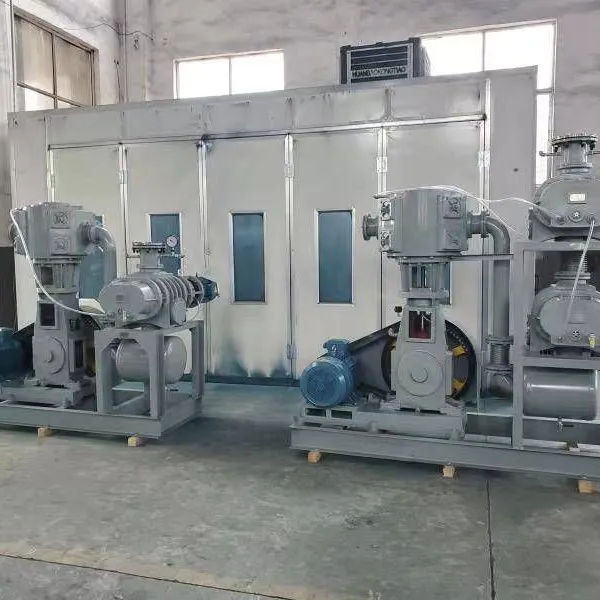
Structural Features (1) Overall Structural Form of the Pump The arrangement structure of the pump body of the vacuum pump determines the overall structure of the pump. In the vertical structure, the inlet and outlet ports are horizontally arranged, which makes the assembly and connection of pipelines relatively convenient. However, the center of gravity of the pump is relatively high, resulting in poor stability during high - speed operation. Therefore, this type is mostly used for small pumps. For the horizontal pump, the inlet port is on the top and the outlet port is on the bottom. Sometimes, for the convenience of installing and connecting the vacuum system pipeline, the outlet port can be connected horizontally, that is, the inlet and outlet directions are perpendicular to each other. At this time, the outlet port can be opened from either the left or right direction. Except for the end connected to the exhaust pipeline, the other end is blocked or connected to a bypass valve. This pump structure has a low center of gravity and good stability during high - speed operation. Generally, large and medium - sized pumps mostly adopt this structure. The two rotor shafts of the pump are installed vertically to the horizontal plane. This structure makes it easy to control the assembly clearance, convenient for rotor assembly, and the pump occupies a small area. However, the center of gravity of the pump is relatively high, the disassembly and assembly of the gears are inconvenient, and the lubrication mechanism is also relatively complex. (2) Transmission Mode of the Pump The two rotors of the vacuum pump achieve their relative synchronous operation through a pair of high - precision gears. The driving shaft is connected to the motor through a coupling. There are mainly the following two arrangements in the transmission structure: One is to place the motor and the gears on the same side of the rotors as shown in the figure. The driven rotor is directly driven by the gear at the motor end. In this way, the torsional deformation of the driving rotor shaft is small, so the clearance between the two rotors will not change due to the large torsional deformation of the driving shaft, thus keeping the clearance between the rotors uniform during operation. The disadvantages of this transmission mode are: a. There are three bearings on the driving shaft, which increases the difficulty of pump processing and assembly, and the disassembly, assembly and adjustment of the gears are also inconvenient; b. The overall structure is uneven, and the center of gravity of the pump is biased towards the motor and gearbox side. Features (1) It has a large pumping speed in a wide pressure range; (2) The rotors have good geometric symmetry, so the vibration is small and the operation is stable. There are clearances between the rotors and between the rotors and the housing. No lubrication is required, and the friction loss is small, which can greatly reduce the driving power and thus achieve a higher rotation speed; (3) There is no need for oil sealing and lubrication in the pump chamber, which can reduce the pollution of the vacuum system by oil vapor; (4) There is no compression and no exhaust valve in the pump chamber. The structure is simple and compact, and it is not sensitive to dust and water vapor in the pumped gas; (5) The compression ratio is relatively low, and the pumping effect on hydrogen is poor; (6) The rotor surface is a curved cylindrical surface with a relatively complex shape, which is difficult to process and inspect. Mechanical Selection (1) Whether the vibration generated during the operation of the vacuum pump has any impact on the technological process and the environment. If the technological process does not allow it, a pump without vibration should be selected or vibration prevention measures should be taken. (2) Understand the composition of the pumped gas, whether there is condensable vapor in the gas, whether there are particulate dusts, and whether there is corrosiveness, etc. When selecting a vacuum pump, it is necessary to know the gas composition and select the corresponding pump according to the pumped gas. If the gas contains vapor, particles, and corrosive gases, auxiliary equipment such as condensers and dust collectors should be considered to be installed on the inlet pipeline of the pump. (3) The vacuum pump should be able to discharge all the gas generated in the technological process of the vacuum equipment at its working pressure. (4) Correctly combine the vacuum pumps. Since vacuum pumps have selective pumping, sometimes a single pump cannot meet the pumping requirements, and several pumps need to be combined to complement each other to meet the pumping requirements. For example, the titanium sublimation pump has a high pumping speed for hydrogen but cannot pump helium, while the three - pole sputtering ion pump (or the two - pole asymmetric cathode sputtering ion pump) has a certain pumping speed for argon. When the two are combined, a better vacuum degree can be obtained for the vacuum device. In addition, some vacuum pumps cannot work under atmospheric pressure and need pre - vacuum; some vacuum pumps have an outlet pressure lower than atmospheric pressure and need a backing pump. Therefore, the pumps need to be combined for use. (5) Requirements of the vacuum equipment for oil pollution. If the equipment strictly requires no oil, various oil - free pumps should be selected, such as water - ring pumps, molecular sieve adsorption pumps, sputtering ion pumps, cryogenic pumps, etc. If the requirements are not strict, an oil - lubricated pump can be selected, and some oil pollution prevention measures, such as adding cold traps, baffles, and oil traps, can also meet the requirements for a clean vacuum. (6) Correctly select the working point of the vacuum pump. Each pump has a certain working pressure range. For example, the working pressure range of the 2BV series water - ring vacuum pump is 760mmHg~25mmHg (absolute pressure). In such a wide pressure range, the pumping speed of the pump changes with the pressure (refer to the pump performance curve for the detailed change). Its stable working pressure range is 760~60mmHg. Therefore, the working point of the pump should be selected within this range, and it should not work at 25~30mmHg for a long time. (7) How the oil vapor discharged by the vacuum pump affects the environment. If the environment does not allow pollution, an oil - free vacuum pump can be selected, or the oil vapor can be discharged outdoors. (8) The working pressure of the vacuum pump should meet the requirements of the ultimate vacuum and working pressure of the vacuum equipment. For example, a certain vacuum drying process requires a working vacuum degree of 10mmHg. The ultimate vacuum degree of the selected vacuum pump should be at least 2mmHg and can reach 1mmHg. Usually, the ultimate vacuum degree of the selected pump should be half to one order of magnitude higher than the working vacuum degree of the vacuum equipment. (9) The price, operation and maintenance costs of the vacuum pump. Mechanical Installation (1) The vacuum pump should be installed in a place with a solid and firm ground, and there should be sufficient space around it for inspection, maintenance, and upkeep. (2) The foundation under the vacuum pump base should be level. It is recommended to pad shock - absorbing rubber at the four corners of the base or install it with bolts to ensure that the vacuum pump operates stably with small vibration.
Installation schematic diagram: (3) The connecting pipe between the vacuum pump and the system should be sealed reliably. For small vacuum pumps, metal pipes can be used for connection, and oil-resistant rubber can be used as the sealing gasket. For small vacuum pumps, vacuum hoses can be used for connection. The pipe diameter shall not be smaller than the suction port diameter of the vacuum pump, and the pipeline is required to be short with few elbows. (When welding the pipeline, the welding slag in the pipeline should be removed, and it is strictly prohibited for the welding slag to enter the vacuum pump chamber.) (4) In the connecting pipeline, the user can install a valve and a vacuum gauge above the air inlet of the vacuum pump to check the ultimate pressure of the vacuum pump at any time. (5) Connect the power supply according to the regulations on the motor nameplate, and connect the ground wire and install fuses and thermal relays of appropriate specifications. (6) When the vacuum pump is powered on for trial operation, the motor belt must be removed. Make sure that the rotation direction of the vacuum pump conforms to the specified direction before putting it into use to prevent the vacuum pump from reversing and spraying oil. (The rotation direction is in accordance with the direction indicated on the protective cover.) (7) For vacuum pumps with cooling water, connect the cooling water as required. (8) If a solenoid valve is installed at the vacuum pump port, the valve and the vacuum pump should act simultaneously. (9) When the gas discharged by the vacuum pump affects the working environment, a pipeline can be connected to the exhaust port to lead it away or an oil mist filter can be installed.

Send Inquiry to This Supplier


You May Also Like
-
Vacuum Feeder, Dust-free Electric Negative Pressure Material Conveyor, Powder and Granular Material Suction MachineNegotiableMOQ: 0 Piece
-
Supplier of Hongshun ro Reverse Osmosis EquipmentNegotiableMOQ: 0
-
Hongshun Technology ro Reverse Osmosis Equipment Supplier, 24-hour DeliveryNegotiableMOQ: 0 Unit
-
Vacuum PumpUS$ 230.77MOQ: 1 Set
-
Heat Pump Copper Tube C12200 ASTM B280 Refrigeration Tubing With Clean Oil Free SurfaceUS$ 10 - 25MOQ: 100 Kilograms
-
PV PV62 PV62R Series PARKER PV62R1EF02 Piston Pump Hydraulic Pump Oil PumpNegotiableMOQ: 1 Piece
-
C10100 OFC Copper Round Tube 6mm 8mm 10mm 12mm 15mm Oxygen Free Electrical Vacuum GradeUS$ 8 - 25MOQ: 100 Kilograms
-
SLZD65-310 Mechanical Seal Vertical Pipeline Pump Spare Fittings Shandong ShuanglunNegotiableMOQ: 1 Piece
-
SCAIR High Quality Ultimate Pressure 0.35mbar 0.26Torr Frequency Conversion Screw Oil-free Vacuum PumpUS$ 390 - 450MOQ: 1 Unit
-
Inline Vertical Fluorine Lined Pipeline Pump Vertical Chemical Acid PumpNegotiableMOQ: 1 Piece
