








 Contact Platform Support
 Help Center
Steel Billet, Length: Standard Fixed Lengths 6 m, 9 m, 12 m; Custom Lengths Available per Order.


Related Products
-
 Steel Wire, Low Carbon Steel Wire (Mild Steel Wire) - Representative Grades: Q195, Q215, Q235, SAE1008, SWRM6, SWRM8NegotiableMOQ: 2 Metric Tons
 -
Steel Round Bar&Round Bar,Q195, Q235, 20#, S20C, 1020,35#, 45#, S45C, 1045,40Cr, 42CrMo, 20CrMnTiNegotiableMOQ: 5 Metric Tons
-
Steel Round Bar&Round Bar,Q195, Q235, 20#, S20C, 1020,35#, 45#, S45C, 1045,40Cr, 42CrMo, 20CrMnTiNegotiableMOQ: 3 Metric Tons
-
Steel Round Bar&Round Bar,Q195, Q235, 20#, S20C, 1020,35#, 45#, S45C, 1045,40Cr, 42CrMo, 20CrMnTiNegotiableMOQ: 5 Metric Tons
-
Steel Round Bar&Round Bar,Q195, Q235, 20#, S20C, 1020,35#, 45#, S45C, 1045,40Cr, 42CrMo, 20CrMnTiNegotiableMOQ: 5 Metric Tons
Steel Billet Product Detailed Description
Steel billet is a key semi-finished steel product formed by solidifying molten steel via continuous casting or ingot casting. Serving as the primary raw material for rolling and forging finished steel products, it acts as a critical intermediate link connecting steelmaking and steel rolling/forging processes across the steel industry chain, and is rarely used directly as an end product.
1. Production Process
Continuous casting (CC billet) is the dominant method today: molten steel is poured into a mold for rapid solidification, continuously withdrawn, and cut to fixed lengths. It features uniform composition, high production efficiency, and superior yield, having largely replaced traditional ingot casting. A small portion of billets are produced by blooming rolled steel ingots into primary billets.
Core procedures: Steelmaking & refining → Ladle pouring → Mold forming → Secondary cooling zone solidification → Straightening & withdrawal → Fixed-length cutting → Surface conditioning (scarfing, grinding) → Inspection & warehousing.
2. Main Classifications & Forms
By Cross-Section Shape
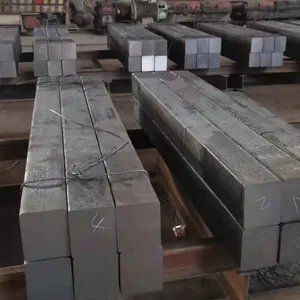
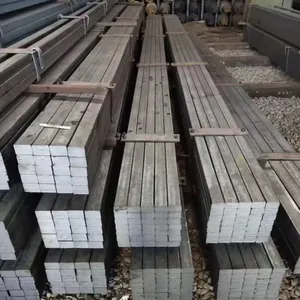
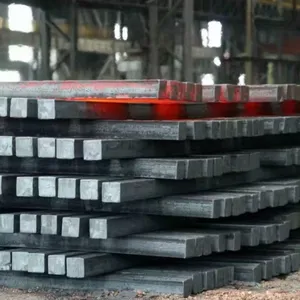
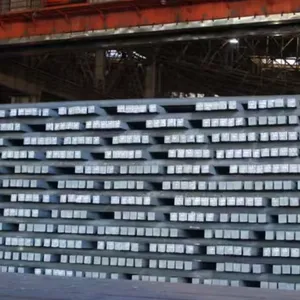
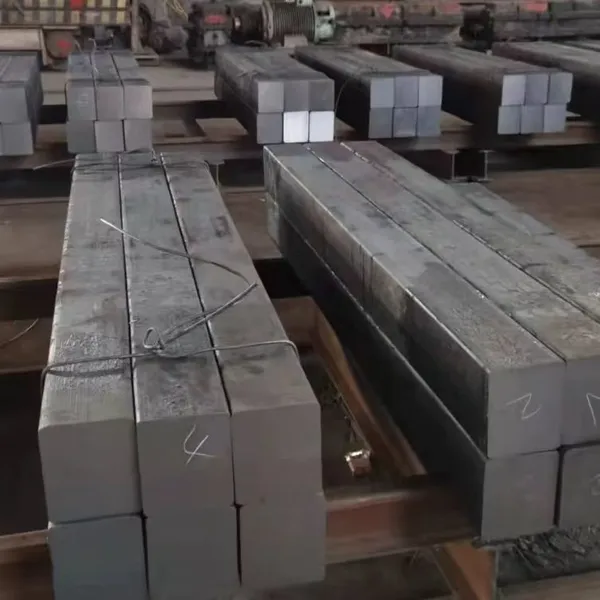
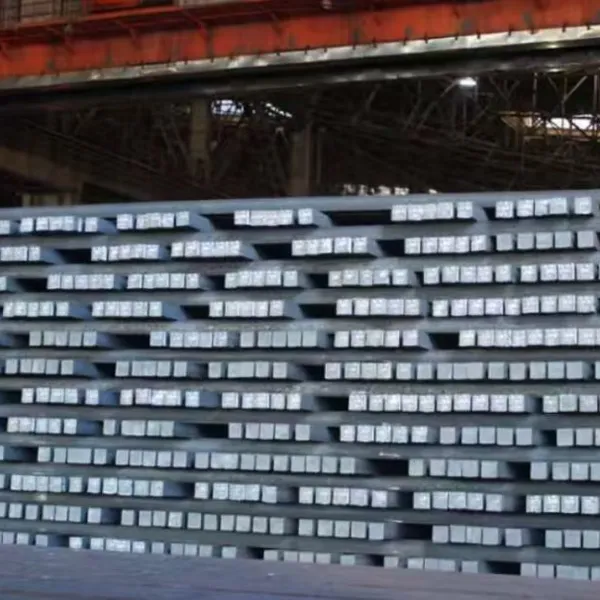
• Square Billet: Square or near-square cross-section, common sizes 120×120 mm, 150×150 mm, 200×200 mm, etc. Primarily used for rolling rebar, bars, wire rods, small/medium sections, and forging mechanical parts.
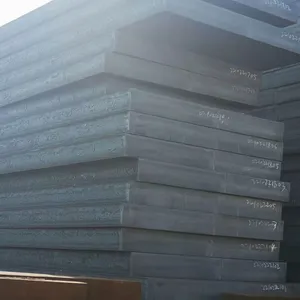
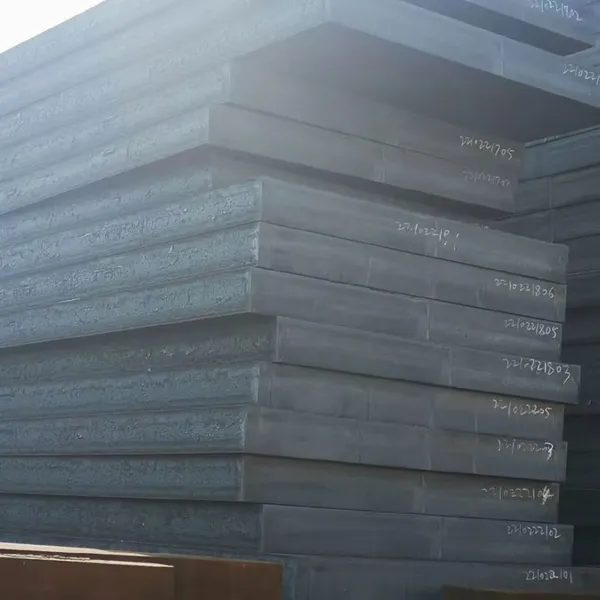
• Slab: Rectangular thick billet with a high width-to-thickness ratio, typical thickness 150–250 mm, width 600–2000 mm. Exclusively for rolling hot-rolled coils, medium & heavy plates, and cold-rolled substrates, widely applied in shipbuilding, automotive, pressure vessels, steel structures, etc.
• Round Billet: Circular cross-section, diameter ranging 100–600 mm. Mainly used for piercing and rolling seamless steel pipes, as well as forging shafts, gears, flanges and other precision components.
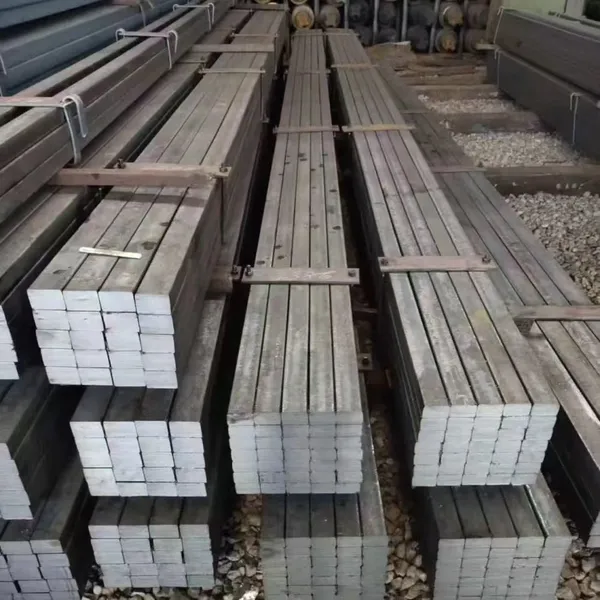
• Rectangular Billet / Special-Shaped Billet: Rectangular cross-section with moderate aspect ratio, or H/I-shaped special profiles, tailored for direct rolling of specific sections, rails and special profiles to reduce processing loss.
By Steel Grade & Material
• Carbon Structural Steel Billet: Q195, Q235, Q275, SS400, etc. Cost-effective, widely used for construction rebar, general structural parts and common profiles.
• High-Strength Low-Alloy (HSLA) Steel Billet: Q355, Q420, 16Mn, etc. Balanced strength and toughness for bridges, engineering machinery, wind power and pipeline structures.
• Quality Carbon & Alloy Structural Steel Billet: Grades 20#–45#, 40Cr, 42CrMo, 20CrMnTi, etc. With low impurities and precise chemical composition, ideal for automotive parts, bearings, gears and high-end machinery equipment.
• Special Steel Billet: Stainless steel, heat-resistant steel, tool steel, electrical steel billets, etc., for corrosion-resistant, high-temperature, electrical and die applications.
By Production Method
Continuous cast billet (mainstream), primary blooming billet, thin slab / thin strip cast billet (near-net-shape casting for short-process thin plate production).
3. Key Specifications & Tolerances
• Length: Standard fixed lengths 6 m, 9 m, 12 m; custom lengths available per order.
• Dimensional Standards: Governed by GB/T 20566, YB/T 001/002/003 and other national/industrial standards, with clear tolerances for side/thickness, width, diagonal, straightness, end cut deviation and fillet radius.
• Surface Quality: Free of harmful defects such as cracks, scabs, inclusions and folds. Local defects may be repaired by grinding, with removal depth limited within the allowable thickness margin.
4. Chemical Composition & Fundamental Mechanical Properties
• Matrix dominated by iron, with carbon content 0.02%–2.11%, plus Si, Mn, S, P; alloy steels incorporate Cr, Ni, Mo, V, Nb and other elements as required.
• Strict control over harmful impurities S and P; premium/special steel billets require tight limits on gases (O, N, H) and non-metallic inclusion ratings.
• Internal quality (density, segregation, porosity) must comply with steel-grade standards to provide a reliable substrate for subsequent rolling/forging.
5. Core Applications
As a feedstock for downstream processing, covering nearly all steel application sectors:
1. Construction & Infrastructure: Rolled into HRB400/500 rebar, H-beams, I-beams, channels, angles.
2. Plate Manufacturing: Hot/cold rolled coils, medium & heavy plates for ships, containers, automobiles, home appliances and pressure vessels.
3. Pipe Production: Round billets pierced into seamless steel pipes for oil & gas transmission, pipelines and boiler tubes.
4. Mechanical Manufacturing: Rolled or forged into shafts, gears, connecting rods, flanges and engineering machinery structural components.
5. Specialty Fields: Raw material for electrical steel, stainless profiles, railway rails, military & aerospace precision forgings.
6. Quality Inspection & Delivery
1. Inspection Items: Chemical composition (spectroscopy / wet analysis), macrostructure (porosity, segregation, shrinkage), surface appearance, dimensional accuracy, non-destructive testing (UT/MT/PT).
2. Delivery Condition: Hot-rolled as standard; annealed, normalized, peeled or machined surfaces available upon request.
3. Marking: Clear labeling of heat number, steel grade, size, manufacturer and batch information, accompanied by official mill test certificate (MTC).
7. Storage & Transportation Guidelines
• Store on flat, dry yards with classified stacking, elevated supports to avoid moisture, impact, deformation and corrosion.
• Transport via open wagons or containers with secure strapping to prevent lifting damage and end deformation.
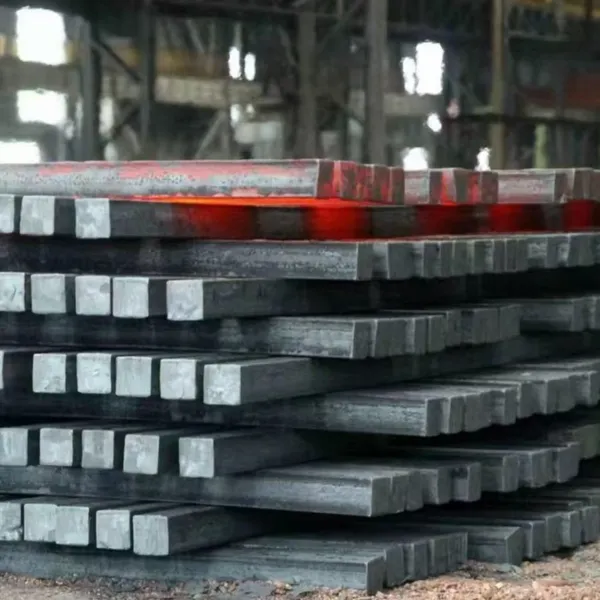
• Hot billets require controlled slow cooling per process specifications to avoid cracking from internal stress.
8. Reference Industry Standards
• National Standards: GB/T 20566, GB/T 699, GB/T 1591;
• Industry Standards: YB/T 001 (blooming billets), YB/T 002 (hot-rolled square/rectangular billets), YB/T 003 (thin slabs);
• International Standards: ASTM, JIS, EN, API and other corresponding grade & technical specifications for export trade.

Send Inquiry to This Supplier



You May Also Like
-
Steel Round Bar&Round Bar,Q195, Q235, 20#, S20C, 1020,35#, 45#, S45C, 1045,40Cr, 42CrMo, 20CrMnTiNegotiableMOQ: 5 Metric Tons
-
Silicon Steel&Electrical Steel,M4, M5, M6, M7, M8, 30Q120, 30Q130, 27Q110NegotiableMOQ: 5 Metric Tons
-
Silicon Steel&Electrical Steel,M4, M5, M6, M7, M8, 30Q120, 30Q130, 27Q110NegotiableMOQ: 3 Metric Tons
-
Silicon Steel&Electrical Steel,M4, M5, M6, M7, M8, 30Q120, 30Q130, 27Q110NegotiableMOQ: 3 Metric Tons
-
Silicon Steel&Electrical Steel,M4, M5, M6, M7, M8, 30Q120, 30Q130, 27Q110NegotiableMOQ: 3 Metric Tons
-
Silicon Steel&Electrical Steel,M4, M5, M6, M7, M8, 30Q120, 30Q130, 27Q110NegotiableMOQ: 3 Metric Tons
-
Steel Billet&Carbon Steel Billet,Q195, Q215, Q235B, Q275, SS400, 3SP, 5SP,Q345B, Q355B, 20MnSiNegotiableMOQ: 5 Metric Tons
-
Steel Billet&Carbon Steel Billet,Q195, Q215, Q235B, Q275, SS400, 3SP, 5SP,Q345B, Q355B, 20MnSiNegotiableMOQ: 5 Metric Tons
-
Steel Billet&Carbon Steel Billet,Q195, Q215, Q235B, Q275, SS400, 3SP, 5SP,Q345B, Q355B, 20MnSiNegotiableMOQ: 5 Metric Tons
-
Steel Billet&Carbon Steel Billet,Q195, Q215, Q235B, Q275, SS400, 3SP, 5SP,Q345B, Q355B, 20MnSiNegotiableMOQ: 4 Metric Tons


