








 Contact Platform Support
 Help Center
Commercial Kitchen Cleaning Cabinet — 304 SS With Drain Pan, Built for Grease and Steam
Product Spotlights



Related Products
-
 Heavy-Duty Janitor Cabinet — 201 Stainless Steel, 20×16×71 In, Lockable, Reinforced ShelvesUS$ 80 - 200MOQ: 5 Combos
 -
Gym and Locker Room Cleaning Cabinet — 201 SS W500×D400×H1800mm, Lockable With Drying RodUS$ 80 - 200MOQ: 5 Combos
-
HACCP Compliant Food Grade Cleaning Cabinet — 304 SS, 500×400×1800mm, With Drain and LockUS$ 80 - 200MOQ: 5 Combos
-
Efficient Industrial-grade Heavy Tool Chest Machinery Tool Storage Cabinet -OEMNegotiableMOQ: 10 Pieces
-
High - Quality CNC Workshop Tool Cabinet Heavyweight Workshop Tool OrganizerNegotiableMOQ: 10 Pieces
Commercial Kitchen Cleaning Cabinet — 304 SS with Drain Pan, Built for Grease and Steam
Restaurant kitchens destroy cabinets. Not in years. In months.
Dishwasher steam hits the walls. Grease settles on every surface. Floor cleaner splashes up from the mop bucket. The cabinet next to the dish pit takes all of it—heat, moisture, chemicals, fat. A standard steel cabinet rusts at the base in three months. A plastic one warps. A wooden one absorbs everything and swells shut.
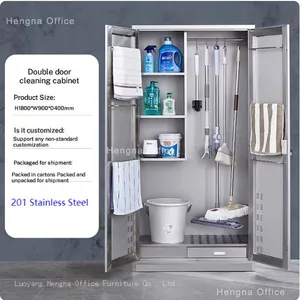
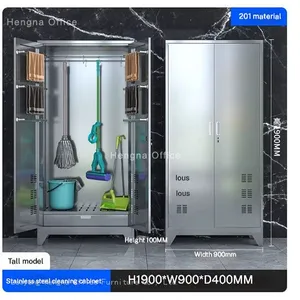
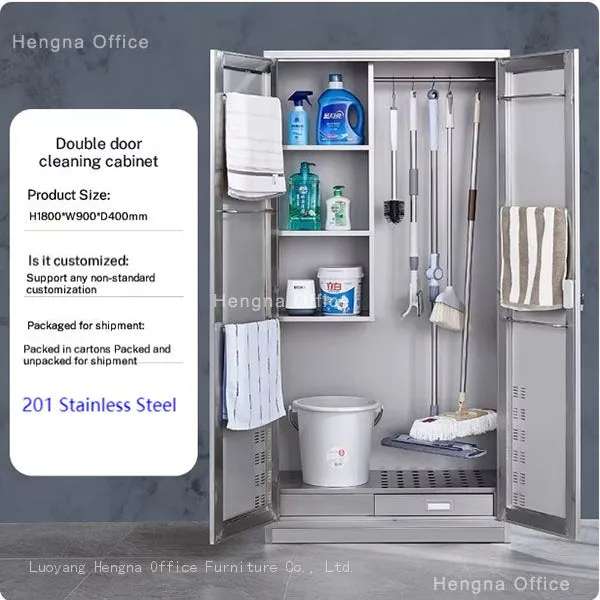
This cabinet is built for it. 304 stainless steel. Drain pan underneath. Double door with a lock. The same grade of stainless used in commercial kitchen prep tables, but designed to hold wet mops, dirty rags, and cleaning chemicals instead of food.
What a commercial kitchen does to standard cabinets
The dish pit area is the worst spot in the building for any piece of equipment. Steam at 140°F rolling out of the dishwasher for hours. Grease-laden vapor from the fryer drifting across the room. Floor cleaning chemicals splashing onto cabinet legs. Standing water that never fully dries between shifts.
Standard steel cabinets fail at the base first. Water seeps into the seam between the body and the floor. Rust starts. Within two months the cabinet rocks because one leg has corroded shorter than the others. By six months the bottom shelf is unsafe to put anything on.
We've seen restaurants try to fix this by putting cabinets on wooden blocks. The blocks rot. They try plastic cabinets—plastic warps in the heat. They try painting steel cabinets with rust-proof paint—grease eats through the paint.
304 stainless doesn't fight the environment. It ignores it.
Why 304, specifically
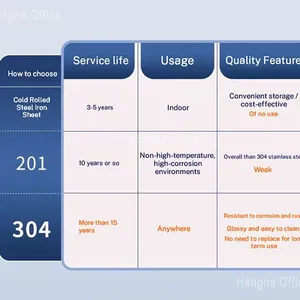
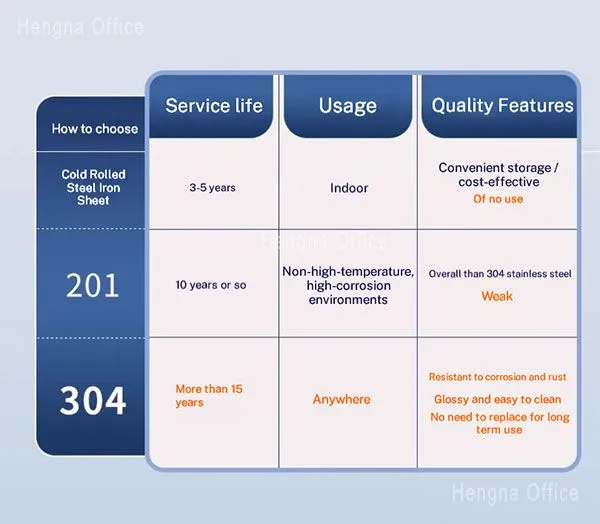
304 stainless contains 8-10% nickel and molybdenum. Nickel handles the acids in degreasers and floor cleaners. Molybdenum handles the chloride in bleach-based sanitizers. Both are present in commercial kitchens every shift.
201 stainless is fine for dry storage. In a kitchen, 201 will show rust spots at the weld points within a year. The heat and chemical combination is too aggressive.
A restaurant group in Chicago runs seven locations. They standardized on 304 stainless for all back-of-house equipment after replacing 201 shelving units that were rusting within 18 months. Their kitchen cleaning cabinets are part of that same standard. Five years in, zero replacements.
The drain pan: kitchen-specific design
Kitchen mops are the dirtiest mops in any building. Floor cleaner, degreaser, food particles, and water all come back on the mop head. That cocktail sitting in the bottom of a cabinet for eight hours breeds bacteria fast.
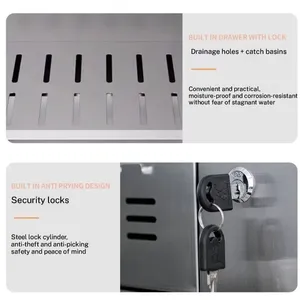
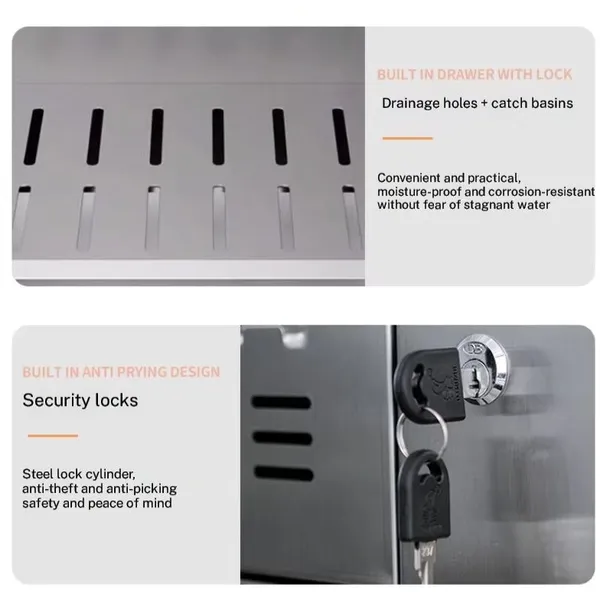
The drain hole sends it to the pan. The pan is 304 stainless—same as the cabinet. Pull it out at end of shift. Dump it in the floor drain. Rinse it. Slide it back. Thirty seconds.
At closing time nobody wants to clean a cabinet. The drain pan makes it so you don't have to. The water leaves. The cabinet stays dry. Health inspector walks in the next morning—that cabinet isn't going to be a violation.
Steam, grease, and what sticks around
Grease doesn't just sit on surfaces. It bonds with steam and settles as a film. On a painted cabinet, this film gets sticky and holds dirt. On 304 stainless, it wipes off with standard kitchen degreaser. No special treatment. No paint to protect. Just steel.
The cabinet sits next to the dish pit. Steam rolls over it for hours. Water condenses on the outside. If the material can corrode, it will corrode here. 304 doesn't.
One thing worth noting: the outside of the cabinet will still get greasy. That's the kitchen, not the cabinet. Wipe it down with degreaser during closing shift. The steel doesn't care—it just needs the film removed so it can breathe.
Specs
| Item | Spec |
|---|---|
| Material | 304 stainless steel (molybdenum for chemical resistance) |
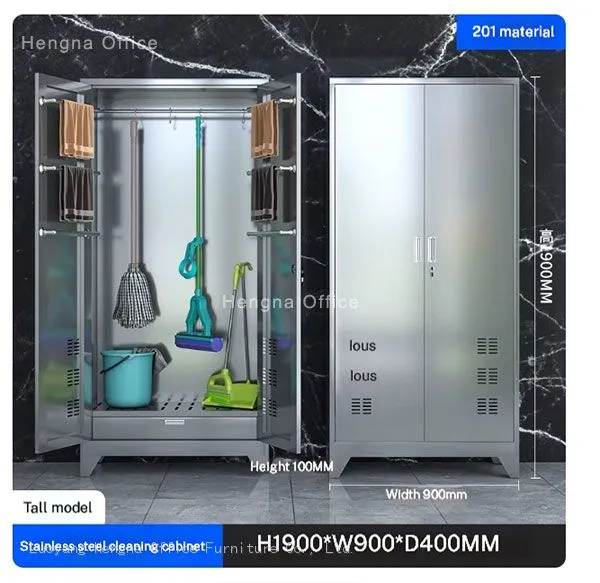
| Dimensions | W500 × D400 × H1800mm (with feet) / H1690mm (body) |
| Door | Double door, key lock |
| Shelf spacing (top to bottom) | 300 / 380 / 350 / 100mm |
| Drainage | Bottom drain hole + removable drain pan (304 stainless) |
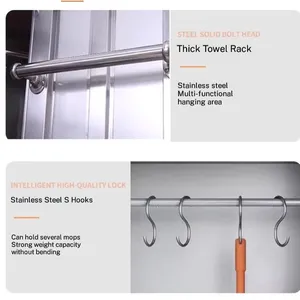
| Drying rod | Stainless steel bar |
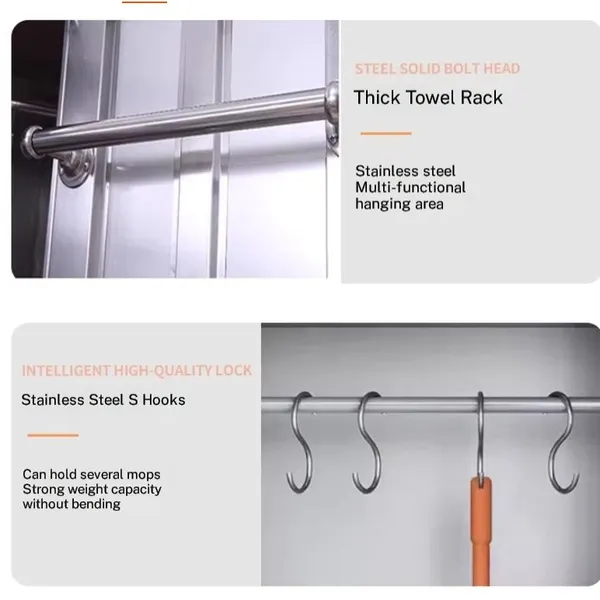
| Hooks | Side panel hooks |
| Lock | Steel cylinder |
Lock: chemicals and cleaning tools stay put
Restaurant kitchens have high turnover. Dishwashers, line cooks, prep staff—people come and go. An unlocked cabinet full of degreaser, bleach solution, and floor cleaner is a liability.
Steel cylinder lock. Kitchen manager and closing shift lead have keys. Morning crew checks them out. Nobody leaves the cabinet open at end of shift because they forgot.
If your kitchen uses a key-card or code system, tell us. We can set up the lock cylinder to match your existing kitchen keying. Less keys on the manager's ring.
Health inspection reality
Every restaurant manager knows the drill. Health inspector walks the back of house. They check the dish pit. They check the mop sink. They check the cleaning supply storage. If the cabinet that holds your mops and chemicals is rusted, leaking, or smells, it gets written up.
This cabinet addresses three common health code items:
Chemicals stored separately from food contact surfaces—lockable cabinet solves this. Wet mops stored in a way that allows drying—drain pan and drying rod solve this. No standing water or visible mold—304 stainless with drainage solves this.
We're not saying the health inspector will compliment the cabinet. We're saying they won't write it up. That's the goal.
What goes in a kitchen cleaning cabinet
Top shelf: backup cleaning chemicals, spray bottles, replacement sponges.
Middle shelf with drying rod: wet rags and small towels hung to dry between shifts. Color-coded cloth system—red for raw prep areas, blue for general, green for front-of-house—each color gets its section of the rod.
Bottom shelf with drain pan: mop bucket fill station area, mop heads hanging from hooks above the drain.
Side hooks: deck brush for floors, pot brush for stubborn pans, dustpan.
One cabinet. Everything the closing shift needs to clean the kitchen. Not scattered across three different corners of the back of house.
Questions from kitchen managers and restaurant owners
Q: Will 304 actually hold up next to a dishwasher? A: Yes. We've got units in a Chicago restaurant group that have been next to dish pits for five years. Zero rust. The steam and chemicals are exactly what 304 is designed to handle.
Q: How often does the drain pan need to be emptied? A: End of every closing shift. Kitchen mops are the dirtiest in any industry. Don't let that water sit overnight. Dump the pan in the floor drain, rinse, put it back. Takes 30 seconds.
Q: Grease builds up on everything in my kitchen. Will it ruin the cabinet finish? A: Grease film will settle on the outside—that's your kitchen, not the cabinet. Wipe it down with standard degreaser during closing. 304 stainless cleans back to original finish. No paint to strip, no coating to damage.
Q: We open a new location every year. Can we spec this cabinet into our build-out standard? A: Yes. Restaurant groups use us for exactly this. One model number in the build-out spec. We ship to each new location. Consistent equipment across all sites means consistent results.
Q: Minimum order? What about single-location restaurants? A: One unit for a single restaurant is fine. Restaurant groups adding to their standard spec: volume pricing at 10+ units. Contact us.
Q: Lead time? A: Standard units ship in 2-4 weeks. Ocean freight adds 3-5 weeks depending on port. If you're opening a new location, order when the build-out starts, not when you're two weeks from soft opening.
About us
Luoyang Hengna Office Furniture Co., Ltd. 9 years in steel furniture. We supply restaurant groups across North America, the Middle East, and Southeast Asia—from single-location independent restaurants to multi-unit chains standardizing their back-of-house equipment.
We work directly with our production base. CE certified. OEM available for restaurant group branding.
Need a quote for your kitchen? Send your quantity and delivery destination. Response within 24 hours.

Send Inquiry to This Supplier



You May Also Like
-
Factory-based Heavy Tool Chest Robust Tool Storage Unit SupplierNegotiableMOQ: 20 Pieces
-
Industrial-strength Tool Chest in Factory High-capacity Tool CabinetNegotiableMOQ: 25 Pieces
-
Durable Tool Storage in Factory HNGJ703 Hard Wearing Metal Industrial Tool ChestNegotiableMOQ: 18 Pieces
-
Juntuo -CNC Tool Storage Cabinet With Full Extension Drawers for Machine Shop Use | OEM/ODMUS$ 150 - 500MOQ: 5 Pieces
-
Heavy Duty Tool Cabinet With Multiple Drawers for Industrial Workshop Storage|Mold Workshop Tool CabinetUS$ 150 - 500MOQ: 5 Pieces
-
CNC Tool Holder Cabinet for Precision Tool Management in Manufacturing Plants| Garage Tool Storage CabinetUS$ 150 - 500MOQ: 5 Pieces
-
Industrial Metal Tool Storage Cabinet With Lock | Factory Direct Supply|Small Parts Storage CabinetUS$ 150 - 500MOQ: 5 Pieces
-
Rolling Tool Cart With Drawers for Automotive Repair Workshops|Pegboard Tool Cabinet-Blue & WhiteUS$ 150 - 500MOQ: 5 Pieces
-
Mobile Tool Trolley Cabinet for Garage and Assembly Line Workstations|Drawer Tool CabinetUS$ 150 - 500MOQ: 5 Pieces
-
Industrial Drawer Tool Cabinet With Double-Rail Slide System | Custom Sizes|Triple Rail Drawer Tool CabinetUS$ 150 - 500MOQ: 5 Pieces


