








 Contact Platform Support
 Help Center
16 Drawer Stainless Steel Herb Cabinet | 48 Herbs, 3 Compartments Per Drawer for Clinic Storage
Product Spotlights



Related Products
-
 Moisture-Proof Stainless Steel Herbal Cabinet | Type 201, No Rust, No Odor — Medical GradeUS$ 299 - 799MOQ: 2 Combos
 -
Type 201 Stainless Steel Herbal Cabinet 1400mm | 48-Compartment Dispensing Table for TCM Clinic & PharmacyUS$ 299 - 799MOQ: 2 Combos
-
48-Compartment Herbal Dispensing Table | Type 201 Stainless Steel, Ready to Ship to Your ClinicUS$ 299 - 799MOQ: 2 Combos
-
16 Drawer 48 Herb TCM Cabinet | Customizable With Casters, Locks & Drawer Labels for Pharmacy UseUS$ 299 - 799MOQ: 2 Combos
-
48 Drawer TCM Dispensing Cabinet — Stainless Steel Chinese Medicine Storage Cabinet With Labeled Herb CompartmentsUS$ 108 - 666MOQ: 5 Combos
A clinic in Nairobi ordered five units from us last year. Before that, they'd been using locally made wooden cabinets. Three months in, two drawers had already started sticking. Humidity was the problem — Nairobi isn't a rainforest, but the seasonal moisture was enough to swell the wood. They switched to stainless steel and haven't looked back.
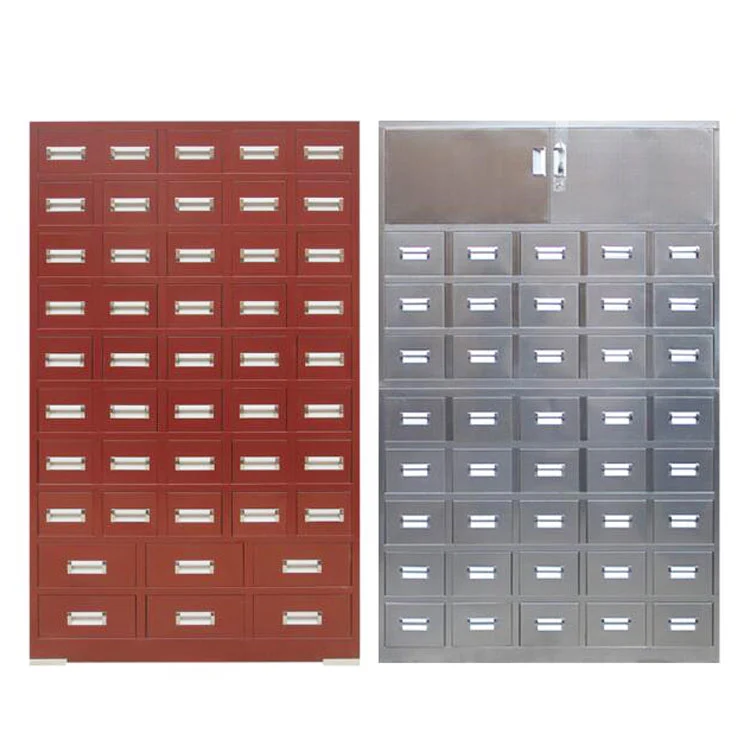
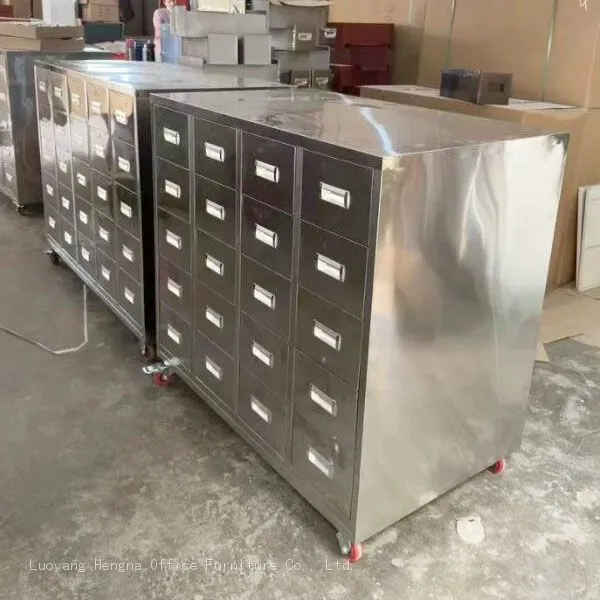
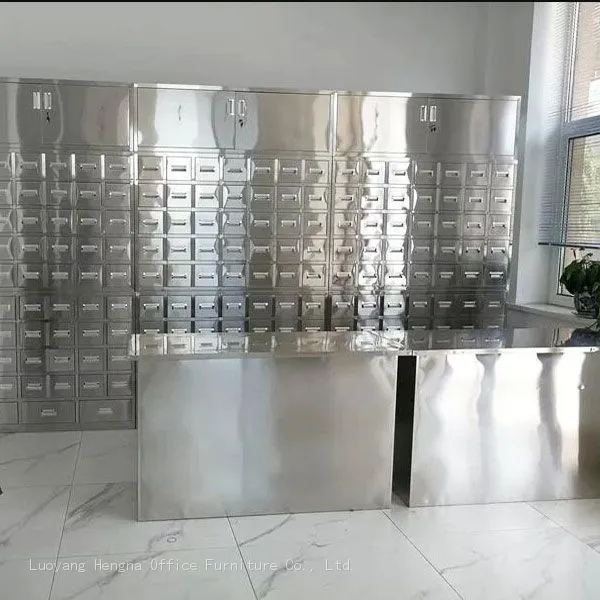
This is the cabinet they chose. 16 drawers. 3 compartments per drawer. 48 herbs total. Made from Type 201 stainless steel, shipped fully assembled.
Quick Specs
| Item | Value |
|---|---|
| Material | Type 201 stainless steel |
| Dimensions | 1400mm (W) × 600mm (D) × 830mm (H) — no casters |
| 1400mm (W) × 600mm (D) × 900mm (H) — with casters | |
| Inside drawer | 171mm (H) × 291mm (W) × 485mm (D) |
| Drawer count | 16 |
| Per drawer | 3 compartments |
| Total herbs | 48 |
| Slide type | Stainless steel ball-bearing slides |
| Assembly | Fully assembled out of the crate |
| Casters | Optional — locking swivel type |
The 485mm drawer depth fits the herb bags and bins most clinics use. No need to modify anything.
Why 16 drawers
When people ask me how many drawers they need, my answer is usually the same: count your most-used herbs, add a few extras for seasonal stock, and that's your number.
For most clinics, 16 drawers hits the mark. 48 compartments means 48 individual herbs, each in its own space. That covers the standard TCM formulary — the roots, leaves, barks, and minerals you prescribe day in, day out. If you stock a wider range, we also make 20 and 24-drawer versions. But 16 is what most clinics settle on after a year of operation.
Too many drawers and you're walking back and forth. Too few and you're doubling up herbs in the same space. 16 is the balance.
Three compartments — why fixed dividers matter
The inside of each drawer is split into three equal sections by welded stainless steel dividers.
Some manufacturers use removable dividers — thin metal strips that slot into grooves. They're cheaper to make, but they come loose over time. When a divider shifts, one compartment steals space from the next. You end up with overcrowded sections and herbs spilling across the boundary.
Our dividers are welded into place. They're not going anywhere. Each compartment stays the exact same size for the life of the cabinet. No realignment. No readjustment.
The size of each section — roughly 160mm wide — fits a standard herb bag lying flat. You can stack bags vertically or lay them side by side. In clinics that pre-package herbs, labeled bags sit neatly in each slot. The pharmacist or technician opens the drawer and grabs what they need without sorting through a pile.
Drawer slides — the part that gets tested daily
A drawer slide on a herb cabinet opens and closes dozens of times a day. On a busy clinic counter, that's thousands of cycles a year. This is the part of the cabinet that takes the most abuse.
We use stainless steel ball-bearing slides. Not the thin roller slides you see on budget cabinets. Ball-bearing slides distribute weight evenly across the track. A drawer filled with herbs can weigh several kilograms. Over time, roller slides deform and start scraping. Ball-bearing slides maintain their clearance.
Every drawer is tested before the cabinet leaves the factory. We slide it in and out, check for friction, check alignment. If it doesn't glide smoothly, we adjust it before packing.
After installation, if you feel any drag in the first few weeks, it's usually because the cabinet isn't sitting level on the floor. A quick adjustment of the feet or casters fixes it. Once level, the drawers will slide smoothly for years.
Type 201 stainless steel — what you actually get
I'll be direct about the material because I've seen too many product pages that make stainless steel sound like magic.
201 stainless steel contains less nickel than 304. That makes it less resistant to corrosion in extreme conditions — think salt spray, chemical exposure, constant outdoor moisture. But for an indoor clinic countertop, those conditions don't exist. The difference between 201 and 304 in a standard pharmacy environment is theoretical. Both will outlast the cabinet's useful life.
What 201 does well: it doesn't rust. It doesn't absorb odors. It doesn't need painting or coating. The surface is non-porous, so herbal powders wipe off without leaving residue. If you spill liquid on it, it won't stain.
What 201 doesn't do: it doesn't resist scratches better than other metals. Scratches will show on any stainless steel surface. But a scratch on stainless steel is cosmetic. A scratch on a painted cabinet exposes bare metal to moisture. With stainless, a scratch changes nothing.
Fully assembled — why we do it this way
I've been in enough clinic rooms to know that nobody budgets time for furniture assembly.
KD cabinets — flat-packed, unassembled — are cheaper to ship. The manufacturer saves on freight. The buyer saves nothing on labor. Someone has to put it together. In some countries, that means paying a handyman a day's wage. In others, it means the clinic owner spending their weekend with a screwdriver.
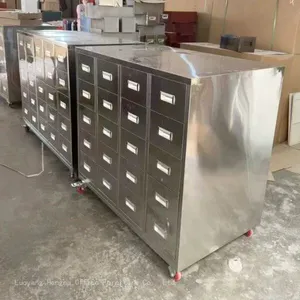
We ship this cabinet fully assembled. It's welded, finished, wrapped in protective film, and strapped into a wooden crate. When it arrives, you cut the straps, remove the crate, and — if you ordered casters — screw them into the pre-drilled holes. Then roll it into position.
That's the full installation process. Two steps. No instruction booklet needed.
Export packaging
We send these cabinets to clinics on five continents. The packaging has to survive port handling, container stacking, ocean humidity, and last-mile trucking.
Here's how we pack:
The cabinet is wrapped in moisture-proof film — not the thin plastic sheeting some factories use, but industrial-grade VCI film that prevents condensation damage.
Corner guards made of laminated cardboard are strapped to each edge.
For air freight, the cabinet goes into a plywood crate with foam padding.
For sea freight, we use a heavier wooden crate with internal bracing.
We include a packing list inside the crate and a commercial invoice in a waterproof pouch attached to the outside. Customs clearance is straightforward — the documentation is complete.
Who buys this cabinet
The typical buyer is a TCM clinic doing 30-80 daily prescriptions. They've been operating for a while, know their herb volume, and want a cabinet that will last without issues.
We also sell to:
Private clinics — the owner makes a one-time purchase and wants it to be right.
Hospital pharmacy departments — stainless steel meets infection control requirements.
Training institutions — 16 drawers with 48 herbs covers the curriculum.
Overseas Chinese medicine centers — places like Nairobi, Dubai, Bangkok, and Kuala Lumpur. The fully assembled delivery matters more in these markets because local assembly labor is expensive or unreliable.
FAQs
Q: What's the difference between Type 201 and 304? For an indoor clinic, very little. Type 304 has higher nickel content and better corrosion resistance in extreme environments. For normal use, 201 is the practical choice.
Q: Can I get a 20-drawer version instead? Yes. We make 12, 16, 20, and 24-drawer configurations. Same cabinet width — the drawers get slightly shorter as you add more rows.
Q: Do you ship samples? Yes. One unit is fine. We recommend starting with a sample to verify quality before ordering in volume.
Q: What warranty do you offer? 12 months standard. Covers defects in materials and workmanship.
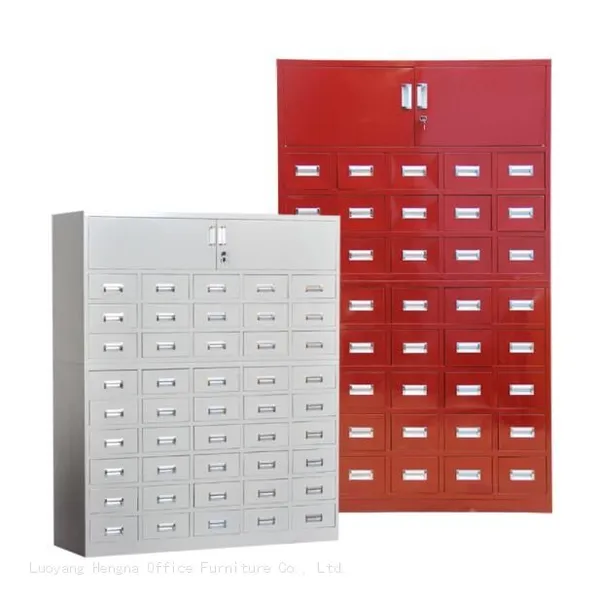
Q: Can the cabinet be customized? Yes. We offer OEM services — silk-screen logos, custom packaging, custom manuals. Locks, label holders, and concealed compartments available on request.
Q: How long does sea freight take? Depends on destination. Southeast Asia: 15-20 days. Middle East: 20-30 days. East Africa: 25-35 days. Europe: 30-45 days.
A practical note
There's nothing complicated about this cabinet. It's a stainless steel box with 48 compartments, built to sit on a clinic counter and hold herbs. What matters is that the drawers slide smoothly, the dividers stay in place, and the cabinet arrives ready to work.
We've been making these long enough to know which details matter and which don't. Thicker steel on the countertop — worth it. Cheap drawer slides — not worth it. Removable dividers — causes problems. Welded dividers — solves them.
If you're looking for a supplier who's been doing this for years and ships to your part of the world, send me a message. I'll send you the spec sheet, photos, and shipping estimate for your location.

Send Inquiry to This Supplier



You May Also Like
-
Rust-Resistant Chinese Medicine Cabinet — Cold-Rolled Steel TCM Dispensing Cabinet for Coastal & Tropical PharmaciesUS$ 108 - 666MOQ: 5 Combos
-
Steel TCM Cabinet 70 Drawer — Hospital Dispensing Storage for 210 Herbs | Built DifferenUS$ 69 - 700MOQ: 5 Combos
-
Stainless Steel TCM Cabinet 60 Drawer — for Tropical Pharmacy Herbal Storage | Won't SwellUS$ 69 - 700MOQ: 5 Combos
-
Large Capacity 60-Drawer Stainless Steel Apothecary Cabinet - Holds 180 Herbal Medicines With Moisture-ProofUS$ 50 - 300MOQ: 5 Combos
-
Compact Stainless Steel Herbal Medicine Cabinet for TCM Clinics & Pharmacies - Thin Edges for Safe Medicinal StorageUS$ 50 - 300MOQ: 5 Combos
-
Space-Saving Stainless Steel Herbal Dispenser for Wellness Centers & Health Stores - Large Capacity Waterproof Cabinet for Herb Sample ManagementUS$ 50 - 300MOQ: 5 Combos
-
60-Drawer Large Capacity Cabinet for Clinic Pharmacy |Steel Herbal Medicine Organizer With Labels - (Matt Gray/Antique Red Options)US$ 50 - 300MOQ: 5 Combos
-
Durable All-Steel Herb Storage Cabinet With Label Holders -Traditional Medicine & Spice OrganizationUS$ 50 - 300MOQ: 5 Combos
-
Premium Stainless Steel Herbal Medicine Cabinet for TCM Clinics - Multi-Drawer Storage System for 90-210 Herb FlavorsUS$ 50 - 300MOQ: 5 Combos
-
OEM Moisture-Proof Stainless Steel TCM Herb Cabinet - Durable Alternative to Wooden Medicine CabinetsUS$ 50 - 300MOQ: 5 Combos


