








 Contact Platform Support
 Help Center
Lightweight, High-strength 3d Printing





Related Products
-
 Guangdong Chuangyuan Information Continuous Carbon Fiber 3d Printing ServiceNegotiableMOQ: 0 Set
 -
Continuous Carbon Fiber 3d Printer, Enabling Lightweight and High-strength for RobotsUS$ 19230.77 - 19692.31MOQ: 1 Set
-
Light Curing and Continuous Carbon Fiber 3d Printing, Designed for Complex DesignsUS$ 3846.15 - 4307.69MOQ: 1 Set
-
Continuous Carbon Fiber 3d Printing Service, High-precision, High-strength, Lightweight SolutionsUS$ 16153.85 - 16615.38MOQ: 1 Set
-
Chuangyuan Information (shenzhen) Continuous Carbon Fiber 3d Printing Service on BehalfUS$ 14769.23 - 15076.92MOQ: 1 Set
It's not just about lightness, but a subversion of "light yet strong and tough".
The core magic of continuous carbon fiber 3D printing lies in precisely embedding continuous carbon fiber bundles into the substrate to form an "oriented load-bearing skeleton" —— the density of the finished product is only 1/5 of that of steel and 1/2 of that of aluminum alloy, with the weight directly reduced by 40%-70%. However, its tensile strength can reach 1250MPa, which is 10-25 times that of ordinary plastics, and its specific strength is 7.5 times that of aluminum alloy!
Imagine: When the weight of a drone frame is reduced by 40%, the battery life is directly extended by 25%; when the weight of a bicycle frame is reduced from 4.4kg to 1.27kg, it saves 15% of effort when climbing. An industrial robotic arm weighs less than 5kg but can stably carry an 80kg load. This characteristic of "reducing weight without reducing strength" enables dynamic components to respond faster and consume less energy, and makes static structures more impact-resistant and durable, completely bidding farewell to the dilemma of "sacrificing weight for strength and compromising performance for lightweight".
It's not just about strength, but also the flexibility of "customization on demand".
Traditional high-strength parts rely on mold opening and welding, making it difficult to achieve complex structures and resulting in high costs for small-batch production. However, continuous carbon fiber 3D printing does not require molds and can integrally form complex topological structures. It can also plan the fiber direction through AI algorithms —— the carbon fibers are laid where the stress is high. The material utilization rate soars from 30% to 95%, and the strength of the stress concentration area is directly doubled.
Whether it's customized automotive fixtures, special-shaped robot joints, exclusive bicycle frames, or anti-crash drone brackets, even if only one piece is made, it can be transformed from design to finished product within 72 hours. The cost of small-batch production is directly reduced by 50%-90%. It can also achieve "multi-piece integration", printing 10 originally spliced parts at one time, which not only reduces assembly errors but also eliminates the weak links of welds.
It's not just about manufacturing, but also an innovation of "empowering all scenarios".
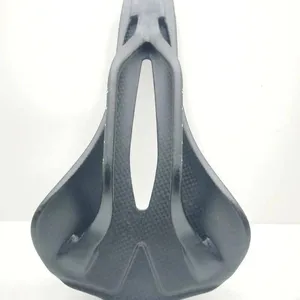
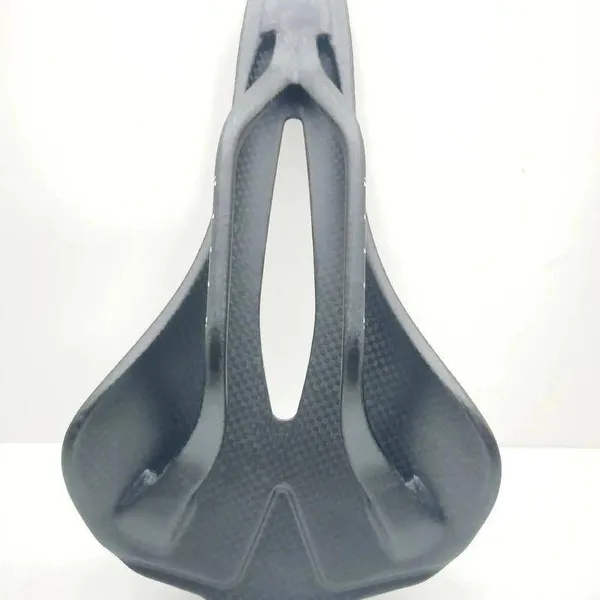
Transportation: Bicycle frames, drone frames, and racing car suspension components. Lightweighting brings better handling and battery life, with the impact resistance increased by 300% and the maintenance cost greatly reduced by 88%;
Industrial production: Robotic arms, customized fixtures, and end-effectors. The weight is reduced by more than 56%, the motion efficiency is increased by 18%, the energy consumption is reduced by 35%, and there is no need to bear huge mold costs for small-batch production;
High-end equipment: Aerospace components and underwater robot shells. They are corrosion-resistant, durable, and lightweight, meeting the precise requirements in extreme environments;
Medical rehabilitation: Bionic hands and prosthetic joints. A 450g hand can grab a 5kg object. It can be customized to fit different body types, achieving both comfort and load-bearing capacity.
Why choose continuous carbon fiber 3D printing?
Cost reduction: No need for mold opening for small batches. The material utilization rate exceeds 95%, the R & D cycle is shortened by 60%, and the cost of maintenance spare parts is directly reduced by 80%.
Efficiency improvement: From design to finished product, the fastest delivery time is 3 days. Complex structures can be integrally formed without subsequent processing.
Innovation: Support for personalized customization and topological optimization design makes "impossible structures" possible.
When lightweight meets high strength, and when flexible customization meets efficient mass production, continuous carbon fiber 3D printing is no longer a black technology in the laboratory, but a "manufacturing upgrade tool" that has been put into practice. Whether it is a high - end product pursuing performance or small - batch production that requires rapid iteration, it can make your products lighter, stronger, and more competitive.
Consult now to get an exclusive application plan + sample printing service. Let the "light and strong" manufacturing revolution start from your next part!

Send Inquiry to This Supplier


You May Also Like
-
3d Printing: Shorten the Mold Development Cycle and Unlock a New Paradigm of Manufacturing EfficiencyUS$ 18153.85 - 18461.54MOQ: 1 Set
-
Dassault Cst Electromagnetic Simulation Software: a Precise, Efficient, and Practical Industry ModelUS$ 1015.38 - 1046.15MOQ: 1 Set
-
Uv-curable 3d Printer: Industrial Intelligent Manufacturing, "flexible Production, Rapid Response to Market Demand"US$ 5384.62 - 5846.15MOQ: 1 Unit
-
Application of Industrial-grade Light-curing 3d Printers in Industrial Intelligent ManufacturingUS$ 5538.46 - 6000MOQ: 1 Unit
-
Light-curing 3d Printers Make the "complex Structures" in Industrial Intelligent Manufacturing a RealityUS$ 5384.62 - 6153.85MOQ: 1 Unit
-
3d Printing: Shorten the Mold Development Cycle and Unlock a New Paradigm of Manufacturing EfficiencyUS$ 3846.15 - 4000MOQ: 1 Set
-
Continuous Carbon Fiber 3d Printing: Breaking Through the Physical Limitations of Traditional Manufacturing Processes to Reduce Costs and Increase EfficiencyUS$ 4000 - 4307.69MOQ: 1 Set
-
Domestic Alternative Solutions for Industrial Software: Cad/cae/pcb/plmUS$ 1538.31MOQ: 1 Set
-
Domestic Replacement Solutions for Industrial Software: Cad/cae/pcb/plmUS$ 1367.38MOQ: 2 Sets
-
Domestic Alternative Solutions for Industrial Software: Cad/cae/pcb/plmUS$ 7384.62 - 7692.31MOQ: 1 Set


