








 Contact Platform Support
 Help Center
Chinese-style Courtyard, Wooden Structure of Ancient Buildings, Gazebos, Corridors, Waterside Pavilions, Doorways, Foyers, and Wooden Houses
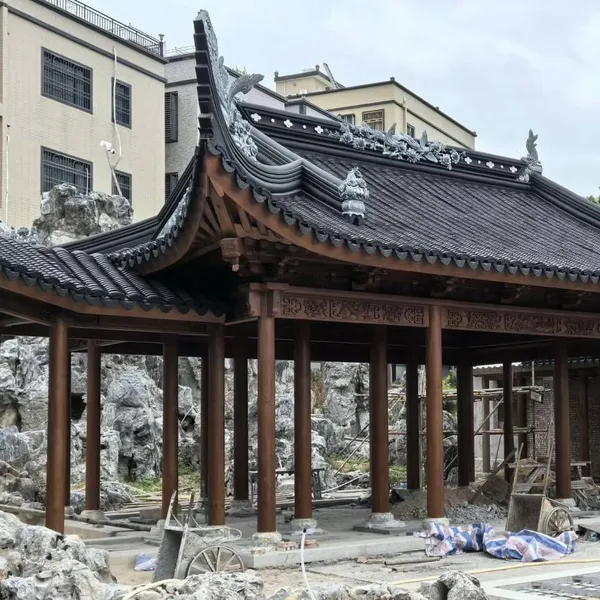
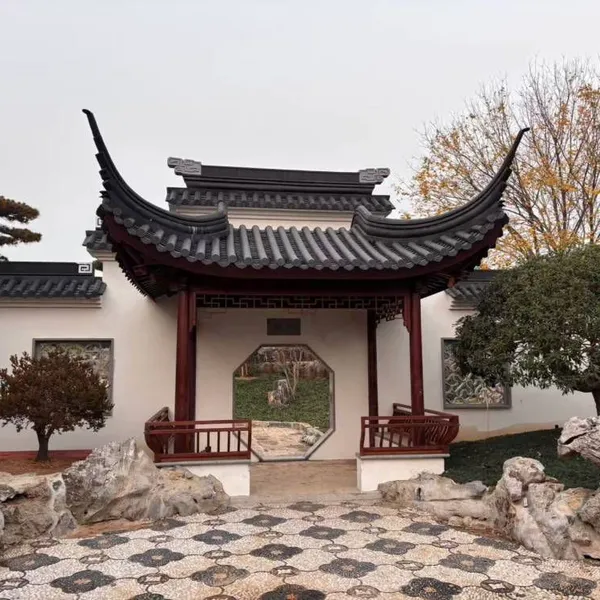


Related Products
-
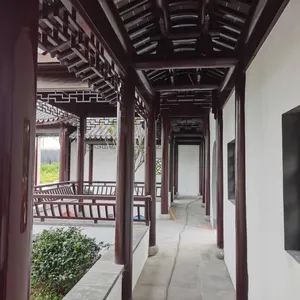
 Customized Ancient-style Wooden Corridors for Courtyards, Scenic Spots, and ParksNegotiableMOQ: 0 Set
 -
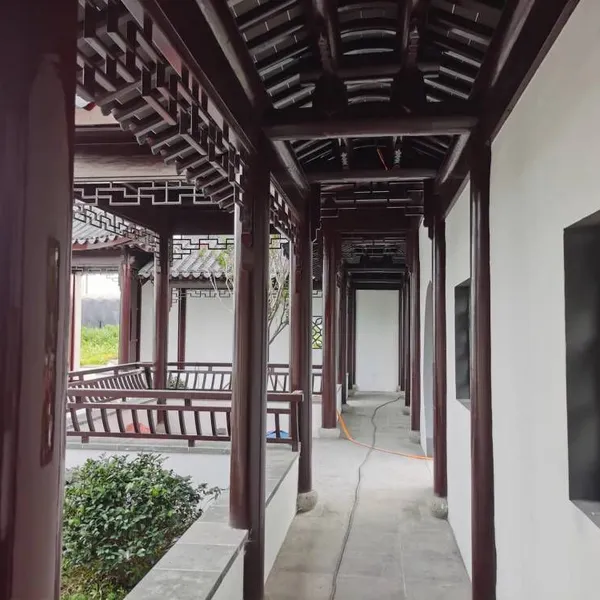
Customized Factory for Wooden Ancient - Style Corridors for Courtyards, Scenic Spots and Parks. Wooden Archaized CorridorsNegotiableMOQ: 0 Set
-
Imitation Ancient Building Wood, Solid Wood Boards, Round Logs and Square Timber, Including Chinese Fir, Pine, Mongolian Pine, Merbau, Teak, and Camphor WoodNegotiableMOQ: 0 Cubic Meter
-
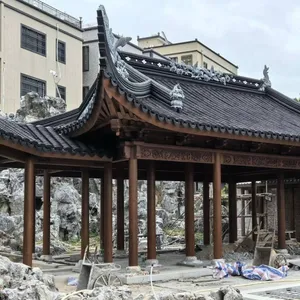
Customizable Double - Eaves Ancient - Style Wooden Pavilions for Scenic Spots and Parks, With Customizable Styles and SizesNegotiableMOQ: 0 Set
-
Antiseptic Wood Ancient - Style Corridor in Scenic Spots, Courtyard Corridor in Parks, Wooden - Structured Courtyard, Antique CorridorNegotiableMOQ: 0 Set
The soul of a courtyard is often hidden in a corridor or a pavilion. The corridor is the "invisible link" of the courtyard, connecting the landscapes, green plants and residences, making the movement as natural as strolling in a garden; the pavilion is the "resting anchor point" of the courtyard, providing shade and shelter from the rain, framing the scenery and creating an artistic conception, carrying the pleasant time of family sitting together and friends chatting. Choosing the right style not only makes the corridor and pavilion blend seamlessly with the overall courtyard, but also shows the owner's aesthetic taste and attitude towards life. This article sorts out the most popular styles of courtyard corridors and pavilions at present, disassembles their core features, suitable scenarios and selection skills, helping you avoid selection mistakes and create a unique courtyard aesthetics.
I. Chinese classical style: Hiding charm in the ancient, showing the elegance of the East
The Chinese classical style is a classic choice for courtyard corridors and pavilions. Rooted in Chinese traditional garden culture, its core is the aesthetic concept of "harmony between man and nature", emphasizing seamless integration with natural landscapes and having a gentle and poetic temperament. This style is subdivided into four branches, each with its own characteristics, suitable for different regions and aesthetic needs.
1. Suzhou style (Jiangnan style): Elegant, delicate, lively and gentle
The Suzhou style is the most flexible branch of the Chinese style. Originating from the gardens in the south of the Yangtze River, its core feature is "lightness, delicacy, simplicity and elegance", perfectly fitting the humid climate and the aesthetic of literati in the south of the Yangtze River. The corridors often adopt winding and tortuous shapes, in line with the garden concept of "changing scenery with each step". The corridor columns are slender, the eaves are light, the top uses a grille design, the ground is paved with bluestones, and bamboo and climbing plants are arranged on both sides. When walking in it, the light and shadow flow between the columns. You can listen to the raindrops under the eaves on rainy days and enjoy the clouds on sunny days. It itself becomes a scenic spot.
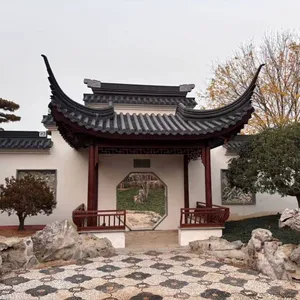
The pavilions are mainly made of wooden structures, often using anti - corrosion woods such as Korean pine and merbau. The shapes are mostly four - cornered or six - cornered pointed roofs, with gentle and light - upturned eaves. It is not only convenient for drainage but also adds a sense of flexibility. There is no excessive cumbersome decoration, only simple carvings and "beauty chairs" are matched, making the whole pavilion transparent and light. The suitable scenarios are mainly villa courtyards and small yards in the Jiangnan style, especially suitable for courtyards with water bodies and rockeries nearby. Matched with flowing water, green bamboos, white walls and black tiles, it fully shows the gentle artistic conception of "a small bridge over a flowing stream and a cottage". It is suitable for people who prefer a poetic and leisurely life and like a lively style.
2. Huizhou style: White walls and black tiles, ancient and solemn
The core of the Huizhou style is "white walls and black tiles, in an orderly arrangement". With bricks and stones as the core materials, the shape is solemn and regular, with a humanistic atmosphere of "ink and wash paintings". It is a highly recognizable branch of the Chinese style. The corridors often have regular and straight shapes. The corridor body is designed with white walls and black tiles, the eaves are regularly upturned, and there are exquisite brick carvings under the corridor, mostly in the patterns of flowers, birds, landscapes, taking into account both practicality and ornamental value. It connects naturally with Huizhou - style residences and ancient ancestral halls, and pays attention to echoing with the surrounding cultural landscapes.
The pavilions are also mainly made of bricks and stones, matched with small - green - tile roofs. The eaves are regularly upturned, and some will incorporate the iconic horse - head wall elements of the Huizhou style. The brick carvings under the eaves are delicate in detail, presenting an ancient and solemn temperament as a whole. The suitable scenarios are mainly ancient streets and towns, cultural scenic spots, and Chinese courtyards (emphasizing the humanistic atmosphere). It is suitable for people who pursue cultural heritage and like the ancient and solemn style, especially suitable for courtyards with Huizhou - style buildings nearby, which can form a unified humanistic style.
3. Jing School: Grand and Symmetrical
The Jing School originates from the northern royal gardens and residential houses. Its core characteristics are "grand and symmetrical", emphasizing a sense of etiquette and order, and is suitable for the open spatial pattern and climatic characteristics of the north. The corridors are mostly linear, with regular and symmetrical shapes. The corridor columns are thick and tall, the eaves are gentle and solemn, and the corridor roofs are paved with glazed tiles or small green tiles. The corridors are decorated with magnificent paintings, mostly featuring dragons, phoenixes, and auspicious patterns, fully showing the royal style.
The pavilions adopt a brick-wood combined structure. Most of them have octagonal or circular roofs. The upturned eaves are gentle and solemn, the columns are thick, and the foundations are solid, taking into account the performance of cold and wind resistance. The decoration is mainly paintings, magnificent but not flashy. The suitable scenarios are mainly large-scale courtyards, municipal squares, temples and Taoist temples, and northern courtyards. It is suitable for people who pursue grandeur and solemnity and like the royal style and symmetrical aesthetics, especially for open courtyards, which can highlight the overall grand style.
4. Gan School: Simple, Solid, Practical and Durable
The Gan School relies on the forest resources in Jiangxi. Its core is "simple, solid, practical and durable". The shape is simple and grand, the decoration is simple but with details, and it focuses on the structural stability, suitable for a variety of complex scenarios. The corridors adopt a structure combining bricks, stones and wood. Most of them are in a straight line or gentle curve shape. The corridor columns are thick, the corridor body is solid, and the corridor roofs are paved with small green tiles, focusing on the practicality of sheltering from wind and rain. The walls retain the natural color of blue bricks, highlighting the natural texture of the bricks. Some will incorporate simplified elements of the Gan-style horse-head walls.
The pavilions are also mainly made of a combination of bricks, stones and wood. The shape is simple, mostly with four-cornered or six-cornered roofs. The upturned eaves are gentle without excessive decoration. The columns are thick and the foundations are solid, suitable for complex environments such as mountainous areas and windy areas. The suitable scenarios are mainly mountain courtyards, rural homestays, scenic mountain nodes, and courtyards in Jiangxi and surrounding areas. It is suitable for people who pursue durability and convenience and like the simple and down-to-earth style, especially for courtyards with complex geological conditions.
II. New Chinese School: Integrating the Past and Present, Suitable for Modern Life
The New Chinese School is one of the current styles. With the core of "modernizing traditional elements and orientalizing modern design", it breaks the complexity of traditional Chinese style, retains its essence, and at the same time integrates the simplicity and practicality of modern design, perfectly adapting to the needs of modern courtyards and life. The core proposition is "breaking the boundaries" to seamlessly integrate indoor and outdoor spaces.
As the "core link" of the new Chinese courtyard, the corridors mostly adopt a semi-open design to balance privacy and transparency: the top uses hollow grilles to filter sunlight, and the sides use glass or lattice windows instead of solid walls, which not only ensures the penetration of sight but also avoids "seeing everything at a glance", becoming a transition area between indoor and outdoor - from the living room to the garden, it is not "pushing open a door" but "passing through a scenic area", thus creating a sense of spatial hierarchy. The corridor body mostly selects durable materials such as anti-corrosion wood and aluminum alloy, with simple and smooth lines and no excessive cumbersome decoration, only decorated with a small amount of carvings and grilles. The color scheme is mainly dark brown, light gray, and off-white, showing a calm and grand style.
The gazebo has a simple design, retaining classic Chinese elements such as flying eaves and pointed roofs, but simplifying the curvature of the upturned corners and the complexity of the carvings. In terms of materials, it mostly uses anti-corrosion wood, aluminum alloy, stone, etc., taking into account both durability and aesthetics. Some are paired with glass and metal components to add a modern touch. Inside the gazebo, simple tea tables and chairs can be matched to meet the practical needs of resting and viewing the scenery. At the same time, it echoes with the corridor, forming a landscape pattern of "connected corridors and gazebos".
It is extremely versatile in terms of adaptable scenarios. Whether it is a small courtyard, a villa courtyard, or a courtyard with a modern minimalist style or a mixed style, it can be perfectly adapted. It is suitable for people who pursue "both traditional charm and a connection to modern life", especially young families who like simplicity and grandeur and value practicality.
III. Modern Minimalist Faction: Simple and Neat, Suitable for a Minimalist Life
The modern minimalist faction takes "less is more" as its core, discarding all cumbersome decorations, emphasizing the simplicity of lines, the regularity of shapes, and the texture of materials, and highlighting practicality and modern aesthetics. It is suitable for modern minimalist and luxury-style courtyards and is a popular choice for young families.
The corridor has a simple design, mostly in a straight or gently curved shape, without excessive decoration. The corridor columns are square or round, with neat lines. The main materials are aluminum alloy, glass, and anti-corrosion wood, among which the aluminum alloy corridor frame is the most common. The black metal material paired with simple lines can not only block strong sunlight but also maintain ventilation. It can also form a "framed view" through the columns and the top structure, optimizing the visual hierarchy of the courtyard. The corridor mostly adopts a transparent design, weakening the boundary between the building and the courtyard, making the space more continuous. It can be paired with simple sofas and coffee tables to directly expand the "usable space" of the courtyard.
The gazebo has a simple and grand design, mostly with flat or sloping roofs, without flying eaves and upturned corners, with smooth lines. The shapes are mostly square or round. The main materials are aluminum alloy, glass, and concrete. The color scheme tends to be black, white, gray, and natural wood color, which is simple, clean, and unobtrusive. The gazebo focuses on practicality and can be paired with sunshades and mosquito nets to meet the usage needs in different seasons. Some adopt a panoramic glass design to enhance the sense of transparency, allowing people resting inside to enjoy the courtyard scenery from all directions.
The adaptable scenarios are mainly small courtyards, modern minimalist-style villas, and luxury-style courtyards. It is suitable for people who pursue simplicity and high-class style and value the practicality of life, especially families with small courtyard areas. The simple shape does not take up much space and can enhance the high-class sense of the courtyard.
IV. Rustic Faction: Natural and Rustic, Returning to the Essence
The core of the rustic faction is "close to nature, simple and casual", discarding the traces of artificial carving, pursuing harmonious coexistence with nature, and having a natural rural atmosphere. It is suitable for people who like nature and yearn for a leisurely life, and is adaptable to rural courtyards and small yards with a natural feel.
The corridor is mostly built with natural wood and bamboo. The shape is casual, which can be winding or simply straight. The corridor columns do not need to be finely polished, retaining the original texture of the wood and bamboo. The corridor roof can be covered with thatch, wooden tiles, or bamboo curtains to add a natural atmosphere. Under the corridor, rattan chairs and wooden benches can be matched, and climbing plants and flowers can be planted around, integrating the corridor with the green plants and forming a comfortable scene of "vines winding around the scenery".
The gazebo has a simple and casual shape, mostly with four - corner or six - corner roofs. The main materials are natural wood and thatch, retaining the original color and texture of the wood. There is no excessive decoration, only simple wooden railings are used. Some will adopt bamboo structures, fully showing the natural simplicity. Inside the gazebo, log tables and chairs and rattan cushions can be matched, and flowers, plants, fruits and vegetables can be planted around it to create a leisurely atmosphere of "returning to the rural life".
The suitable scenarios are mainly rural courtyards, homestay courtyards, and small natural - style courtyards. It is suitable for people who prefer natural simplicity and like rural life. Without complex design and decoration, a warm and comfortable resting space can be created.
6. Core principle for style selection: Adaptability first, considering both practicality and aesthetics
When choosing the style of the courtyard corridor gazebo, there is no need to blindly pursue popularity. The core is "adaptability". By combining the following 3 points, you can make the most suitable choice for yourself and achieve a balance between practicality and aesthetics.
1. Adapt to the overall style and area of the courtyard
This is the most core principle: For Chinese - style courtyards, it is recommended to choose Chinese classical or new Chinese styles; for European - style courtyards, choose European styles; for modern minimalist courtyards, choose modern minimalist or new Chinese styles; for pastoral - style courtyards, choose pastoral styles. Avoid style conflicts and make the corridor gazebo blend in with the courtyard. At the same time, the courtyard area determines the size of the shape: Small courtyards are suitable for simple styles (new Chinese, modern minimalist, small pastoral styles) to avoid complex shapes taking up too much space; large courtyards can choose grand styles (Beijing style, European style, Suzhou style) to highlight the style and sense of hierarchy.
2. Adapt to the regional climate and usage requirements
Northern courtyards need to pay attention to cold and wind resistance. It is recommended to choose corridor gazebos made of a combination of brick and wood or stone materials (Beijing style, European style, modern minimalist) to avoid damage to pure wooden structures due to low temperature and strong winds; Southern courtyards need to pay attention to moisture and corrosion resistance. It is recommended to choose anti - corrosion wood, aluminum alloy, and stone materials (Suzhou style, Huizhou style, new Chinese style), and at the same time choose shapes with good ventilation to avoid stuffiness. In addition, clarify the usage requirements: If it is mainly for resting and drinking tea, the gazebo needs to be equipped with seats and tea tables, focusing on comfort; if it is mainly for viewing and connecting landscapes, the corridor needs to focus on transparency and traffic flow design.
3. Adapt to personal aesthetics and maintenance costs
The style selection should ultimately fit personal aesthetics. If you like traditional charm, choose Chinese classical or new Chinese styles; if you prefer Western romance, choose European styles; if you pursue simplicity and practicality, choose modern minimalist styles; if you yearn for nature, choose pastoral styles. At the same time, consider the maintenance cost: Pure wood (Suzhou style, pastoral style) needs regular painting and anti - corrosion treatment, with relatively high maintenance costs; Aluminum alloy and stone (modern minimalist, European style) have strong weather resistance and are easy to maintain, which are suitable for families with no time to take care of them.
Conclusion
The winding corridor and the standing gazebo. A suitable corridor gazebo is not only a scenic embellishment of the courtyard, but also a manifestation of the living style. Fuzhou Yuanye Classical Architecture LLC has achieved the elegance of Chinese classical style, and can create a natural and simple atmosphere for pastoral - style wooden structures. When building a courtyard, there is no need to deliberately pursue high - end and complexity. As long as it fits the courtyard's temperament and meets the living needs, the corridor gazebo can become the most charming corner in the courtyard, carrying the beauty of the changing seasons and the warmth of family gatherings.

Send Inquiry to This Supplier



You May Also Like
-
Anticorrosive Wood Ancient - Style Corridor for Scenic Spots and Parks, Imitation - Ancient Connected Corridor With Solid Wood and Small Green TilesNegotiableMOQ: 0 Set
-
Customized Factory for Anti-corrosion Wood Ancient-style Pavilions, Chinese-style Courtyard Small Green-tiled Four-cornered, Six-cornered and Merbau Antique PavilionsUS$ 4092.31MOQ: 1 Set
-
Customized Factory for Traditional Wooden Su-style Corridor With Ancient Architectural Craftsmanship, Including Design and Production ServicesNegotiableMOQ: 0 Set
-
Suzhou-style Anti-corrosion Wood Ancient-style Corridor for Courtyards, Scenic Spots, and Parks, Wooden Structure Imitation Ancient CorridorNegotiableMOQ: 0 Set
-
Construction of Traditional Chinese Courtyard Houses (three - Courtyard and Four - Courtyard Houses), su - Style Gardens, and Ancient Wooden Buildings; Ancient Brick - and - Wood - Structured Ancestral HallsNegotiableMOQ: 0 Set
-
Customized Factory for Antiseptic Wood Ancient - Style Pavilions, Courtyard Archaized Pavilions, Park Landscape PavilionsUS$ 861.54MOQ: 1 Set
-
Customized Factory for Antiseptic Wood Ancient - Style Pavilions, Four - Cornered / Six - Cornered / Eight - Cornered Ancient - Style Pavilions Made of Merbau Wood for CourtyardsUS$ 3646.15MOQ: 1 Set
-
Chinese-style Courtyard Ancient Building Corridor, Wooden Structure Antique Corridor, High-end Customized Factory for Antique Corridors, Su-style CorridorsNegotiableMOQ: 0 Piece
-
Garden PavilionNegotiableMOQ: 2000 Pieces
-
Factory Direct Outdoor Aluminum Net Mesh Canopy Awning for Gazebo Pergola Pavilion Garden ShadeNegotiableMOQ: 1


