








 Contact Platform Support
 Help Center
Customized Factory for Traditional Wooden Su-style Corridor With Ancient Architectural Craftsmanship, Including Design and Production Services
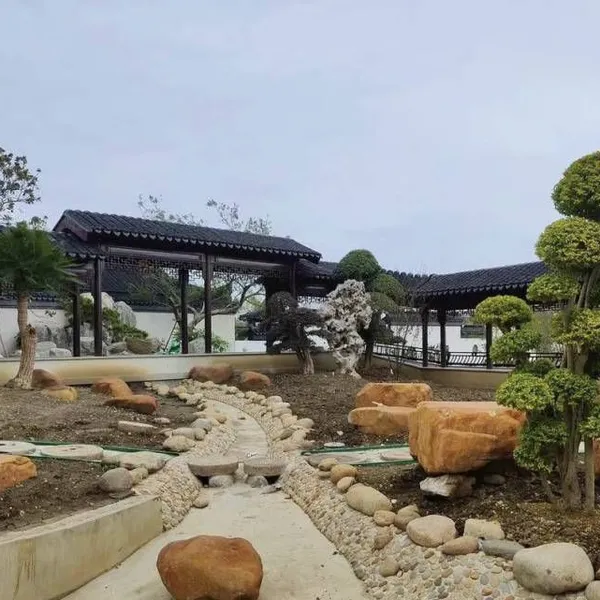
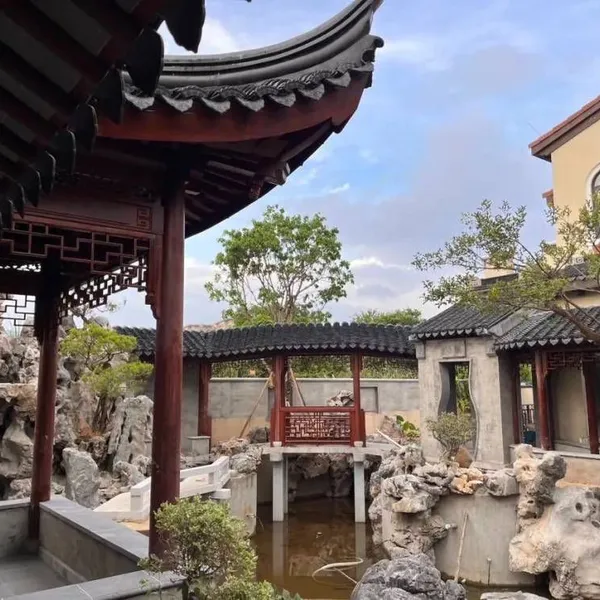



Related Products
-
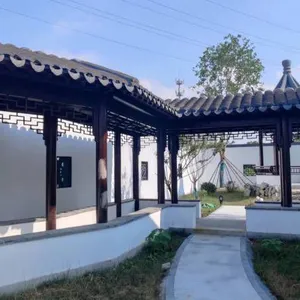
 Suzhou-style Anti-corrosion Wood Ancient-style Corridor for Courtyards, Scenic Spots, and Parks, Wooden Structure Imitation Ancient CorridorNegotiableMOQ: 0 Set
 -
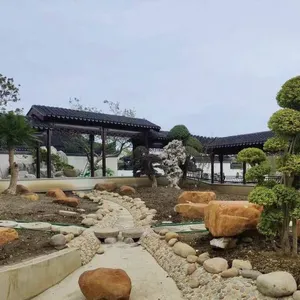
Construction of Traditional Chinese Courtyard Houses (three - Courtyard and Four - Courtyard Houses), su - Style Gardens, and Ancient Wooden Buildings; Ancient Brick - and - Wood - Structured Ancestral HallsNegotiableMOQ: 0 Set
-
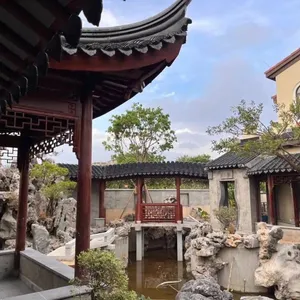
Customized Factory for Antiseptic Wood Ancient - Style Pavilions, Courtyard Archaized Pavilions, Park Landscape PavilionsUS$ 861.54MOQ: 1 Set
-
Customized Factory for Antiseptic Wood Ancient - Style Pavilions, Four - Cornered / Six - Cornered / Eight - Cornered Ancient - Style Pavilions Made of Merbau Wood for CourtyardsUS$ 3646.15MOQ: 1 Set
-
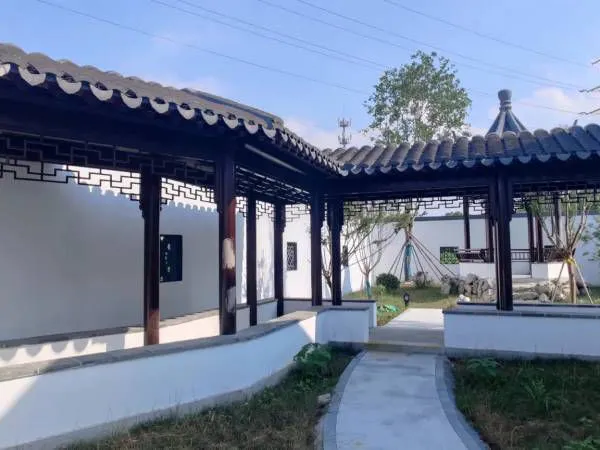
Chinese-style Courtyard Ancient Building Corridor, Wooden Structure Antique Corridor, High-end Customized Factory for Antique Corridors, Su-style CorridorsNegotiableMOQ: 0 Piece
The construction of the wooden ancient - style corridor is a concentrated manifestation of traditional construction techniques. It follows the principles of "acting according to the situation, taking mortise and tenon joints as the soul, and using high - quality materials with exquisite craftsmanship". From the pre - construction preparation to the post - construction finishing, every link demonstrates the ancient people's wisdom in construction. The whole set of craftsmanship is rigorous and orderly, taking into account both the structural stability and the aesthetics of ancient architecture. After thousands of years of inheritance and continuous improvement, it has become an important part of Chinese traditional architectural craftsmanship.
Pre - construction preparation and site selection and layout are the foundation of construction, which directly determine the overall layout and service life of the corridor. Site selection should combine the terrain of the site, the surrounding landscape and the usage requirements. Areas with flat terrain, smooth drainage and far from wet and low - lying areas should be preferred to avoid wood decay caused by long - term water accumulation. At the same time, the design of the moving line should be considered to ensure that the corridor can not only connect the surrounding buildings but also blend into the natural landscape, achieving the landscaping effect of "different views as one moves forward". After the site is determined, layout work is carried out. Traditional measuring tools are used to accurately demarcate the positions and sizes of the corridor columns and foundations, and mark the installation points of components such as beams, purlins and brackets to ensure the accuracy of subsequent construction.
The construction of the foundation focuses on stability, providing a solid support for the corridor body. The foundations of wooden ancient - style corridors mostly use strip foundations or independent foundations. The appropriate foundation form is selected according to the soil texture: shallow foundations can be used in areas with hard soil, while in areas with soft soil, the foundation depth needs to be increased, and crushed stones and cushion layers are laid and compacted to enhance the bearing capacity of the foundation. After the foundation construction is completed, a moisture - proof layer is laid on the top of the foundation. Commonly used materials include bluestones, waterproof membranes or wooden boards soaked in tung oil to isolate the upward penetration of underground moisture and prevent the bottom of the corridor columns from rotting. This is a key step in extending the service life of the corridor.
The selection and processing of wood are the core links, which directly affect the firmness and aesthetics of the corridor body. High - quality woods with tough texture, corrosion resistance, moisture resistance and straight grain, such as camphor wood, Chinese fir, nanmu and cypress, are preferred for material selection. Woods with insect damage, cracks and twisted grains should be avoided. After material selection, drying treatment is carried out. Through natural drying or artificial drying, the moisture content of the wood is controlled between 15% - 20% to avoid subsequent wood deformation and cracking, which may affect the structural stability. The dried wood is processed into components such as columns, beams, purlins, brackets and dougong according to the design drawings. Traditional tools are used for planing and grinding to ensure that the surface of the components is smooth and the size is accurate. At the same time, tenons and mortises are processed on the components according to the design requirements to prepare for subsequent assembly.
The assembly of mortise and tenon joints and the construction of the main body are the core of the construction, demonstrating the essence of traditional construction techniques. No nails or rivets are needed during assembly. Only through the precise engagement of tenons and mortises, components such as columns, beams, purlins and brackets are connected in sequence. First, the corridor columns are built, then the cross - beams and purlins are installed, gradually forming the framework of the corridor body. Commonly used mortise and tenon styles include dovetail mortise, through - post mortise, and shoulder - embracing mortise. Craftsmen select them reasonably according to the stress requirements of the components to ensure firm connection, convenient disassembly and assembly, and good seismic performance. The installation of corridor columns should be vertical, the installation of cross - beams should be horizontal, and the spacing of purlins should be uniform to ensure the overall stability of the corridor body. If the corridor is in a winding or climbing shape, the angles of the components need to be adjusted according to the terrain to fit the terrain undulation, achieving the goal of "constructing the corridor according to the situation".
The construction and decoration of the corridor roof are the final steps, taking both practicality and aesthetics into account. The corridor roof mostly adopts the hipped-and-gabled roof, the hip roof or the gable roof, which are selected according to the purpose and style of the corridor. When building, first lay the sheathing boards, and then lay the tiles. The tiles are arranged neatly, and waterproof treatment is done well. The eaves corners are slightly upturned, which is not only conducive to drainage but also adds the vivid beauty of ancient architecture. In the decoration and modification process, the principle of "simple and elegant, in line with the ancient charm" is followed. Simple auspicious patterns and landscape patterns can be carved on the corridor columns and beams, or couplets can be hung; Su-style paintings and Hexi-style paintings can be painted inside the corridor, with themes covering landscapes, flowers, birds and classic allusions, which not only improves the aesthetics but also carries cultural connotations.
Post - maintenance treatment is indispensable and is the key to extending the service life of the corridor. After the completion of the main body, it is necessary to apply protective layers such as tung oil and raw lacquer on the surface of the wood to form a dense protective film to isolate air, moisture and pests; in daily use, regularly check whether the mortise and tenon joints are loose, whether the wood shows signs of decay and cracking, and carry out reinforcement, paint - filling and repair treatment in time. At the same time, avoid the corridor being exposed to long - term sunlight and humid environment to ensure that the ancient wooden corridor can remain intact after years of baptism.

Send Inquiry to This Supplier


You May Also Like
-
Chinese-style Courtyard, Wooden Structure of Ancient Buildings, Gazebos, Corridors, Waterside Pavilions, Doorways, Foyers, and Wooden HousesNegotiableMOQ: 0 Set
-
Customized Ancient-style Wooden Corridors for Courtyards, Scenic Spots, and ParksNegotiableMOQ: 0 Set
-
Customized Factory for Wooden Ancient - Style Corridors for Courtyards, Scenic Spots and Parks. Wooden Archaized CorridorsNegotiableMOQ: 0 Set
-
Imitation Ancient Building Wood, Solid Wood Boards, Round Logs and Square Timber, Including Chinese Fir, Pine, Mongolian Pine, Merbau, Teak, and Camphor WoodNegotiableMOQ: 0 Cubic Meter
-
Customizable Double - Eaves Ancient - Style Wooden Pavilions for Scenic Spots and Parks, With Customizable Styles and SizesNegotiableMOQ: 0 Set
-
Antiseptic Wood Ancient - Style Corridor in Scenic Spots, Courtyard Corridor in Parks, Wooden - Structured Courtyard, Antique CorridorNegotiableMOQ: 0 Set
-
Anticorrosive Wood Ancient - Style Corridor for Scenic Spots and Parks, Imitation - Ancient Connected Corridor With Solid Wood and Small Green TilesNegotiableMOQ: 0 Set
-
Customized Factory for Anti-corrosion Wood Ancient-style Pavilions, Chinese-style Courtyard Small Green-tiled Four-cornered, Six-cornered and Merbau Antique PavilionsUS$ 4092.31MOQ: 1 Set
-
(135x25mm)Wood Plastic Floor Corridor/corridor Floor Pattern/corridor Floor TilesUS$ 19 - 25MOQ: 200 Square Meters
-
Antiseptic Retaining Wood Walls for Garden UseUS$ 760 - 770MOQ: 55 Cubic Meters


