








 Contact Platform Support
 Help Center
Steel Pipe & Tube & Cast Pipe,ISO2531、EN545、AWWA C151
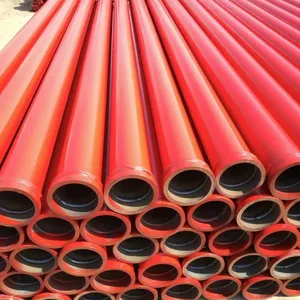
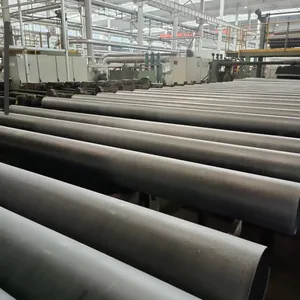
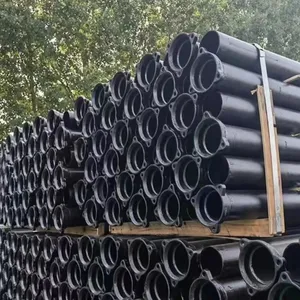
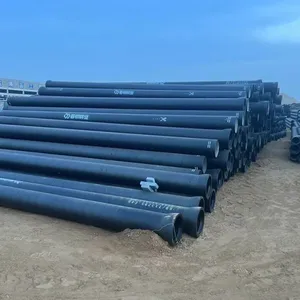

Related Products
-
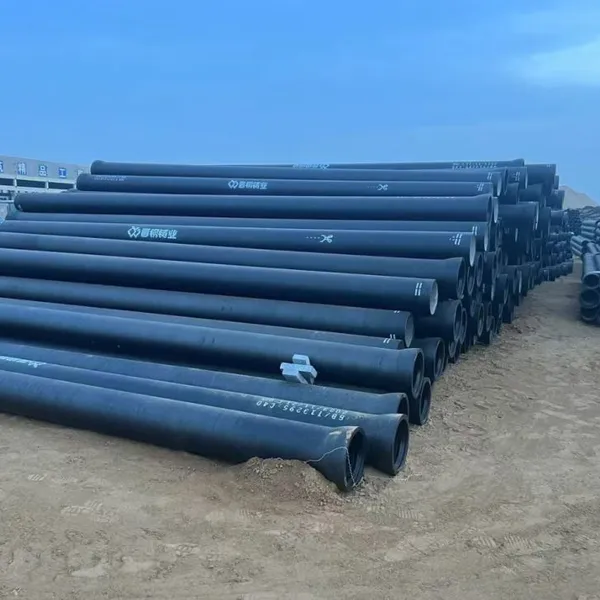
 Steel Pipe & Tube & Cast Pipe,ISO2531、EN545、AWWA C151NegotiableMOQ: 5 Metric Tons
 -
Steel Pipe & Tube & Precision Steel Pipe,GB/T 3639-2021、DIN 2391-2、ASTM A519、GB/T 699NegotiableMOQ: 5 Metric Tons
-
Steel Pipe & Tube & Precision Steel Pipe,GB/T 3639-2021、DIN 2391-2、ASTM A519、GB/T 699NegotiableMOQ: 5 Metric Tons
-
Steel Pipe & Tube & Precision Steel Pipe,GB/T 3639-2021、DIN 2391-2、ASTM A519、GB/T 699NegotiableMOQ: 5 Metric Tons
-
Steel Pipe & Tube & Precision Steel Pipe,GB/T 3639-2021、DIN 2391-2、ASTM A519、GB/T 699NegotiableMOQ: 5 Metric Tons
Cast Pipe Product Detailed Description
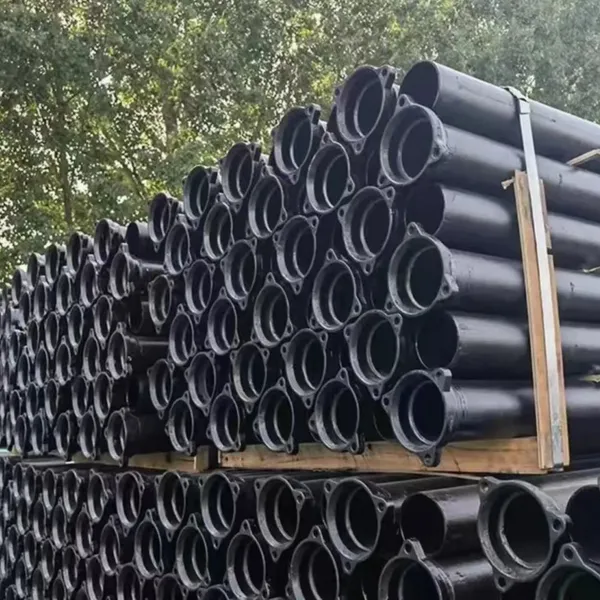
Cast Pipe (commonly known as Cast Iron Pipe) is a metal pipe formed by pouring molten cast iron into molds, then cooling and shaping through centrifugal or continuous casting. It features high strength, high toughness, corrosion resistance, reliable joint sealing and long service life, widely applied in municipal water supply and drainage, gas, chemical industry and construction engineering.
1. Product Classification
1.1 By Material (Core)
Ductile Iron Pipe (Mainstream) : Magnesium/rare earth nodulizer is added to molten iron with spherical graphite structure. Tensile strength ≥420MPa, elongation ≥7%. It has good toughness and high pressure resistance (≤6MPa) with a service life of 50–100 years; the first choice for municipal water supply and gas transmission.
Gray Cast Iron Pipe (Phased Out) : Flake graphite structure, brittle and easy to crack. Only used for low-pressure drainage and gradually being replaced.
High Silicon Cast Iron Pipe : Silicon content ≥14.5%, resistant to strong acid and high temperature but high brittleness, applied to chemical anti-corrosion scenarios.
1.2 By Casting Process
Centrifugal Cast Iron Pipe (Mainstream) : Formed by high-speed centrifugal molding with water-cooled metal mold/sand mold, featuring uniform wall thickness and compact structure with high pressure resistance. Divided into metal mold type (high precision, DN50–2600) and sand mold type (low cost, large diameter).
Continuous Cast Iron Pipe : Horizontal continuous casting with flexible length and low cost, mostly used for low-pressure drainage.
1.3 By Joint Type
Flexible Joint (Type T / Type K / Type W) : Sealed with rubber ring, allowing deflection of ±2.5°, anti-sedimentation and easy installation; mainstream for ductile iron pipes.
Flange Joint : Fixed by bolts and sealed with gaskets, suitable for high pressure and equipment connection.
Self-anchored Joint : Equipped with locking ring, no concrete buttress required, applicable to high water pressure and crossing road sections.
1.4 By Pressure Grade (Class K for Ductile Pipe)
K9 (National Standard Conventional) : Wall thickness T=9×DN/1000, working pressure ≤1.6MPa, preferred for municipal projects.
K7/K8 : Thinner wall thickness for low-pressure drainage; K10/K12 : Special for high pressure (≤2.5MPa).
2. Core Technical Parameters (K9 Grade Ductile Iron Pipe)
2.1 Size Specification (DN=Nominal Diameter)
Caliber: DN50–DN2600mm (Common specifications: DN100/150/200/300/400/600/800).
Standard Length: 6m per piece, customizable 3–12m.
Wall Thickness: DN100=9mm, DN200=12mm, DN300=14mm, DN600=21mm.
2.2 Mechanical Properties (QT500-7)
Tensile Strength: ≥420MPa
Yield Strength: ≥300MPa
Elongation: ≥7%
Hardness: 180–250HB
Hydrostatic Test: DN≤300: 3.0MPa; DN>300: 2.5MPa, no leakage after 1 minute pressure holding.
2.3 Anti-corrosion System (Three-layer Protection)
External Anti-corrosion : Zinc spraying (≥130g/㎡) + Asphalt Paint / Epoxy Coal Tar Pitch, resistant to soil corrosion.
Inner Lining : Cement Mortar (≥3mm) / Epoxy Ceramic, anti-scaling and water corrosion resistant.
Joint Sealing : Styrene-butadiene Rubber Ring (-30℃–80℃), non-toxic and aging resistant.
3. Performance Advantages
Durable and Tough : Ductile structure combines the corrosion resistance of cast iron and toughness of steel, impact resistant and foundation settlement resistant, applicable to seismic intensity up to 9 degrees.
Reliable Sealing : Flexible joint matched with rubber ring realizes zero leakage, adapting to uneven foundation settlement.
Efficient Installation : Type T joint requires no welding or cement pouring. The installation efficiency is 40% higher than steel pipes.
Ultra-long Service Life : 50–100 years buried service life with maintenance-free performance and low full-life cycle cost.
Environmental Protection & Safety : Non-toxic inner lining complies with drinking water standards; recyclable, belonging to green building materials.
Noise Reduction & Flame Retardant : High density of cast iron ensures good noise reduction effect; high temperature resistance up to 800℃, available for fire protection engineering.
4. Application Scenarios
Municipal Water Supply : DN100–1200, urban main and secondary pipe network, K9 grade, Type T joint.
Gas Transmission : Medium and low pressure gas pipeline, explosion-proof and settlement resistant.
Building Drainage : Type W flexible joint, used for high-rise and residential sewage discharge with mute and anti-seismic performance.
Sewage Treatment : Excellent corrosion resistance adapting to acid-base sewage, with epoxy ceramic inner lining.
Chemical & Metallurgical Industry : Suitable for high temperature, high pressure and corrosive media, high silicon/stainless steel cast pipes are available.
Fire Protection & Pump Station : High-pressure water supply, flange/self-anchored joint with high safety and reliability.
5. Executive Standards
National Standard: GB/T13295 (Ductile Iron Pipe), GB/T26081 (Pipe Fittings)
International Standard: ISO2531, EN545, AWWA C151
6. Installation and Maintenance Guidelines
Foundation Treatment : Level the pipe trench and pave 100mm fine sand to avoid damage to the anti-corrosion layer by sharp objects.
Joint Installation
Clean the socket and daub lubricant (soapy water / special silicone oil).
Place the rubber ring in position, insert the straight pipe into the socket to the marked line, and ensure no displacement of the sealing ring.
Backfilling : Fill fine sand and tamp both sides of the joint first, then backfill in layers; avoid direct rolling by mechanical equipment.
7. Comparison with Other Pipe Materials
| Item | Ductile Iron Pipe | Steel Pipe | PVC Pipe | Reinforced Concrete Pipe |
|---|---|---|---|---|
| Strength | Extremely High (420MPa) | High | Low | Medium |
| Toughness | Good (Elongation 7%) | Good | Poor | Extremely Brittle |
| Corrosion Resistance | Three-layer Protection, 50+ Years | Easy to Rust, Heavy Anti-corrosion Required | Corrosion Resistant, UV Resistant | Easy Leakage, Short Service Life |
| Joint Performance | Flexible Sealing, Zero Leakage | Welded/Flange, Easy Leakage | Glued/Rubber, Easy Aging | Rigid Joint, Leakage by Settlement |
| Installation | Simple & Efficient | Complex, Welding Required | Easy Installation, Brittleness at Low Temperature | Bulky, Low Efficiency |
| Comprehensive Cost | Low (Long Service Life) | High | Medium | Low (Short Service Life) |

Send Inquiry to This Supplier



You May Also Like
-
Steel Pipe & Tube & Precision Steel Pipe,GB/T 3639-2021、DIN 2391-2、ASTM A519、GB/T 699NegotiableMOQ: 5 Metric Tons
-
Steel Pipe & Tube & Precision Steel Pipe,GB/T 3639-2021、DIN 2391-2、ASTM A519、GB/T 699NegotiableMOQ: 5 Metric Tons
-
Steel Pipe & Tube & Precision Steel Pipe,GB/T 3639-2021、DIN 2391-2、ASTM A519、GB/T 699NegotiableMOQ: 5 Metric Tons
-
Steel Pipe & Tube & Precision Steel Pipe,GB/T 3639-2021、DIN 2391-2、ASTM A519、GB/T 699NegotiableMOQ: 5 Metric Tons
-
Steel Pipe & Tube & Precision Steel Pipe,GB/T 3639-2021、DIN 2391-2、ASTM A519、GB/T 699NegotiableMOQ: 5 Metric Tons
-
Steel Pipe & Tube & Precision Steel Pipe,GB/T 3639-2021、DIN 2391-2、ASTM A519、GB/T 699NegotiableMOQ: 5 Metric Tons
-
Steel Pipe & Tube & High Pressure Boiler Tube,38、42、48、51、57、60、76、89、108、133、159、168、194、219NegotiableMOQ: 5 Metric Tons
-
Steel Pipe & Tube & High Pressure Boiler Tube,38、42、48、51、57、60、76、89、108、133、159、168、194、219NegotiableMOQ: 5 Metric Tons
-
Steel Pipe & Tube & High Pressure Boiler Tube,38、42、48、51、57、60、76、89、108、133、159、168、194、219NegotiableMOQ: 5 Metric Tons
-
Steel Pipe & Tube & High Pressure Boiler Tube,38、42、48、51、57、60、76、89、108、133、159、168、194、219NegotiableMOQ: 5 Metric Tons


