








 Contact Platform Support
 Help Center
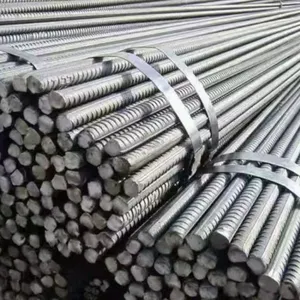
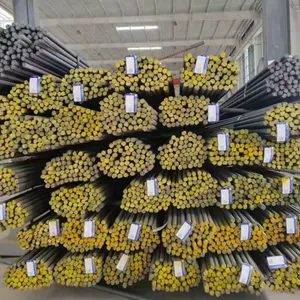
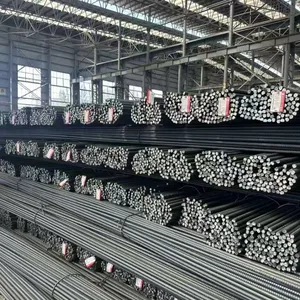
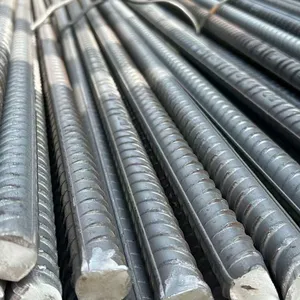
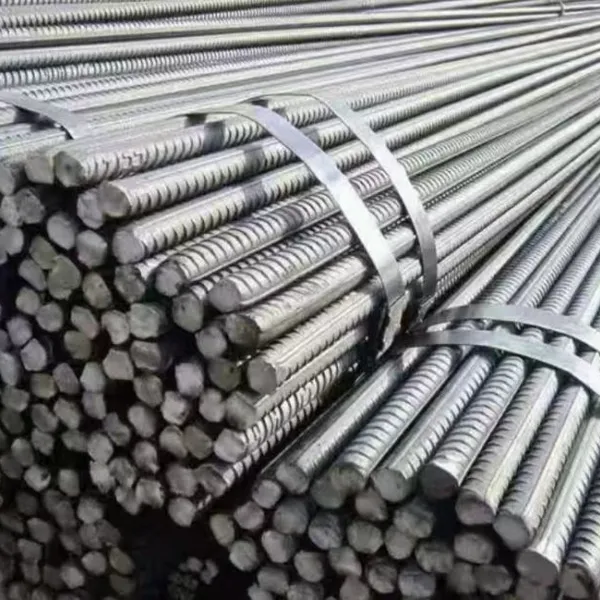
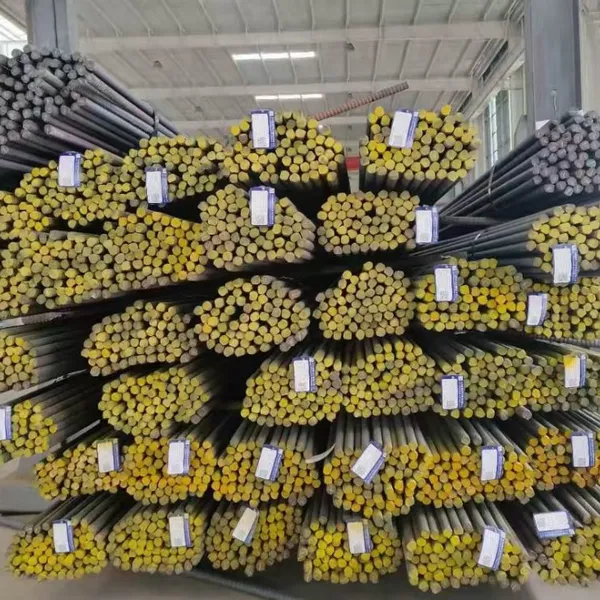
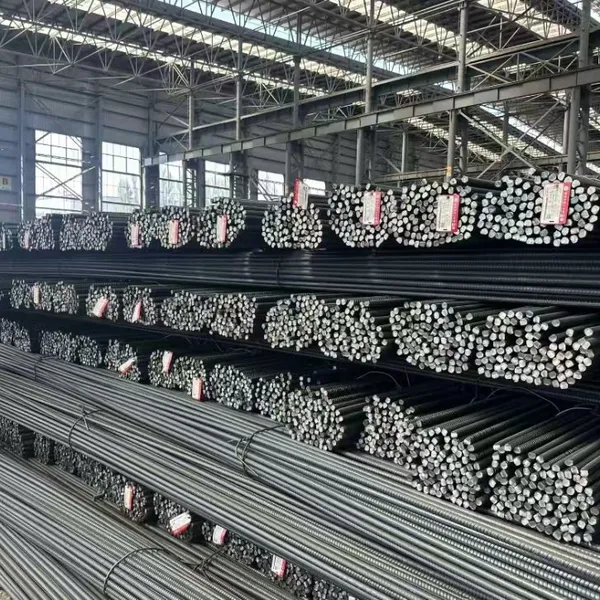
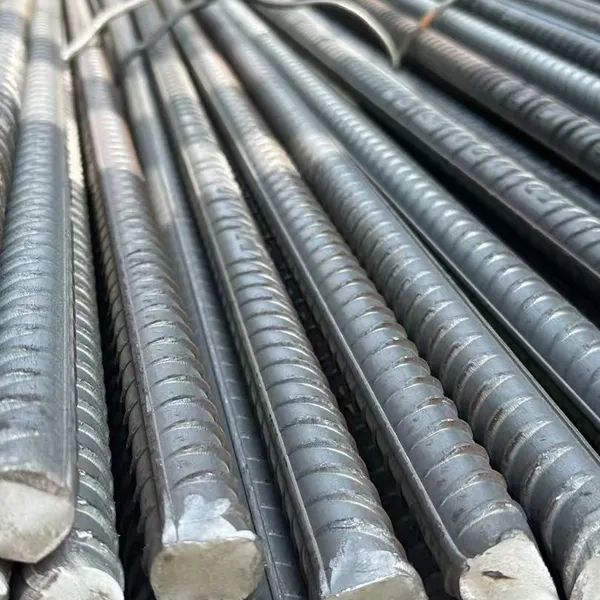
Steel Rebar & Deformed Steel Bar,HRB400、HRB500、CRB550、CRB600H


Related Products
-
 Steel Rebar & Deformed Steel Bar,HRB400、HRB500、CRB550、CRB600HNegotiableMOQ: 5 Metric Tons
 -
Steel Rebar & Deformed Steel Bar,HRB400、HRB500、CRB550、CRB600HNegotiableMOQ: 5 Metric Tons
-
Steel Rebar & Deformed Steel Bar,HRB400、HRB500、CRB550、CRB600HNegotiableMOQ: 5 Metric Tons
-
Steel Sheet & Plate & Checkered Steel Plate,GB/T 3277、GB 247NegotiableMOQ: 5 Metric Tons
-
Steel Sheet & Plate & Checkered Steel Plate,GB/T 3277、GB 247NegotiableMOQ: 5 Metric Tons
1. Product Overview
Steel bars are strip-shaped steel products processed from high-quality carbon structural steel and low-alloy high-strength steel through multiple processes such as hot rolling, cold rolling and heat treatment. Their cross-sections are mainly circular and ribbed, and they are the core load-bearing components of reinforced concrete structures. Its core function is to make up for the insufficient tensile strength of concrete, work synergistically with concrete to improve the bearing capacity, seismic performance and durability of building structures. It is widely used in various civil engineering projects such as housing construction, bridges, roads, water conservancy and municipal engineering, and is an indispensable key building material in modern engineering construction. The production of steel bars strictly follows the current national standards, with stable material and excellent mechanical properties. The specifications, surface treatment and performance parameters can be customized according to engineering needs to adapt to the needs of building structures with different strength levels.
2. Product Classification
2.1 Classified by Production Process
Hot-Rolled Plain Steel Bars: Formed by high-temperature hot rolling, with a smooth and rib-free surface and a circular cross-section. They have good toughness, are easy to weld and bend, and are mainly used for stirrups, distribution bars of reinforced concrete structures, and secondary load-bearing components. The commonly used material grade is HPB300, which is a basic type of steel bar with large usage in construction projects.
Hot-Rolled Ribbed Steel Bars: The mainstream steel bars for engineering. After hot rolling, spiral, herringbone or cross ribs are formed on the surface, which can greatly improve the bond strength with concrete and prevent slippage. They have high strength and excellent seismic performance, and are divided into ordinary hot-rolled ribbed steel bars and fine-grained hot-rolled ribbed steel bars. They are suitable for load-bearing components of the main structure (such as beams, columns, slabs), with commonly used material grades HRB400 and HRB500, and are currently the most commonly used type of steel bar in the building materials market.
Cold-Rolled Ribbed Steel Bars: Processed by cold rolling process, with equidistant ribs on the surface, high dimensional accuracy, high strength and moderate plasticity. They do not require high-temperature heating, have low energy consumption, and are mostly used for small components, prefabricated components, and distribution bars of floor slabs and walls. The commonly used material grades are CRB550 and CRB600H.
Heat-Treated Steel Bars: Processed by quenching and tempering heat treatment (oil quenching, tempering) after hot rolling, with extremely high strength, excellent toughness and outstanding fatigue resistance. They are mostly used for prestressed concrete structures (such as long-span bridges, high-rise buildings), with commonly used material grades HRB400E and HRB500E (seismic type). They are strictly prohibited from being used in railway bridges and shall not be used as welding and spot welding steel bars.
2.2 Classified by Material Grade
HPB300: Ordinary carbon structural steel with moderate strength, good plasticity and easy welding. It is mainly used for plain steel bars, suitable for secondary load-bearing scenarios such as stirrups and distribution bars. The carbon content is controlled within a reasonable range to ensure that the welding performance meets the standard.
HRB400 (HRB400E): Low-alloy high-strength steel, containing alloying elements such as vanadium, niobium and titanium, with a yield strength ≥ 400MPa, high tensile strength and excellent seismic performance. It is currently the main material for construction projects. HRB400E is a seismic type, which can bear large seismic loads and is widely used in load-bearing components of the main structure. Compared with traditional grade 2 steel bars, it can save 10%-15% of steel.
HRB500 (HRB500E): High-strength low-alloy steel with higher strength than HRB400, yield strength ≥ 500MPa, strong bearing capacity and excellent wear resistance. It is suitable for long-span and heavy-load structures (such as high-rise buildings, bridges), which can reduce the amount of steel bars and lower engineering costs.
Special Materials: Weathering steel bars can be customized to adapt to harsh environments with strong corrosion such as coastal areas, chemical industry and outdoor humidity; high-strength hot-rolled ribbed steel bars of 630MPa grade can also be provided. Under the same strength, replacing HRB400 steel bars can save more than 46% of steel, which is suitable for long-span concrete structures, key public facilities and other fields, representing the future direction of construction steel.
2.3 Classified by Application
Load-Bearing Steel Bars: Used in core parts such as beams, columns, slabs and foundations of the main building structure to bear tensile and compressive forces and ensure structural stability. They mainly adopt HRB400 and HRB500 series ribbed steel bars.
Stirrups: Used to fix the position of load-bearing steel bars, bear shear force and prevent steel bar deformation. Most of them adopt HPB300 plain steel bars or HRB400 ribbed steel bars, and the diameter and spacing are customized according to the component size.
Distribution Bars: Used in floor slabs and walls to evenly transfer loads, fix load-bearing steel bars and prevent concrete cracking. Most of them adopt cold-rolled ribbed steel bars or HPB300 plain steel bars.
Prestressed Steel Bars: Used in prestressed concrete structures to apply prestress in advance to improve the crack resistance and bearing capacity of components. They mostly adopt heat-treated steel bars or high-strength ribbed steel bars.
Auxiliary Steel Bars: Used for embedded parts, lifting rings, reinforcement parts, etc. The lifting rings of prefabricated components must be made of HPB300 hot-rolled plain steel bars without cold drawing to ensure safe use.
3. Specification Parameters
3.1 Specification Marking
Expressed by "diameter" (Unit: mm), for example: Φ6mm, Φ12mm, Φ25mm, Φ32mm; plain steel bars are marked as "HPB300 ΦXXmm", ribbed steel bars are marked as "HRB400 ΦXXmm", and seismic type is marked as "HRB400E ΦXXmm"; the conventional diameter range is 6mm-50mm, and special diameters can be customized. The cross-section is circular by default (ribbed steel bars are circular with ribs).
3.2 Common Specifications
Fine-Diameter Steel Bars: Diameter 6mm-12mm, mostly used for stirrups, distribution bars and auxiliary steel bars. The commonly used materials are HPB300 and CRB550, supplied in coil or straight bar form.
Medium-Diameter Steel Bars: Diameter 14mm-25mm, with the widest use, suitable for load-bearing components of the main structure such as beams, columns and slabs. The commonly used materials are HRB400 and HRB400E, which are the main specifications for construction projects.
Coarse-Diameter Steel Bars: Diameter 28mm-50mm, used for heavy-load and long-span structures (such as bridges, high-rise building foundations). The commonly used materials are HRB500 and HRB500E, with high strength and strong bearing capacity.
3.3 Standard Length
Standard straight bar length: 6m, 9m, 12m; fixed-length cutting can be customized according to engineering needs (such as 10m, 15m); fine-diameter steel bars can be supplied in coils (each coil weighs 500kg-1000kg), supporting zero cutting and fixed-length processing to meet the needs of different construction scenarios. Small round steel (5.5-25mm) is mostly supplied in bundles of straight bars, and round steel larger than 25mm can be used for manufacturing mechanical parts or seamless steel pipe blanks.
3.4 Executive Standards
Hot-Rolled Plain Steel Bars: GB/T 1499.1-2017; Hot-Rolled Ribbed Steel Bars: GB 1499.2-2024 (implemented on September 25, 2024, replacing GB/T 1499.2-2018); Cold-Rolled Ribbed Steel Bars: GB/T 13788-2017; Heat-Treated Steel Bars: GB/T 1499.3-2010; The product's dimensional tolerance, mechanical properties, surface quality and chemical composition all meet the current national testing standards, with stable and controllable quality. It is suitable for ordinary hot-rolled ribbed steel bars and fine-grained hot-rolled ribbed steel bars for reinforced concrete, and not suitable for recycled steel bars and thermomechanically treated steel bars.
4. Chemical Composition Table (Melting Analysis, %)
Material Grade |
Carbon (C)≤ |
Silicon (Si) |
Manganese (Mn) |
Phosphorus (P)≤ |
Sulfur (S)≤ |
Vanadium (V) |
HPB300 |
0.22 |
0.17–0.37 |
0.30–0.65 |
0.045 |
0.045 |
— |
HRB400 |
0.25 |
0.20–0.55 |
1.00–1.60 |
0.035 |
0.035 |
0.020–0.120 |
HRB500 |
0.25 |
0.20–0.55 |
1.00–1.60 |
0.035 |
0.035 |
0.020–0.120 |
5. Mechanical Properties
HPB300: Yield Strength ≥ 300MPa, Tensile Strength ≥ 420MPa, Elongation ≥ 25%, good plasticity, easy to weld and bend, suitable for secondary load-bearing and auxiliary load-bearing scenarios, with excellent cold bending performance.
HRB400: Yield Strength ≥ 400MPa, Tensile Strength ≥ 540MPa, Elongation ≥ 16%, high strength, good toughness and excellent seismic performance (impact energy of HRB400E seismic type ≥ 34J). It has good welding performance, with carbon content less than 0.54%, which can adapt to various welding methods, with simple and convenient process. It is the main material of the main structure, with ultimate strength up to 600MPa.
HRB500: Yield Strength ≥ 500MPa, Tensile Strength ≥ 630MPa, Elongation ≥ 15%, high strength, high wear resistance and outstanding fatigue resistance. The impact energy of the seismic type (HRB500E) is ≥ 34J, which is suitable for heavy-load and long-span structures. Both yield strength and ultimate strength are higher than those of the HRB400 series.
Cold-Rolled Ribbed Steel Bars (CRB550): Yield Strength ≥ 550MPa, Tensile Strength ≥ 600MPa, Elongation ≥ 8%, high dimensional accuracy, suitable for distribution bars, stirrups and other scenarios; the strength of heat-treated steel bars can reach 1350-1500MPa, suitable for prestressed structures, and attention should be paid to avoiding brittle fracture.
6. Core Advantages
Excellent Load-Bearing Performance: High tensile, compressive and shear strength, strong bond strength with concrete, good synergy, which can effectively improve the bearing capacity and stability of building structures and avoid structural deformation and cracking.
Outstanding Seismic Performance: Seismic steel bars such as HRB400E and HRB500E have good low-temperature toughness and strong impact resistance, which can effectively absorb energy under seismic loads, reduce structural damage and ensure building safety. Vanadium-containing steel bars have better bending resistance and low-cycle fatigue performance.
Convenient Processing: Easy to cut, weld and bend, and can be secondary processed according to construction needs, adapting to on-site construction and prefabricated component production with high construction efficiency. After welding, heat preservation, slow cooling or heat treatment can be carried out according to material characteristics to ensure welding quality.
Complete Specifications: Wide diameter range, multiple material and process choices, plain, ribbed and seismic types can be customized to meet the load-bearing needs of different projects and components, adapting to various building scenarios from ordinary civil houses to large public facilities.
Strong Durability: The surface can be treated with anti-rust and anti-corrosion (such as galvanizing, anti-corrosion coating), adapting to harsh environments such as humidity, outdoor and coastal areas, not easy to rust, with long service life, which can reduce engineering maintenance costs. Steel bars treated with microalloying have more stable performance.
High Cost Performance: Stable raw material supply, mature production process and affordable price. High-strength steel bars can reduce the amount of usage and engineering consumable costs, and at the same time, convenient transportation and storage further reduce the comprehensive engineering costs. New products such as 630MPa grade steel bars can greatly improve the steel saving rate.
Controllable Quality: Strictly follow the current national standards, each batch of products is tested for chemical composition and mechanical properties, with uniform size, clean surface, stable and reliable performance, in line with the development requirements of green building materials, and can help building projects achieve low carbon and environmental protection.
7. Main Application Scope
Housing Construction: The main structures such as foundations, beams, columns, slabs, walls and stairs of residential buildings, office buildings, shopping malls, factories, etc., are the core components of the "steel frame" of buildings, which are widely used from ordinary civil houses to 100-meter giant buildings.
Bridge Engineering: Main beams, piers, abutments, bridge deck paving, etc., of highway bridges, railway bridges, pedestrian bridges, cross-sea bridges, etc., require high-strength and fatigue-resistant steel bars, such as HRB500 series and 630MPa grade steel bars, to adapt to long-span and heavy-load needs.
Municipal Engineering: Public facilities such as roads, tunnels, culverts, subways, sewage treatment plants, municipal squares, etc., are used for structural reinforcement and load-bearing support, adapting to complex environments such as outdoor and humidity. Weathering steel bars are required in some scenarios.
Water Conservancy Engineering: Reservoirs, dams, canals, pumping stations, etc., require anti-corrosion and anti-scour steel bars to ensure the stability and durability of water conservancy facilities and resist water erosion.
Prefabricated Components: Prefabricated slabs, prefabricated beams, prefabricated columns, prefabricated stairs, etc., adopt steel bars with high precision and stable performance to improve the quality and installation efficiency of prefabricated components, adapting to the needs of industrialized building construction.
Other Fields: Ports, docks, airport runways, nuclear power plants, military and civil air defense projects, etc., require special steel bars with high strength, corrosion resistance and fatigue resistance to meet strict use requirements. 630MPa grade steel bars can greatly improve the structural strength and safety of such projects.
8. Surface Treatment and Custom Services
Regular Factory Status: Hot-rolled plain steel bars have a smooth original surface with slight oxide scale; hot-rolled ribbed steel bars are in hot-rolled original color, with clear ribs and no obvious defects on the surface; cold-rolled ribbed steel bars have a smooth surface and uniform ribs; heat-treated steel bars have a uniform color after quenching and tempering, without cracks, inclusions and other defects.
Customizable Processing: Surface anti-rust treatment (galvanizing, anti-corrosion coating), fixed-length cutting, zero cutting, seismic performance enhancement, special specification customization (such as large diameter, special-shaped cross-section), and the strength, toughness and other performance parameters of steel bars can be adjusted according to customer needs. High-strength steel bars such as 630MPa grade can also be provided to meet the personalized needs of different projects.
9. Packaging and Delivery
Packaging: Straight bar steel bars are bundled with steel strips, each bundle is 2–5 tons, and specifications, materials, batches, furnace numbers, executive standards and other information are marked on the ends, neatly stacked; coiled steel bars are wrapped with waterproof paper and plastic film, and the outer layer is bundled and fixed with steel strips to prevent moisture, wear and rust, ensuring that the performance of steel bars is not affected during transportation.
Delivery: The delivery cycle for conventional stock specifications is 5–7 days; the delivery cycle for customized sizes, special surface treatments, high-strength and special material steel bars shall be negotiated separately. Delivery can be arranged according to the customer's logistics needs to ensure that the goods are delivered to the construction site in a timely manner, and a complete quality certificate is provided, which meets the national inspection and acceptance requirements.

Send Inquiry to This Supplier



You May Also Like
-
Steel Sheet & Plate & Checkered Steel Plate,GB/T 3277、GB 247NegotiableMOQ: 5 Metric Tons
-
Steel Sheet & Plate & Checkered Steel Plate,GB/T 3277、GB 247NegotiableMOQ: 5 Metric Tons
-
Steel Coil & Strip & Cold Rolled Steel Coil,GB/T 709、GB/T 11253、JIS G3141、ASTM A1008NegotiableMOQ: 5 Metric Tons
-
Steel Coil & Strip & Cold Rolled Steel Coil,GB/T 709、GB/T 11253、JIS G3141、ASTM A1008NegotiableMOQ: 5 Metric Tons
-
Steel Coil & Strip & Cold Rolled Steel Coil,GB/T 709、GB/T 11253、JIS G3141、ASTM A1008NegotiableMOQ: 5 Metric Tons
-
Steel Coil & Strip & Cold Rolled Steel Coil,GB/T 709、GB/T 11253、JIS G3141、ASTM A1008NegotiableMOQ: 5 Metric Tons
-
Steel Coil & Strip & Hot Rolled Steel Coil,Q195, Q235, Q355NegotiableMOQ: 5 Metric Tons
-
Steel Coil & Strip & Hot Rolled Steel Coil,Q195, Q235, Q355NegotiableMOQ: 5 Metric Tons
-
Steel Coil & Strip & Hot Rolled Steel Coil,Q195, Q235, Q355NegotiableMOQ: 5 Metric Tons
-
Steel Coil & Strip & Hot Rolled Steel Coil,Q195, Q235, Q355NegotiableMOQ: 5 Metric Tons


