








 Contact Platform Support
 Help Center
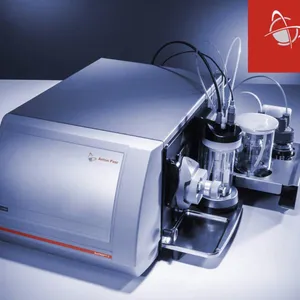
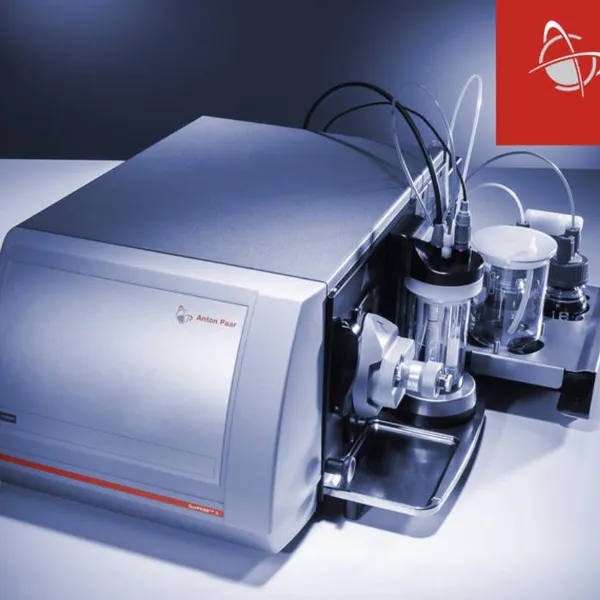
Anton Paar Solid Surface Zeta Potential Analyzer Surpass


Related Products
-
 Anton Paar Quantachrome Mercury Porosimeter PoremasterNegotiableMOQ: 0
 -
Anton Paar High-end Multifunctional Refractometer Abbemat 450/650NegotiableMOQ: 0
-
Anton Paar Rotational Viscometer Viscoqc 300NegotiableMOQ: 0
-
Differential Scanning Calorimeter Dsc 300 Caliris Select-pNegotiableMOQ: 0
-
Netzsch Picotr Thermal Reflectance Method Thin Film Thermal Conductivity Measuring InstrumentNegotiableMOQ: 0
Instrument Introduction:
Instrument Name: Zeta Potential Analyzer
Research Objects: Materials such as fibers, films, powders, particles, solid metal or non-metal sheets, etc.
Main Uses: Measure the surface charge of materials, understand the charge status on the material surface, and study the surface properties of materials.
Main Applications: Material surface modification
Material surface adhesion, adsorption, desorption, etc.
Material composition
Material hydrophilicity and hydrophobicity
Material cleaning treatment, etc.
Interaction of surfactants
SurPASS 3 Solid Electrokinetic Analyzer / Solid Surface Zeta Potential Analyzer helps researchers improve and adjust surface characteristics in the fields of chemistry and materials science, and design new materials with specific properties, such as polymers, textiles, ceramics, glass, or surfactants, etc.
By measuring the streaming current or streaming voltage (potential) on the surface of macroscopic solids, the SurPASS 3 Solid Electrokinetic Analyzer provides important information such as Zeta potential.
Zeta potential is an interfacial property, which is very important for understanding solid materials in many process technologies. Zeta potential provides information on the surface charge and adsorption properties of solids.
The SurPASS 3 Solid Electrokinetic Analyzer / Solid Surface Zeta Potential Analyzer enriches the knowledge of surface and interface analysis.
The SurPASS 3 Solid Electrokinetic Analyzer / Solid Surface Zeta Potential Analyzer is applicable to solid and powder materials of different shapes and sizes.
In surface analysis, the solid surface Zeta potential analyzer SurPASS 3 is based on the streaming potential and streaming current measurement methods to study the Zeta potential of macroscopic solid surfaces. It can provide information about surface charge and related properties, and can detect the slightest changes in surface properties.
Zeta Potential:
Range: There is no limit determined by the measurement principle used
Reproducibility: +/-0.5 mV
Isoelectric Point:
Reproducibility: +/-0.1 pH
Flat Solids:
Minimum 35 mm x 15 mm, thickness 20 mm x 10 mm, thickness Disks with a diameter of 14 mm or 15 mm
Fibers:
Minimum weight 100 mg
Powders:
Minimum particle size 25 μm
Membranes and filter materials
Biomaterials
Semiconductor industry
Fibers, fabrics and non-wovens
Cosmetics and detergents
Minerals
For solids of various shapes
Various measuring cells are suitable for natural and man-made fibers and fabrics, particulate samples, coarse particles and flat samples.
Break through the limits - the mystery of flow
Fast measurement:
Zeta potential measurement takes less than 2 minutes
Direct analysis of surface Zeta potential:
Suitable for real samples without the use of tracer particles
Main Features:
Measurement principle:
In the model of the electrochemical double current layer, the charge distribution forms a fixed layer and a mobile layer. The sliding layer separates these two layers from each other. The Zeta potential is specified as the potential decay between the solid surface and the liquid phase on the sliding layer. The external force of electrolyte flow applied parallel to the solid-liquid interface causes relative motion and charge separation between the fixed layer and the mobile layer, from which the experimental Zeta potential is obtained. The magnitude of the streaming potential is determined by the flow pressure difference P of the liquid phase. The Zeta potential can be defined as the potential between the fixed layer charge on the solid surface and the ion mobile layer. The corresponding streaming potential coefficient is dU/dP, and the Zeta potential is expressed as:
Solid surface properties, viscosity, dielectric constant, electrolyte conductivity K, etc. all affect the magnitude of the Zeta potential. When obtaining the Zeta potential value, the type, concentration, and pH value of the electrolyte solution need to be specified.
The diluted electrolyte circulates through the measuring cell containing the sample, resulting in a pressure difference. The relative movement of the charges in the electrochemical double layer generates and increases the streaming voltage. This streaming voltage/streaming current (optional) is detected by the electrodes placed on both sides of the sample. SurPASS 3 can simultaneously measure the conductivity, temperature, and pH value of the electrolyte.

Send Inquiry to This Supplier


You May Also Like
-
Thermo Fisher Nicolet Is50 Fourier Transform Infrared SpectrometerNegotiableMOQ: 0
-
Anton Paar Quantachrome Autosorb-iq Automatic Specific Surface Area and Pore Size Distribution AnalyzerNegotiableMOQ: 0
-
German Netzsch Synchronous Thermal Analyzers Sta 499f1, Sta499f3, Sta499f5, Sta2500NegotiableMOQ: 0
-
Hunterlab Ultrascan Vis Yellowness Index MeterNegotiableMOQ: 0
-
German Zwick Tensile Testing Machine ZwickiNegotiableMOQ: 0
-
Dandong Bettersize Laser Particle Size Analyzer Bettersize2600eNegotiableMOQ: 0
-
Hunterlab Agera Polyester Chip ColorimeterNegotiableMOQ: 0
-
Xipingzhe Aurora-f2 Fully Automatic Bottle Washing Machine and Vessel CleanerNegotiableMOQ: 0
-
German Eckart 120eh-450 Adhesive Three-roll Mill, German Eckart Three-roll MachineNegotiableMOQ: 0
-
Hunterlab Vista Haze MeterNegotiableMOQ: 0
