








 Contact Platform Support
 Help Center
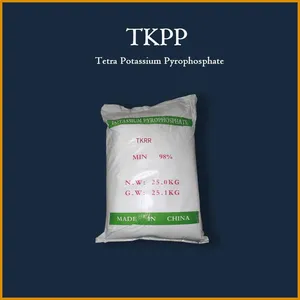
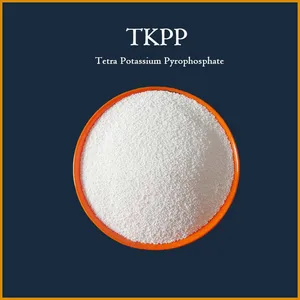
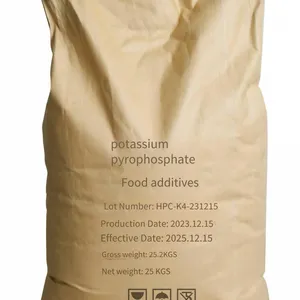
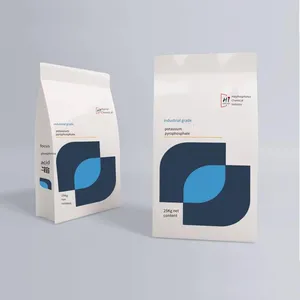
Food-grade Potassium Pyrophosphate for Electroplating With High Content and Low Impurities



Related Products
-
 Feed-grade Urea Phosphate 17-44-00 Fully Water-soluble Fertilizer Urea PhosphateUS$ 907.69 - 923.08MOQ: 10 Tons
 -
Lightweight Sodium Tripolyphosphate, Industrial Grade, Food Grade, Improver, Water Retaining Agent, Meat Product Pickling Agent for Weight Gain, Water Retention Agent, for Washing, Refractory Materials, Ore Dressing, and Water TreatmentUS$ 1153.85 - 1169.23MOQ: 10 Tons
-
Fermentation Aid Diammonium Hydrogen Phosphate With Reach Certification, Specially for Wine Fermentation (dap)US$ 1215.38 - 1230.77MOQ: 10 Tons
-
Water-soluble Fertilizer Ammonium Dihydrogen Phosphate 12-61-00 Export Type 73% Nutrient Sewage Treatment Descaling AgentUS$ 1184.62 - 1200MOQ: 10 Tons
-
Food Water Retention Agent, Food Grade Leavening Agent, Mild Alkaline Agent, High Purity Dipotassium Hydrogen PhosphateUS$ 1676.92 - 1692.31MOQ: 10 Tons
Chemical Name: Potassium Pyrophosphate
Alias: Potassium Pyrophosphate, TKPP
Chemical Formula: K4P2O7
CAS NO.: 7320-34-5
National Standard: GB 25562-2010
————————————————————————————————————————
Properties
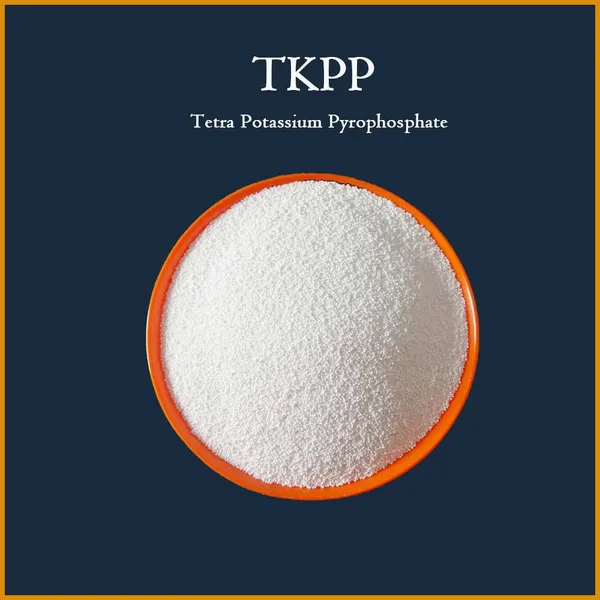
Anhydrous potassium pyrophosphate is a white powder, with a relative density of 2.534 and a melting point of 1109℃. It is easy to absorb moisture and deliquesce. It is easily soluble in water but insoluble in ethanol. At 25℃, 187 grams can be dissolved in 100 grams of water. It can chelate with alkaline earth metal and heavy metal ions. The aqueous solution is alkaline, and the pH of a 1% aqueous solution is 10.2. It is insoluble in ethanol. Its properties are similar to other polyphosphates. It is prepared by melting dipotassium hydrogen phosphate and losing water molecules. At room temperature, it is a white crystalline powder or granules. It has strong hygroscopicity in the air and is extremely soluble in water but insoluble in ethanol. The aqueous solution is alkaline and has the effect of inhibiting food spoilage and fermentation. The pH value of a 1% aqueous solution is about 10.5. The solubility of potassium pyrophosphate in 100g of water at 25℃ is 187g. It hydrolyzes into potassium phosphate in acid or alkali solutions and forms a viscous paste when mixed with water.
————————————————————————————————————————
Applications
Potassium pyrophosphate is often used in combination with other condensed phosphates. For example, a binder for hams and sausages is made according to the ratio of 10% potassium pyrophosphate, 10% sodium pyrophosphate, 30% potassium polyphosphate, 30% sodium polyphosphate, and 20% sodium metaphosphate. It is usually used to prevent struvite formation in canned aquatic products, prevent discoloration of canned fruits, increase the expansion rate of ice cream, increase the extraction amount of coffee raw materials, increase the yield of hams and sausages, enhance the water-holding capacity of fish, improve the taste and yield of noodles, and prevent cheese aging. In order to make the electroplating layer smooth and firm, the formula of electroplating solutions in industrial production is often very complex. Previously, cyanides were commonly used as complexing agents to prepare electroplating solutions. However, since CN- is highly toxic, it causes great harm to the health of electroplating workers. At the same time, discharging sewage and waste gas containing CN- also seriously pollutes the environment. Therefore, cyanide-free electroplating is mainly used now, and the complexing agent that replaces cyanide is potassium pyrophosphate.
Potassium pyrophosphate has all the properties of other polymeric phosphates. It is similar to sodium pyrophosphate but has a higher solubility. It can chelate with alkaline earth metal and heavy metal ions; it can form stable complexes with Ca2+ and Mg2+ in hard water, thereby softening hard water, improving the washing ability, and removing dirt. It can also form a protective film on the surfaces of metals such as iron, lead, zinc, and aluminum; the pyrophosphate ion (P2O74-) has a strong dispersing ability for finely dispersed solids and can promote the uniform mixing of fine and trace substances. High-purity and low-iron potassium pyrophosphate has a stable pH buffering ability and can maintain the pH value of the solution for a long time.
————————————————————————————————————————
Packaging
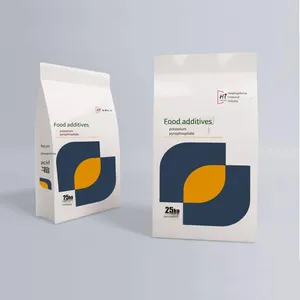
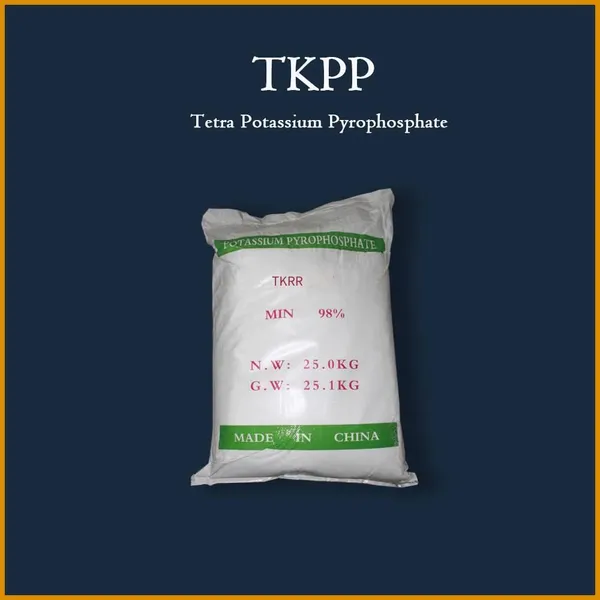
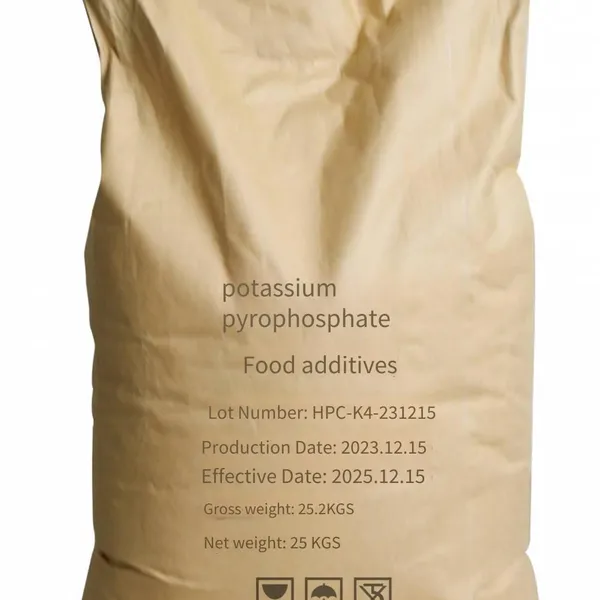
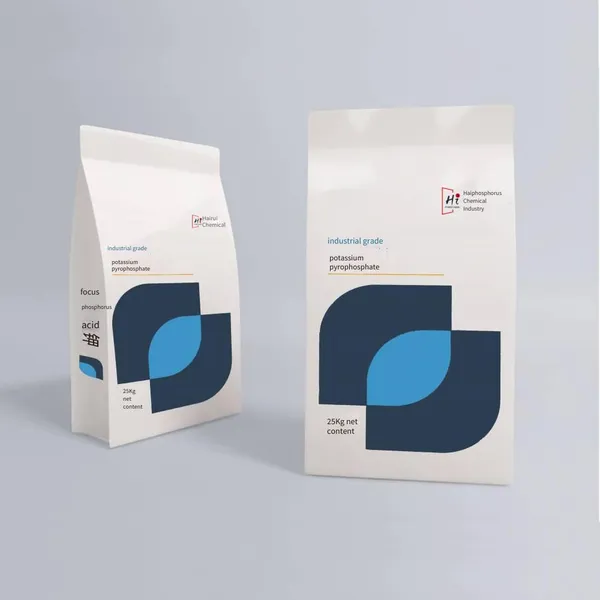
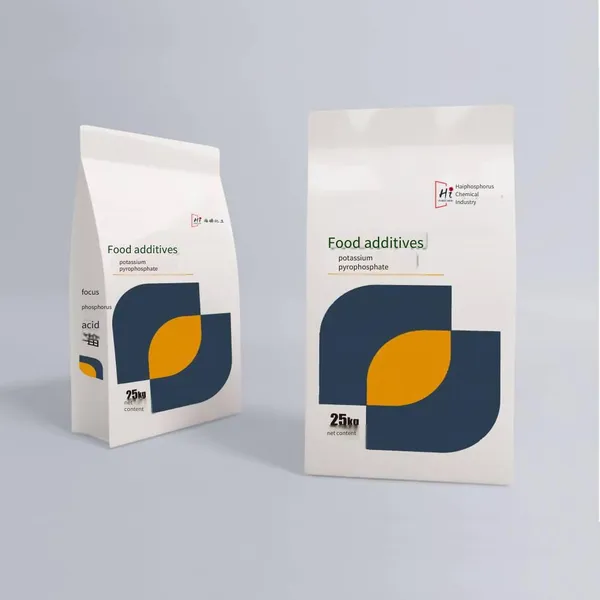
The regular packaging is a 25KG bag, with a double-layer plastic inner bag and a plastic woven outer bag. It can also be packed in 1000/1100/1200KG ton bags.
Customizable packaging and shipping marks
————————————————————————————————————————
Specifications
| Serial number | Indicator items | National standard | Internal control indicators |
| 1 | Appearance | White powder | |
| 2 | Tetrapotassium pyrophosphate %≥ | 96.0 | 96.0 |
| 3 | Phosphorus pentoxide %≥ | / | 42 |
| 4 | Iron %≤ | 0.03 | 0.002 |
| 5 | Water-insoluble matter %≤ | 0.1 | 0.05 |
| 6 | Heavy metals (calculated as lead) %≤ | 0.001 | 0.001 |
| 7 | Arsenic (calculated as arsenic) %≤ | 0.0003 | 0.0001 |
| 8 | PH value | 10.0-10.7 | 10.0-10.7 |
| 9 | Loss on ignition % | / | 0.2 |
| 10 | Orthophosphate | Pass the test |

Send Inquiry to This Supplier


You May Also Like
-
Sodium Hexametaphosphate, White Crystalline Granules, Water-retaining Agent, Modifier, 68%US$ 1.46MOQ: 20000 Kilograms
-
Food-grade Water Retention Agent Sodium Tripolyphosphate, Moisture Retention Agent, Meat Water Retention and Weight Gain AgentUS$ 1.22MOQ: 20000 Kilograms
-
Food-grade Sodium Tripolyphosphate, Water-retaining and Weight-increasing Pickling Agent for Improving Meat Quality, 25 kgUS$ 1.22MOQ: 20000 Kilograms
-
Sodium Hexametaphosphate, 68% Content, Food Grade, Meat Products, Beef Water-retaining Agent, ph Regulator, EmulsifierUS$ 1.46MOQ: 20000 Kilograms
-
Sodium Hexametaphosphate, Food Grade and Industrial Grade, White Powder or CrystalUS$ 1.46MOQ: 20000 Kilograms
-
Sodium Hexametaphosphate, Food-grade Phosphate, Water-retaining Agent and Improver for Pasta and Meat ProductsUS$ 1.46MOQ: 20000 Kilograms
-
Food-grade Sodium Hexametaphosphate, Factory Supply, Food Additive Humectant, 25kg/bagUS$ 1.46MOQ: 20000 Kilograms
-
Sodium Tripolyphosphate, Food Grade, Water Retaining Agent, Stpp, Selected Manufacturer, Industrial Detergent AdditiveUS$ 1.22MOQ: 20000 Kilograms
-
Sodium Hexametaphosphate, Graham's Salt, Industrial Grade, Water Softening, Improvement, Leavening AgentUS$ 1.46MOQ: 20000 Kilograms
-
Sodium Hexametaphosphate, Food Additive for Meat Products, for Crispness Enhancement, Water Retention, Anti-corrosion and Preservation, Compound Water Retention AgentUS$ 1.46MOQ: 20000 Kilograms


