








 Contact Platform Support
 Help Center
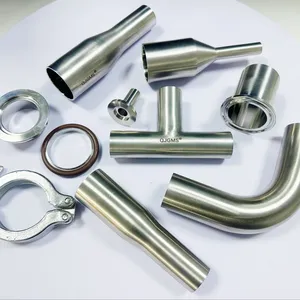
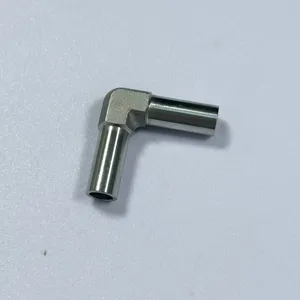
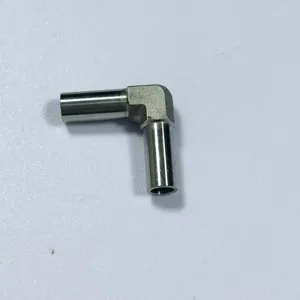
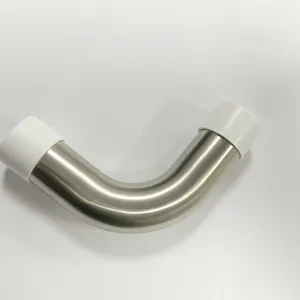
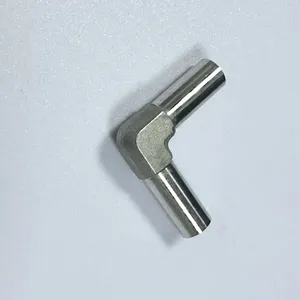
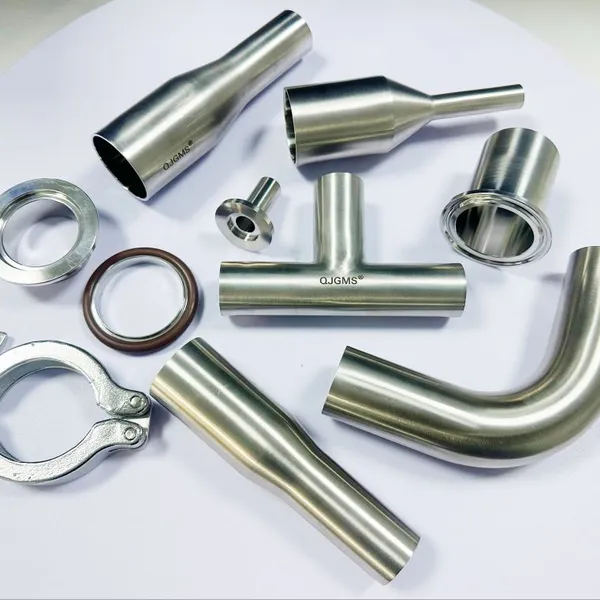
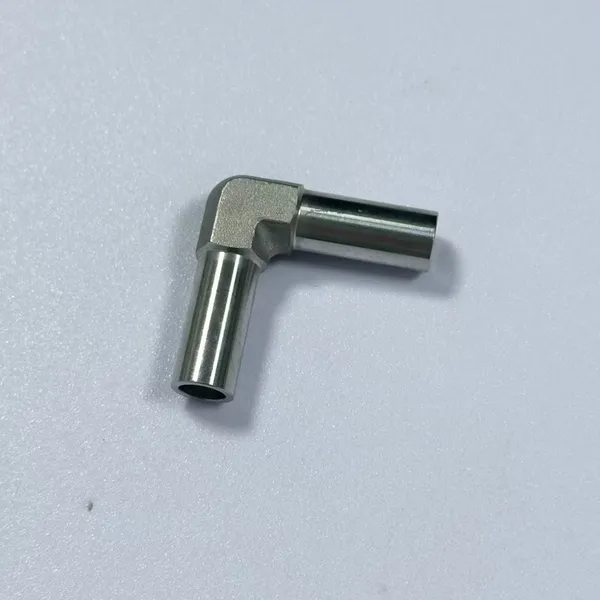
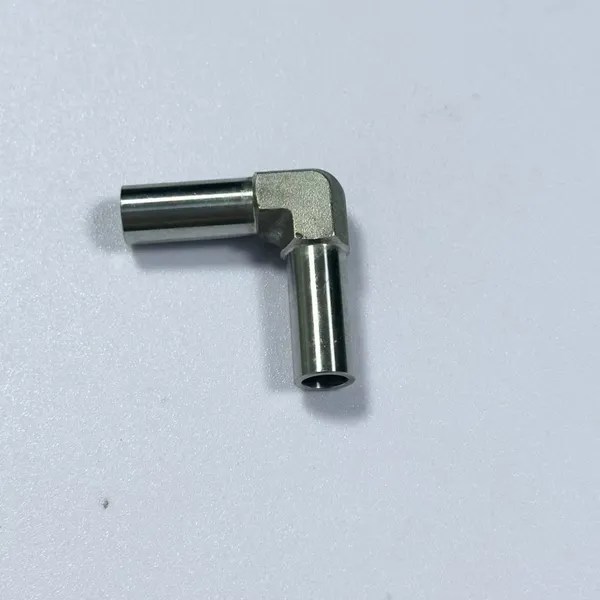
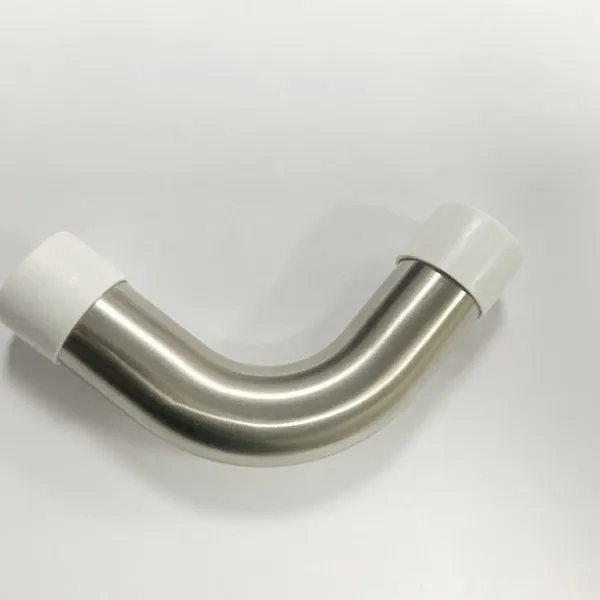
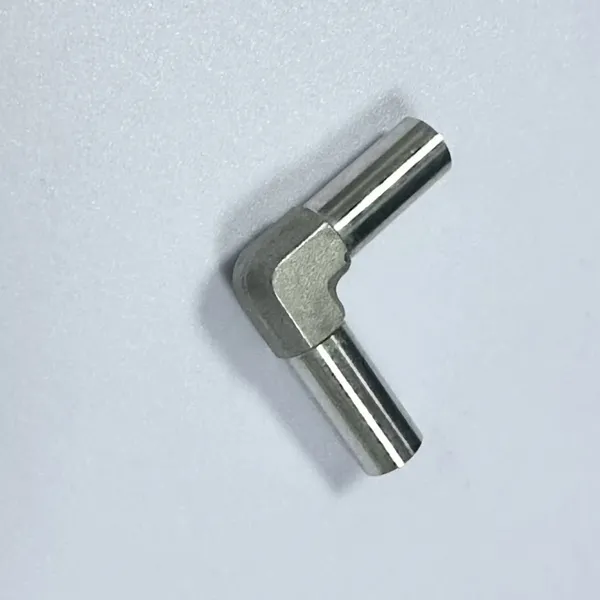
Weld Elbow 90 Degree Tube Welding Fitting for Semiconductor Gas Lines
Product Spotlights



Related Products
-
 High Pressure Carbon Steel Weld Elbow 90 Degree Long Radius Butt Weld BendNegotiableMOQ: 1000 Pieces
 -
DN15-DN600 Butt Weld Elbow for High-Pressure Steam ApplicationsNegotiableMOQ: 1000 Pieces
-
316L Stainless Steel Long Radius Welding Elbow Sch 40 With Electropolished SurfaceNegotiableMOQ: 1000 Pieces
-
304 Stainless Steel Tube Fitting Cap for Hydraulic SystemsNegotiableMOQ: 500 Pieces
-
1/4" OD 316L Stainless Steel Tube End Cap Double Ferrule Compression FittingNegotiableMOQ: 500 Pieces
A Weld Elbow is a pipe fitting used in piping systems to change the direction of fluid flow. It is connected to adjacent pipes or equipment ports by welding. It is widely used in high-purity or high-pressure fluid systems such as chemical, petroleum, natural gas, pharmaceutical, food and beverage, and semiconductor industries. According to the bending angle, the most common type is the 90° elbow, with 45° and 180° specifications also available.
I. Basic Definition and Applications
Names: Weld Elbow / Welded 90° Elbow / Welded Bend
Functions:
Changes the direction of pipe routing (typically 90°, but also 45° or 180°).
Achieves fluid direction change in confined spaces, avoiding pressure drop or turbulence caused by sharp right-angle bends.
Forms a continuous, leak-free, high-strength connection with the pipe through welding.
Applicable Systems:
High-pressure, high-temperature, corrosive media systems.
Ultra-high purity (UHP) gas, vacuum systems (e.g., semiconductor, biopharmaceutical).
Food-grade and pharmaceutical fluid transfer (must comply with sanitary standards).
II. Material and Surface Treatment
1. Body Material
Stainless Steel (most common):
304 / 304L: General purpose, corrosion resistant, lower cost.
316 / 316L: Resistant to chloride corrosion, suitable for marine and chemical environments.
316L VAR (Vacuum Arc Remelted): Used for ultra-high purity applications, extremely low impurity content.
904L, 254SMO, C-276: Used for highly corrosive media (e.g., sulfuric acid, hydrochloric acid, seawater).
Carbon Steel:
Used for low-pressure, non-corrosive media (e.g., steam, air, water), low cost.
Alloy Steel:
Used for high-temperature, high-pressure applications (e.g., power plants, petrochemical).
Special Materials:
Titanium, Hastelloy, Monel, etc., used for extreme corrosion or high-temperature environments.
2. Surface Treatment
Electropolishing (for UHP/Sanitary grade):
Surface roughness Ra ≤ 0.13 µm (5 µin), reduces particle adhesion.
Complies with SEMI, ASME BPE, ISO standards.
Mechanical Polishing:
Ra ≤ 0.4 µm, used for general industry.
Blasting / Pickling and Passivation:
Removes scale and weld slag, improves corrosion resistance.
Cleaning Process:
SC-10 / SC-01: Used for ultra-high purity systems, ensures oil-free, grease-free, and particle-free.
III. Structure and Dimensional Parameters
1. Key Structural Features
Bending Angle:
Most common: 90°
Others: 45°, 180° (U-bend)
Connection Method:
Butt Weld End: Both ends are plain, used for butt welding to pipes.
Socket Weld End: Less common for elbows, more common for straight connectors.
Wall Thickness Schedule:
Typically uses wall thickness standards such as Sch 10, Sch 40, Sch 80, XXS (ANSI/ASME B36.10M).
High purity systems often use thickened or extra-thick walls to reduce inner surface roughness.
Bend Radius (R):
Long Radius (LR): R = 1.5 × Nominal Diameter (DN), mainstream choice, low pressure drop.
Short Radius (SR): R = 1.0 × Nominal Diameter (DN), saves space but has higher pressure drop.
High purity systems mostly use long radius to reduce turbulence and particle deposition.
2. Dimensional Specifications (DN25 as an example)
| Parameter | Description |
|---|---|
| Nominal Diameter (DN) | 25 mm (1") |
| Outside Diameter (OD) | 33.7 mm (Sch 40) |
| Wall Thickness (WT) | 3.38 mm (Sch 40) |
| Bend Radius (R) | 38.1 mm (Long Radius, 1.5×DN) |
| Center-to-End Distance | Approx. 51 mm (90° Long Radius Elbow) |
| Weld Bevel Angle | 37.5° (standard butt weld bevel) |
| Bevel Depth | Approx. 1.5–2 mm |
Note: Actual dimensions should reference standards such as ASME B16.9, ISO 1127, DIN 2605.
IV. Standards and Certifications
International Standards:
ASME B16.9: Factory-made wrought steel butt-welding fittings standard.
ISO 1127: Stainless steel tubes and fittings – Dimensions, tolerances, surface roughness.
DIN 2605: German standard for stainless steel welded fittings.
Industry Specifications:
SEMI F20: Standard for ultra-high purity gas piping in the semiconductor industry.
ASME BPE: Standard for bioprocessing equipment (sanitary welded elbows).
Certifications:
ISO 9001, PED 2014/68/EU (EU Pressure Equipment Directive), 3.1/3.2 Material Certificates.
V. Selection Guidelines
Material Matching: Select based on media corrosivity, temperature, and pressure (e.g., 316L for most chemical applications, Hastelloy for strong acids).
Bend Radius: Prioritize Long Radius (LR), especially in high-purity or deposition-prone systems.
Wall Thickness Schedule: Select based on system pressure (Sch 40 is standard, choose Sch 80 or XXS for high pressure).
Surface Roughness: UHP/Sanitary grade systems require electropolishing (Ra ≤ 0.13 µm).
Welding Process: Must match the pipe welding method (primarily TIG welding) to ensure defect-free welds.
Cleanliness: High-purity systems require SC-01 cleaning with a cleaning report and certificate.
VI. Example: 316L Stainless Steel 90° Long Radius Welded Elbow (DN25)
Material: 316L Stainless Steel, VAR grade
Specification: 90°, Long Radius (R = 1.5 × DN)
Wall Thickness: Sch 40
Surface Treatment: Electropolished, Ra ≤ 0.13 µm
Standards: ASME B16.9, ISO 1127
Cleaning Process: SC-01, oil-free, grease-free, particle-free
Suitable Media: High purity nitrogen, argon, hydrogen, clean water, pharmaceutical liquids, etc.
VII. Precautions
Ensure the port is clean, burr-free, and oxide-free before welding.
Perform non-destructive testing (e.g., PT, RT) after welding to ensure weld quality.
High-purity systems require welding and assembly in a cleanroom environment.
Avoid weld protrusions on the inner wall of the elbow; perform internal grinding if necessary.
✅ Summary: The weld elbow is a key directional component in piping systems. The choice of its parameters directly affects the system's safety, sealing, fluid performance, and cleanliness. In high-purity or harsh operating conditions, strict matching of material, surface treatment, dimensional standards, and cleaning processes is essential.

Send Inquiry to This Supplier



You May Also Like
-
316L Stainless Steel Double Ferrule Tube Cap for Instrumentation PipelineNegotiableMOQ: 500 Pieces
-
3/8" OD 316L Stainless Steel Tube End Plug Double Ferrule Compression FittingNegotiableMOQ: 500 Pieces
-
High Purity 316L Tube Cap Double Ferrule for Semiconductor & Lab Gas LinesNegotiableMOQ: 500 Pieces
-
High-Pressure VCR Male to NPT Male Adapter 316L SS for Oil & Gas ApplicationsNegotiableMOQ: 10 Pieces
-
Precision VCR Male to Male NPT Adapter 316L SS for Vacuum SystemsNegotiableMOQ: 10 Pieces
-
Traceable VCR Male to Male NPT Adapter 316L SS With Mill Test ReportNegotiableMOQ: 10 Pieces
-
316L Stainless Steel VCR-NPT Adapter With Helium Leak Test CertificationNegotiableMOQ: 10 Pieces
-
316L Stainless Steel VCR Male NPT Adapter With Electropolished FinishNegotiableMOQ: 10 Pieces
-
316L SS VCR Male NPT Adapter for Pharmaceutical Process PipingNegotiableMOQ: 10 Pieces
-
VCR to NPT Male Adapter 316L SS 1/4" to 1/2" for Semiconductor EquipmentNegotiableMOQ: 10 Pieces


