








 Contact Platform Support
 Help Center
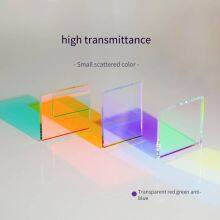
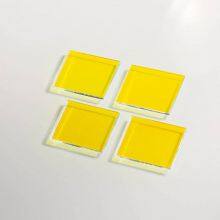
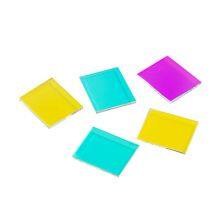
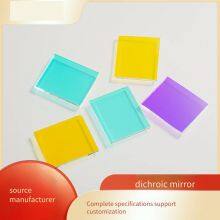
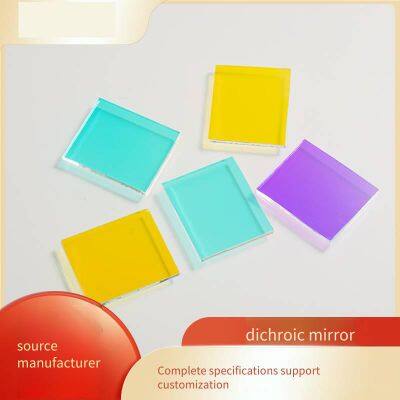
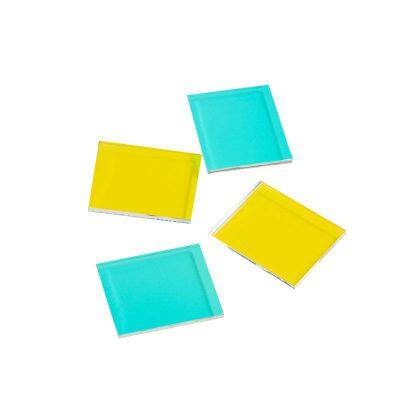
Pingzhi Optics Projection Module Dichroic Mirror, Transmitting and Reflecting Red, Green and Blue, Filter for Medical Optical Instruments


Related Products
-
 Pingzhi Optical nd Neutral Density Filter, High-definition Polarizing Film, Increase Exposure Time and Create Water Surface Atomization EffectUS$ 1.26 - 1.38MOQ: 10000 Pieces
 -
Pingzhi Optics Near-infrared Filter for Radar Scanner, Nbp940nm, Double-sided CoatedUS$ 0.31 - 0.37MOQ: 1000 Pieces
-
Pingzhi Optics Uvc Band Disinfection Lenses, 254nm and 220nm Narrow Band FiltersUS$ 0.44 - 0.49MOQ: 1000 Pieces
-
Pingzhi Optics Infrared Lens Imaging Silicon Lens With Double-sided Anti-reflective Coating for 5.5 - 14μmUS$ 3.15 - 3.46MOQ: 1000 Pieces
-
Pingzhi Optics Portable Infrared Thermometer Sensor Lens Window Piece, Silicon Wafer, Double-sided CoatingUS$ 0.71 - 0.8MOQ: 1000 Pieces
Product Brief:
It refers to separating the specific spectrum from the light source and changing the optical path direction of part of the spectrum when the incident angle is 45 degrees or a large angle. It is commonly used in sensor systems such as enzyme-labeled instruments, fluorescence microscope systems, projection light engine systems, laser lights, optical instrument beam splitters, and video glasses. It is an optical component that optical designers are crazy about. It can effectively reduce the structure of the device and realize multi-functional optical paths.
Regular Parameters:
Process Method: IAD Multi-layer Dielectric Hard Coating
Surface S1: AR Coating 420 - 680nm@R
Surface S2: Dichroic Beam Splitting Coating
Average Transmission in Working Band: T>95%
Average Reflection in Working Band: R>95%
Size Range: 2*2mm~146*146mm, Φ3mm~Φ110mm
Product Thickness: 0.3 - 5.0mm
Clear aperture: Coating coverage is greater than 95% of the effective area
Surface finish: National standard level 3, US military standard 40 - 20 (scratches/pits)
The 3LCD method controls the three primary colors of light using separate liquid crystal display panels for R (red), G (green), and B (blue), and then synthesizes the colors. In this way, the original color of each point can be faithfully reproduced. LCD can also show fine gradations and naturally reproduce the color changes in the image, especially in the dark areas.
Soft image
Since three LCDs are used to display colors, it can reproduce images that are gentle on the eyes. The 3LCD method does not produce rainbow-like patterns known as "color separation", allowing users to enjoy images for a long time with peace of mind.
Projection methods
Projectors with similar appearances have different internal optical systems and different types due to the different display components used. Currently, projectors on the market can be roughly divided into the following 3 methods.
3LCD method
The incident light from the light source is separated into red, green, and blue by a special filter that only projects light of specific wavelengths. The separated three primary colors are adjusted by a TFT (LCD) light valve respectively, and then re-synthesized by a prism before being projected onto the display screen. This 3LCD system provides a wider range of light adjustment, resulting in a wide range of practical applications.
DLP™*1 method
The display component uses DMD™*2 (Digital Micromirror Device). DMD is a semiconductor composed of hundreds of thousands to millions of micron-sized micromirrors. Each mirror corresponds to a pixel, and images are projected by reflecting light from the light source. There are single-chip and 3-chip types. Structurally, DMD™ has mirrors covering a semiconductor substrate, and these mirrors are tilted through ON/OFF operations. DLP™ refers to the general term for the optical system using DMD™, which rotates a color wheel to display an image consistent with the color at a certain moment and can display full color by rotating thousands of times per second.
LCOS Method
The display component uses LCOS (Liquid Crystal On Silicon). LCOS is a reflective liquid crystal display panel characterized by a high aperture ratio. The wiring part and switching elements are located below the reflective layer, so there is no need for a black matrix part, enabling seamless image display. There are single-chip and three-chip types.
Actual Photos:

Send Inquiry to This Supplier


You May Also Like
-
Pingzhi Optics Lidar Filter, Wavelength 905nm, Bandwidth 10 - 40nmUS$ 0.62 - 0.69MOQ: 1000 Pieces
-
Pingzhi Optics Laser Welding Protection Lens, Diameter 20*2.0mm, Double-sided ar CoatingUS$ 1.08 - 1.15MOQ: 1000 Pieces
-
Pingzhi Optical Factory Supplies Narrow Bandpass Optical Filter With a Central Wavelength of 750nmUS$ 0.09 - 0.12MOQ: 1000 Pieces
-
Pingzhi Optics Chromatographic Detection Optical Module Single Wavelength Narrow Band Filter 590nmUS$ 3 - 3.08MOQ: 1000 Sets
-
Pingzhi Optics Transcutaneous Bilirubin Detector Bp461nm Narrow Bandpass FilterUS$ 0.28 - 0.34MOQ: 1000 Pieces
-
Pingzhi Optics - Manufacturer of 640nm Optical Filters for Infrared Ink RecognitionUS$ 0.31 - 0.46MOQ: 1000 Pieces
-
Pingzhi Optics, Coating Manufacturer, 530nm Narrowband Optical Filter for Water Quality Environment Analysis ExcitationUS$ 0.23 - 0.31MOQ: 1000 Pieces
-
Pingzhi Optics Supplies Surveillance Glass, Light Control Sheets, and Window Testing for Coating EquipmentUS$ 2.42 - 2.57MOQ: 1000 Pieces
-
Pingzhi Optics Infrared Gas Detection Filter, Center Wavelength 4.26μmUS$ 6.92 - 7.69MOQ: 100 Pieces
-
Pingzhi Optics Supplies Gold and Silver Plated Aluminum Mirrors for 2d and 3d Scanning EquipmentUS$ 1.05 - 1.15MOQ: 1000 Pieces


